Blog

EPDM versus Fibreglass for Your Flat Roof

A flat roof rarely fails at a convenient time. A small crack around a roof edge, a split near a drain or water sitting after heavy rain can soon become a ceiling stain inside the home. When replacement is needed, homeowners often ask about EPDM versus fibreglass. Both are widely used, modern flat-roof systems, but they suit different roofs, budgets and priorities.

The right answer is not simply whichever material is cheapest on the day. A flat roof needs to cope with North West weather, movement in the building, drainage, foot traffic and the details around adjoining walls, skylights and gutters. A properly fitted roof in either material can give many years of reliable service. The material must be matched to the roof and installed with care.

What is EPDM roofing?

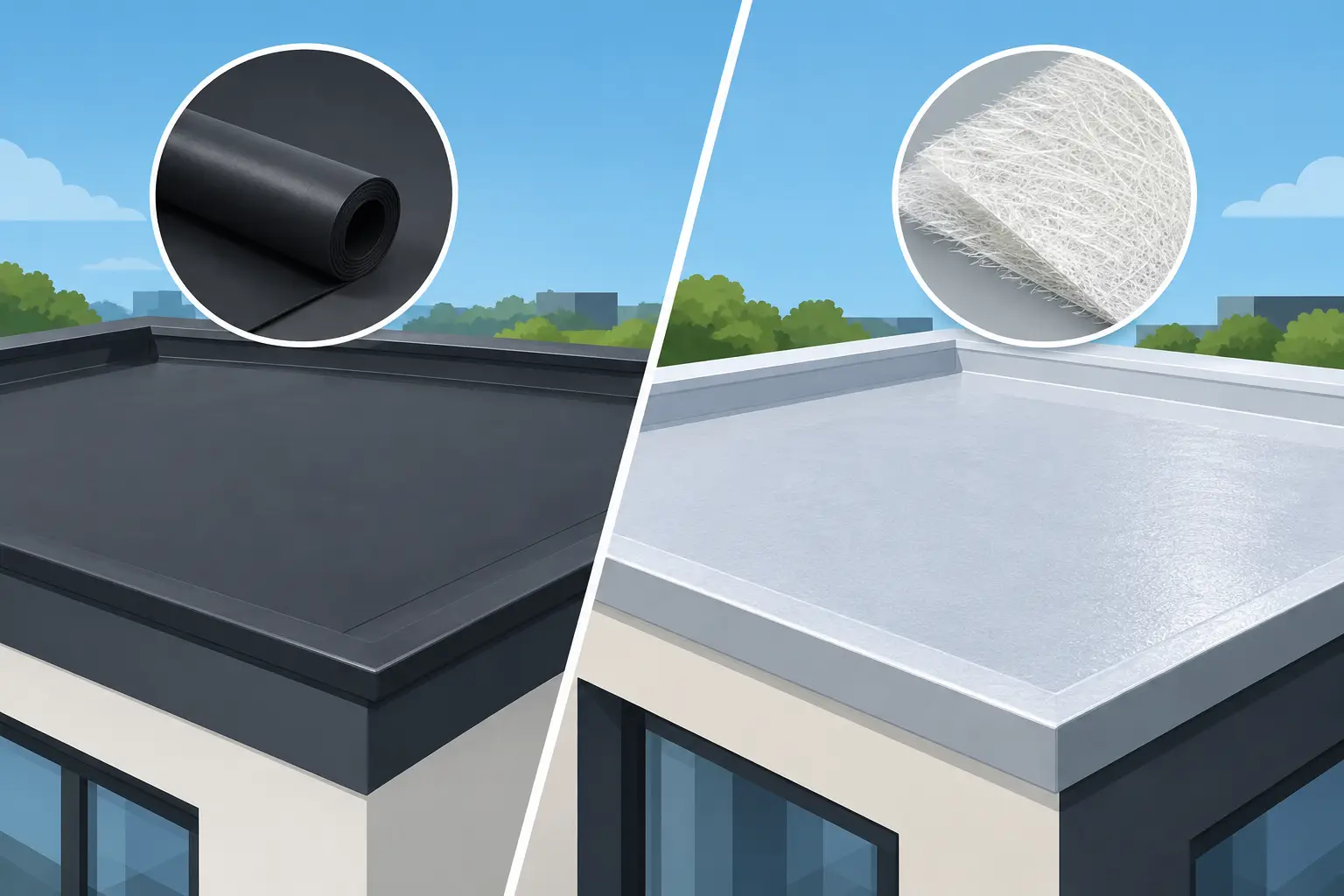
EPDM is a synthetic rubber membrane used on flat and low-pitched roofs. It is normally supplied in large sheets, allowing many domestic roofs to be covered with very few joins. The membrane is bonded to a prepared deck and finished carefully around the perimeter, outlets and any roof penetrations.

Its main advantage is flexibility. EPDM can move slightly as temperatures change and as the building settles, without becoming brittle. In a place such as Bolton, where rain, frost and strong winds can all test a roof over the course of a year, that flexibility is valuable.

A quality EPDM roof is usually black, although other finishes are available. It has a simple, neat appearance and is often a strong choice for garages, extensions, bay roofs, porches and larger flat roof areas. When installed as a complete system on a sound deck, an EPDM roof can commonly last 30 years or more.

What is fibreglass roofing?

Fibreglass roofing, often called GRP roofing, is made by applying resin and glass-reinforced matting over a prepared roof deck. Once it has cured, it forms a hard, continuous waterproof surface. A protective topcoat provides the final finish, usually in a clean grey colour.

Unlike EPDM, fibreglass is not a flexible sheet membrane. It creates a rigid covering, which can look particularly smart on a smaller roof with straightforward details. It is also a popular option where the roof needs a tough surface, such as a balcony, walkway or roof area that may occasionally be accessed for maintenance.

A professionally installed GRP roof can have a long life, often around 20 to 30 years or more. Its performance depends heavily on preparation, the quality of the roof deck, weather conditions during installation and correct detailing at edges and outlets.

EPDM versus fibreglass: the key differences

The biggest practical difference between EPDM and fibreglass is how they handle movement. EPDM is elastic and forgiving. Fibreglass is hard and durable, but less tolerant of movement beneath it. If a roof deck flexes, if the structure is older, or if there are temperature changes across a large area, EPDM may be the safer long-term option.

Fibreglass has the advantage of a firm, smooth finish. It can be a good fit for a small extension or garage roof where appearance matters and the deck can be kept stable. It is also easier to mould around certain shapes, such as upstands and awkward details, when completed by an experienced installer.

EPDM tends to be quicker to fit on many simple domestic roofs because large sheets reduce the number of seams. Fewer seams can mean fewer potential weak points, although every edge, outlet and join still needs proper attention. Fibreglass is applied in stages and needs suitable dry conditions while it cures. A spell of damp or cold weather can affect scheduling more than it would with some EPDM installations.

Neither material should be judged on surface appearance alone. The roof beneath it matters just as much. Rotten timber, trapped moisture, poor falls or failed guttering can shorten the life of any new covering. A reliable roofer will inspect the deck and drainage before recommending a system.

Cost: why like-for-like quotes matter

Fibreglass is sometimes presented as the lower-cost choice for a small roof, while EPDM can offer excellent value over a larger area. In reality, the total price depends on much more than the membrane or resin. Roof size, access, existing roof removal, timber repairs, insulation, edge trims, drainage outlets and the condition of surrounding brickwork all affect the quotation.

A low price can be tempting after a leak has caused stress, but it is worth checking what the quote includes. Is the old material being removed? Will damaged decking be replaced if found? Are new gutters or outlets needed to stop standing water? Is the work covered by a clear workmanship guarantee?

The most useful quote is one that explains the proposed system in plain English. Homeowners should be able to see what is being fitted, why it is suitable and what is included before work begins. That avoids surprises once the roof has been stripped back.

Repairs and future maintenance

Both EPDM and fibreglass can be repaired, but the approach differs. Small EPDM punctures or splits can often be repaired with compatible patches and adhesives, provided the area is clean and dry. Repairs should be completed with materials designed for that particular roofing system, rather than general sealant spread over the surface.

Fibreglass repairs usually involve preparing the damaged area, applying new resin and matting where needed, then restoring the topcoat. A good repair can blend in well, but the roof must be properly assessed first. Cracking around a roof edge may point to movement in the deck or a detail that needs correcting, not just a surface issue.

Whichever roof is chosen, basic maintenance helps it last. Keep outlets clear of leaves, check gutters after autumn and do not allow moss, plant growth or stored items to block drainage. A flat roof is designed to shed water slowly towards outlets, but persistent ponding should be investigated. Water that remains for days may indicate poor falls, blocked drainage or a problem with the structure below.

Which is better for a garage, extension or bay roof?

For a garage roof or a larger, simple rectangular area, EPDM is often an excellent choice. Its flexibility, long sheet lengths and dependable waterproofing make it well suited to broad roof spaces. It can also work very well around rooflights when the details are formed correctly.

For a smaller extension, porch or bay roof, fibreglass can provide a smart, hard-wearing finish. It is particularly worth considering where there are several changes of direction or where a rigid surface is preferred. However, the underlying deck must be sound and stable. A fibreglass roof should not be installed over a surface that is already moving or deteriorating.

If the roof is likely to be walked on regularly, the decision needs more care. Standard EPDM is not automatically a walking surface, and standard fibreglass can also suffer damage if used beyond its intended purpose. A balcony or terrace needs a specified system designed for foot traffic, including safe edge protection and suitable drainage.

The workmanship behind the material

The difference between a roof that lasts and one that leaks early is often in the details. Edges must be securely finished, outlets must be correctly formed and the roof needs the right falls so rainwater reaches the gutter or drain. Corners, skylights, pipes and adjoining walls are all areas where poor workmanship can allow water in.

Before choosing between EPDM and fibreglass, ask for an inspection rather than relying on a photo or a quick guess. An experienced roofer can check whether the deck is dry, whether insulation needs upgrading and whether the existing drainage is doing its job. They can also explain whether repair is realistic or whether replacement will be better value in the long run.

For homeowners across Bolton and the wider North West, Roofcraft Roofing Services provides straightforward advice, free quotations and practical recommendations based on the condition of the roof, not a one-size-fits-all sales pitch. The aim should always be a safe, watertight result that suits the property and budget.

A new flat roof is an investment in keeping the rest of the home dry. If you are unsure which material is right, arrange an assessment before the next small leak becomes a larger repair. Clear advice at the start can make the choice between EPDM and fibreglass far less stressful.
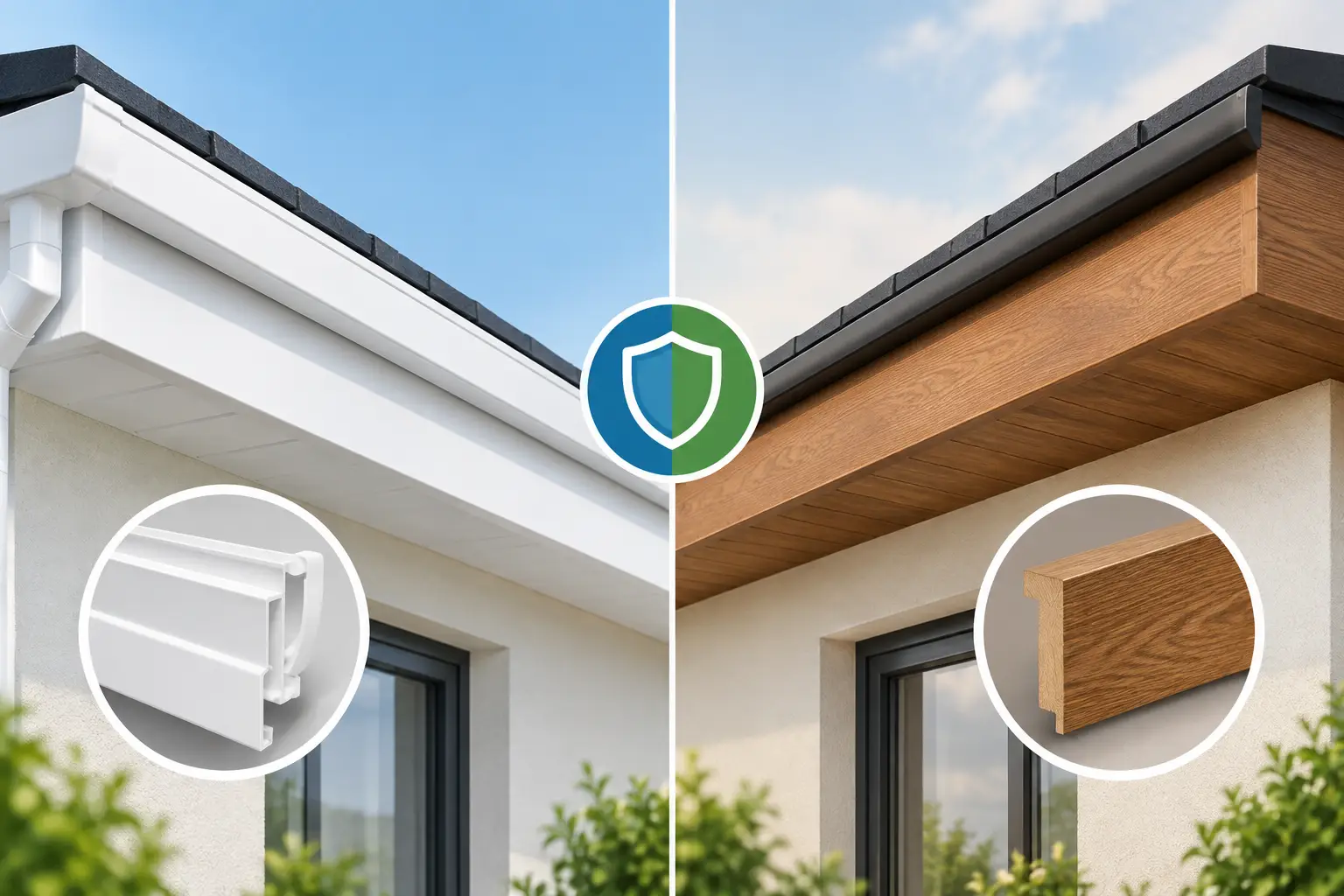

uPVC Versus Timber Fascias: Which Lasts?

A fascia board may sit just below the roofline, but it has a demanding job. It supports the guttering, protects the exposed ends of your roof timbers and helps keep rainwater out of places it should never reach. When deciding between uPVC versus timber fascias, the right answer depends on your property, budget, preferred look and how much maintenance you are prepared to take on.

For many homes in Bolton and across the North West, uPVC offers dependable protection with very little upkeep. Timber can still be an excellent choice, particularly on older or more traditional properties, but it needs proper care from the outset. The key is not simply choosing the material that looks best on day one. It is choosing one that will continue to protect your home through wet winters, wind and years of gutter use.

What fascias do for your roof

Fascias are the long horizontal boards fixed along the lower edge of a pitched roof. Your gutters are normally attached directly to them, so they carry the weight of rainwater, leaves and, at times, snow or ice. Together with soffits, they create a neat finish at the eaves while protecting the roof structure from weather exposure.

A failing fascia is more than a cosmetic problem. Rotten timber, loose fixings or an overflowing gutter can allow water into the eaves. Left unchecked, that moisture can affect rafters, insulation and internal ceilings. This is why a fascia replacement is often best treated as part of a wider check of the guttering, soffits and roof edge rather than as an isolated repair.

uPVC versus timber fascias: the main differences

The biggest difference is maintenance. uPVC is designed to withstand moisture without rotting, while timber is a natural material that needs regular protection against the weather. That does not automatically make timber the wrong choice. It simply means the long-term commitment is different.

Appearance and suitability for your property

Timber has a traditional character that is difficult to copy completely. On period homes, cottages and properties with original wooden detailing, a painted timber fascia can preserve the look of the building and may be the most appropriate option. It can also be shaped and finished to suit particular roof details.

Modern uPVC fascias are available in more than plain white. Black, anthracite grey, brown and woodgrain-effect finishes can complement many properties, from newer semis to traditional terraced homes. A well-fitted uPVC system gives a crisp, uniform appearance and can be matched with soffits and guttering for a tidier roofline.

If your home is in a conservation area or has restrictions relating to its appearance, it is sensible to check what is permitted before committing to a material. The right choice should respect the character of the property as well as provide lasting weather protection.

Maintenance requirements

This is where uPVC is usually the practical winner. It does not need painting, staining or sealing. A wash with warm soapy water once or twice a year is normally enough to remove dirt and keep it looking smart. Gutters should still be cleared regularly, as blocked gutters can cause problems regardless of the fascia material.

Timber needs closer attention. Paintwork or protective treatment must be kept in good condition, particularly on exposed elevations where wind-driven rain is common. Small cracks in paint can let water into the wood, leading to swelling, peeling, rot and eventually soft sections around gutter brackets.

A timber fascia that is maintained properly can last well, but missed maintenance often turns a straightforward repainting job into a larger replacement project. For busy households or landlords wanting a lower-maintenance solution, uPVC is often the more reassuring option.

Lifespan and weather resistance

Quality uPVC fascias fitted correctly can provide many years of reliable service. They are not affected by rot, and they cope well with the damp conditions that are familiar across Greater Manchester and the North West. Their performance still relies on correct installation, secure guttering and good roof drainage.

Timber can also last for decades, but its lifespan is much more dependent on maintenance and exposure. A sheltered, well-painted board may remain sound for a long time. One that is regularly soaked by a leaking gutter or hidden behind neglected paintwork can deteriorate far sooner.

It is worth remembering that a fascia can look acceptable from the ground while the timber behind the gutter is already weakened. A close inspection is the only reliable way to judge its condition.

Cost now and over time

Initial prices vary according to access, property size, roof height, existing damage and the type of finish selected. Timber can sometimes appear competitive as a material, but the full cost should include preparation, priming, painting and future redecoration. If rotten boards have affected the roof edge, additional repairs may also be needed.

uPVC often represents better value over its working life because it requires less ongoing treatment. However, the cheapest quote is not always the best value. Thin boards, unsuitable fixings or fitting new uPVC over decayed timber can create problems that are hidden from view. The existing fascia and rafter ends should be assessed properly before replacement work begins.

When uPVC is likely to be the best choice

uPVC suits most modern homes and homeowners who want a clean, durable roofline without adding regular painting to their to-do list. It is particularly useful where gutters have previously overflowed or where the existing timber has started to rot.

It can also be a sensible choice when replacing the complete system at once. New fascias, ventilated soffits and correctly sized guttering work together to improve drainage and airflow at the eaves. This gives the roofline a consistent finish and reduces the risk of patch repairs becoming a repeated expense.

For homes with dark window frames, roof tiles or cladding, anthracite grey or black uPVC can offer a more contemporary finish than standard white. The best colour is usually one that works with the rest of the exterior rather than following a short-lived trend.

When timber is worth considering

Timber remains a good option where authenticity matters. If your property has original timber bargeboards, sash windows or detailed eaves, replacing a failing wooden fascia with carefully prepared timber may keep the building looking right.

It is also worth considering where a particular profile or size is needed that standard uPVC boards cannot achieve. The decision should come with a realistic plan for maintenance. Regular inspections, prompt gutter repairs and repainting before the coating fails will make a significant difference to the board’s life.

Choosing timber does not mean accepting poor durability. It means accepting that the finish is part of the protection. The quality of the timber, paint system and installation all matter.

Do not cover up a problem

One common concern with fascia replacement is whether new uPVC can be fitted over old timber. In some cases, capping boards may be used where the existing timber is completely sound and dry. But covering boards that are rotten, soft or poorly fixed only hides the issue. The new guttering may then be attached to a weakened structure, allowing the problem to continue behind the surface.

A proper assessment should check the fascia, soffits, rafter ends, gutter falls and roof covering near the eaves. Signs that need attention include peeling paint, sagging gutters, water marks on soffits, birds or insects entering gaps, and sections that feel soft when tested safely. If water has already entered the roof space, the repair may involve more than the visible boards.

Choose the material, then choose the fitting carefully

Whether you select uPVC or timber, good workmanship is what turns the material into a reliable roofline. Fascias need secure fixing, straight alignment and correctly supported guttering. Soffit ventilation may also be needed to help prevent condensation in the roof space, particularly where insulation has been upgraded.

Ask for a clear explanation of what will be removed, what condition the timber beneath is in, and whether gutters and downpipes are included. A trustworthy roofer will explain any hidden damage found during the work before proceeding, rather than leaving you with an unexpected problem at the end.

For most households, uPVC provides the lower-maintenance, cost-effective answer. For a character property, well-maintained timber may be the better visual fit. If you are unsure what is behind your existing boards, a straightforward roofline inspection and free quotation from Roofcraft Roofing Services can give you a clear, honest starting point before the next spell of bad weather tests the eaves.

Fibreglass Versus Felt Roofing – Which Is Best?

A flat roof rarely fails all at once. It usually starts with a small blister, a split at the edge, pooling water after rain or a stain appearing on the ceiling below. When replacement is needed, the main question for many homeowners is fibreglass versus felt roofing. Both systems can protect a home well, but they suit different roofs, budgets and long-term plans.

For a garage, extension, porch or dormer roof in Bolton and the North West, the right answer is not simply the cheapest material or the one with the longest advertised lifespan. The condition of the existing roof, drainage, insulation, access and quality of fitting all matter just as much.

Fibreglass versus felt roofing at a glance

Fibreglass roofing, often called GRP roofing, is a liquid-applied system reinforced with glass fibres. Once cured, it forms a hard, continuous waterproof surface with no joints across the main roof area. It is normally finished with a coloured topcoat, commonly grey.

Felt roofing usually refers to modern modified bitumen felt. This is very different from older-style traditional felt that many people remember cracking and lifting. A quality modern felt roof is built up in layers, with sealed laps and a tough mineral finish. Depending on the system, it may be applied using a torch, cold adhesive or self-adhesive materials.

Neither is automatically better in every situation. Fibreglass is often chosen for a clean, long-lasting finish on smaller domestic flat roofs. Modern felt remains a reliable and cost-effective option, particularly where the roof shape, detailing or budget makes it the more sensible choice.

When fibreglass is the stronger choice

A professionally installed fibreglass roof is a popular option for extensions, garages and flat-roofed bays. Its biggest advantage is the seamless finish. With fewer joins on the main roof surface, there are fewer potential weak points for water to find.

GRP is also hard-wearing and can cope well with normal foot traffic for occasional maintenance, such as clearing gutters or checking a rooflight. Its smooth finish gives a smart appearance, which can be particularly appealing where the roof is visible from an upstairs window.

For homeowners planning to stay in their property for many years, fibreglass can represent good value over time. A well-designed and correctly fitted system can often last 20 to 30 years or more. That said, this depends on proper preparation. The roof deck must be sound, dry and suitably ventilated where required. If it is laid over damp or unstable timber, even a premium material can develop problems.

Fibreglass installation is weather-sensitive. Resin and topcoat need suitable dry conditions and temperatures to cure correctly. This does not mean it cannot be fitted in the colder months, but the roofer must plan the work carefully rather than rush it between showers.

Fibreglass works best on simple roof areas

GRP is especially effective on straightforward roofs with clean edges, good falls and sensible drainage. It can be formed neatly around upstands and rooflights, but complicated details need careful workmanship. A hard fibreglass surface also has less flexibility than felt, so movement in an unsuitable roof deck can lead to cracking over time.

Why modern felt roofing still has a place

Modern felt roofing has moved on considerably. A properly installed, multi-layer felt system is durable, weather-resistant and far more dependable than the old single-layer coverings that gave felt a poor reputation.

Felt is often the practical choice where a homeowner needs a dependable replacement at a more affordable initial cost. It can also be well suited to roofs with awkward junctions, changes in level or details that benefit from the material’s flexibility.

Unlike fibreglass, certain felt systems can be installed across a wider range of weather conditions, although a dry, safe working environment is always preferable. This can be useful when a roof is deteriorating and needs attention promptly before a minor leak becomes damaged plaster, insulation or timber.

A good-quality felt roof commonly provides around 15 to 25 years of service, and sometimes longer with the right system and maintenance. The exact lifespan will vary with exposure, drainage, installation quality and whether the roof is regularly inspected.

Felt can be simpler to repair locally

Every roof can be damaged by falling debris, poor drainage or work carried out by other trades. Felt is often easier to repair in a localised area because a roofer can cut back the affected section and bond in compatible material. Repairs to fibreglass are also possible, but colour matching and achieving a tidy finish can require more care, particularly on an older roof.

Cost is about more than the surface covering

It is understandable to compare quotes on price, but the material is only one part of the job. The cost of a flat roof replacement may include removing the old covering, replacing rotten decking, improving insulation, fitting new fascias or guttering, creating proper falls and safely disposing of waste.

Fibreglass usually costs more upfront than felt, mainly because of the materials and preparation involved. On a suitable roof, its longer expected service life may make that extra spend worthwhile. Felt can offer a lower entry cost while still giving many years of reliable protection when fitted correctly.

Be cautious with a quote that is noticeably cheaper than every other estimate. It may leave out important work such as stripping back failed layers, renewing damaged boards or finishing edges properly. Water often enters at trims, upstands, outlets and wall junctions, not through the middle of a roof field. Those details should never be treated as an afterthought.

Drainage and insulation can decide the outcome

The covering cannot fix a roof with standing water. A flat roof should have a slight fall towards a suitable outlet or gutter, so rainwater can drain away. Small amounts of temporary surface water may occur after heavy rain, but regular ponding places extra strain on any system and can shorten its life.

If the roof is being replaced over a heated room, it is also sensible to assess the insulation at the same time. Many older extensions have limited insulation, leading to cold rooms and condensation issues. A warm-roof build-up places insulation above the roof deck and can improve thermal performance, but it changes the height and detailing of the roof. This needs to be planned properly around doors, flashing and drainage.

This is one reason a site inspection matters. Two garages may look identical from the garden, yet one may need only a new covering while the other needs new decking, better falls and upgraded insulation.

How to choose between fibreglass and felt

Choose fibreglass when you want a clean, durable finish for a relatively simple flat roof, are happy to invest more upfront and the roof structure is suitable. It is a strong choice for homeowners who value longevity and a seamless surface.

Choose modern felt when you need a proven, flexible roof covering with a more modest initial cost, or where the roof has complex details that are better suited to a layered bitumen system. It is not a second-best option when a quality specification and careful installation are used.

The best choice is the one that deals with the actual condition of your roof rather than covering over the symptoms. A roof with damp boards, failed edging or poor drainage needs those faults corrected whichever material is selected.

Questions worth asking before work starts

Before agreeing to a flat roof replacement, ask what system is being proposed and why it suits your roof. You should also understand whether the old roof will be removed, whether the timber deck will be checked, how water will drain away and what guarantee is provided for materials and workmanship.

It is also worth asking how the property will be protected during the work. Professional roofers should explain access, safe working methods, expected timescales and what happens if poor weather interrupts the job. Clear answers early on help prevent surprises later.

At Roofcraft Roofing Services, we assess the whole roof rather than pushing one material for every job. The aim is to give homeowners a clear, fair recommendation based on the roof in front of us, with the work explained in plain English.

If your flat roof is leaking, bubbling or nearing the end of its life, do not wait for water to reach the rooms below. A prompt inspection can establish whether a targeted repair is still sensible or whether a properly planned replacement will give your home the better long-term protection.

Roofing Quotation Checklist UK for Homeowners

A leaking ceiling after heavy rain, a slipped slate spotted from the driveway, or a flat roof that has reached the end of its life can make any quote feel urgent. That is exactly when a clear roofing quotation checklist UK homeowners can use is most valuable. A good quotation should tell you what is wrong, what will be done, what it will cost and who is responsible for putting things right if issues appear later.

The lowest number on the page is not always the best value. Roofing work protects the structure of your home, and vague wording can leave room for misunderstandings, unexpected extras or work that does not solve the real problem. Take a little time to compare like for like before agreeing to anything.

Roofing quotation checklist UK homeowners should use

1. Check the contractor’s details are clear

A proper quotation should show the roofing company’s name, contact number, address or service area, and the date the quotation was prepared. This may sound basic, but it gives you a clear point of contact before, during and after the work.

For larger jobs, such as a full re-roof or replacement flat roof, ask who will manage the work day to day. A local, established team should be happy to explain who is attending, how long the job is expected to take and how you can raise a question if needed.

2. Make sure the problem has been identified

A quote should not simply say “repair roof” with one total price. It should explain the fault found during the inspection, whether that is cracked leadwork, worn felt, broken tiles, failed flashing, blocked gutters or storm damage around the ridge.

This matters because water often travels before it appears indoors. The stain on a bedroom ceiling may be below the point where rain is entering. If a roofer has only priced to replace the visible damaged tile without investigating the surrounding area, the leak could return. For a repair quotation, look for a short but plain-English diagnosis alongside the proposed remedy.

3. Look for a full description of the work

The scope of work is the heart of the quotation. You should be able to understand what is being repaired, removed, replaced or installed without needing to guess.

For example, a clear quote for a pitched roof repair might state the number and type of tiles or slates to be replaced, repairs to battens if required, renewal of lead flashing, and re-bedding or pointing of ridge tiles. A flat-roof quotation should identify the covering system, the areas being renewed, the condition of the decking beneath, edge trims, outlets and any necessary insulation.

Be cautious with phrases such as “repair as required” if there is no explanation of what is included. They may be reasonable for a small emergency repair where hidden damage cannot be confirmed until access is gained, but the quotation should say how any additional work will be discussed and approved.

4. Confirm the materials and finish

Roofing materials vary significantly in lifespan, appearance and price. The quotation should say what products or material types are being used, particularly for replacement work. It should also state whether new materials will match the existing roof as closely as practical.

Ask about the trade-off if you are comparing options. A cheaper felt covering may suit a temporary solution or an outbuilding, while a higher-quality system may offer better long-term value on your main home. Likewise, reclaimed slates may help retain the character of an older property, but their availability can affect cost and timing.

Where colour and style matter, especially for tiles, fascias, soffits and guttering, make sure this is written down. “Black guttering” and “white guttering” are not interchangeable once the work is booked.

5. Check whether access, scaffolding and waste are included

Access can be a major part of roofing costs, especially on taller properties, terraced homes with limited side access, or jobs close to conservatories and extensions. Your quote should make clear whether scaffolding, ladders, safety equipment and pavement licences where needed are included.

It should also state who will remove old tiles, felt, timber and other waste from site. A tidy job is more than a courtesy. Loose debris, nails and damaged materials should be cleared safely, and your property should be left in a respectable condition when the work is complete.

6. Understand the price and possible extras

The quotation should show the total cost and make it clear whether VAT applies. If you are comparing more than one quote, check this carefully. One price may look lower simply because it does not include VAT or access costs.

For planned work, fixed pricing gives homeowners greater certainty. However, roofs can conceal rotten timber, damaged decking or poor previous repairs that are not visible from ground level. A trustworthy contractor will explain that possibility upfront rather than presenting a surprise bill afterwards.

Ask how variations are handled. The sensible approach is that any newly discovered work is photographed or shown to you where possible, priced separately and agreed before it goes ahead, except where immediate action is needed to make the roof safe in an emergency.

7. Ask about timescales and weather arrangements

A quotation should give an expected start date or booking window, along with an estimated duration. No responsible roofer can promise dry weather in the North West, so allow for conditions to affect the programme. What matters is clear communication if rain, high winds or unsafe conditions cause a delay.

For a repair that is letting in water, ask whether a temporary weatherproofing measure can be put in place while materials are ordered or a full repair is scheduled. A fast response can prevent a manageable roofing issue becoming damage to ceilings, electrics and insulation.

8. Check guarantees, insurance and aftercare

Ask what guarantee is offered on workmanship and whether the materials carry a separate manufacturer guarantee. These are different things. A material guarantee may not cover faulty fitting, while a workmanship guarantee should cover problems caused by the installation itself, subject to its stated terms.

You can also ask whether the contractor has appropriate public liability insurance. There is no need to turn the conversation into an interrogation, but a professional roofing company should understand why homeowners want reassurance. Keep a copy of the quotation, invoice, guarantee and any photographs supplied after completion.

9. See whether building regulations may apply

Some roof work may need to meet building regulations, particularly where a large proportion of the roof covering is replaced, structural changes are made, or insulation is upgraded. Work involving chimneys, roof windows and significant alterations can also need additional consideration.

The requirements depend on the property and the work involved. A good contractor will explain whether notification, certification or approval may be needed rather than leaving you to discover it afterwards. Do not assume a job is exempt simply because it is described as a replacement rather than a new roof.

10. Read the payment terms before you accept

The payment schedule should be straightforward. Be wary of pressure to pay the full amount upfront for routine work, particularly if you have not dealt with the company before. Deposits can be appropriate for substantial projects where materials must be ordered, but the amount and reason should be clear.

For larger jobs, staged payments linked to visible progress can be fair to both homeowner and contractor. Make sure you know when the final payment is due and whether it follows a final check of the completed work.

How to compare two roofing quotations fairly

Put both quotations side by side and compare the scope first, then the price. If one quote includes scaffolding, disposal, leadwork, replacement battens and a guarantee while the other says only “roof repair”, they are not comparable quotes even if they relate to the same leak.

It is also worth considering the urgency of the problem. A contractor who can attend quickly, make the area safe and explain the permanent repair may be the better choice than a cheaper quote with a long wait. That does not mean accepting rushed work or unclear costs. It means weighing price alongside safety, communication and the risk of further damage.

For full roof replacements, ask for any assumptions to be recorded. Is the quote based on the existing roof structure being sound? Are chimney repairs, gutters, fascias or insulation included? Are old materials being removed completely? Clear answers protect everyone involved.

Questions worth asking before you say yes

Before accepting, ask the roofer to confirm what is included, what could change the price, how they will protect your property, and what guarantee you will receive. If something is unclear, request that it is added to the quotation in writing. A reliable contractor will not make you feel awkward for asking sensible questions about your home.

Roofcraft Roofing Services provides free quotations and explains the recommended work in plain English, so homeowners can make a decision without being pressured. Whether the job is a small repair or a replacement roof, the right quote should leave you feeling informed rather than uncertain.

A roof is not the place to rely on assumptions. Choose the team that takes the time to inspect properly, puts the work in writing and stays accountable once the ladders have gone.

How to Read a Local Roofing Review Properly

A leaking roof rarely gives you the luxury of time. Whether water is coming through the ceiling after heavy rain, a ridge tile has fallen into the garden, or an ageing flat roof is finally showing its limits, you need to know who you can trust. A local roofing review can give you a useful picture of a contractor before you make the call, but only when you know what to look for.

The best reviews do more than say a roofer was “great” or “friendly”. They show how the company handled the problem, communicated with the customer and left the property once the work was complete. For homeowners in Bolton and across the North West, those details can make the difference between a quick, lasting repair and an expensive headache.

What a local roofing review should tell you

Roofing is not a job most people arrange often. That is why it is easy to focus on a star rating and overlook the details that matter when your home is exposed to the weather. A high rating is encouraging, but the written comments reveal whether a roofer is organised, fair and dependable when it counts.

Look for reviews that explain the type of work completed. A customer describing a repaired leak, replacement slates, renewed leadwork, guttering repairs or a new flat roof gives you far more confidence than a short, vague comment. Specific feedback suggests the reviewer has had real work carried out and is reporting on their actual experience.

It is also worth paying attention to timing. When a roof is leaking, fast attendance matters. Reviews that mention a prompt inspection, a clear diagnosis and work being scheduled without unnecessary delay are particularly valuable. A reliable roofer will not always be able to complete a larger project the same day, especially in poor weather or when materials need ordering. They should, however, explain the situation honestly and take sensible steps to protect the property where urgent action is needed.

Look beyond the overall rating

An excellent overall rating is a good starting point, not the whole decision. Read a range of recent reviews and look for consistent themes. If several homeowners mention punctuality, tidy work, helpful advice and fair pricing, that pattern is more meaningful than one glowing comment alone.

The strongest feedback often describes how a problem was handled. Perhaps the roofer found the source of a leak that others had missed, explained why a repair was needed, or returned to check that everything was sound after heavy rain. Roofing problems can be difficult to diagnose from ground level, so clear communication is a sign of a contractor who takes responsibility rather than simply rushing through a job.

Be realistic, too. Even good local firms can receive the occasional less favourable review. What matters is whether the feedback raises a genuine concern and, where there is a response, whether the company deals with it professionally. No business can control every circumstance, but it can control how respectfully and fairly it treats customers.

The details that build confidence

When reading reviews, homeowners should notice whether people mention these practical points:

  • A free, clear quotation before work begins
  • Photographs or a straightforward explanation of the problem
  • Polite communication and agreed arrival times
  • Safe, tidy working around the home and garden
  • A repair that has held up after rain and wind
  • No pressure to pay for work that was not needed

These are not extras. They are signs of a contractor who understands that roofing work affects your safety, your home and your peace of mind.

Why local experience matters in roofing

A local roofing contractor depends on its reputation. Unlike a company that appears after a storm and disappears once the work is paid for, an established local team has neighbours, families and repeat customers to answer to. That local accountability matters if you need advice, aftercare or a return visit.

Bolton and the wider North West see their share of driving rain, high winds and cold winter weather. Roofs here need to cope with repeated wet conditions, blocked gutters, loose tiles and ageing materials. A roofer who works in the area every week is familiar with the issues local homeowners commonly face and can recommend a practical solution rather than a one-size-fits-all fix.

Local does not automatically mean best, of course. You should still check that the company has suitable experience for your particular job. A small repair to a slipped slate requires a different approach from a full re-roof, a flat roof replacement or chimney-related work. Reviews should help you see whether a roofer has successfully completed jobs similar to yours.

Watch for reviews that mention price clearly

Most homeowners want affordable roofing work, but the cheapest quote is not always the best value. A very low price can sometimes mean rushed labour, poor-quality materials or important parts of the repair being left out. On the other hand, a high figure without a proper explanation is no better.

Useful reviews often mention that the quote was fair, that the price was explained and that there were no surprises at the end. This does not mean every job will cost the same. The condition of the roof, access, materials, scaffolding and the extent of hidden damage can all affect the final cost.

A trustworthy roofer should talk you through the options. In some cases, a targeted repair is sensible and cost-effective. In others, repeated repairs to a worn-out roof may only delay the inevitable. The right answer depends on the condition of the roof, your budget and how long you plan to remain in the property. Reviews that praise honest advice are often worth their weight in gold.

Reviews matter most after an emergency

Storm damage and sudden leaks can make homeowners feel pressured into accepting the first offer of help. If water is entering the house, protecting the property comes first. An emergency roofer should be able to make the area safe, carry out a temporary repair where appropriate and advise what needs to happen next.

Once the immediate risk is under control, take a moment to read recent customer feedback. Look for comments about emergency call-outs, response times and how the contractor dealt with a stressful situation. A calm, professional manner is particularly important when a family is worried about damage to ceilings, electrics or belongings.

Roofcraft Roofing Services is built around this kind of local responsibility, with more than 40 years of experience and emergency availability for homeowners who need prompt, straightforward help. The aim should always be to assess the issue properly, explain the work in plain English and leave the customer knowing where they stand.

How to use reviews alongside a quotation

Reviews are valuable, but they should support rather than replace a proper conversation. Once you have found a local roofer with consistent positive feedback, ask for an inspection and quotation. Use that meeting to judge whether the service matches what past customers have described.

A good contractor will listen to your concerns, inspect the relevant area and explain the proposed work without confusing jargon. Ask what is causing the problem, what repair is recommended and whether there are alternatives. If the work is significant, ask what materials will be used, how long it should take and how the site will be kept safe and tidy.

You should never feel pushed into agreeing on the spot. Urgent repairs are different where immediate protection is needed, but even then, clear communication remains essential. A dependable roofer will explain what must be done now and what can wait until a full repair is planned.

Trust the pattern, then trust the conversation

The most useful reviews create a pattern: fast response, clear advice, fair prices, tidy workmanship and customers who would use the roofer again. When that pattern is backed up by a professional visit and a straightforward quote, you are in a far stronger position to choose with confidence.

Your roof protects everything beneath it. Take a little time to read what local homeowners say, ask sensible questions and choose a team that treats your property with the care it deserves.

What a Roofing Workmanship Guarantee Covers

A leak returning shortly after a repair is frustrating enough. Finding out that nobody will take responsibility for putting it right is worse. That is why a roofing workmanship guarantee matters. It is your written reassurance that, if a fault is caused by the way the work was carried out, the contractor will return and correct it within an agreed period.

For homeowners in Bolton and across the North West, a guarantee should never be a vague promise made at the doorstep. It should be clear, fair and backed by a roofing company you can contact when you need them. Knowing what to expect before work starts helps you compare quotations properly and protects your home long after the scaffolding has come down.

What is a roofing workmanship guarantee?

A roofing workmanship guarantee covers the quality of the roofer’s labour. In plain English, it applies if a problem develops because the roof, flashing, tiles, felt, guttering or other agreed element was installed or repaired incorrectly.

For example, if new lead flashing has not been fitted securely and allows water to enter, that may be a workmanship issue. If tiles have been fixed incorrectly and come loose in normal conditions, the same may apply. The contractor should inspect the fault and, where it falls within the guarantee terms, put the work right without charging again for the covered repair.

It is not the same as a material warranty. A manufacturer may offer a warranty on a roof covering, membrane, insulation product or roof window. That relates to a defect in the product itself, usually subject to the manufacturer’s conditions. A workmanship guarantee relates to the installation. Good roofing needs both suitable materials and careful fitting, but they are separate protections.

What a roofing workmanship guarantee should include

The best guarantees are specific. Before accepting a quotation, ask for the guarantee in writing and make sure it identifies the property, the work completed and the date the cover begins. It should state how long the workmanship is covered and explain how to report a problem.

The document should also describe the work it applies to. A full re-roof, replacement flat roof and new guttering installation may each have different scopes and guarantee periods. If only a small section has been repaired, the cover will normally apply to that repair rather than every part of an older roof.

A clear guarantee should set out exclusions too. This is not a warning sign on its own. Sensible exclusions prevent confusion later. No contractor can guarantee against damage caused by extreme storms, falling branches, vandalism, subsidence, poor ventilation outside the agreed work, or deterioration in parts of the roof they were not asked to repair.

The key question is whether the terms are reasonable and explained before the job starts. If a roofer cannot say what is covered, for how long, or what happens if an issue appears, do not rely on a verbal assurance.

The length depends on the job

There is no single correct length for every roofing project. A minor repair may carry a shorter workmanship guarantee because it is localised work on an existing roof with unknown age and condition. A new roof or complete replacement will generally justify longer cover because the contractor has control over more of the installation.

The right period depends on the roof type, the materials selected and what was discovered during the survey. For instance, a flat roof system has different details and expected performance from a pitched slate roof. A reputable roofer will explain the proposed guarantee rather than offering an impressive-sounding number with no detail behind it.

Longer is not automatically better if the contractor is unlikely to be trading, difficult to contact or unclear about exclusions. A realistic written guarantee from an established local firm with a track record of aftercare can be more valuable than an overblown promise from a company that disappears once payment has cleared.

What is not usually covered?

A workmanship guarantee is valuable, but it is not a home insurance policy or a maintenance plan. Most guarantees will not cover new damage caused by severe weather, accidental impact or a third party working on the roof after the original job.

They also cannot usually cover faults caused by sections left untouched at the customer’s request. A roofer may repair a leak around a chimney, for example, but point out that ageing ridge tiles or a worn valley elsewhere could require attention later. This should be noted on the quotation or completion paperwork so there is no misunderstanding.

Normal wear and tear is another consideration. Gutters can block with leaves, mortar can age, and roof surfaces need occasional checks, particularly after high winds. Keeping gutters clear and dealing with small defects promptly gives your roof the best chance of lasting well. It also makes it easier to identify whether a later issue is related to the completed work or is a separate problem.

Questions to ask before agreeing to the work

A free quotation is the right time to discuss the guarantee, not after the roof is finished. Ask whether the guarantee covers labour only or includes any materials, whether it is supplied in writing, and exactly which parts of the job are included.

You should also ask what happens if a fault is reported. Will the company inspect it? How quickly will they respond, particularly if water is entering the property? Is there a clear phone number for aftercare? These practical details tell you much more about the service than a headline guarantee period alone.

If you are comparing quotations, check that each contractor is pricing the same work. One quote may include replacement battens, leadwork, ventilation or waste removal while another only covers the visible roof surface. The cheaper quote can become the more expensive option if essential work has been left out. A detailed scope, sensible materials and a workmanship guarantee give you a fair basis for comparison.

Keep your paperwork somewhere safe

Once the work is complete, keep the quotation, invoice, guarantee certificate and any photographs or product paperwork together. Take a few clear photographs of the finished roof yourself if it is safe to do so from ground level. These records can help if you sell the property, make an insurance enquiry or need to report a concern later.

Check whether the guarantee can be transferred to a new owner if you expect to move. Some are transferable, while others are not, or may require the contractor to be notified. Do not assume this point either way.

It is also worth reading the final paperwork before settling the balance. Make sure it matches the work you agreed, including any changes made after the roof was opened up. Hidden rot, damaged timbers and old roof layers can sometimes only be fully assessed once work begins. An honest contractor will explain the issue, provide costs clearly and confirm any change to the guarantee coverage.

Why local aftercare matters

A guarantee is only as useful as the people standing behind it. Roofing work is exposed to rain, frost, wind and changing temperatures, so a responsible contractor should be prepared to answer questions after completion. Fast communication matters especially when a homeowner is worried about a possible leak.

Roofcraft Roofing Services has built its reputation on straightforward advice, tidy work and being available when customers need help. With more than 40 years of experience, the team understands that reassurance does not come from complicated wording. It comes from explaining the job honestly, completing it safely and taking responsibility for the work carried out.

If you notice a problem during the guarantee period, report it promptly and provide your paperwork. Avoid allowing another contractor to alter the affected area before the original roofer has had a chance to inspect it, unless there is an immediate safety risk or an emergency that needs urgent action. In that situation, take photographs where possible and keep details of any temporary work completed.

A good roofing workmanship guarantee should leave you with confidence, not fine print to worry about. Choose a roofer who explains the work before it begins, puts the terms in writing and remains easy to reach once the job is done. That is the kind of protection that helps a roof feel like a lasting improvement to your home, rather than another uncertainty to manage.

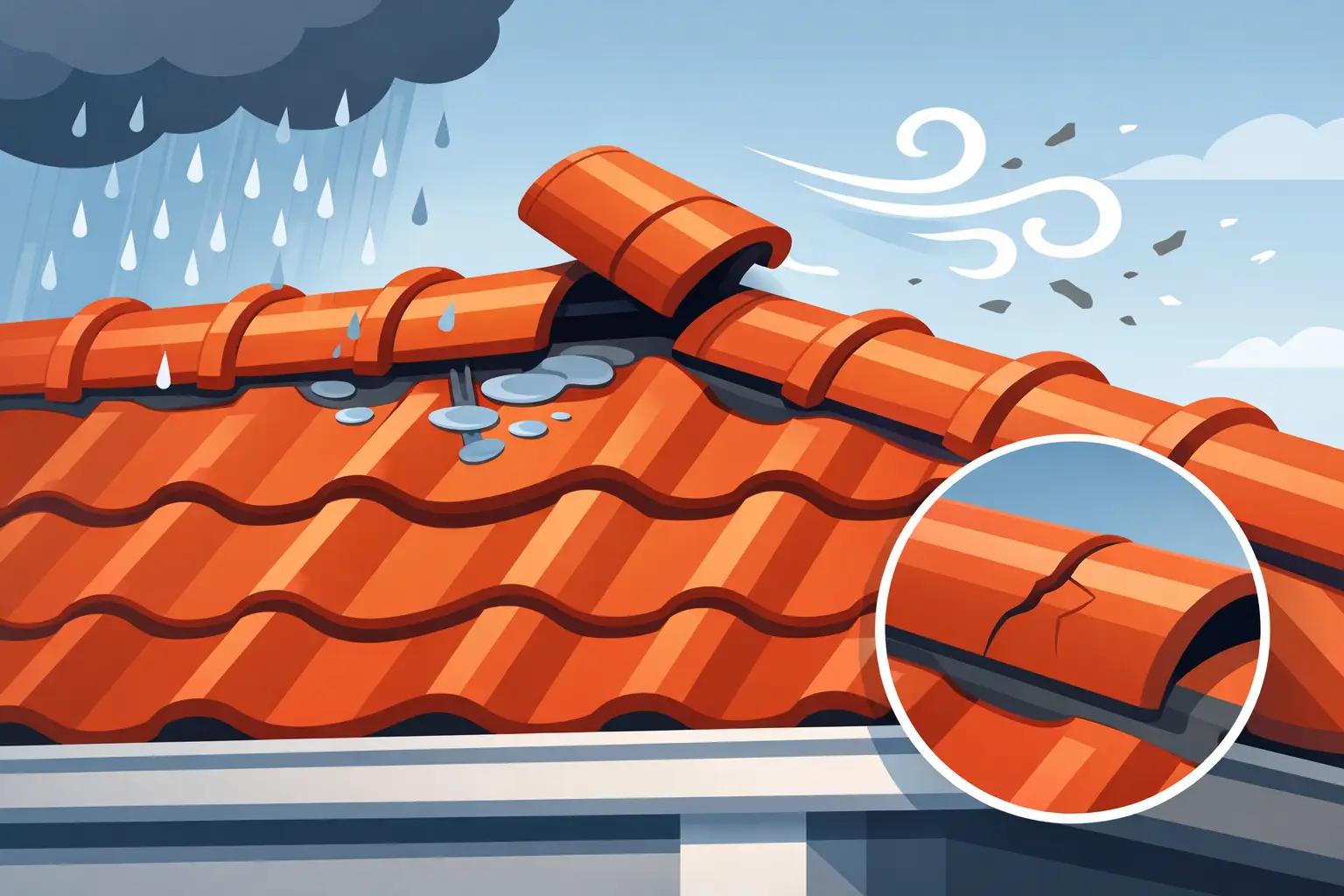
How to Fix Loose Ridge Tiles Safely

A ridge tile moving in the wind may look like a small issue from ground level, but it can quickly become a safety risk. To fix loose ridge tiles properly, the cause needs to be identified, the roof made safe and the repair carried out with materials suited to the rest of the roof. Waiting for the next storm can turn one loose tile into broken tiles, water damage or debris falling into a garden, driveway or public pavement.

For homeowners in Bolton and across the North West, this is one repair that is best dealt with promptly. Ridge tiles sit at the highest point of a pitched roof, where they take the full force of wind and rain. A secure ridge line helps hold the roof together and keeps water out of the roof space below.

Why loose ridge tiles need prompt attention

Ridge tiles cover the junction where the two slopes of a roof meet. Traditionally, they are fixed in place with mortar, although some newer roofs use a dry ridge system with mechanical fixings and ventilation. Either way, they have an important job: keeping the roof ridge weatherproof and stable.

When mortar begins to crack or break away, a tile can shift slightly at first. Wind then gets underneath it, rain finds its way into gaps and nearby tiles may be put under extra strain. In severe weather, a loose ridge tile can come away completely. That is a danger to anyone below and can leave a large exposed section at the top of the roof.

It is also worth remembering that the visible tile is not always the full problem. Failing mortar along the ridge can be a sign of general age-related wear, movement in the roof structure or storm damage. A proper inspection makes sure the repair addresses what is actually happening, rather than simply covering over a crack.

Signs your ridge tiles may be failing

You do not need to climb a ladder to spot every roofing issue. In fact, it is safer to keep both feet on the ground and look for changes from a distance. A ridge line that appears uneven, gaps beneath tiles, crumbling mortar on the ground, or a tile that seems to sit proud of the others all deserve attention.

Inside the property, check the loft after heavy rain if it is safe to do so. Damp insulation, staining on timbers, drips or a musty smell can point to water entering through the roof, although the exact entry point may be elsewhere. A roofer will assess the full area around the ridge, including adjacent tiles, underfelt, flashings and chimney details where relevant.

You may also hear a knocking, rattling or scraping sound during high winds. That can be caused by a moving ridge tile, but it could also be loose slates, gutters or other roof components. It is sensible to arrange an assessment rather than guessing.

What causes loose ridge tiles?

The most common cause is simply ageing mortar. Years of frost, rain, heat, wind and natural movement can make traditional bedding mortar brittle. Once it loses its grip, the ridge tile no longer has the support it needs.

Storms can speed up this process. Strong gusts may loosen a tile that was already weakened, while driving rain gets into fine cracks and expands them when temperatures drop. On older roofs, previous repairs can also be a factor. Mortar that has been applied incorrectly, mixed poorly or patched onto an unstable base may not last as it should.

Occasionally, the issue is more localised. A single tile could have been damaged by impact, nearby chimney work, a fallen branch or a previous contractor walking on the roof. The right repair depends on whether one tile has moved, a section of ridge bedding has failed, or the entire ridge line is nearing the end of its serviceable life.

Can you fix loose ridge tiles yourself?

This is not generally a sensible DIY repair. Ridge work takes place at the highest and most exposed part of the roof, often on a sloping surface. Access equipment, fall protection and safe working practices are essential. A tile may also be less secure than it looks, making it unsafe to lean a ladder against the roof or work nearby.

There is a quality issue as well as a safety issue. Simply pushing a tile back into position or applying sealant around it will not provide a dependable repair. The loose tile must be carefully removed where necessary, the old failed material cleared away and the ridge rebuilt or refixed correctly. If the surrounding mortar is also crumbling, a one-tile patch may only delay the next failure.

If a tile is visibly hanging, has fallen, or looks likely to come down, keep people, vehicles and pets away from the area beneath it. Do not try to catch or retrieve a tile from the roof. Where there is an immediate risk, arranging an emergency roofer is the safest course of action.

How professionals fix loose ridge tiles

A professional repair begins with a close inspection from safe access. The roofer will check the ridge tiles individually, assess the condition of the bedding mortar or mechanical fixings, and look at the tiles immediately below. This helps establish whether a local repair is appropriate or whether more extensive work is needed.

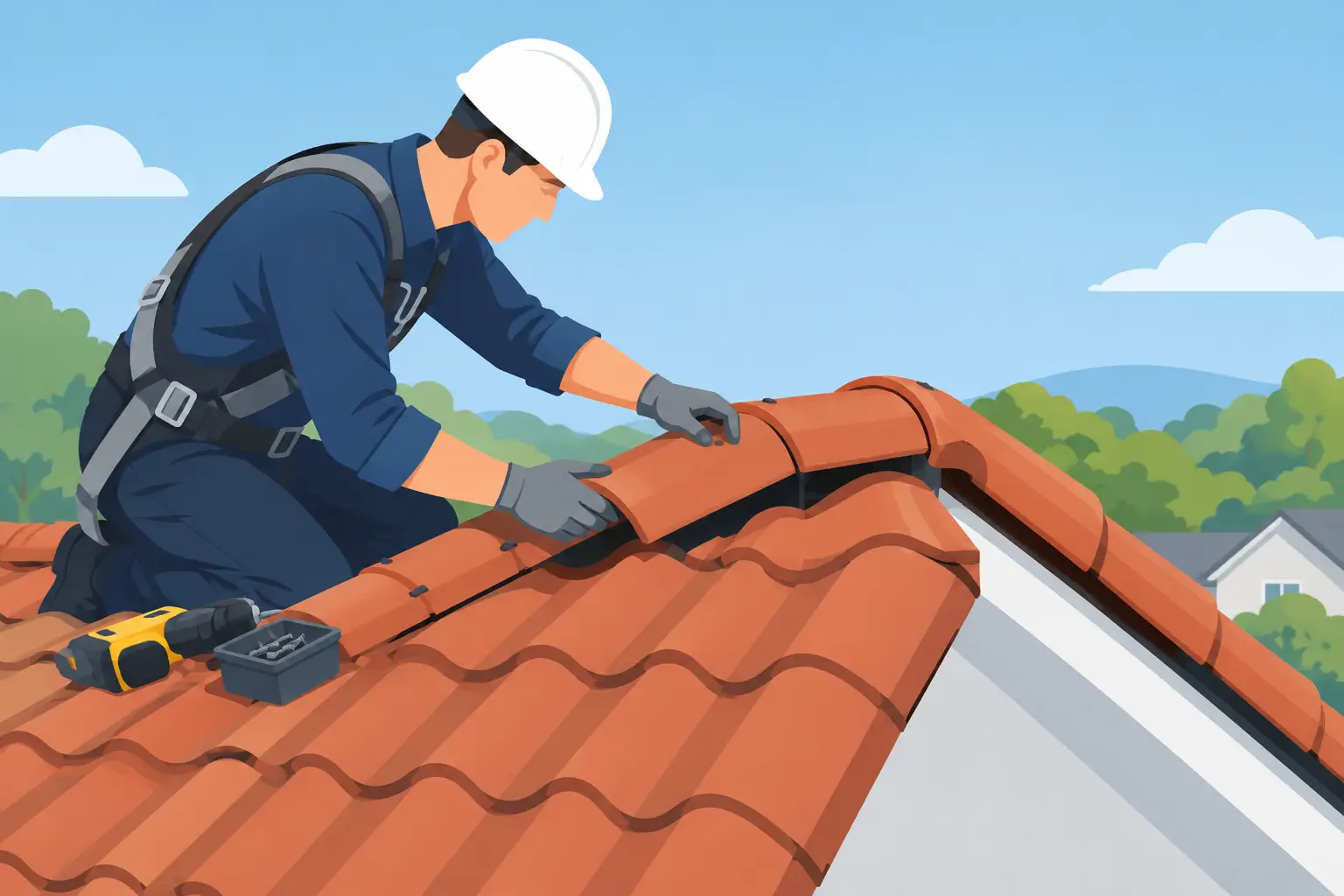
For a traditional mortar-bedded ridge, damaged or loose tiles are lifted carefully. Old loose mortar is removed back to a sound surface, and replacement or existing tiles are reset using suitable roofing mortar. The work needs a clean, firm bed and proper pointing to shed water. Matching the existing tile profile and colour where replacement tiles are needed also helps retain the appearance of the roof.

Where the ridge has widespread cracking, rebedding or repointing a longer section may be better value than repeated small repairs. This gives the roofer the chance to secure the whole affected area and identify any hidden defects underneath.

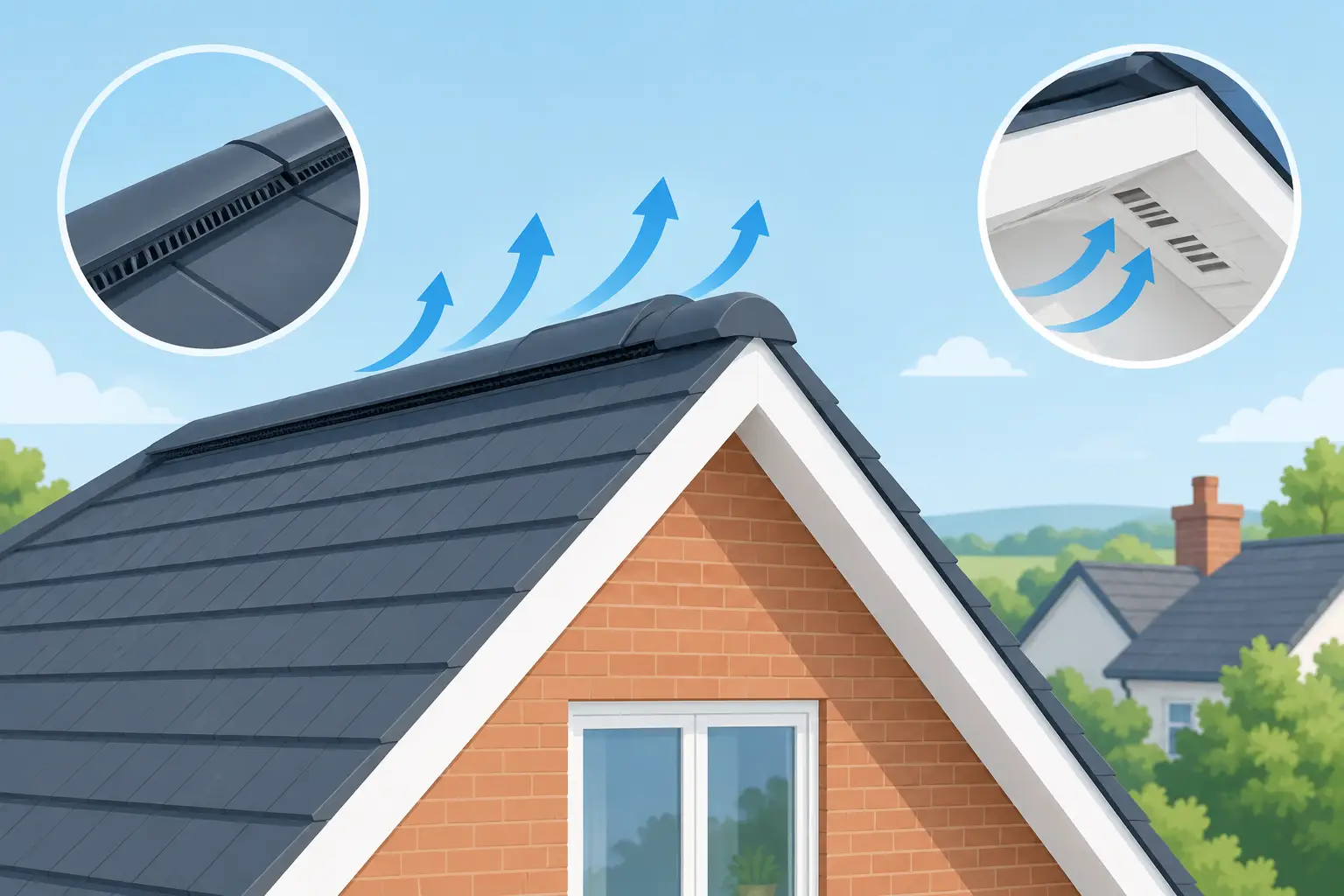
A dry ridge system is repaired differently. Tiles are held by ridge unions, brackets, clamps and screws rather than relying solely on mortar. Loose fittings can sometimes be tightened or replaced, but corroded fixings, missing end caps or damaged ridge rolls may mean part of the system needs renewing. Dry ridge systems can offer good ventilation and flexibility, but only when installed correctly and checked after severe weather.

Repair or replace: what is the right choice?

There is no single answer because the condition of the roof matters. If one ridge tile has come loose and the rest of the ridge is sound, a targeted repair may be all that is needed. This is often the most affordable option and can prevent damage spreading.

If mortar is failing along most of the ridge, several tiles are loose, or the roof covering beneath is worn, a more thorough repair may make better long-term sense. Repeated patching can become false economy if every strong spell of weather exposes another weak spot.

A clear quotation should explain the recommended work, why it is needed and whether there are alternatives. Homeowners should be wary of anyone who gives a firm diagnosis from the ground without checking the ridge safely, or who pressures them into major work without evidence. A reliable roofer will talk through the condition of the roof in plain English and give you space to make an informed decision.

What to do after wind or storm damage

After high winds, inspect the roof from ground level only. Look for fallen mortar, tiles in the garden, missing ridge pieces or visible gaps at the roof peak. If there is debris near a path or entrance, keep the area clear until it can be made safe.

If water is entering the loft, move stored belongings away from the affected area where possible and use a container to catch drips. Avoid touching electrical fittings or using the loft if water is near cables. Temporary protection may be possible in an emergency, but it should be fitted by a qualified roofing team using safe access.

Roofcraft Roofing Services provides prompt roofing assessments for homeowners in Bolton and the wider North West, including emergency call-outs when storm damage cannot wait. With over 40 years of experience, the focus is on identifying the problem quickly, explaining the work clearly and leaving the site tidy once the repair is complete.

Preventing future ridge tile problems

No roof is maintenance-free, particularly in exposed North West weather. A visual check after storms and before winter can help you spot changes early. Keeping gutters clear also matters, as overflowing water can soak roof edges and mask other issues that need attention.

Most importantly, act when you first see cracked mortar or movement at the ridge. A timely repair is usually simpler, safer and less disruptive than dealing with a fallen tile or a leak that has spread into the roof space. If something at the top of your roof does not look right, trusting your instincts and arranging a professional inspection can protect both your home and the people around it.

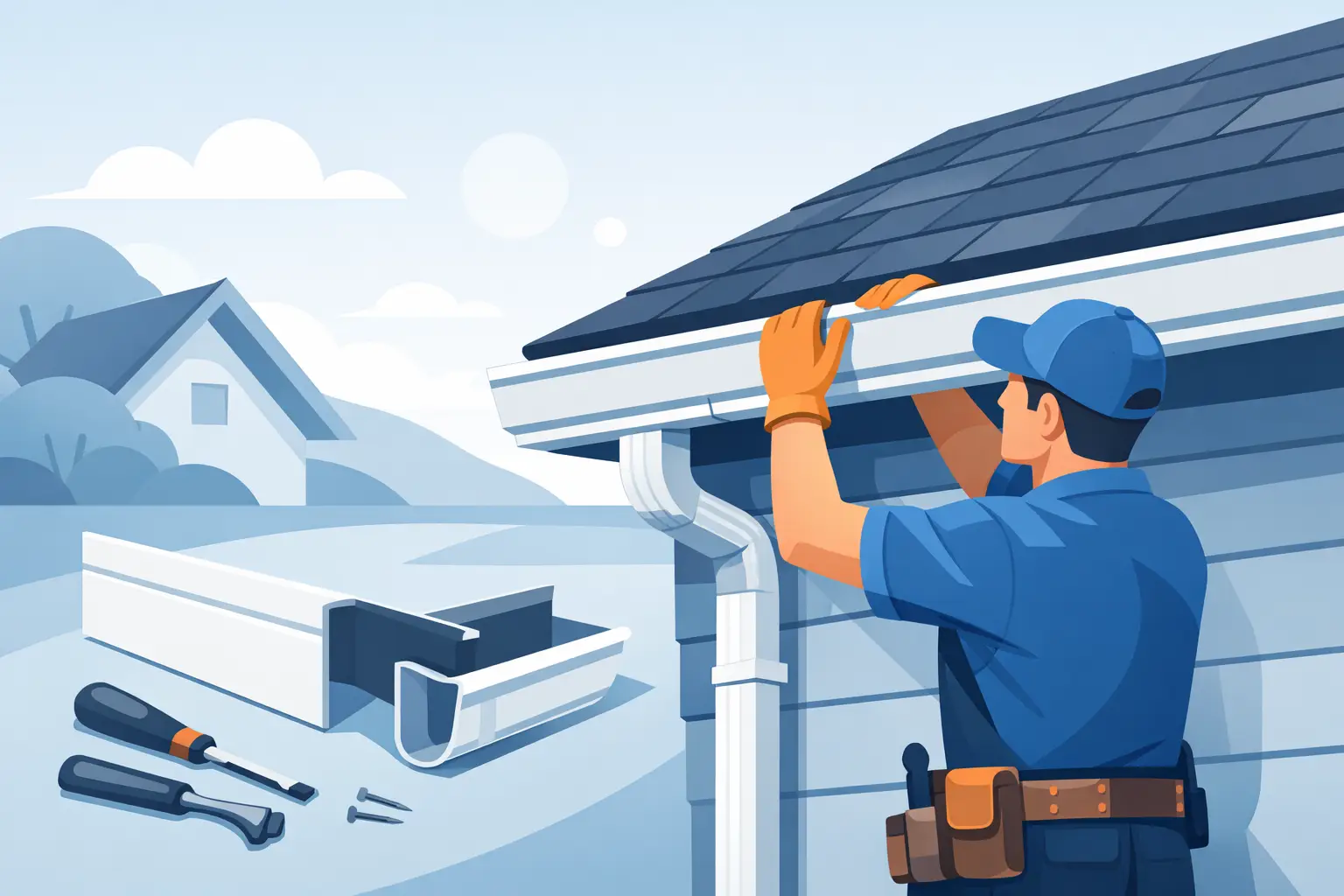
How to Clear Blocked Rain Gutters Safely at Home

A gutter overflowing over the front door or pouring water down a wall is more than an annoyance. Knowing how to clear blocked rain gutters can prevent damp patches, damaged brickwork and water finding its way into places it should not be. In Bolton and across the North West, frequent rain, falling leaves and moss from pitched roofs can fill a gutter surprisingly quickly.

Some blockages are straightforward to deal with from ground level or by safely reaching a low section of guttering. Others point to a bigger issue, such as loose brackets, a failed joint or water backing up beneath roof tiles. The key is to deal with the cause safely rather than simply moving the debris along.

Signs your gutters need attention

The most obvious sign is water spilling over the gutter edge during rain. Watch where it happens. Overflow at one point may mean a local build-up of leaves or moss, while water overflowing along a longer run can indicate that the gutter has sagged and is no longer falling towards the outlet.

You may also notice staining on fascias, green growth around gutter joints, damp marks on an external wall, or puddles forming close to the house after a shower. A downpipe that seems dry while the gutter above it is full is usually blocked at the outlet or somewhere within the pipe.

Do not ignore gutters that appear to be pulling away from the roofline. Wet debris is heavy, and a blocked gutter can put extra strain on brackets and fascias. Left alone, a small clearance job can become a repair to the guttering, fascia boards or roof edge.

Before you clear blocked rain gutters

Choose a dry, still day with good daylight. Never attempt gutter work during rain, high winds, frost or when the ground is slippery. Water makes roofs, paths and ladders far more hazardous, and it is difficult to see whether the system is draining properly while you are trying to maintain your footing.

Use a sound ladder on firm, level ground and have another adult hold it where possible. The ladder should be positioned so you can work without stretching sideways. Climbing onto a roof, leaning too far from a ladder, or balancing across a conservatory roof is not a sensible shortcut. If the gutter is high, access is awkward, or you do not feel fully confident, arrange professional help.

Wear gloves, sturdy footwear and eye protection. Gutter debris is often a mix of rotting leaves, moss, bird nesting material and sharp grit from roof tiles. A bucket hooked securely to the ladder can help keep the area tidy, but do not overload it or leave it where it could fall.

A safe method for clearing gutter debris

Start at the end furthest from the downpipe. Remove loose leaves, moss and silt by hand or with a small gutter scoop, placing it into your bucket rather than dropping it onto paths, patios or garden beds. Work steadily towards the outlet so you do not compact material into the downpipe.

Once the main debris has been removed, check the gutter channel for standing water and packed silt. A small amount of dirt is normal, but thick sludge prevents water from reaching the outlet and encourages moss growth. Clear this by hand where you can reach safely.

Next, test the flow with a hose from ground level if possible, or by carefully running a modest amount of water into the gutter section. Avoid a powerful jet directed beneath tiles or against gutter joints. You are testing drainage, not pressure-washing the roof edge.

Water should travel cleanly to the outlet and down the pipe. If it pools in the gutter, the fall may be wrong, the gutter may have sagged, or the outlet may still be restricted. If it runs over a joint, inspect for a displaced seal, cracked fitting or loose bracket rather than relying on sealant as a permanent answer.

Clearing a blocked downpipe

A downpipe blockage often sits near the top outlet, at a bend, or where the pipe meets the drain. First clear any material around the gutter outlet. If water still will not pass through, try flushing the downpipe from the top with a hose on a gentle setting.

If the blockage remains, a drain rod used carefully from the lower end may loosen it. Take care not to force joints apart or damage older plastic pipework. Never use excessive pressure, and do not dismantle high-level pipework while on a ladder.

Where a downpipe discharges into a gully, lift the grate only if it is safe to do so and remove visible leaves and silt. If the gully is full, smells unpleasant or repeatedly backs up, the problem may be in the drainage rather than the gutter itself.

Check for damage while the gutter is empty

Clearing is the ideal time to look closely at the condition of the system. Small faults are much easier to put right before the next spell of heavy rain. Look for cracked gutter lengths, leaking unions, brackets that have come loose, faded or warped sections, and areas where the gutter has dropped.

Also inspect the fascia line from the ground. Flaking paint, soft-looking timber, dark staining or gaps behind the gutter can be signs that water has been overflowing for some time. On properties with uPVC fascias and soffits, staining around joints may still show where a leak needs attention.

It is worth looking up at the roof too. Heavy moss shedding into gutters may mean the roof needs assessing, particularly if tiles are worn or broken. A gutter full of grit can sometimes be a sign of ageing roof coverings, as tile surfaces gradually weather. It does not automatically mean a new roof is required, but it should not be dismissed.

When gutter cleaning becomes a roofing job

Not every blocked gutter needs a roofer, but some situations are best left to an experienced team. Call for help if the gutter is above a conservatory, over a steep roof, close to overhead cables, or difficult to reach from safe ground. The same applies if brackets are loose, fascias are damaged, tiles have slipped, or water seems to be entering the roof space.

Repeated blockages also deserve investigation. Clearing leaves every autumn is normal on some streets, especially near mature trees. Having to clear the same outlet after every shower is not. There may be a poor fall, an incorrectly positioned downpipe, a crushed section of guttering or a hidden obstruction.

At Roofcraft Roofing Services, we regularly find that what looks like a simple overflow has a practical underlying cause. A prompt inspection can establish whether the answer is a gutter clean, a local repair, replacement brackets or attention to the roof edge. Homeowners should receive a clear explanation of the work needed before deciding how to proceed.

How often should gutters be cleaned?

For most homes, a check twice a year is sensible: once after autumn leaf fall and again in spring. Properties beneath trees, homes near woodland, and roofs that collect moss may need more frequent checks. It is also wise to inspect gutters after strong winds, as twigs and slipped debris can gather around outlets.

Gutter guards can reduce the amount of larger debris entering the system, but they are not maintenance-free. Fine silt and moss can still settle on top or pass through, and some guards make cleaning more awkward. They can be worthwhile in the right setting, but only if they are fitted securely and the gutter remains accessible for inspection.

A clear gutter should quietly do its job in the next downpour: carry water away from your roof, walls and foundations without spilling over the edge. If you cannot safely check that yourself, arranging help before the wet weather arrives is a simple way to protect your home and avoid a more costly repair later.

How to Seal a Leaking Roof Valley Properly

A roof valley carries a large volume of rainwater, so even a small fault can quickly become a damp patch on a bedroom ceiling or water running into the loft. If you need to seal a leaking roof valley, the priority is finding the true entry point rather than simply covering the visible gap with sealant. A quick patch can sometimes hold back water temporarily, but a lasting repair depends on the valley material, the condition of the surrounding tiles or slates, and how water is being directed off the roof.

For homeowners in Bolton and across the North West, this is particularly relevant after prolonged rain, strong winds or winter frost. Valleys are one of the hardest-working parts of any pitched roof. When they fail, water can travel beneath the roof covering before it becomes visible indoors, making the source of the leak less obvious than it first appears.

Why roof valleys start leaking

A roof valley is the channel where two roof slopes meet. It may be formed from lead, fibreglass, felt, GRP, cement or a modern dry valley system. Its job is simple: collect water from both sides of the roof and send it safely into the gutter. The conditions it works under, however, are demanding.

Leaves, moss and broken mortar can block the channel and force water underneath tiles. In other cases, a slipped slate, cracked tile or loose fixing beside the valley allows rain to bypass the lining. Older lead valleys can split around folds or fixings, while cement mortar may crack and pull away over time. On felt or flat-roof junctions, ageing material can become brittle and lose its waterproof seal.

It is also possible for the apparent valley leak to be caused by a problem further up the roof. Damaged flashing around a chimney, a broken tile above the valley, or overflowing gutters can all send water towards the same area. This is why a proper inspection matters. Treating the wrong section may hide the issue briefly while moisture continues to damage timbers, insulation and plasterboard.

How to seal a leaking roof valley safely

Working at height is never a job to take lightly. Roof surfaces can be slippery even when they look dry, and a valley concentrates rainwater, moss and debris in one place. If there is active water coming through the ceiling, move belongings away from the affected area, place a container underneath the drip and switch off electricity to that room if water is close to light fittings or wiring. Do not climb onto the roof during rain, wind, frost or darkness.

From ground level, you may be able to identify a blocked valley or a tile that has visibly moved. Clearing loose leaves from a gutter with safe access can help if water is backing up at the eaves. However, avoid poking tools up the roof or trying to clear a valley from a ladder. It is easy to dislodge tiles, damage a lining or lose balance.

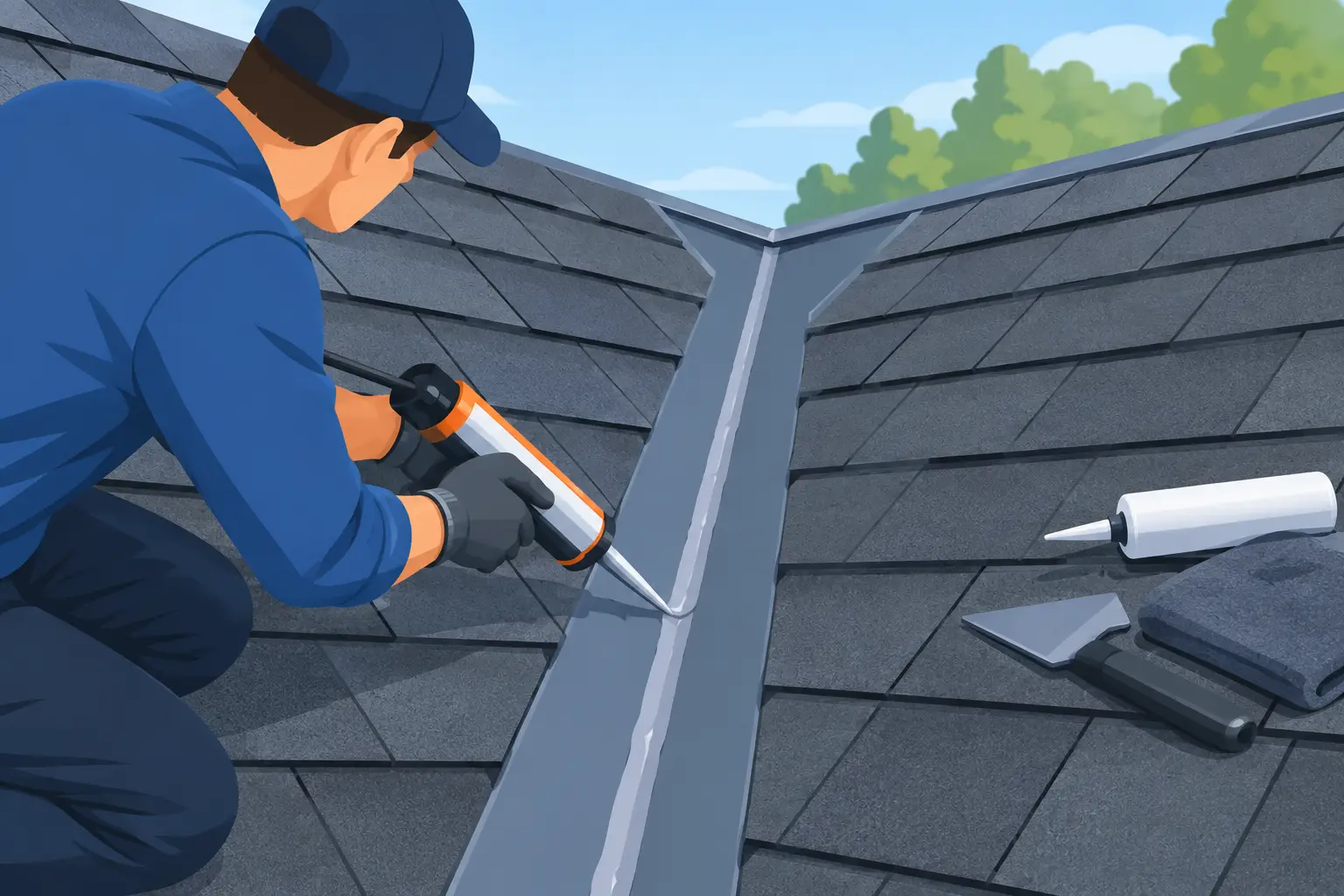
For a small, accessible defect, roofing sealant may be used as a short-term measure, but only on a clean, dry and suitable surface. It is not a replacement for sound leadwork, correctly fitted tiles or a secure valley lining. Sealant applied over wet moss, crumbling mortar or a split that is still moving with temperature changes is unlikely to last. It can also make a later repair more difficult if it traps water or conceals corrosion beneath.

A reliable repair usually involves lifting the surrounding roof covering carefully, removing debris and failed materials, then inspecting the full length of the valley. The roofer can assess whether individual tiles need replacing, whether lead needs dressing or renewing, or whether the valley lining has reached the end of its serviceable life. The tiles or slates must then be refitted with the correct overlap so rain is directed into the channel rather than behind it.

When sealant is enough and when it is not

There is a place for sealant in roofing repairs. A high-quality compatible product can help finish a small detail, secure a localised edge or provide short-term protection while more extensive work is arranged. It may be appropriate where the underlying valley is sound and the issue is confined to a minor crack or a failed joint.

It is not the right answer if lead has split significantly, mortar is loose along the valley, the lining is torn, or tiles are broken and slipping into the channel. Nor will it solve a valley that is too narrow, badly installed or repeatedly filling with moss and debris. In these cases, continuing to reseal the area can cost more over time than repairing it correctly.

A replacement may sound like the larger option, but it can be the more sensible one when the materials around the valley are worn. A new lead valley can provide a long-lasting traditional finish when fitted properly. Dry valley systems can be a practical alternative on suitable tiled roofs, reducing reliance on mortar and allowing controlled drainage. The best choice depends on the age and style of the roof, the existing covering and the condition of adjoining areas.

Signs the roof valley needs urgent attention

Some leaks develop slowly, but others need prompt action to prevent wider damage. A brown ceiling stain that grows after rainfall, damp loft insulation, peeling paint near the roof line or a musty smell in an upstairs room can all point to water getting beneath the roof covering.

Outside, look for displaced tiles beside the valley, visible gaps in mortar, vegetation growing in the channel, sagging guttering, or water spilling over the edge during rain. A leak that only appears in heavy wind-driven rain can be especially difficult to trace. This often suggests that water is being forced under a tile overlap or through a weak flashing detail rather than simply overflowing from above.

If you can see daylight through the roof from inside the loft, or water is dripping near electrical fittings, treat the problem as urgent. A temporary cover from a professional roofer may be needed before permanent repairs can be completed. Acting early protects more than the roof covering. Water can affect timber rafters, ceiling finishes, insulation and possessions below.

What a professional valley repair should include

A good roofing repair should begin with a clear assessment, not a guess from the driveway. The roofer should inspect the valley, surrounding tiles or slates, guttering and nearby flashings to establish how water is entering. Where safe and necessary, they may lift sections of the roof covering to inspect the hidden lining and battens underneath.

You should receive a straightforward explanation of what has failed, what work is recommended and whether there are options to consider. For example, replacing one broken tile and repairing a small lead split may be enough on an otherwise sound roof. If several areas are worn and the lining is failing along its length, renewing the valley may offer better value and peace of mind.

The completed work should leave the valley clear, properly supported and ready to shed water into the gutter. Tiles need to sit securely without blocking the channel, and any replacement materials must suit the existing roof. Tidy workmanship matters too. Loose debris left in a valley or gutter can create another blockage shortly after the repair.

At Roofcraft Roofing Services, our family-run team can inspect roof valley leaks, explain the practical options in plain English and provide a free quotation before work begins. With more than 40 years of experience and emergency availability when water is getting in, we focus on repairs that deal with the cause rather than covering it over.

Preventing another leaking valley

No roof is completely maintenance-free, but simple checks can reduce the likelihood of a valley problem becoming an emergency. After storms, look from the ground for slipped tiles and overflowing gutters. Keep gutters clear so water can leave the roof freely, and arrange safe removal of heavy moss or debris before it builds up in valleys.

It is also sensible to have ageing leadwork, chimneys and roof junctions checked before winter. Small defects are usually easier to repair when the roof is dry and access is straightforward. Waiting until water reaches the ceiling can turn a local repair into a wider internal restoration job.

A leaking valley does not always mean a new roof is needed, but it does deserve a careful inspection. The safest course is to protect the inside of your home, avoid risky DIY work at height and arrange a clear diagnosis while the fault is still manageable.

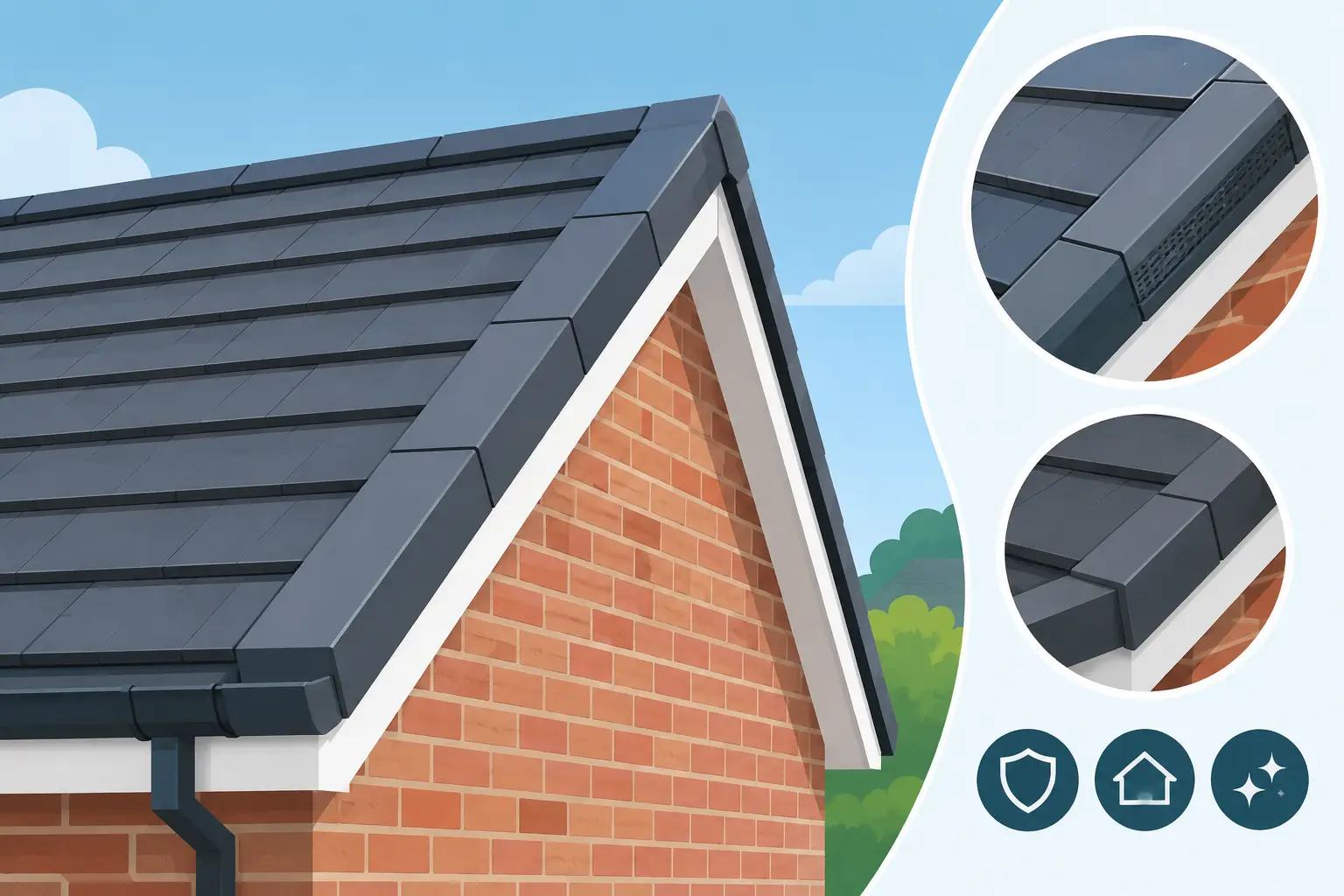
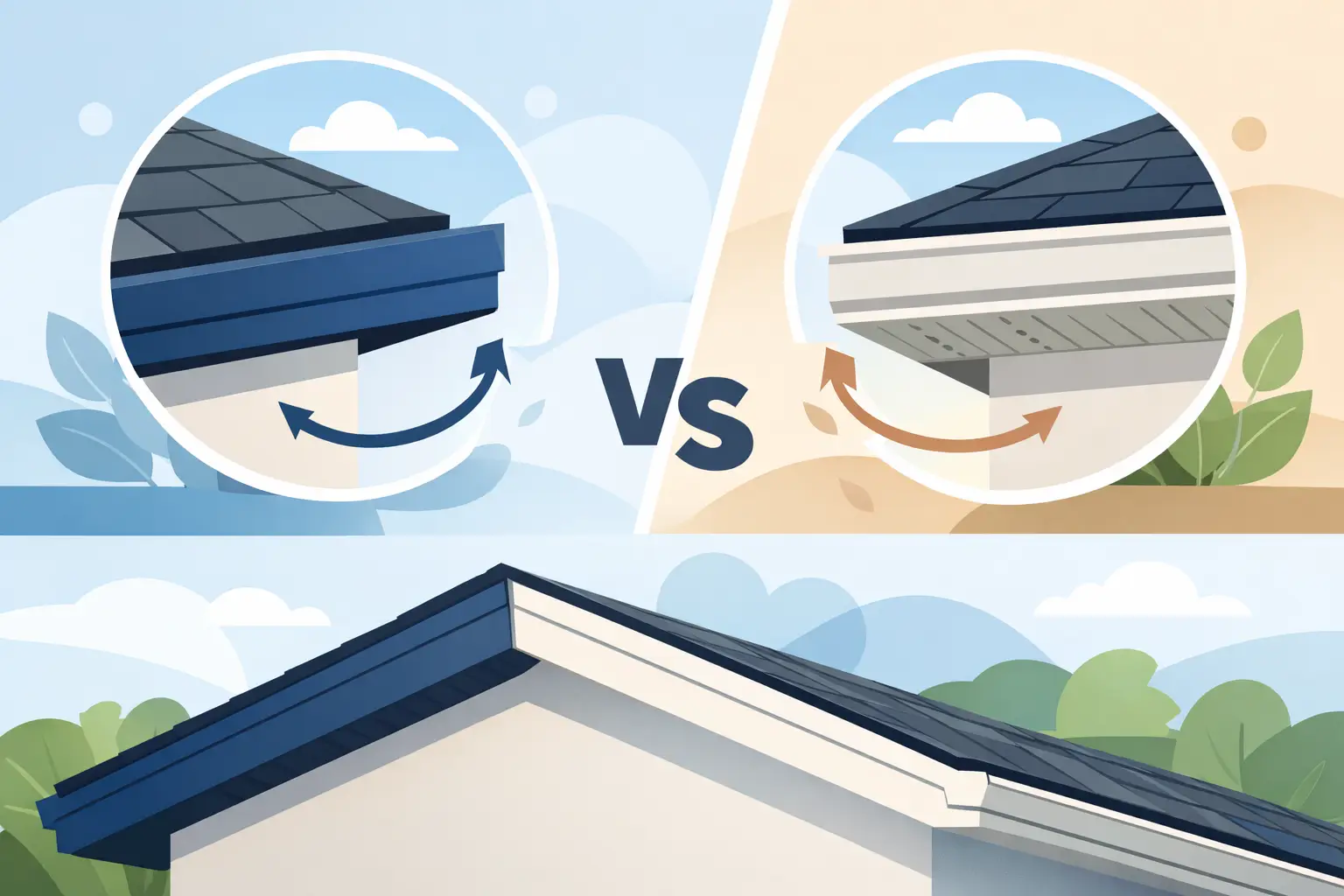
Dry Verge Guide for a Safer, Tidier Roof

A loose or crumbling roof edge can quickly become more than a cosmetic problem. This dry verge guide explains what dry verge systems do, how to spot when yours needs attention and why a secure roof verge matters in Bolton and across the North West, where wind and driving rain can put every part of a roof to the test.

The verge is the exposed edge of a pitched roof, usually found at the gable ends of a property. Traditionally, the tiles or slates along this edge were held in place with mortar. A dry verge system uses purpose-made interlocking caps, mechanically fixed to the roof structure, to give those edges a neat and secure finish without relying on mortar alone.

What Is a Dry Verge System?

A dry verge system consists of durable caps that fit over the edge tiles on a pitched roof. They are normally made from weather-resistant uPVC and are fixed along the gable edge to hold the tiles firmly in position. The result is a clean, uniform line that helps protect the roof from wind, rain and pest access.

Unlike a mortar verge, which can crack and fall away over time, dry verge caps are designed to move slightly with normal changes in temperature without losing their grip. That makes them a popular option for roof replacements, new-build properties and older homes where the existing verge mortar is failing.

Dry verge systems are available in several colours, including black, brown, grey and terracotta-style finishes. The right choice should complement the roof tiles and the character of the property rather than stand out for the wrong reasons.

Why Homeowners Choose Dry Verge Caps

The biggest benefit is security. Edge tiles are particularly exposed during high winds. Once mortar has weakened, individual tiles can become loose, allowing rain to reach the roof covering beneath or creating a risk of falling material around the property.

Properly installed dry verge caps help keep those tiles aligned and fixed. They also reduce the need for repeated patching of cracked mortar, which can be useful for homeowners who have had the same verge repaired more than once.

Appearance matters too. A weathered mortar verge can look untidy, particularly where sections have broken away or been filled with mismatched cement over the years. A new dry verge gives the gable end a crisp finish and can make an older roof look better cared for.

There are practical benefits as well. Birds can sometimes exploit gaps at the roof edge, nesting beneath tiles and blocking ventilation routes. A well-fitted dry verge closes off these gaps while still allowing the roof to perform as intended.

Dry Verge or Mortar Verge: Which Is Best?

There is no one answer for every roof. A traditional mortar verge can still be appropriate on certain properties, particularly where maintaining an original appearance is important. It can also be a sensible local repair where only a small section has been damaged and the surrounding mortar remains sound.

However, mortar is exposed to frost, rain and movement in the roof structure. Over time, it can crack, loosen and require maintenance. Repointing may restore the verge for a while, but it does not remove the reason mortar tends to fail in the first place.

A dry verge system is generally the lower-maintenance option. Because it is mechanically fixed, it is less dependent on cement staying intact through years of changing weather. It is often the better long-term choice when a roof is being renewed, when a full gable edge requires attention, or when recurring mortar repairs have become frustrating and costly.

The important point is that dry verge caps are not a shortcut for a roof that has deeper problems. If tiles are slipping because battens have rotted, the underfelt has failed or the roof timbers are compromised, those issues need to be assessed and addressed first. Fitting caps over an unstable roof edge is not a proper repair.

Signs Your Roof Verge Needs Attention

From ground level, look for missing pieces of mortar, uneven edge tiles or visible gaps beneath the tiles along the gable. You may also notice debris on the ground after bad weather, damp patches in an upstairs room near the gable wall, or an edge that looks noticeably uneven compared with the rest of the roof.

Do not climb onto the roof or lean ladders against fragile gutters to investigate. Loose tiles and weakened mortar can be dangerous, especially after a storm. A roofer can inspect the verge safely and establish whether the problem is limited to the outer edge or is linked to a wider fault in the roof covering.

An urgent inspection is sensible if a tile is visibly hanging loose, mortar has fallen onto a driveway or pavement, or water is entering the property. Temporary protection may be needed before a permanent repair can be arranged, particularly during wet or windy conditions.

What Dry Verge Installation Involves

A proper installation starts with an inspection of the roof edge. The roofer will check the condition of the tiles, battens, underfelt and existing verge before recommending a solution. If old mortar needs to be removed, this is done carefully to avoid damaging sound tiles or dislodging neighbouring sections.

The dry verge units are then fitted in sequence from the bottom of the roof upwards. They are secured to the roof structure and interlock with one another, creating a continuous protective edge. The exact fixing method depends on the roof type, tile profile and manufacturer’s system, which is why using compatible components matters.

At the top of the gable, a ridge-end piece is fitted to finish the system neatly. On some roofs, related work may be needed around the ridge, undercloak, fascias or soffits to ensure the whole roofline is secure and weatherproof.

Most straightforward dry verge work can be completed with limited disruption. The timescale depends on access, the length of the gable, the height of the property and whether repairs are uncovered once work begins. A clear quotation should explain what is included and flag any likely additional work before it is carried out.

Common Mistakes to Avoid

The most common mistake is treating loose verge mortar as a purely visual issue. It may look minor from the garden, but it can be the first sign that edge tiles are no longer properly restrained. Waiting until several tiles have moved usually makes the repair more involved.

Another mistake is choosing a system based on colour alone. Dry verge caps need to suit the tile profile and be fitted to a sound roof edge. A cap that does not sit correctly can look poor and may not provide the protection expected.

It is also worth being cautious about quick cement patches after every storm. Small repairs have their place, but repeated patching can become false economy where the entire verge has reached the end of its useful life. An experienced roofer should explain both options honestly, including when a local repair is sufficient and when replacement offers better value.

Looking After a Dry Verge System

Dry verge systems need far less attention than traditional mortar verges, but they should not be forgotten. Check the roof line from the ground once or twice a year, and after particularly severe weather. Look for caps that have shifted, cracks caused by impact, or tiles that no longer sit evenly.

Keep gutters clear so overflowing water does not repeatedly soak the roofline. If you arrange roof maintenance, ask for the verges, ridge tiles and flashing to be checked at the same time. Finding a small issue early is usually simpler than dealing with water damage later.

For homeowners in Bolton, a dry verge can be a sensible improvement where exposed roof edges are showing their age. Roofcraft Roofing Services can inspect the condition of your existing verge, explain the practical options in plain English and provide a free quotation before any work begins.

A secure roof edge is one less worry when the weather turns. If your verge is cracked, loose or beginning to look tired, having it checked now can help protect the roof, the property and the people below it.

A Pitched Roof Ventilation Guide for UK Homes

A loft can look dry during a quick glance yet still be holding enough moisture to damage timbers, insulation and roof coverings over time. This pitched roof ventilation guide explains what healthy airflow should do, what warning signs to take seriously, and when it is time to ask an experienced roofer to inspect the problem.

For most homes, roof ventilation is not about creating a draught for the sake of it. It is about allowing moist air to escape before it condenses on cold surfaces. Get that balance right and your roof structure is better protected. Get it wrong and a small amount of condensation can turn into mould, damp insulation and timber decay.

Why a pitched roof needs ventilation

Everyday life creates moisture. Showers, cooking, drying clothes indoors and even breathing all add water vapour to the air. Some of that moisture naturally finds its way into the loft through ceiling gaps, loft hatches, light fittings and service openings.

In colder weather, the underside of the roof can be far colder than the air rising from the rooms below. When warm, damp air meets those cold surfaces, it can form condensation. A well-ventilated cold roof space allows this moisture to disperse rather than settle on rafters, felt or insulation.

Ventilation also helps reduce overheating in warmer spells, although moisture control is usually the main concern in North West homes. It should work alongside insulation, not compete with it. The aim is a warm, well-insulated living space below and a ventilated roof void above.

The warning signs homeowners should not ignore

Condensation is often hidden until it has caused visible damage. A musty smell in the loft, dark staining on roof timbers or mould on the underside of the roofing felt are all reasons to investigate further. Water droplets on nails or felt on a cold morning can also point to excess moisture.

Inside the home, peeling wallpaper near upstairs ceilings, mould at the top of external walls, or repeated condensation around roof windows may be connected to poor airflow. They can also have other causes, including leaks or inadequate insulation, so it is worth having the roof checked rather than guessing.

A roof leak and condensation can look very similar at first. Leaks are often more localised and may worsen after rainfall, while condensation tends to affect wider areas of the loft. However, wind-driven rain, damaged underlay and defective flashing can make diagnosis less straightforward. An inspection should consider the full roof, not just the damp patch.

Pitched roof ventilation guide: where air should move

Most traditional pitched roofs are designed as cold roofs. This means the insulation sits at ceiling level, leaving the loft space above it cold and ventilated. Fresh air is normally brought in at the eaves, where the roof meets the gutter line, and exits higher up through the roof or at the ridge, depending on the roof design.

The low-level intake is particularly important. If insulation is pushed tightly into the eaves, it can block the route air needs to take. This is a common issue after extra loft insulation has been fitted. Insulation should reach the correct depth across the ceiling, but the ventilation path at the edges must remain clear, often with suitable eaves trays or ventilation baffles.

High-level ventilation may be provided through ridge vents, tile vents or other purpose-made outlets. The right choice depends on the roof pitch, span, covering, existing underlay and how the roof has been constructed. It is not simply a case of adding more vents wherever there is space.

Older roofing felt can be less breathable than modern membranes, which can increase the need for correctly positioned ventilation. Modern breathable membranes may reduce the amount of ventilation required in some roof designs, but they do not excuse poor workmanship or remove the need to follow the system requirements. Every roof should be assessed on its own condition and construction.

Do not rely on gaps and broken tiles

A cracked tile, loose slate or gap in the eaves is not ventilation. It is an entry point for rain, insects, birds and wind-blown debris. Proper ventilation products are designed to let air move while helping keep weather out.

Trying to improve airflow by leaving roof defects unresolved can make the original problem far worse. A sound roof covering, secure flashings and clear gutters are still the first line of defence against water ingress.

Insulation and ventilation must work together

Homeowners often worry that ventilation will make their house colder. When the insulation is at ceiling level and fitted properly, it should not. The loft itself may be cold, but heat should remain in the rooms where it is needed.

Problems arise when insulation is thin, uneven, wet or badly installed. Compressed insulation performs less effectively, and damp insulation can lose much of its thermal value. If moisture has affected it, replacing the damaged section may be necessary after the cause has been dealt with.

Loft hatches deserve attention too. An uninsulated or poorly fitting hatch allows warm, moist air into the loft and creates a cold spot below. A draught-sealed, insulated hatch can make a meaningful difference without restricting the roof ventilation routes.

If you are converting the loft into a living space, the arrangement changes. A room-in-roof or warm roof construction needs a more considered approach, with insulation installed in the roof slope and ventilation details planned around the build-up. This is not a job for general assumptions, as the wrong layers or blocked voids can trap moisture within the structure.

Common causes of poor roof airflow

Poor ventilation is rarely caused by one dramatic failure. More often, it is the result of several small issues building up over time. These can include blocked soffit vents, insulation covering the eaves, missing ventilation trays, a sealed-up loft after refurbishment, or unsuitable alterations made during previous roof work.

Heavy condensation can also be made worse by high moisture levels in the home. Extractor fans in bathrooms and kitchens should vent outside, not into the loft. Tumble dryers should be properly vented where applicable, and drying washing indoors without adequate extraction can add a surprising amount of moisture to the house.

Bird nests, leaves and debris can obstruct some external ventilation points. Damaged fascias and soffits may allow pests into the roof void while doing little to provide controlled airflow. Regular checks help catch these issues before they become larger repairs.

When to call a roofer

It is sensible to look in the loft occasionally, especially after a period of cold weather or following a storm. Use a torch, avoid standing on plasterboard between joists, and do not disturb electrical cables or insulation unnecessarily. If you see widespread dampness, sagging felt, rotten timber, daylight where it should not be, or signs of an active leak, arrange a professional inspection.

A competent roofer should identify whether the issue is condensation, water ingress, or a combination of both. The solution may involve clearing or adding ventilation, correcting insulation around the eaves, repairing tiles or slates, renewing damaged underlay, or addressing defective ridge and flashing work. The right repair is based on what is actually happening in the roof, not a one-size-fits-all fix.

For homeowners in Bolton and the surrounding North West, Roofcraft Roofing Services can assess roof condition clearly and explain the work required in plain English. A proper survey helps avoid spending money on ventilation changes when the real cause is a leak, or overlooking condensation that could quietly damage the roof structure.

A healthier roof starts with a clear route for air

Your loft does not need to be warm, but it does need to stay dry. Keeping eaves ventilation clear, ensuring insulation is correctly fitted and dealing quickly with leaks or damaged roof coverings gives moisture far less chance to take hold. If something in the loft looks or smells wrong, acting early is usually safer, simpler and more affordable than waiting for visible damage indoors.

Gutter Repair Signs Bolton Homeowners Should Act On

A gutter overflowing above the front door may look like a small annoyance, particularly during a heavy Bolton downpour. But water that cannot drain away properly does not simply disappear. It can run down brickwork, soak into the ground around your home and find its way behind fascias, into roof timbers or through walls. Timely gutter repair is one of the simplest ways to prevent a manageable issue from becoming an expensive damp or roofing problem.

For most homeowners, the question is not whether gutters need attention after years of rain, wind and falling leaves. It is whether the problem is a straightforward clean, a local repair or a sign that sections of the system need replacing. Knowing what to look for helps you act before the next spell of bad weather tests your property.

When Gutter Repair Should Not Wait

The clearest warning sign is water spilling over the side of the gutter during rain. A blockage caused by leaves, moss or nesting material is often to blame, but it is not the only possibility. The gutter may be sagging, incorrectly angled or too narrow for the water flow from the roof. If it happens repeatedly, clearing the channel alone may not solve the underlying issue.

Look out for damp patches or discolouration on external walls, especially directly below gutter joints and downpipes. Paint that is peeling around fascias and soffits can also point to water escaping where it should not. These signs deserve prompt attention because persistent moisture can damage timber and spoil brickwork over time.

A gutter pulling away from the roofline is another job to take seriously. Brackets can loosen, fixings can fail and the extra weight of standing water can make the problem worse quickly. During windy weather, a loose length of guttering may become unsafe as well as ineffective.

You may also notice puddles gathering near the base of your home after rain. Some surface water is normal in a downpour, but a downpipe that is blocked, disconnected or discharging in the wrong place can leave water sitting against the property. Over time, this can contribute to damp at lower levels and may affect foundations in severe cases.

Common Causes of Gutter Problems in the North West

Gutters work hard in the North West. Frequent rainfall, high winds and seasonal leaf fall all take their toll. Moss washed down from a roof can collect in corners and outlets, creating a compact blockage that stops water reaching the downpipe. Even homes without nearby trees can experience this, particularly where an ageing roof sheds moss or grit.

Poor alignment is another common cause. Gutters need a slight, consistent fall towards the outlet so that water drains freely. If a section has dropped or been fitted without the correct angle, water will sit in the channel. This adds weight, attracts debris and can cause joints to leak.

Joints and seals naturally deteriorate with age. Small drips at a connection may initially appear harmless, yet every shower sends water onto the same section of wall or fascia. Cracked plastic, corroded metal components and old brackets can all lead to leaks or instability.

Storm damage should always be checked promptly. Strong winds can lift gutter sections, crack fittings or dislodge downpipes. If tiles or slates have slipped too, debris may have entered the gutter and blocked the outlet. It is sensible to assess the full roof edge rather than treating the visible gutter problem in isolation.

Cleaning, Repair or Replacement?

Not every gutter issue requires a new system. If the guttering is sound and firmly fixed, a thorough clean may be enough to restore the flow. Clearing debris from the channel, outlets and downpipes can prevent overflow and reveal whether there are any leaks that were hidden by dirt.

A repair is often the right option where the problem is limited to a failed bracket, leaking joint, damaged stop end or a short cracked section. Localised work can be cost-effective and avoids replacing materials that still have years of useful life left. A professional roofer can also correct a poor fall so water is directed properly towards the downpipe.

Replacement becomes more sensible when several lengths are brittle, warped, badly faded, leaking at multiple joints or pulling away from the roofline. Continually repairing an ageing system can cost more over time than fitting new guttering, fascias or soffits where required. The best choice depends on the condition of the whole system, not just the most obvious fault.

It is also worth considering the roof edge while the work is being assessed. Rotten timber fascias can make it difficult to secure new brackets safely, while damaged soffits may allow moisture or pests into the roof space. Clear advice should explain which work is essential now and which improvements can reasonably wait.

Why Safe Gutter Repairs Matter

It can be tempting to climb a ladder with a bucket and a pair of gloves. For a ground-level downpipe blockage or light debris in a safely accessible area, basic maintenance may be possible. However, working at height carries real risk, particularly on uneven ground, near conservatories or in wet and windy conditions.

There is also a difference between removing leaves and diagnosing why the gutter is failing. A blocked outlet may be only part of the problem. A loose fascia board, damaged roof covering or incorrectly positioned downpipe can continue to cause water damage after the debris has been cleared.

Professional gutter repair should include a close check of the channels, joints, brackets, outlets and roofline. The aim is not merely to stop a visible drip for a few days, but to make sure rainwater is carried away from the property reliably. Safe access equipment and experienced workmanship matter, especially when repairs are close to roofing materials or chimney areas.

Practical Steps Homeowners Can Take

You do not need to inspect gutters every week, but a little attention after autumn leaf fall and before the wettest winter weather can make a difference. From ground level, check for visible sagging, overflowing water, detached downpipes and staining on walls. Keep an eye on areas beneath valleys, where water flow can be heavier and debris often collects.

After a storm, walk around the property when it is safe to do so. Look for fallen gutter parts, loose clips or water running down the face of the wall. Do not lean ladders against guttering or attempt repairs during poor weather. A quick call for advice is usually safer than turning a small fault into an injury or a larger repair.

If you are arranging work for an elderly relative or managing a rental property, do not rely on a problem being reported once it becomes severe. Regular visual checks can catch the early signs, while photographs from a professional assessment can give everyone a clear view of the condition and recommended work.

Choosing a Reliable Gutter Repair Service

A trustworthy local contractor should explain the issue in plain English, set out what needs repairing and provide a clear quotation before work begins. Be wary of vague diagnoses or pressure to replace an entire system without an inspection. Equally, a very cheap quick fix may not represent good value if it ignores damaged brackets, poor alignment or decaying roofline timber.

Ask whether the work includes checking the downpipes and outlets, not only the section that is leaking. It is also reasonable to ask how the area will be left once the job is complete. Tidy workmanship matters when debris, old fittings and roof moss have been removed from around a home.

For urgent leaks, storm damage or guttering that has become loose, a fast response can protect your home from further water damage. Roofcraft Roofing Services provides straightforward assessments and dependable guttering work for homeowners across Bolton and the wider North West, with the care you would expect from a family-run local team.

Rain will always find the lowest point. Making sure that point is a clear, secure gutter and downpipe rather than your walls, roofline or doorstep is a small piece of home maintenance that brings real peace of mind.

Roof Lantern vs Velux: Which Suits Your Home?

A dark kitchen extension can make an otherwise good home feel smaller than it is. When homeowners ask about a roof lantern vs Velux window, they are usually trying to solve that exact problem: bringing in more daylight without creating leaks, draughts or a room that is too hot in summer.

Both options can transform a space, but they work best in different parts of a property. A roof lantern is often chosen for a flat-roof extension, while a Velux roof window is normally fitted into a pitched roof. The right answer depends on your roof structure, the room below, your budget and how you want the space to feel day-to-day.

Roof lantern vs Velux: the main difference

A roof lantern is a raised glazed structure fitted on a flat or very low-pitched roof. It sits above the roofline, usually with several glass panels meeting at a central ridge. Because it has height as well as width, daylight can enter from different angles, helping it spread further into a larger room.

A Velux window is a brand name commonly used to describe a roof window fitted flush within a pitched roof. It is a practical way to bring natural light and fresh air into loft conversions, upstairs rooms and extensions with a sloping roof. Many models open easily, either manually, electrically or by solar power.

Neither is automatically better. A roof lantern tends to make a bigger visual statement and is particularly effective over an open-plan kitchen or dining extension. A Velux window is often more straightforward where a pitched roof already exists, or where you want light and ventilation in a smaller space.

When a roof lantern is the better choice

Roof lanterns are designed for flat-roof areas. They are often installed during a new extension or as part of replacing an older flat roof. If a rear extension feels enclosed, even with patio doors at one end, a lantern can pull daylight into the centre of the room rather than leaving it reliant on light from the garden-facing wall.

The raised design can make ceilings feel higher and rooms feel more open. This is one reason roof lanterns suit family kitchens, dining areas and living spaces where people spend much of the day. On an overcast north-west afternoon, the extra light from above can make a noticeable difference.

A lantern can also give an extension a more architectural finish. It is visible from inside and out, so it becomes part of the design rather than simply a practical window. That appeal does come with a cost: the roof must be properly designed to support it, and the waterproofing around the upstand must be completed to a high standard.

Light and appearance

If maximum daylight is the priority, a roof lantern is often the stronger option. Its glazed sides and pitched shape collect light throughout the day, rather than only from directly above. In a broad extension, this can reduce gloomy areas away from doors and vertical windows.

However, more glass is not always the best choice. A very large lantern on a south-facing roof can increase glare and solar gain, particularly in a kitchen where ovens and appliances already create heat. Good-quality glazing, the right size and sensible positioning matter far more than simply choosing the largest possible unit.

Ventilation and comfort

Some roof lantern systems include opening vents, though this is not always the standard specification. Opening sections can help warm air escape, but they should be selected and positioned carefully. For many households, ventilation is better planned alongside opening doors, trickle vents and extractor fans rather than relying on the lantern alone.

Blinds may also be worth considering for bedrooms, television areas or rooms that get strong afternoon sun. They are not a substitute for correct glazing, but they can give you greater control over light and heat.

When a Velux window is the better choice

Velux roof windows are particularly well suited to pitched roofs. In a loft conversion, they can turn a dark storage area into a bright, usable bedroom, office or bathroom without the greater structural work involved in adding a dormer.

They are also useful in rooms where ventilation matters. An opening roof window can release warm, humid air from a bathroom or loft, helping the room feel fresher. Depending on the model and location, remote-controlled or solar-powered opening can be useful where the window is out of reach.

For homeowners wanting daylight without altering the outward appearance of the roof too dramatically, a roof window is generally a more discreet option. It follows the slope of the tiles or slates and can be carefully flashed into the roof covering.

A practical option for lofts and pitched extensions

A pair of Velux windows can often provide excellent light in a loft room, especially when placed opposite one another or positioned to suit the layout below. The size, height and orientation all affect the result. A window fitted too high may give light but not a useful view; one placed too low may not work with furniture or internal headroom.

The installation itself needs the same attention as any other roofing alteration. Tiles or slates have to be removed and reinstated correctly, the opening must be trimmed properly, and the flashing kit must suit the roof material and pitch. Poor fitting can lead to leaks around the frame, staining to plasterboard and avoidable heat loss.

Cost, installation and long-term value

A Velux window is commonly the more affordable route when it is being installed into an existing pitched roof, although the final price depends on the window size, glazing, opening method, access and the amount of internal finishing required. A simple fixed window will cost less than a large, electric opening model with blinds and additional controls.

A roof lantern generally costs more because it is larger, has a more complex glazed structure and is usually part of a flat-roof project or extension build. The roof deck, insulation, upstand, membrane and drainage detail all need to work together. It should never be treated as a quick cut-out in a flat roof.

Value is not only about the initial quote. Well-chosen roof glazing can make a room more enjoyable and improve the appeal of the property. But a cheaper installation is poor value if it creates condensation, heat issues or water ingress later. Ask what is included in the price, how the roof will be weathered in, what internal making-good is required and what guarantee applies to the workmanship.

Planning permission and building regulations

Many roof windows and roof lanterns can be installed under permitted development, but this is not a rule that applies to every property. Restrictions can apply if your home is listed, in a conservation area, subject to an Article 4 direction or affected by previous planning conditions.

A roof lantern should not usually project excessively above the existing roofline, and roof windows should be designed with privacy in mind where they face neighbouring properties. Building regulations can also apply, particularly around structural support, thermal performance, safety glazing and ventilation.

For a new extension, the lantern will normally form part of the wider building regulations work. For a roof window in an existing loft, the requirements can vary depending on whether the space is simply being improved or formally converted into a habitable room. Getting advice before work starts is far easier than correcting a problem afterwards.

Choosing the right option for your property

Start with the roof you have. A flat-roof extension is normally a natural setting for a roof lantern, while a pitched roof usually points towards Velux windows. Then consider how the room is used. A large family kitchen may benefit from the broad, central light of a lantern; a loft bedroom may need controllable ventilation and a clear view through a roof window.

Orientation is equally important. North-facing glazing gives softer, more consistent light. South-facing glazing can be bright and welcome in winter but needs careful thought around overheating in summer. East and west-facing roofs can bring strong morning or late-afternoon sun, which may affect where you place dining tables, screens and seating.

It is also worth looking at the condition of the surrounding roof before fitting anything new. A worn flat roof membrane, damaged tiles, blocked gutters or failing flashings should be addressed as part of the project. Roofcraft Roofing Services can assess the roof as a whole, explain the practical options clearly and provide a free quotation before work is agreed.

The best choice is the one that fits your roof properly, gives the room the light it needs and remains reliable through years of Bolton rain and changing temperatures. A careful survey and a properly planned installation will do more for your peace of mind than choosing solely on appearance.

Slate Versus Tiles for Your Bolton Home Roof

A slipped slate after heavy rain can look very different from a cracked roof tile, but the decision between the two reaches far beyond a single repair. When weighing up slate versus tiles, Bolton homeowners need to consider the age and style of the property, the condition of the roof structure, local weather and what will give the best value over the years ahead.

Neither material is automatically right for every home. A well-fitted slate roof can last for generations, while a properly installed tiled roof can offer excellent protection at a more accessible initial cost. The right choice is the one that suits your property and is fitted with care.

Slate versus tiles: the key differences

In roofing terms, slate usually means natural stone slate, although manufactured slate products are also available. Natural slate is split from stone into thin, durable pieces and has a distinctive, traditional finish. It is especially common on older homes, period properties and roofs where character matters.

Roof tiles are generally made from concrete or clay. They come in a wider range of shapes, profiles and colours, from flat modern tiles to traditional interlocking designs. Concrete tiles are widely used across the North West because they are durable, readily available and can suit many types of homes.

The most visible difference is appearance. Slate gives a roof a refined, natural look, with small variations in colour and texture that cannot be copied exactly. Tiles offer more choice. They can complement a newer build, match surrounding properties or provide a practical replacement where the original roof was tiled.

Behind the appearance, however, the materials behave differently. Their weight, fixing methods, expected lifespan and repair requirements should all be considered before work begins.

Cost: look beyond the first quotation

Natural slate normally costs more than concrete tiles. The material itself is more expensive, and fitting it requires experienced workmanship. Each slate needs to be correctly sized, laid and fixed to create a weather-tight covering that will stand up to years of wind and rain.

Concrete tiles are often the more affordable option for a replacement roof. They can be laid efficiently, and their standard sizes make sourcing matching materials simpler. For homeowners managing a tight budget, this can make tiles an attractive and sensible choice.

That said, the lowest upfront price is not always the best long-term value. A quality natural slate roof can last well over a century when looked after, while concrete tiles generally have a shorter service life. Clay tiles can also last a very long time, though their price often sits above concrete.

A fair quotation should account for more than the roof covering. It needs to include the condition of battens, breathable membrane, leadwork, ridge details, flashings, gutters and any repairs needed to the timber structure. A roof can only perform as well as the work beneath the slates or tiles.

The existing roof may affect the price

Changing from slate to tiles is not always straightforward. Concrete tiles are usually heavier than natural slate, so the roof structure may need checking to make sure it can support the additional load. This is particularly relevant on older properties around Bolton, where the roof may have been designed specifically for slate.

Changing from tiles to slate can also involve adjustments to battens, verge details and the roof design. A professional inspection before committing to a material helps prevent unexpected costs once work is under way.

Lifespan and maintenance

Natural slate is known for its longevity. On a well-maintained roof, individual slates can often be replaced without disturbing large areas of the covering. This makes slate a strong option for homeowners who want a traditional roof with a long future ahead of it.

Slate is not completely maintenance-free. Fixings can deteriorate over time, especially on older roofs, causing slates to slip. Storm damage, failing nails, damaged flashing and blocked gutters can all allow water to get beneath the covering. Acting quickly is vital, as a small gap can lead to damp timbers and internal water damage.

Concrete tiles are hard-wearing and need relatively little routine attention, but they can crack, become porous as they age or work loose in severe weather. Moss growth may also hold moisture on the surface and make minor damage harder to spot. Clay tiles tend to keep their colour well and can offer an impressive lifespan, but they may crack if struck or walked on incorrectly.

With either material, occasional visual checks from ground level are worthwhile. Look for missing pieces, uneven roof lines, damaged mortar around ridge tiles, stains on ceilings and overflowing gutters. Do not climb onto the roof yourself. Slates and tiles can be fragile, and safe access is essential.

Weather resistance in the North West

Bolton roofs need to cope with regular rain, strong winds and changing temperatures. Both slate and tiles can provide excellent weather protection, but only when they are suitable for the roof pitch and fixed correctly.

Slate is naturally dense and sheds water effectively. Its individual format also allows a skilled roofer to create secure, close-fitting courses. On exposed roofs, the type and number of fixings matter as much as the slate itself.

Interlocking tiles offer strong coverage and are designed to resist wind uplift when installed to the manufacturer’s requirements. The roof pitch is particularly important. A tile that performs well on a steeper roof may not be appropriate for a lower pitch without the right system beneath it.

The underlay, battens, ventilation and lead flashings are not glamorous parts of a new roof, but they are central to its reliability. Water can enter around chimneys, valleys, roof windows and abutments even where the main slate or tile covering looks sound. A thorough survey should assess these areas rather than focusing only on what can be seen from the pavement.

Matching the character of your property

For many period homes, natural slate is more than a roofing material. It is part of the building’s character. Replacing a traditional slate roof with modern concrete tiles can noticeably change the appearance of the property and may not be suitable in conservation areas or where planning restrictions apply.

A like-for-like slate replacement can preserve the original style while improving the roof’s protection through modern membranes, better ventilation and renewed flashings. Reclaimed slate may sometimes be used for repairs where a close match is needed, although its quality should be checked carefully.

For newer homes, extensions and many standard roof replacements, tiles can provide a smart, consistent finish. There is a wide choice of colours and profiles, so it is often possible to achieve a look that sits comfortably with neighbouring properties without the cost of natural slate.

Repairs are not the same as replacement

If only a few slates or tiles are damaged, a targeted repair is often the sensible answer. Replacing a handful of slipped slates, cracked tiles or loose ridge units can stop a leak before it becomes a much larger job. The key is finding the cause, rather than simply fitting a replacement over the visible problem.

For example, repeated slipped slates may point to deteriorating nail fixings. Several broken tiles in one area may suggest storm impact, foot traffic or a failing batten beneath. If the underlay has perished, the roof is sagging or repairs are becoming frequent, a wider replacement may offer better value and greater peace of mind.

An experienced roofer will explain whether a repair is likely to last, what materials can be matched and when a replacement should be considered. Clear advice matters, particularly when a leak is causing worry inside the home.

Choosing the right roof for the years ahead

Choose natural slate when your property calls for a traditional finish, the structure is suitable and you are prepared to invest in a roof with exceptional longevity. Choose tiles when you want a dependable, versatile and often more cost-effective solution that complements the property and meets the demands of the roof pitch.

The best decision starts with a proper inspection, not a guess based on appearance alone. Roofcraft Roofing Services can assess the condition of your existing roof, explain the practical options in plain English and provide a free quotation without pressure. Whether the answer is a small repair or a full replacement, the aim should be the same: a safe, weather-tight roof that lets your family get on with life without worrying about the next spell of rain.

A New Roof Installation Example for Bolton Homes

A roof can look tired for years before it becomes a serious problem. Then a spell of heavy rain finds the weak point, water reaches the loft, and a repair that once seemed simple may no longer be enough. This new roof installation example shows how a typical re-roof can progress for a Bolton homeowner, what decisions matter along the way, and how good communication keeps disruption under control.

When a Repair Is No Longer the Sensible Option

Imagine a semi-detached home with an original tiled roof that has been repaired several times over the years. The owner has noticed recurring leaks around the chimney, a few slipped tiles after high winds, and damp marks beginning to appear in an upstairs bedroom. From the ground, the roof has uneven lines and several patches where tiles have been replaced at different times.

A prompt inspection is the starting point. A reliable roofer should look beyond the visible leak and assess the condition of the tiles, ridge, underfelt, battens, flashings, valleys, gutters and roof structure where accessible. The aim is not to push a replacement where a repair will do. It is to explain honestly whether targeted work is likely to provide lasting value.

In this example, the tiles are brittle and reaching the end of their working life. More importantly, the felt beneath them has deteriorated and the timber battens show signs of decay in places. Repairing one leak may stop the immediate water ingress, but it would leave the homeowner facing further call-outs as other weak areas fail. A full new roof is the more sensible long-term investment.

A New Roof Installation Example, Step by Step

Once the homeowner agrees to the quotation, the work can be scheduled around the weather forecast and the practical needs of the household. Before work begins, the roofing team explains access arrangements, where materials will be stored, expected working hours and how the property will be protected. For families, this clarity matters. It means fewer surprises when scaffolding goes up and work starts overhead.

1. Safe access and protection

Scaffolding is erected to provide safe access to the roof. This is not simply a formality. It allows roofers to remove old materials carefully, work securely at height and protect people around the property. Areas below the working zone are covered as needed, and the team should take care around driveways, gardens, conservatories and neighbouring properties.

A tidy site is particularly important on a residential street. Roofing creates waste, and old tiles can be heavy and sharp. Materials should be removed in a controlled way, with waste kept contained rather than left scattered around the home.

2. Stripping the old roof

The existing tiles, ridge materials, worn felt and battens are removed section by section. A responsible team does not take off more of the roof than it can protect if the weather changes. In the North West, conditions can turn quickly, so temporary coverings and sensible planning are essential.

This stage often reveals issues that could not be confirmed from a ground-level inspection. In our example, some of the roof timbers near the chimney are damp from long-term water ingress. The affected sections are checked, and the homeowner is shown the problem before any additional work is carried out. Clear approval before extra costs are added is a basic sign of fair service.

3. Repairing the roof structure

Where timber is sound, it remains in place. Where sections have weakened, they are repaired or replaced so the new roof sits on a secure base. There is little value in fitting attractive new tiles over damaged battens or compromised timber.

The chimney area also receives attention. Loose mortar may need repointing, while old flashing can be replaced to form a more reliable seal where the chimney meets the roof. Chimney work is often where recurring leaks begin, so this detail deserves proper time rather than a rushed patch.

4. Installing the new layers

With the structure prepared, new breathable membrane is fitted. This acts as a secondary barrier against wind-driven rain and helps manage moisture within the roof space. New battens are then fixed at the correct spacing for the chosen tile type.

The homeowner in this example chooses concrete tiles in a colour that suits nearby properties. Concrete tiles are a popular, cost-conscious option and offer a neat, durable finish. Clay tiles can provide a more traditional appearance, while slate may suit period homes or properties where a lighter, distinctive material is preferred. The right choice depends on budget, roof pitch, the character of the house and the existing local look.

Tiles are laid carefully from the bottom upwards, with appropriate fixing methods used for exposed areas and roof details. Valleys, verges and ridges are completed with matching components to create a weatherproof finish. Good roofing is not about how quickly tiles go on. It is about the care taken at every edge, junction and penetration where water is most likely to find a route in.

5. Gutters, fascias and ventilation checks

A new roof is a sensible time to review guttering, fascias and soffits. If gutters are cracked, sagging or repeatedly overflowing, replacing them alongside the roof can avoid the inconvenience of another access job later. Likewise, rotten timber fascias can undermine the appearance of an otherwise excellent re-roof.

Ventilation also needs consideration. A dry, well-ventilated loft helps reduce condensation risks, particularly in homes with increased insulation or limited airflow. The exact solution depends on the property, but it should be considered as part of the whole roofing system, not treated as an afterthought.

What the Homeowner Can Expect During the Work

For an average house, a straightforward re-roof may take several days, although larger properties, complex roof shapes, chimney repairs and poor weather can extend the schedule. The roofers should keep the homeowner updated each day, especially if unexpected findings affect the plan.

There will be noise from removing tiles and fitting materials, and vehicles may need space for deliveries and waste collection. However, good preparation limits disruption. Homeowners can help by moving vehicles away from the work area, securing garden items and keeping children and pets clear of scaffolding and materials.

The inside of the property should remain protected throughout. Roofers should avoid leaving a roof exposed overnight, use temporary weather protection when needed and respond quickly if rain is forecast. If there is an urgent leak before the planned work can begin, an emergency repair may be used to make the property safe in the meantime.

Final Checks Make the Difference

When the new roof is complete, the job is not finished simply because the last ridge tile is in place. The site should be cleared, waste removed and gutters checked for debris. The roofer should inspect the completed roof, confirm that flashings and edges are secure, and talk the homeowner through the work carried out.

This is also the right time to ask practical questions. How should gutters be maintained? Are there trees nearby that could block drainage? Is loft insulation in good condition? A straightforward answer is more useful than technical jargon. Homeowners should feel confident about what has been done and who to call if they have a concern afterwards.

Roofcraft Roofing Services approaches new roofs with the same principle that matters on every job: treat the home as if it were your own, explain the work clearly and never leave a customer guessing about the next step.

A new roof is a significant decision, but it should not feel like a gamble. If recurring repairs are draining money and confidence, arrange a proper inspection and ask for a clear, no-pressure quotation. The right team will help you choose a solution that protects your home for the years ahead.

Rubber Roofing Review for Bolton Homeowners

A flat roof rarely fails at a convenient time. Water marks on the ceiling, a growing puddle after heavy rain or cracking around an old felt roof can quickly turn into a worry about damage inside the home. This rubber roofing review looks at whether modern rubber roofing is a sensible answer, what it does well and where another option may suit your property better.

For many homeowners in Bolton and across the North West, rubber roofing means EPDM – a tough, flexible synthetic membrane designed for flat and low-pitched roofs. It is commonly fitted to garages, extensions, porches, dormers, bay windows and garden rooms. When it is properly specified and installed, it offers a clean-looking, long-lasting alternative to worn felt.

What is rubber roofing?

EPDM is a single-ply rubber membrane. Rather than relying on several layers of bitumen felt and hot-applied materials, the membrane is usually adhered to a suitable roof deck with specialist adhesive. The joints, perimeter trims and upstands are then sealed to create a watertight finish.

It is not the same as the thin rubber coverings some people remember from older outbuildings. Modern EPDM systems are purpose-made roofing products, available in different thicknesses and often installed in large sheets. Fewer seams are generally good news for a flat roof, because seams are common places for water to find a way through when workmanship or materials begin to fail.

A good roof is never just about the membrane, though. The deck beneath it, the fall that guides rainwater towards the outlet, the edge details and the condition of adjoining walls all matter. A quality material cannot correct a poor roof structure or standing water that has nowhere to go.

Rubber roofing review: the main benefits

The biggest advantage of EPDM is its flexibility. Roofs expand and contract through changing temperatures, particularly during cold North West winters and warm spells in summer. Rubber can move with those changes without becoming brittle in the way older felt products sometimes do.

It is also highly resistant to rain, frost and ultraviolet light. This makes it a practical choice for exposed garage roofs and extensions that receive the full force of the weather. A well-fitted EPDM roof can have a service life of several decades, although its actual lifespan will depend on the product chosen, the roof design and regular care.

For households, the installation process can be another welcome benefit. Many EPDM roofs can be fitted without flames or hot works, reducing disruption and avoiding the smell associated with some traditional felt installations. A single sheet can often cover a modest roof with minimal joints, helping work move along efficiently once the preparation is complete.

The finish is neat and understated. It does not try to make a feature of itself, which is usually exactly what homeowners want from a garage or extension roof. It can also work well around rooflights, provided the detailing is carried out carefully.

The points to consider before choosing EPDM

Rubber roofing is not automatically the right answer for every flat roof. The existing roof may need more work than first expected. If the timber deck is soft, rotten or uneven, it should be replaced before a new covering goes down. Laying a new membrane over a failing base may look cheaper at first, but it can lead to further problems and extra cost later.

Drainage deserves particular attention. A flat roof should not be completely flat: it needs a suitable fall towards the gutter, outlet or drain. Small areas of water can be harmless after rain, but persistent ponding puts any roofing system under greater pressure. If water remains for days, the roof design needs assessing rather than simply recovering.

EPDM can also be punctured by sharp objects, careless trades work or regular foot traffic. It is durable, but it is not intended to be used as a walkway unless the roof has been designed for access and protected accordingly. If you need frequent access to a roof for maintenance, solar equipment or a terrace area, discuss this before choosing the covering.

Appearance can be a deciding factor too. EPDM is usually black and has a simple matte finish. Some homeowners prefer the look of fibreglass or a modern liquid-applied system, particularly on a highly visible extension. The best choice depends on the roof shape, the required detailing and your budget, not simply on which material is most familiar.

How long does a rubber roof last?

A professionally installed EPDM roof is often expected to last 20 to 30 years or longer. That does not mean every roof will reach the same age. Workmanship, product quality, drainage, nearby trees and how well the roof is maintained all make a difference.

Leaves and moss should be cleared from outlets and gutters so water can drain freely. Overhanging branches are worth cutting back where practical, as rubbing branches and accumulated debris can damage edges over time. It is also sensible to inspect the roof after severe storms, especially if you notice damp patches, loose trim or water overflowing from the guttering.

A small split or lifted edge does not always mean full replacement is needed. Rubber roofs can often be repaired with compatible patches and sealants if the issue is caught early. Prompt attention matters, because a minor leak can gradually affect the timber deck, insulation and ceiling below.

What affects rubber roofing costs?

There is no honest one-price answer without seeing the roof. The size of the area matters, but so do access, the amount of preparation required, insulation needs, drainage alterations and the details around walls, pipes, rooflights and edges.

A straightforward garage roof with sound decking will be very different from an extension roof where the old covering has leaked into the structure. Removing failed materials safely, replacing damaged boards and correcting poor falls are all worthwhile jobs, but they change the quotation. A clear written quote should explain what is included rather than leaving important work as an unexpected extra.

It is worth being cautious of a price that seems unusually low. Cheap flat-roof work can involve thin materials, rushed preparation or corners cut around trims and upstands. These details are where a roof earns its keep during heavy rain. Fair pricing should still allow time for proper preparation, safe working and a finish that is built to last.

Is rubber roofing better than felt or fibreglass?

EPDM is often a strong upgrade from traditional torch-on felt, particularly for a simple flat roof. It has fewer seams, is flexible and can be installed without open flames. Modern felt systems can still perform very well when fitted correctly, however, and may be a sensible option for particular roof designs or budgets.

Fibreglass, also known as GRP, creates a hard, continuous surface and can provide a smart finish on some extensions. It generally needs dry conditions and careful installation, while EPDM’s flexibility can make it more forgiving as temperatures change. Neither is universally better. The condition and design of the roof should lead the decision.

Liquid systems can be useful where there are awkward details, complex shapes or areas that are difficult to cover with a single membrane. The right contractor should explain why a system suits your roof rather than steering every job towards one material.

What good installation should include

A dependable rubber roof starts with an inspection, not a guess from ground level. The roofer should check the existing surface, decking, edges, drainage and any signs of moisture damage. They should also explain whether insulation is needed, particularly where the roof sits above a heated room.

The old roof covering may need removing so the structure can be inspected properly. Once the deck is sound, clean and dry, the membrane can be adhered and dressed into the edges and upstands. Trims, outlets and seals should be finished neatly, because these are the areas most exposed to water movement.

At Roofcraft Roofing Services, the approach is to explain the condition of the roof in plain English and provide a free quotation before work begins. For homeowners, that clear communication matters as much as the material itself. You should know what is being repaired or replaced, why it is necessary and what result to expect.

If your flat roof is showing early signs of trouble, do not wait for the next downpour to decide. A proper inspection can establish whether a targeted repair is enough or whether a well-fitted rubber roof would give your home the longer-term protection it needs.

Chimney Repairs for a Safer, Drier Home

A loose chimney pot, a damp patch in the loft or mortar collecting on the ground can look like a small issue at first. Left through a wet Bolton winter, however, the problem can allow water into your roof structure or create a genuine safety risk. Prompt chimney repairs protect more than the chimney itself – they help keep your whole home dry, secure and weatherproof.

For homeowners, the main concern is rarely knowing the technical name for a fault. It is knowing whether the problem needs urgent attention, what work is likely to be required and whether the roofer explaining it can be trusted. A clear inspection and straightforward advice make all the difference.

Why chimneys need regular attention

A chimney sits above the main roofline, fully exposed to wind, rain, frost and changing temperatures. Bricks and mortar naturally absorb a small amount of moisture. When that moisture freezes, it expands, gradually weakening pointing and causing the brick face to crumble. Years of weather can also loosen chimney pots, damage lead flashing and affect the cement bedding around the top of the stack.

Even where a chimney is no longer used for a fire, it still needs looking after. An unused chimney can develop cracked mortar, failed flashing or blocked ventilation. Covering it incorrectly may trap moisture inside, while ignoring it can allow water to find its way into the loft or upper rooms.

The right repair depends on the stack’s condition, its age and how much damage has spread. A small section of failed pointing may be a relatively simple repair. If the stack is leaning, bricks are badly weathered or the chimney is unstable, more substantial work may be needed to make it safe.

Signs you may need chimney repairs

Water stains near a chimney breast are one of the clearest warning signs. They may appear after heavy rain, often on an upstairs ceiling, in the loft or on the wall below the chimney. The source is not always obvious from indoors, as water can travel along roof timbers before showing itself. It could be damaged flashing, worn pointing, cracked render or a defect further up the roof.

Look outside from ground level as well. Missing mortar between bricks, spalled brickwork, a crooked pot or visible gaps around the flashing all deserve a professional check. Never climb onto the roof or lean a ladder against a chimney to investigate. Chimney stacks can be less stable than they appear, especially after storms.

You should also act quickly if pieces of mortar or tile have fallen into the garden, a chimney pot has moved, or you hear unusual knocking during strong winds. These can indicate loose materials at height. Keep people away from the area below and arrange an assessment as soon as possible.

Inside the property, a musty smell, peeling wallpaper around the chimney breast or dark staining can point to ongoing moisture. These symptoms do not always mean the entire chimney needs rebuilding, but they should not be painted over and forgotten. The underlying cause needs to be found before internal decoration is repaired.

The most common chimney repair work

A good roofer will inspect the chimney, roof covering and surrounding flashings together. This matters because a leak around a chimney can be mistaken for a tile problem, and a tile problem can be mistaken for a chimney leak. Proper diagnosis avoids spending money on work that does not solve the issue.

Repointing worn mortar

Repointing involves carefully removing loose or failed mortar from the joints and replacing it with new mortar. It helps protect the brickwork from water ingress and restores the stack’s strength. The key is to repair only what is needed while matching the mortar appropriately to the existing chimney, particularly on older properties.

Replacing damaged bricks and pots

Frost-damaged bricks can become soft, flaky or cracked. These should be replaced before water reaches deeper into the stack. Loose or damaged chimney pots may also need reseating or replacing. This work needs safe access and secure fixing, as anything loose above the roofline can become dangerous in high winds.

Repairing lead flashing

Lead flashing forms the weatherproof seal where the chimney meets the roof. If it splits, lifts or pulls away from the brickwork, rain can enter even when the roof tiles are in good condition. In some cases, flashing can be repaired and resealed. Where it has reached the end of its life, replacement is the more dependable option.

Rebuilding a chimney stack

A partial rebuild may be recommended when the upper courses of brickwork are unsafe but the lower stack remains sound. A full rebuild is normally reserved for severe structural deterioration, significant leaning or widespread brick failure. It is a larger investment, but rebuilding an unsafe stack properly is safer than repeatedly patching work that can no longer hold.

Removing or reducing an unused stack

For some homes, taking down an unused chimney stack is worth considering. It can remove a long-term maintenance issue, but it must be planned properly. The roof needs to be made good with matching materials, and any remaining breast, flue or ventilation requirements must be considered. Removal is not automatically the best option, especially where the chimney contributes to the character of an older property.

When a chimney problem is an emergency

Not every fault needs a same-day repair, but some situations should be treated as urgent. A visibly leaning stack, a pot or brickwork that has fallen, storm damage, a sudden leak during heavy rain or loose material above an entrance all need prompt professional attention.

If water is coming into the property, move belongings away from the affected area and use a container to catch drips where safe to do so. Avoid touching light fittings or electrical points near water damage. Do not attempt a temporary repair from the roof during poor weather. An emergency roofer can assess the risk, make the area safe and install a temporary weatherproof repair where necessary before completing permanent work.

What affects the cost of chimney work?

The cost of chimney repairs varies because no two stacks are exactly alike. The main factors are the extent of the damage, chimney height, ease of access, the type of materials needed and whether scaffolding is required. A straightforward repointing repair may be much less involved than replacing failed flashing on a tall, difficult-to-reach stack.

It can be tempting to choose the lowest figure without asking what it covers. A useful quotation should explain the fault, outline the proposed repair and make clear whether access, materials and waste removal are included. If a repair is only temporary, that should be stated plainly. Honest advice helps you decide whether a smaller repair is sensible now or whether more lasting work will offer better value.

Choosing a roofer you can rely on

Chimney work is not the place for guesswork. Look for a local roofing company with experience working safely at height, clear communication and a willingness to explain the condition of the stack in plain English. Photographs before and after the work can also provide useful reassurance, particularly when most of the repair cannot be seen from the ground.

At Roofcraft Roofing Services, we understand that a chimney issue can quickly become a worry for homeowners. With more than 40 years of roofing experience, our family-run team can inspect the problem, explain the practical options and carry out repairs with care for your home and surrounding property.

A chimney does not need to be collapsing to deserve attention. Arranging an inspection when you first notice a warning sign can often keep a manageable repair from turning into a larger roofing problem – and help your home stay warm, dry and safe when the weather turns.

Top Benefits of Roofline Replacement for Homes

A leaking gutter, peeling fascia boards or a sagging soffit can look like a small exterior problem. Left alone, though, these areas can allow water into the roof edge, damage timber and make a well-kept home look neglected. The top benefits of roofline replacement go far beyond fresh-looking boards – it is a practical way to protect your property from the North West weather.

Your roofline is the group of components running around the lower edge of your roof: fascias, soffits, guttering and downpipes. They work together to guide rainwater away from the building while helping to protect the rafters and roof space. When one part begins to fail, the rest of the system can soon be under pressure.

Top benefits of roofline replacement for your home

Better protection against damp and rot

The main purpose of a roofline is to deal with water safely. Gutters collect rainwater, downpipes carry it to ground level, and fascias support the guttering at the roof edge. When gutters pull away, boards rot or joints leak, water can overflow down walls and back towards the eaves.

Over time, this can lead to damp patches, stained brickwork, decaying timber and damage around windows or doors. In more serious cases, water reaches the roof structure itself. Replacing worn roofline components creates a reliable route for rainwater, helping to keep moisture where it belongs – outside your home.

This is particularly valuable in Bolton and across the North West, where frequent rain, wind and blocked gutters can quickly expose weak points. A properly fitted system is not just tidier. It is an active layer of protection for the building.

Less ongoing maintenance

Older timber fascias and soffits can be attractive, but they need regular attention. Paint may crack, surfaces can blister, and small areas of rot need dealing with before they spread. Neglecting that work often means a modest repair becomes a larger replacement project.

Modern uPVC roofline products do not rot, and they do not need painting year after year. A simple clean and routine gutter clearing are usually enough to keep them looking smart. That means less time up ladders, fewer worries about deteriorating boards and less spending on repeated decorating.

There is a trade-off worth considering. uPVC is low maintenance rather than no maintenance. Gutters can still fill with leaves, moss and debris, especially near trees, while joints and brackets still need occasional checks. However, a good-quality replacement removes much of the routine upkeep associated with tired timber.

A stronger, more reliable guttering system

Guttering is only as dependable as the boards and fixings supporting it. If a fascia is soft or rotten, gutter brackets may loosen over time. Heavy rain can then cause the gutter to sag, overflow or pull away from the property altogether.

Roofline replacement gives the whole drainage system a fresh start. New fascias provide a sound fixing point, while correctly sized gutters and downpipes can be fitted with the right fall to move water efficiently. This matters during sudden downpours, when an undersized or poorly aligned system is most likely to overflow.

The best arrangement depends on the property. A small terraced home may need a straightforward replacement, while a larger detached house, conservatory extension or roof valley may require extra drainage capacity. An experienced roofer should assess how water currently runs off the roof rather than treating every house in the same way.

Improved ventilation at the roof edge

Soffits sit underneath the fascia board, closing off the gap between the roof edge and the external wall. They help create a neat finish, but they also have an important role in roof ventilation. Where suitable ventilation is installed, fresh air can circulate through the roof space and help reduce excess condensation.

Condensation is easy to overlook because it develops out of sight. Yet persistent moisture in a loft can contribute to mould, damp insulation and timber problems. Ventilated soffits can support a healthier roof space when they form part of a properly planned ventilation approach.

It is not a one-size-fits-all fix. The amount of ventilation needed depends on the roof design, insulation level and whether the loft is cold or converted into living space. A professional inspection can identify whether the issue is poor airflow, a roof leak, inadequate insulation or a combination of factors.

Better kerb appeal without a major renovation

Faded paint, stained soffits and crooked guttering can drag down the appearance of an otherwise tidy home. The roofline frames the top of the property, so it is more noticeable than many homeowners realise. Replacing it can make the exterior look sharper and better cared for without the disruption of a full refurbishment.

White remains a popular choice, but black, anthracite grey and wood-effect finishes can suit certain styles of home. The right colour should complement window frames, brickwork and roofing rather than follow a passing trend. A traditional property may benefit from a sympathetic finish, while a newer home may suit a cleaner, more contemporary look.

Kerb appeal is not only about appearance. A property that looks maintained gives buyers and visitors greater confidence that essential work has not been ignored. Although roofline replacement alone will not determine a sale price, it can help prevent a poor first impression and reduce obvious concerns during viewings.

A chance to spot hidden roofing problems early

Replacing fascias, soffits and guttering often reveals what has been happening behind the old boards. Rotten rafter ends, damaged felt, loose tiles at the eaves or signs of water entry may otherwise remain hidden until a leak appears inside the house.

Finding these issues during planned work is useful because repairs can be completed before new roofline materials are fitted. It is far better to deal with damaged timber or failing underlay at that stage than cover it over and face further disruption later.

This is why the cheapest quote is not always the best value. Simply capping new uPVC over badly decayed timber can hide the problem rather than resolve it. In some situations, capping sound, stable boards may be appropriate. Where there is rot or water damage, removing the affected material and repairing the structure first is the safer long-term option.

Greater peace of mind in bad weather

Storms put roof edges under strain. Strong winds can lift loose sections, while heavy rainfall tests every gutter joint, outlet and downpipe. A roofline that is already cracked, poorly fixed or overloaded is more likely to fail when the weather turns.

A professionally installed replacement system gives homeowners confidence that the roof edge has been checked, secured and set up to manage water properly. It also reduces the risk of emergency problems such as overflowing gutters soaking external walls, falling gutter sections or water entering through damaged eaves.

No roofline can make a property immune to extreme weather, and gutter clearing remains essential. But investing in sound materials and careful workmanship can greatly reduce the chance of avoidable trouble when rain and wind arrive together.

When should you consider roofline replacement?

Visible rot, peeling paint, cracked boards, sagging gutters and recurring overflow are clear warning signs. You should also arrange an inspection if you notice damp at the top of external walls, watermarks in the loft, birds entering gaps near the eaves or gutters that regularly come loose.

Sometimes a targeted repair is enough. Replacing a short damaged gutter run or a few brackets can be sensible where the wider system is in good condition. Full roofline replacement is often the better choice when several areas are failing, the timber is deteriorating, or repeated small repairs are beginning to add up.

A clear quotation should explain what will be removed, whether any rotten timber or roof-edge repairs have been allowed for, and how waste will be handled. It should also make clear whether guttering, downpipes and ventilation are included. Asking these questions before work starts helps avoid surprises later.

For homeowners who want straightforward advice, Roofcraft Roofing Services can inspect the condition of the roofline, explain the options in plain English and provide a free quotation. Acting before a small weakness becomes water damage is usually the most affordable way to keep your home protected.

How to Know Roof Lifespan Before Problems Start

A roof rarely fails all at once. More often, it gives small warnings first: a slipped tile after high winds, a damp patch in the loft, granules in a gutter or a leak that only appears during heavy rain. If you are wondering how to know roof lifespan, the answer is not simply checking how old it is. Its condition, material, previous repairs and exposure to the North West weather all matter.

For homeowners, the aim is not to replace a roof too soon or wait until a minor issue becomes expensive internal damage. A clear assessment helps you plan ahead, protect your home and make decisions with confidence.

How to know roof lifespan: age is only the starting point

The date a roof was installed is useful, but it does not tell the whole story. A well-fitted roof that has been maintained can outlast its expected lifespan. Equally, a newer roof may deteriorate early if it was poorly installed, has inadequate ventilation or has suffered repeated storm damage.

Start by finding out when the roof was last replaced or extensively repaired. Property paperwork, old invoices, guarantees and previous owners can all provide clues. If you cannot find a date, a professional roofer can often estimate the roof’s age from the type of tiles, underlay, fixings and general construction.

The material also gives a broad indication of what to expect. Natural slate and quality clay tiles can last for many decades when looked after. Concrete tiles commonly have a shorter serviceable life, although they can still perform well for many years. Flat roofs vary widely: older felt systems may require attention sooner than modern EPDM rubber or GRP fibreglass systems.

These are guide periods, not expiry dates. The key question is whether the roof is still keeping water out reliably and whether its main components remain sound.

Look beyond the tiles or slates

From ground level, a roof can look acceptable while problems develop underneath. Tiles and slates are the visible weatherproof layer, but the roof also relies on underlay, battens, flashings, mortar work, valleys, gutters and ventilation.

Flashing around chimneys, roof windows and joins is a common weak point. Leadwork can lift, crack or become poorly sealed after movement and weather exposure. Ridge tiles may loosen as mortar breaks down. In valleys, debris can hold water back and cause it to track beneath coverings.

A roof may have plenty of usable tiles left but still need targeted repairs because the supporting materials are failing. This is why a recommendation for repair rather than full replacement can often be the right and more affordable option.

Inside the property, check the loft during daylight hours. You should not see daylight through the roof covering, apart from intended ventilation points. Look for damp insulation, water staining on timbers, a musty smell, mould or dark marks around the chimney breast. Fresh signs of moisture after rain deserve prompt attention, even if the ceiling below still looks fine.

Warning signs that a roof may be nearing the end

Some faults can be repaired locally. Others suggest the roof is becoming unreliable across a wider area. The difference matters when deciding whether to spend money on another repair or begin planning a replacement.

Pay attention to repeated leaks in different places, widespread cracked or slipped tiles, sagging roof lines, deteriorating ridge mortar and badly worn underlay. If roofing material has become porous, brittle or heavily weathered, patch repairs may only provide short-term relief.

On a flat roof, standing water that remains long after rain, bubbling in the surface, splits around edges or failed seams should not be ignored. Water can work beneath the covering and damage the deck below before a visible leak appears indoors.

Gutters can offer useful clues too. Moss, broken tile fragments, bits of mortar or excessive granules can indicate deterioration above. Moss itself does not automatically mean a roof needs replacing, but heavy growth can retain moisture and lift tiles or block drainage routes.

It is also worth watching what happens after strong winds. A single dislodged tile may be a straightforward repair. Regular movement, loose ridge tiles or recurring storm damage can point to tired fixings, failing mortar or a roof that needs more thorough work.

Consider the roof’s history and local exposure

Bolton and the wider North West experience plenty of rain, wind and changing temperatures. Roofs exposed to open ground, higher elevations or prevailing winds can weather more quickly than sheltered roofs. Nearby trees can add another challenge, with falling branches, leaf build-up and shaded areas that stay damp for longer.

Previous repair history is equally revealing. One isolated repair after a storm is normal. However, if you have called out roofers several times over a short period for new leaks, slipping tiles or failed mortar, it may be time to look at the bigger picture.

Ask whether the faults are connected. For example, replacing a few tiles will not solve an underlay that has degraded across the whole roof. Repointing ridge tiles may not last if the roof structure is moving or if the original mortar bedding has failed extensively. Honest advice should explain what is causing the issue, how long a repair is likely to last and when replacement becomes the better value choice.

Repair or replacement: make the decision on value, not fear

A roof replacement is a significant investment, so it should be based on evidence rather than pressure. A repair is usually sensible where damage is localised, the roof covering remains sound and the underlying structure is dry and stable.

Replacement becomes more practical when repairs are frequent, water is getting in through several areas, the roof has reached the later stage of its expected life, or major components such as underlay, battens and flashings are failing together. It can also be worthwhile if you are carrying out a loft conversion, improving insulation or addressing longstanding ventilation issues.

There is a middle ground in some cases. A partial reroof may be possible where one section has deteriorated more than the rest. This can be cost-effective, but only if the junction between old and new work can be weathered properly and the remaining roof is genuinely in good condition.

The cheapest quote is not always the most affordable outcome. A repair that repeatedly fails costs more in disruption and potential water damage than a properly planned solution. At the same time, a full reroof should never be recommended simply because a roof looks weathered. The right option depends on the findings.

What a professional roof inspection should tell you

A proper inspection should leave you clearer about your roof, not more confused. The roofer should assess the visible coverings, ridges, verges, valleys, flashings, guttering and chimney details, as well as the condition from inside the loft where access is safe.

You should receive a plain-English explanation of the problem, photographs where useful and a clear outline of the proposed work. If repairs are recommended, ask what they involve and whether they are expected to solve the cause rather than just cover the symptom. If replacement is advised, ask which materials are suitable for your home and what work is included.

Roofcraft Roofing Services takes this practical approach because homeowners need facts, fair options and enough time to make the right decision for their property. A free quotation should help you understand the work, not leave you guessing about hidden costs.

Practical steps to protect the years your roof has left

You do not need to climb onto a roof to keep an eye on it. In fact, doing so without the right equipment is unsafe. Instead, inspect it from the ground after severe weather, check the loft occasionally and deal with small issues promptly.

Keep gutters and downpipes clear so rainwater can drain away properly. Trim back overhanging branches where appropriate, and do not ignore loose tiles, damaged flashing or water marks indoors. A quick repair after a storm can prevent rotten timbers, damaged plaster and mould later on.

If your roof is approaching the age when its material commonly needs closer attention, arrange an inspection before winter or before putting your home on the market. Planning work calmly is usually less stressful and more cost-effective than responding to an emergency leak in the middle of heavy rain.

Your roof does not need to look brand new to be doing its job well. What matters is that it is secure, watertight and properly maintained. When something changes, getting a straightforward professional opinion early gives you the best chance of protecting both your home and your budget.

Do I Need a New Flat Roof? Key Warning Signs

A small damp patch on a bedroom ceiling can look harmless at first, especially after a spell of heavy rain. But water often travels beneath a flat roof covering before it appears indoors. If you are asking, “do I need a new flat roof?”, the answer depends on the condition of the whole roof, not just the visible leak.

A sound flat roof should keep your home dry, drain water properly and withstand the North West weather year after year. When it starts to fail, acting early can be the difference between a straightforward repair and more extensive work to the roof deck, insulation or ceilings below.

Do I Need a New Flat Roof or a Repair?

Not every leak means a full replacement is needed. A localised split in the covering, a loose edge or failed seal around a pipe can often be repaired effectively, provided the surrounding roof is still in good condition. A proper inspection should identify where water is entering and whether the existing materials remain sound.

A replacement becomes more likely when the problem is widespread or recurring. If repairs have been carried out several times and water keeps returning, it may be more cost-effective to replace the roof rather than continue paying for short-term fixes. The same applies where moisture has reached the timber deck underneath, causing it to soften, rot or sag.

Age matters, but it is not the only deciding factor. Traditional felt roofs may last around 15 to 20 years when installed and maintained well, while modern systems such as GRP fibreglass and EPDM rubber can offer a longer service life. Exposure, installation quality, drainage and previous repairs all affect how long a roof actually lasts.

Warning Signs Your Flat Roof May Be Failing

The clearest sign is water getting into the property. This may show as a brown ceiling stain, peeling paint, a musty smell or damp around the top of a wall. Even if the leak only appears during very heavy rain, it should be checked. Water does not need a large opening to cause damage over time.

Standing water is another issue worth taking seriously. Flat roofs are built with a slight fall to guide rainwater towards an outlet or gutter, but poor drainage can leave puddles behind. A small amount of water shortly after rainfall is not always a concern. However, pooling that remains for more than 48 hours can put extra pressure on seams and accelerate wear in the roof covering.

From ground level, look for cracked, blistered or uneven areas in felt, as well as lifting at edges and around flashings. Blisters can indicate trapped moisture or air beneath the surface. They are not always an emergency, but they should be assessed before they split and allow water into the roof structure.

Inside the home, watch for a ceiling that has begun to bow, new cracks near the roof line, or insulation that feels damp. These signs can point to a longer-running issue than a single isolated leak. It is especially important to arrange an inspection if the roof feels spongy when accessed safely by a professional, as this may mean the deck beneath has deteriorated.

When a Repair Is Usually the Sensible Option

A repair can be a good, affordable choice where damage is contained and the roof is otherwise performing well. For example, a split caused by a fallen branch, a failed joint around a rooflight, or cracked flashing at an abutment may be fixed without replacing the full area.

The key is not to judge the roof solely by the size of the visible defect. A small crack can be repaired if the surrounding material is dry, firmly bonded and still flexible enough to do its job. A large-looking problem may also be manageable if it is limited to one section and the deck underneath remains solid.

Emergency repairs are sometimes necessary to stop active water ingress quickly, particularly during storms. This protects the property while a fuller assessment can be made in dry conditions. A temporary repair is useful for preventing further damage, but it should not be mistaken for a permanent answer if the roof covering has reached the end of its life.

When Replacement Gives Better Value

A new flat roof is generally the better long-term choice when there are multiple leaks, widespread cracking, extensive ponding or signs that the timber beneath has been affected. It is also worth considering where the roof has been patched repeatedly. Each repair may solve one issue, but a tired covering can continue to fail elsewhere.

Replacement allows the whole system to be addressed properly. That may include removing worn materials, checking or renewing the deck, improving insulation where appropriate, forming the correct fall for drainage, and fitting a durable new covering. This approach can provide greater peace of mind than trying to extend the life of a roof that is already failing across several areas.

There is a trade-off, of course. Replacement costs more upfront than a small repair, and it may involve more disruption for a short period. However, continuing to repair a failing roof can become more expensive when water damage spreads to internal finishes, electrics, plasterwork or structural timbers. A clear quotation should explain what is required, why it is needed and whether repair remains a realistic option.

Choosing the Right New Flat Roof Material

There is no single best material for every property. The right choice depends on the size and use of the roof, its drainage, the surrounding details and your budget.

Modern torch-on felt systems remain a practical option for many garages, extensions and porches. They are familiar, versatile and can provide good protection when fitted correctly. GRP fibreglass creates a tough, joint-free finish and is often well suited to smaller domestic roofs with straightforward shapes. EPDM rubber is flexible, durable and can be particularly effective on larger flat roof areas because it has fewer seams.

The quality of installation matters just as much as the material. A well-fitted roof needs careful preparation around edges, outlets, walls, rooflights and pipes. These junctions are where many leaks begin, so they should never be treated as an afterthought.

Do Not Ignore Drainage, Gutters and Roof Edges

Sometimes the covering itself is not the main problem. Blocked gutters, poor outlet positioning or damaged fascias can prevent water from leaving the roof as it should. Overflowing water can soak wall surfaces, undermine edges and make a sound roof appear to be leaking.

Before deciding on a replacement, an experienced roofer should inspect the drainage route and the condition of the perimeter details. Clearing an outlet or correcting a local fall may improve performance. On the other hand, if the roof has been holding water because it has sagged or the deck has weakened, more substantial work may be needed.

This is why a quick glance from a ladder is rarely enough. Safe inspection of the roof surface and its details gives a far more reliable picture of what is happening.

What to Expect From a Professional Roof Inspection

A useful inspection should leave you clearer, not more confused. You should be shown the likely cause of the problem in plain English and told whether a repair is likely to last. If replacement is recommended, ask what condition the deck is in, how drainage will be improved, what material is proposed and what work is included around edges, outlets and roof penetrations.

It is also sensible to ask about the expected lifespan of the proposed system and the guarantee provided for the workmanship and materials. The cheapest quote is not always the best value if it leaves out preparation, drainage improvements or essential finishing details.

For homeowners in Bolton and the wider North West, Roofcraft Roofing Services can assess a leaking or ageing flat roof, explain the practical options and provide a free, straightforward quotation. The aim should always be to carry out the work that genuinely protects your home, whether that is a targeted repair or a complete new roof.

If you are unsure, do not wait for a small stain to become a larger repair. A prompt inspection after the first signs of trouble gives you more choice, more control over costs and a better chance of keeping your home dry through the next spell of rain.

How to Choose Velux Window Size for Your Roof

A roof window that is too small can leave a loft feeling dim and enclosed. One that is too large for the roof structure or the room can add unnecessary cost, heat gain and fitting complications. Knowing how to choose Velux window size means balancing daylight, ventilation, headroom and the practical limits of your roof – before any work begins.

For homeowners in Bolton and across the North West, the right answer is rarely just the biggest window that will fit. A good installation should make the room more pleasant to use, protect the weatherproofing of the roof and suit the way your household lives.

Start with the room, not the window

Think first about what the space will be used for. A loft bedroom, home office and landing all need light, but not necessarily in the same way. A bedroom may benefit from wider views and effective ventilation, while a bathroom needs privacy as well as moisture control. On a dark stairwell, a smaller roof window can make a substantial difference without changing the whole roof layout.

As a useful starting point, the glazed area of roof windows is often planned at around 15 to 20 per cent of the room’s floor area. This is a guide rather than a rule. A room with a deep roof slope, dark finishes or limited existing windows may need more glass. A very sunny south-facing room may be more comfortable with a slightly more restrained opening and suitable blinds.

The direction the roof faces matters too. South-facing roof windows can bring strong daylight and warmth, particularly in summer. North-facing windows give more even, softer light but may need a larger glazed area to brighten the room. East-facing windows catch morning sun, while west-facing ones can make an upstairs room warmer later in the day.

How to choose Velux window size around your roof structure

The roof itself sets the real boundaries. Roof windows sit between or alongside rafters, so the spacing of those timbers is one of the first measurements an experienced roofer will check. Choosing a size that works with the existing rafter layout can reduce structural alterations and keep the installation more straightforward.

It is sometimes possible to alter the opening by trimming around the rafters, but this is not a decision to make from measurements alone. The roof structure must remain properly supported, and the work needs to be planned around insulation, tiles or slates, underfelt and internal finishes. A window may look as though it will fit from inside the loft, yet still create complications once the roof covering is opened.

Roof pitch is equally important. On a lower-pitched roof, a taller window can improve the view and admit more light because the glass sits closer to horizontal. On a steep roof, a shorter or more carefully positioned window may provide the same useful outlook. The window must also be compatible with the roof covering and the correct flashing system, whether your roof is tiled, slated or made from another material.

A proper site survey takes account of all these details. It is the safest way to avoid ordering a window size that looks right on paper but is unsuitable for the roof.

Choose proportions that improve the room

The dimensions of a roof window affect more than the amount of glass. They change how the room feels from inside.

A taller window generally gives a better view when you are standing or sitting close to it. It can be particularly effective in a loft conversion where the window is fitted at a sensible height and you want to see more than the sky. A wider window can spread daylight across a broader area, which may work well over a desk, a bed or a larger open-plan loft space.

In many rooms, two modestly sized windows positioned apart will give better, more balanced light than one very large window. This can reduce the gloomy corners that a single central opening may leave behind. It also gives more flexibility for ventilation, especially if you can open windows on different sides of the room.

Do not overlook the position of furniture. A roof window above the head of a bed may bring welcome morning light, but it should be reachable for cleaning and operation. Above a desk, consider glare on a computer screen. In a child’s bedroom, opening controls and safety restrictors should be considered from the outset.

Get the installation height right

The size of the window and its fitting height work together. A window positioned too high can make the room brighter but limit the view. One placed too low may offer a good outlook but could be awkward to open, depending on the handle position and furniture below it.

For a typical loft room, the aim is usually to place the window low enough for a useful view when standing, while keeping the operating handle comfortable to reach. The ideal height depends on the roof pitch, the window design and who will use the room. A family home may need a different arrangement from a rarely used loft office.

If access will be difficult, an electric or solar-powered opening option may be worth considering. It adds to the upfront cost, but it can make a high-level window easier to use and improve ventilation without climbing onto furniture. That choice should be based on day-to-day practicality, not just appearance.

Plan for ventilation, insulation and comfort

Roof windows are often installed to bring in light, yet fresh air is just as valuable. Bedrooms, bathrooms and loft rooms can become stuffy or prone to condensation if ventilation is poor. Opening roof windows can help release warm, moist air, particularly when combined with suitable background ventilation elsewhere in the property.

However, a larger window is not automatically better for comfort. More glazing can mean greater solar heat in summer and more heat loss if an older or poorly specified unit is used. Modern roof windows with efficient glazing, correctly fitted insulation collars and careful internal finishing help control this. Blinds can also make a noticeable difference in a south- or west-facing loft bedroom.

The quality of the fitting matters as much as the product. Gaps around the frame, incorrectly installed flashing or damaged underfelt can lead to draughts, damp patches and leaks. The window should form part of a properly weatherproofed roof system, not simply be cut into the covering and sealed around the edges.

Consider permissions and safety before ordering

Many roof window installations can be completed under permitted development, but this depends on the property and the planned work. Conservation areas, listed buildings, flats and homes with particular planning restrictions may require additional checks. Windows that project significantly beyond the roof plane or overlook neighbouring homes can also raise issues.

Building regulations are another consideration, especially for a loft conversion. A roof window used as an escape route may need to meet minimum clear opening and access requirements. This is not something to guess at. The correct size for daylight may not be large enough or positioned correctly for emergency escape.

Safe access is essential during installation. Roofing work involves working at height, handling roof coverings and making the roof watertight again in changeable weather. A professional roofer will assess access, protect the surrounding area and plan the work so the roof is not left exposed unnecessarily.

Avoid choosing by code alone

VELUX window sizes are commonly identified by product codes, but codes can vary according to the model and generation of the window. If you are replacing an existing roof window, do not rely only on an online image or an approximate internal measurement. Check the identification plate on the existing frame where possible, then have the opening and roof covering assessed.

For a new installation, focus on the visible glass area, the external frame size and the space required for flashing and insulation. Two products that appear similar may not have identical opening sizes. An accurate survey protects you from delays, extra alterations and a window that does not deliver the light you expected.

A sensible way to make the final choice

Before deciding, stand in the room at different times of day and picture where the light will fall. Measure the floor area, note the roof direction and think about furniture, privacy and how easily the window can be opened. Then ask an experienced roofing contractor to inspect the rafters, roof pitch and covering before you commit to a size.

At Roofcraft Roofing Services, we believe homeowners deserve clear advice before work starts, not surprises once the roof has been opened. The best Velux window size is the one that suits your room, fits your roof safely and remains comfortable through every season.

Can Damaged Soffits Cause Damp in Your Home?

A brown patch near an upstairs ceiling, peeling paint on an external wall or a musty smell in the loft can quickly cause concern. But can damaged soffits cause damp? They can contribute to it, particularly where damage allows rainwater, wind-driven spray or pests into the roof edge. However, soffits are not always the root cause, which is why a proper inspection matters before any repair work is planned.

Soffits are the boards fitted beneath the overhang of your roof, bridging the gap between the external wall and the fascia board. They give the roofline a neat finish, help protect the eaves and, in many properties, provide ventilation for the loft. When they are cracked, rotting, loose or missing, the roof edge becomes more exposed to moisture and other problems.

How damaged soffits can lead to damp

A sound soffit should help keep the underside of the eaves protected from the weather. If timber soffits have deteriorated, or modern uPVC boards have been damaged by impact, poor fitting or storm conditions, gaps can develop. Rain does not always fall straight down in the North West. Strong winds can push water into openings around the roofline, where it may soak timber, insulation or masonry over time.

The issue is often made worse when damaged soffits sit alongside failing guttering or fascias. A blocked or overflowing gutter can repeatedly pour water over the roof edge. Rather than being carried safely to the downpipe, water may run behind the gutter, onto the fascia and towards the soffit area. Left unresolved, this can cause rot in timber roof components and damp staining inside the property.

Ventilation also plays a part. Many soffits contain discreet vents that allow air to circulate through the loft space. If vents are blocked, painted over or lost during unsuitable repairs, humid air can become trapped. Condensation may then form on cold surfaces in the loft, particularly during winter. This can look very similar to a roof leak, but the required repair may be different.

Signs your soffits may be linked to a damp problem

You may be able to spot soffit damage from ground level, although it is never worth climbing ladders or walking on a roof to investigate. Look for sagging boards, visible gaps at the eaves, flaking paint on timber, dark staining, bird or wasp activity, and gutters that appear to be pulling away from the property.

Inside the house, the signs can be less obvious. Damp patches close to the top of an external wall, mould in the corner of an upstairs room, wet loft insulation or a persistent musty smell can all point to water getting in around the roofline. Peeling wallpaper is another common warning sign, especially after periods of heavy rain.

It is worth paying attention to when the problem appears. If a patch gets darker after rain or high winds, a defect at the roof edge, guttering, tiles or flashing is more likely. If it becomes worse in colder weather without any obvious rainfall, condensation and restricted loft ventilation may be contributing instead.

Damaged soffits are not the only possible cause

It is easy to assume the most visible defect is responsible, but damp can travel before it shows itself. Water entering through a slipped slate, cracked roof tile, worn flat roof covering or damaged chimney flashing may run along timber before reaching a ceiling or wall. By the time a stain appears indoors, the entry point can be some distance away.

Similarly, overflowing gutters are a frequent cause of damp around eaves. Moss, leaves and debris can stop water flowing freely, while leaking joints or poorly aligned gutters can direct water straight onto the fascia and brickwork. A gutter issue may damage the soffits, but simply replacing the soffit boards without correcting the drainage problem will not provide a lasting solution.

Older properties may also have several issues at once. Timber fascias and soffits can rot after years of exposure, felt beneath the tiles may have deteriorated, and ventilation may be inadequate by modern standards. In this situation, a small patch repair can be sensible if the rest of the roofline is sound. Where damage is widespread, replacement of the affected roofline components may offer better value and longer-term peace of mind.

What a professional roofline inspection should check

A reliable inspection starts by tracing the likely route of the water rather than guessing. An experienced roofer will assess the condition of the soffits, fascias, gutters and downpipes, then check roof coverings and flashings around the affected area. They should also consider whether loft ventilation is sufficient and inspect for signs of condensation, water staining or damp insulation where safe to do so.

The aim is to distinguish between a direct leak and moisture that is building up through poor airflow. This matters because the repair could range from resealing or refitting a short section of guttering to replacing rotten timber, repairing tiles or improving roof ventilation. Clear advice and photographs of any visible faults can help homeowners understand what work is genuinely needed.

At Roofcraft Roofing Services, the focus is on explaining the issue plainly and recommending a practical repair that suits the condition of the property. A prompt assessment can prevent a manageable roofline defect from turning into damaged plaster, mould growth or more extensive timber repairs.

When to arrange repairs

Do not wait for a damp mark to become a leak through the ceiling. Loose or broken soffits should be checked promptly, particularly following stormy weather, if gutters are overflowing, or if you can see water running down external walls. Openings around the eaves can also allow birds, squirrels and insects into the roof space, creating further damage and mess.

Urgency depends on the condition. A small cosmetic crack in an otherwise secure uPVC soffit may not need emergency attention, but it should be monitored and included in a planned roofline check. Rotting timber, boards hanging loose, persistent gutter overflow or active water ingress need quicker action. If water is entering the home or a section of roofline looks unsafe, arrange professional help as soon as possible.

Preventing damp around the roof edge

Regular maintenance is usually far less expensive than repairing the effects of long-term water penetration. Gutters should be kept clear and checked after autumn leaf fall or severe weather. Downpipes need to discharge properly, and any loose brackets, leaking joints or sagging sections should be repaired before water begins overflowing onto the building.

It is also sensible to look at the roofline whenever other roofing work is carried out. Replacing a few slipped tiles, for example, is a good opportunity to check the eaves, felt, fascias and soffit ventilation. For homes with older timber roofline boards, early treatment or targeted replacement can stop decay spreading to otherwise sound areas.

Avoid covering vents when decorating, and be cautious about quick fixes that seal every visible gap. The roof edge needs to keep rain out while allowing the loft to breathe where ventilation is required. Getting that balance right is one of the reasons roofline work benefits from experienced assessment rather than a temporary patch.

A damaged soffit may be a small detail at the edge of the roof, but it can be an early warning that water management or ventilation needs attention. Acting when the signs first appear gives you the best chance of keeping your home dry, safe and free from avoidable repair costs.

Why Chimneys Leak and What Homeowners Can Do

A damp patch beside the chimney breast can look minor at first. Then, after the next spell of heavy rain, paint starts bubbling, plaster feels cold and moisture appears in the loft. Understanding why chimneys leak early can save you from much more extensive damage to your roof, ceilings and internal walls.

A chimney sits above the main roofline, where it is exposed to rain, wind, frost and changing temperatures all year round. It has several points where water can find a way in, and the visible stain indoors is not always directly below the fault. That is why a proper inspection matters before any repair is recommended.

Why chimneys leak in the North West

Bolton and the wider North West see plenty of wind-driven rain. Unlike light rain falling straight down, wind-driven rain can force water into tiny gaps around chimney brickwork, flashing and mortar joints. A chimney that has coped for years may begin leaking after a storm, a hard winter or simply as materials reach the end of their working life.

The most common causes are damaged flashing, deteriorated pointing, cracked chimney pots or flaunching, failed leadwork, and problems with the chimney stack itself. In some cases, the chimney is sound but blocked or overflowing gutters are allowing water to track behind roof coverings nearby. The only reliable way to tell is to inspect the chimney and the surrounding roof together.

Failed flashing around the chimney base

Flashing is the weatherproof material fitted where the chimney meets the roof. It directs rain safely onto the tiles or slates rather than allowing it to run into the roof structure. Traditionally, this is lead, chosen because it can be shaped closely around the chimney and roof covering.

Over time, lead flashing can split, lift, crack at folds or pull away from the brickwork. Mortar holding the upper edge in place, often called the pointing or soaker detail, can also fail. Water then gets behind the flashing and into the loft, often showing up as a stain on the chimney breast or a ceiling below.

This is one of the main reasons chimneys leak, but it should not be treated with a quick surface seal alone. Sealant may help in a very limited situation, but it is rarely a long-term answer to loose, poorly fitted or damaged flashing. A lasting repair normally means renewing or correctly securing the affected leadwork and making good the surrounding roof covering.

Worn brickwork and failed pointing

Chimney stacks take more weather than almost any other part of a property. Bricks can become porous, mortar can crumble and open joints can let rain into the stack. In freezing weather, trapped water expands and can make small cracks worse.

Repointing removes loose or failed mortar and replaces it with sound, suitable mortar. Where individual bricks have spalled or cracked, they may need replacing too. This work protects the structure as well as reducing water ingress. If left too long, a chimney can become unstable, particularly where erosion affects the upper courses of brickwork.

Not every damp chimney breast means the brickwork needs rebuilding. Sometimes the issue is confined to a small area of pointing. Sometimes widespread deterioration makes more substantial chimney repair the sensible and safer choice. An honest assessment should explain the condition clearly and distinguish between necessary work and optional improvements.

Cracked pots, damaged flaunching and missing cowls

At the very top of the stack, chimney pots are held in place by a bed of mortar known as flaunching. This can crack and break down with age, allowing rain to penetrate around the pot. A cracked pot or loose cowl can create the same problem, while also presenting a safety risk if it becomes unstable in high winds.

An unused chimney is not automatically watertight. Open pots can admit rain, birds and debris. A suitable cowl or cap can help keep water out while allowing necessary ventilation. The right solution depends on whether the flue remains in use for a fire, stove or boiler. Blocking a working flue without proper consideration can create serious ventilation and safety issues, so this is work best left to experienced professionals.

Defects in the chimney stack or roof covering

Sometimes the leak is not coming through the chimney itself. Slipped slates, cracked tiles, worn underfelt or damaged valleys close to the stack can allow water into the same area. Because rainwater travels along rafters and timbers, the source can be some distance from the stain you see indoors.

A chimney stack may also have cracks caused by movement, age or storm damage. Larger cracks and leaning brickwork need prompt attention. Water damage is one concern, but the stability of the stack comes first. In severe cases, rebuilding part of the chimney or carefully reducing an unused stack may be the most practical option.

Signs of a chimney leak to act on

Water rarely waits for a convenient time. A leak may only show itself during prolonged rain, which can make it tempting to ignore once the patch dries. However, recurring moisture can rot roof timbers, damage insulation and encourage mould growth.

Look out for brown or yellow marks on ceilings near the chimney breast, peeling wallpaper, damp smells in bedrooms or loft spaces, wet rafters, loose mortar on the ground, or water running down internal walls after rain. White salts on external brickwork can also suggest repeated moisture movement through the masonry.

If you can safely see loose flashing, cracked mortar or a leaning pot from ground level, arrange an inspection rather than climbing onto the roof yourself. Wet roof surfaces and unstable chimney components are not a DIY job.

Why a quick diagnosis makes a difference

The repair needed can range from a small flashing repair to repointing, renewed flaunching or more extensive chimney work. Cost depends on access, the height and condition of the stack, the roof material and whether damage has spread to nearby tiles, slates or timbers. A clear quotation following an inspection is far more useful than guessing from an internal damp patch alone.

Temporary emergency protection may be appropriate when water is entering during severe weather. Once conditions are safe, the underlying fault still needs to be repaired properly. Covering the area without addressing failed flashing or open joints can simply move the problem further into the roof.

For homeowners, the key is to act before a small repair turns into internal redecoration, timber replacement or major roof work. Roofcraft Roofing Services provides straightforward chimney and roof inspections across Bolton and the surrounding North West, explaining what has failed, what work is required and what can wait.

Can regular maintenance prevent chimney leaks?

It can reduce the risk considerably. Check your chimney visually from the ground after storms and have it assessed if you notice loose mortar, displaced pots, flashing that appears lifted, or persistent damp indoors. Keeping gutters and roof valleys clear also matters, as backed-up water can overwhelm otherwise sound details around the chimney.

Older properties especially benefit from periodic roof maintenance. Materials do not always fail at once. A few open mortar joints, a small split in leadwork and a slipped slate can each let in a little water, with the damage becoming obvious only after months of wet weather.

If a chimney leak is suspected, do not wait for the stain to grow. A prompt, safe inspection gives you a clear answer and the chance to protect your home before the next heavy downpour.

Roof Patching vs Reroofing: Which Is Right?

A damp patch on the bedroom ceiling, a slate in the garden after high winds, or a leak around the chimney can make any homeowner worry about the cost ahead. With roof patching vs reroofing, the right answer is not always the biggest job. A well-targeted repair can protect your home for years, but repeatedly patching an ageing roof can soon become false economy.

The sensible first step is a proper roof inspection. An experienced roofer should identify where water is getting in, check the condition of the surrounding roof, and explain clearly whether a repair is likely to last. That gives you the information to make a fair decision without being pressured into work you do not need.

What Does Roof Patching Involve?

Roof patching is a localised repair to a specific damaged area. It may involve replacing broken or slipped slates and tiles, renewing cracked lead flashing, repairing damaged felt beneath tiles, repointing ridge tiles, or sealing a fault around a chimney, roof valley, vent, or roof window.

For flat roofs, patching might mean repairing a split in felt, replacing a damaged section of membrane, or addressing failed seals around an edge or outlet. The aim is to stop water entering the property while retaining the sound parts of the existing roof.

A patch repair is often the best option when the fault is isolated and the wider roof remains in good condition. For example, strong winds can dislodge a small number of tiles without affecting the rest of the roof. Similarly, leadwork can fail around a chimney even though the tiles, battens, and underlay are still doing their job.

The main benefit is cost. A focused repair generally requires less material and labour than a replacement, causes less disruption, and can often be completed quickly. In an urgent situation, such as active water ingress during heavy rain, a temporary repair may also be needed straight away to keep your home safe and dry before permanent work is arranged.

When a Roof Patch Is Usually Enough

A repair is worth considering when the roof is relatively young or has been maintained well, and the issue has a clear cause. A roofer may recommend patching where there are only a few damaged tiles or slates, localised flashing damage, a small leak around a roof penetration, or minor storm damage.

It is also a sensible route when the roof structure is dry and sound. If the timbers, underlay, battens, and surrounding coverings show no signs of widespread deterioration, there is little reason to replace everything simply because one area has failed.

The quality of the repair matters as much as the size of it. A quick application of sealant may appear to stop a leak, but it is not always a lasting fix. Water can travel beneath tiles or felt before it becomes visible indoors, so the point where a ceiling stain appears is not necessarily where the roof defect is. The repair should deal with the source of the problem, not merely cover its symptoms.

A good contractor will be honest about the expected lifespan of the repair. If it is a practical long-term solution, that should be clear. If it is only a short-term measure while you plan for larger work, you should know that too.

Roof Patching vs Reroofing: When Replacement Makes More Sense

Reroofing means replacing most or all of the roof covering. Depending on the condition of the roof, this can include new tiles or slates, breathable membrane, battens, leadwork, ridge systems, and repairs to the underlying structure where required. It is a larger investment, but it gives the whole roof a fresh, consistent weatherproof layer.

Replacement becomes more sensible when problems are widespread rather than local. A roof with repeated leaks in different areas, large numbers of cracked or loose tiles, crumbling mortar, worn-out felt, or failing battens may be reaching the end of its useful life. In these cases, another patch can delay the inevitable without resolving the underlying weakness.

The age of the roof is relevant, but it should not be the only deciding factor. Some older roofs remain reliable because they have been well maintained, while a newer roof can deteriorate early if it was poorly installed or exposed to severe weather. The condition of the materials and structure tells a more accurate story than age alone.

You may also want to consider reroofing if you are planning other improvements. Replacing old fascias, soffits and guttering, adding insulation, upgrading a flat roof, or fitting a Velux window can be easier and more cost-effective while roofing work is already underway. A replacement can also improve the appearance of the property and provide greater confidence if you are preparing to sell.

Signs You May Be Spending Too Much on Repairs

There is no fixed number of repairs that automatically means you need a new roof. However, a pattern of call-outs is worth taking seriously. If you are dealing with a new leak every winter, replacing tiles after every storm, or paying for repairs in several different sections, ask whether the money would be better put towards a planned replacement.

Look out for persistent damp in the loft, daylight visible through the roof covering, sagging areas, loose ridge or hip tiles, and flakes of mortar or slate appearing in gutters. These signs do not always mean an immediate reroof is required, but they do call for a timely assessment.

Inside the house, peeling wallpaper, mould, musty smells, recurring ceiling stains, or damp around chimney breasts can all be connected to roof defects. Do not assume the issue is simply condensation, particularly if it worsens after rainfall or high winds.

A replacement is often less disruptive when it is planned rather than forced by a major failure. Arranging work before water damages insulation, plaster, electrics, or timber can protect both your property and your budget.

What A Roofer Should Check Before Recommending Work

A trustworthy recommendation should be based on more than a quick look from ground level. The roofer needs to inspect the visible roof covering, the ridge and verge details, flashing, valleys, gutters, chimney areas, and any roof windows. Where safe and appropriate, they should also assess the loft space for signs of moisture, damaged timbers, failed underlay, and poor ventilation.

They should explain the condition in plain English. You need to understand what has failed, why it has failed, what work is proposed, and whether there are alternatives. Photographs can be helpful, particularly where the issue is difficult to see from the ground.

Ask whether the work is a permanent repair or a temporary measure, how long it is expected to last, and whether nearby areas are likely to need attention soon. A clear written quotation should set out the scope of work and materials, rather than leaving room for surprises once the job has started.

Price matters, but the cheapest option is not always affordable in the long run. A poorly completed patch can allow water to spread unseen beneath the roof covering. Equally, a full reroof should never be recommended simply because it is the larger job. The best choice is the one that fits the actual condition of your roof.

Choosing the Right Option for Your Home

If the damage is local and the rest of the roof is sound, patching can be a fast, affordable way to restore protection. If the roof is worn across several areas or repairs are becoming regular, reroofing may offer better value and much greater peace of mind.

For homeowners in Bolton and across the North West, weather can expose small roof weaknesses quickly. Heavy rain, frost, wind, and blocked gutters all put pressure on older coverings and flashing. Acting early is usually simpler than waiting for a small issue to become an emergency.

Roofcraft Roofing Services takes the time to assess the problem properly, explain the available options, and provide a free quotation without confusing jargon. Whether your roof needs a few carefully matched replacement tiles or a full renewal, the aim should always be safe, tidy work that protects your home for the years ahead.

If you have noticed a leak, loose tile, or damp mark, arrange an inspection while the issue is still manageable. A straightforward repair may be all that is needed, and if replacement is the better route, you will be able to plan it with confidence rather than under pressure.

Best Roof Tiles for UK Homes Compared Properly

A roof in Bolton has to cope with far more than a bit of rain. Driving wind, winter frosts, moss growth and sudden storms all put pressure on tiles, fixings and flashing. Choosing the best roof tiles for UK homes is therefore about more than picking a colour you like. The right choice needs to suit your property, your roof structure, the local weather and the budget you have available.

For some homes, natural slate is the obvious long-term answer. For others, concrete tiles provide dependable protection at a more manageable cost. A proper assessment before work starts can prevent the expensive mistake of fitting a material that is too heavy, unsuitable for the pitch, or out of keeping with the property.

What Makes a Roof Tile Right for Your Home?

The best tile is not always the most expensive one. It is the one that will perform properly on your roof for years to come, while looking right for the age and style of the house.

Roof pitch is one of the first things to consider. Some tiles need a steeper pitch to shed water effectively, while others are designed for lower-pitched roofs. This matters in the North West, where persistent rain can find its way beneath poorly chosen or badly fitted coverings.

The existing roof structure is just as important. Concrete tiles are generally heavier than clay or slate, so the rafters and supporting timbers must be in suitable condition. If a home is being re-roofed, it is sensible to inspect the structure, felt, battens, leadwork and ventilation at the same time rather than simply replacing visible tiles.

Appearance also plays a part. A traditional terrace, period property or home in a conservation area may need a tile that closely matches the original roof. On a newer property, a modern interlocking tile may be a practical and neat-looking option. If neighbouring homes have a consistent roof finish, matching it can help maintain the character of the street.

Best Roof Tiles for UK Homes: The Main Choices

Natural slate tiles

Natural slate remains one of the finest roofing materials available. It has a classic appearance, copes well with wet British weather and, when selected and installed correctly, can last for generations. Each slate has natural variation, which gives a roof real character and suits many older homes across Bolton and the wider North West.

Its long lifespan can make it good value over time, but the initial cost is usually higher than concrete. Slate installation also requires skill. Slates must be properly graded, fixed securely and detailed carefully around valleys, chimneys and roof windows. Poor workmanship can lead to slipped or cracked slates even where the material itself is excellent.

Reclaimed slate can be an option for repairs to older roofs, particularly where a close match is needed. However, its quality should always be checked. Not every reclaimed slate has enough life left for a long-lasting repair.

Clay roof tiles

Clay tiles are another traditional choice, valued for their warm colour, durability and distinctive finish. They are especially suited to homes where appearance matters as much as practical performance. Good-quality clay can retain its colour well and will not fade in the same way as some coated products.

Plain clay tiles create a detailed, traditional roof covering but can take longer to fit because more individual tiles are needed. Interlocking clay tiles are generally quicker to install and may suit a wider range of budgets. As with slate, the roof structure and pitch need checking first.

Clay can be more brittle than concrete if it is walked on carelessly or struck by falling debris. That does not make it a poor choice, but it does mean future access for chimney work, aerials or solar panels should be planned carefully.

Concrete roof tiles

Concrete tiles are one of the most common choices for UK homes, and for good reason. They are strong, widely available and usually more affordable than natural slate or clay. They come in a broad range of profiles, from low-profile modern styles to tiles designed to resemble traditional slate.

For many homeowners, concrete offers the best balance of cost, durability and appearance. It is particularly useful for full roof replacements where keeping costs under control is important. Modern concrete tiles can provide a tidy, consistent finish and good resistance to the changing weather.

The main trade-off is weight. Concrete can place a greater load on the roof than lighter alternatives, so it is not a material to choose without checking the structure. It can also weather differently over time, with some surfaces more prone to moss and staining in shaded or tree-lined areas. Regular maintenance and clear gutters will help reduce this.

Fibre cement slates

Fibre cement slates are a lighter, more cost-effective alternative to natural slate. They can give a clean slate-style appearance and are often useful where the roof cannot take the weight of heavier materials. They are also consistent in size and thickness, which can make installation more straightforward.

They do not offer the same natural character or lifespan as high-quality natural slate, but they can be a sensible option for homeowners who want a neat finish without the higher upfront cost. The quality of the installation still matters greatly, especially in exposed locations.

Do Not Choose Tiles on Appearance Alone

A tile sample can look excellent from ground level, but roofing decisions need to be based on the whole system. Underfelt, battens, ventilation, ridge and hip tiles, valleys, verges, lead flashing and guttering all work together to keep water out.

For example, replacing slipped tiles on an otherwise sound roof may be all that is needed after a storm. If the felt is perished, battens are rotting or the roof is nearing the end of its life, repeated small repairs can become false economy. A straightforward inspection should establish whether a repair, partial renewal or complete replacement offers better value.

Ridge tiles deserve particular attention. Loose or cracked ridge mortar can become dangerous in high winds, and water can enter through gaps at the top of the roof. Modern dry ridge systems can provide a secure alternative to traditional mortar in the right circumstances, but they should be fitted correctly and matched to the roof design.

Matching Roof Tiles During a Repair

Finding an exact tile match is not always possible, particularly on older roofs. Manufacturers change profiles and colours over time, while existing tiles naturally weather after years outdoors. A new tile that looks slightly different on installation may blend in more as it ages, but this depends on the roof’s condition and position.

For small repairs, a good roofer will aim to source the closest suitable match and make sure the replacement is properly secured. The priority is always to restore weather protection. A tile that looks right but does not suit the pitch or fixing method is not a proper solution.

If many tiles are cracked, porous or slipping, it may be worth considering whether a larger section should be renewed. This can create a more consistent finish and reduce the risk of further call-outs during the next period of bad weather.

Questions to Ask Before Approving a New Roof

Before choosing a material, ask what roof pitch it is approved for, whether your roof structure can carry its weight, and how the new tiles will be fixed. You should also ask what is included in the quotation. A clear quote should explain whether it covers removal of old materials, new membrane and battens, ridge work, leadwork, waste disposal and any necessary repairs to the timber beneath.

It is also sensible to discuss ventilation and insulation. A replacement roof is a useful opportunity to address heat loss or condensation problems, but only where the work is designed as a complete system. Blocking airflow in an effort to make a loft warmer can create damp issues later on.

A Roof Choice That Brings Peace of Mind

The right roof tile should protect your home without creating unnecessary cost or disruption. Natural slate and clay offer lasting traditional appeal, while concrete and fibre cement can provide practical, reliable solutions for many homes. The right answer depends on the building in front of you, not a one-size-fits-all recommendation.

If you are weighing up a repair or replacement, Roofcraft Roofing Services can inspect the roof, explain the options in plain English and provide a free quotation. A careful choice now means your roof is ready for the next spell of North West weather, whatever it brings.

Are Roof Windows Worth It for Your Bolton Home?

A dark loft room can feel like wasted space, particularly when it is being used as a bedroom, office or playroom. A well-positioned roof window can change that almost immediately, bringing in natural light, fresh air and a much more open feel. But are roof windows worth it when you factor in installation costs, heat loss concerns and the condition of the roof itself?

For many homeowners in Bolton and across the North West, the answer is yes – provided the window is the right type, correctly fitted and suited to the room. A roof window is not simply a pane of glass cut into the roof. It needs careful planning, sound structural work and proper weatherproofing to protect your home for years to come.

Are Roof Windows Worth It? The Main Benefits

The clearest benefit is daylight. Roof windows usually bring in more natural light than a similarly sized vertical window because they face the sky directly. This can make a converted loft, top-floor landing or extension feel brighter without relying on electric lighting throughout the day.

That extra light can make a real difference to how a room is used. A loft that once felt like storage may become a practical guest bedroom. A dark upstairs room can become somewhere comfortable to work, read or relax. For families, this is often a more affordable way to get better use from existing space than moving home or building a large extension.

Ventilation is another strong reason to install one. Warm air rises, so opening a roof window can help release heat that gathers at the top of the house. This is particularly useful in loft conversions during warmer weather. Many modern roof windows can be opened manually, by pole, or with electric controls, depending on their height and position.

A quality installation can also improve a property’s appeal. Buyers tend to respond well to bright, usable rooms, especially where the loft has been finished to a good standard. A roof window alone will not guarantee a higher sale price, but it can make a space feel more valuable and better cared for.

The Cost Question: What Are You Paying For?

The price of a roof window installation varies because every roof is different. The window itself is only one part of the job. The overall cost can include safe roof access, opening up the roof covering, altering rafters where required, fitting the window, installing flashing kits, insulating and plastering the internal reveal, and making good the surrounding tiles or slates.

The type of roof covering matters too. Fitting into a tiled roof may be relatively straightforward, while natural slate, older roofs or awkward roof pitches can require more time and specialist care. If the roof is already near the end of its life, it may be more sensible to install the window as part of a re-roof rather than disturb worn materials and create duplicate costs later.

It is tempting to choose the cheapest quote, but roof windows rely on the quality of the detail around them. Poor flashing, badly cut tiles or inadequate internal insulation can lead to leaks, cold spots and condensation. Paying for experienced installation is usually far better value than paying for repairs after the first heavy spell of rain.

A clear quotation should explain what is included, rather than leaving homeowners to discover later that finishing work or flashing is extra. If anything is unclear, ask before work begins. A reliable roofer should be happy to explain the work in plain English.

When a Roof Window May Not Be the Best Option

Roof windows are not automatically right for every property. The first issue is whether there is enough usable space beneath the roof. In a very low loft, the window may improve light but still leave the room impractical for regular use. It is worth considering the height of the ceiling, the placement of furniture and whether the window can be opened and cleaned safely.

Privacy can also be a concern. A roof window may look directly towards neighbouring properties, particularly in built-up streets where houses are close together. Obscure glazing, blinds or a different placement can help, but it is best to think this through before ordering the unit.

Then there is solar gain. South-facing roof windows can make a room wonderfully bright, but they can also bring significant heat in summer. Good glazing, suitable blinds and effective ventilation will help keep the room comfortable. In some cases, a smaller window or a different orientation may be the better choice.

Planning permission is not always required for roof windows, especially where they sit flush with the roof slope and do not project beyond it. However, there can be restrictions for listed buildings, conservation areas, certain developments and properties with specific planning conditions. Building Regulations may also apply, particularly if the window forms part of a loft conversion or an escape route. Checking the requirements before work starts avoids unnecessary problems.

Choose the Right Window for the Room

A centre-pivot roof window is a popular option for many homes because it is practical, easy to operate and straightforward to clean from inside. It suits rooms where the window is within comfortable reach and where furniture will not obstruct access.

For lower roof positions, a top-hung window can offer a wider, clearer opening and a better view outside. This is often appreciated in a converted loft bedroom where the window is installed at a height that allows you to look out while standing or sitting nearby.

If the room has a high ceiling, electric or solar-powered options can make daily use easier. Some can be operated by remote control and closed automatically if rain is detected. These features cost more, so they are most worthwhile where the window would otherwise be difficult to reach.

Glazing matters just as much as the opening style. Modern double glazing is generally expected, while upgraded glazing can offer improved thermal performance, noise reduction or solar control. For bedrooms, blackout blinds are often a sensible addition. For bathrooms, moisture-resistant finishes and reliable ventilation should be part of the plan.

Installation Quality Makes the Difference

The biggest concern homeowners have is understandable: will it leak? A correctly installed roof window should be fully weatherproof. The window needs to be fitted with the correct flashing system for the roof material and pitch, with every surrounding tile or slate properly reinstated.

The work inside the property matters as well. The reveal around the window should be insulated and finished carefully to reduce cold bridging. A good internal finish also makes the window look like a considered part of the room rather than an afterthought.

Before installation, an experienced roofer should inspect the roof condition, the timbers and the proposed position. They should identify any damaged tiles, ageing underlay, rotten battens or signs of previous water ingress that could affect the work. This is especially important on older properties, where small hidden issues can become more noticeable once the roof is opened up.

At Roofcraft Roofing Services, we believe homeowners should know what is being fitted, why it is suitable and what the job involves before work begins. Straightforward advice and careful workmanship are the foundation of a roof window installation that adds comfort rather than future worry.

Is It Better to Fit a Roof Window During a Re-Roof?

If you are already arranging a roof replacement, this is often an ideal time to add roof windows. The roof covering is being removed and renewed anyway, so access is already in place and the window can be integrated properly into the new roof system. It can be more cost-effective than returning at a later date to open up a finished roof.

The same applies to a loft conversion. Planning the windows early allows the room layout, insulation, electrics and fire safety arrangements to work together. Leaving the decision until the conversion is nearly complete can limit your choices and add unnecessary disruption.

That said, a sound existing roof can usually take a new roof window without needing a full replacement. The right approach depends on the age and condition of the roof, not on a one-size-fits-all answer.

A Sensible Investment When It Solves a Real Problem

Roof windows are worth it when they make an underused room brighter, better ventilated and more enjoyable to live in. They are especially worthwhile as part of a loft conversion, a re-roof or a planned improvement to a dark upper-floor space.

The key is to look beyond the initial price. Choose a window that suits the room, check any permissions that may apply, and have the roof assessed properly before installation. Done well, a roof window can make your home feel larger, lighter and more comfortable every day – even when the Bolton weather is doing its worst outside.

Wet Patch on Ceiling From Roof? Act Quickly

A wet patch on ceiling from roof damage is more than an unsightly mark. It can mean water has been getting into the roof space for some time, soaking insulation and timbers before it finally becomes visible indoors. Acting early can prevent a straightforward repair from becoming damaged plaster, mould growth or a larger section of roof needing attention.

The patch may appear after heavy rain, but the water that caused it may have entered the roof some distance away. Water follows rafters, felt, cables and pipes, so the stain on the ceiling is not always directly beneath the fault. That is why a proper inspection matters.

What to do when you spot a wet patch on the ceiling from the roof

First, keep people away from the affected area. A ceiling that is bulging, sagging or actively dripping may be holding a considerable amount of water. Do not press it, puncture it or climb into the loft to investigate if the ceiling looks unstable.

Move furniture, rugs and electrical items out of the way if it is safe to do so. Place a bucket or waterproof container underneath any drips and protect the floor with towels or a sheet of plastic. If water is close to a light fitting, switch off the electricity to that circuit at the consumer unit if you can do so safely. Never touch a wet light fitting or exposed wiring.

Take a few clear photographs of the patch, especially during or shortly after rainfall. They can help a roofer understand the urgency and may also be useful if you need to speak to your insurer. Then arrange for an experienced roofer to assess the roof as soon as possible. A dry spell can make a leak seem less urgent, but the next spell of wind-driven rain may expose the problem again.

Why a ceiling patch is not always where the leak is

Roofs are built in layers, and water can travel a surprising distance before it reaches a room below. A slipped slate near the ridge, for example, might allow rain onto the underfelt. From there, the water can run down a timber before dripping onto insulation and eventually staining a ceiling several feet away.

The same is true of chimney stacks, valleys, roof windows and leadwork. A fault in flashing around a chimney can send water across the roof structure rather than straight down. Looking only at the patch from inside the house can therefore lead to the wrong repair.

An experienced roofing inspection should consider the full route water may be taking. This includes the roof covering, mortar work, lead flashing, gutters, valleys, verges, roof penetrations and the condition of the underfelt where it can be safely viewed from the loft.

Common roof problems that cause ceiling damp

A single cracked tile can sometimes cause a leak, particularly where it sits in an exposed part of the roof. More often, however, the issue is found around details where water is directed, collected or meets another material.

Slipped, broken or missing slates and tiles are common after strong winds. Ridge and hip tiles can also become loose as mortar ages, allowing rain to enter beneath the roof covering. On older roofs, worn underfelt may no longer provide a reliable second line of defence when water gets past the outer surface.

Lead flashing around chimneys, dormers and adjoining walls is another frequent cause. It can split, lift or fail at the joints over time. Valley channels, where two roof slopes meet, carry a high volume of water and can leak if tiles have shifted, the valley lining has deteriorated or debris is holding water back.

For homes with flat roofs, a split membrane, failed seam, damaged edge trim or pooling water can lead to leaks that show up on the ceiling below. Flat roof issues need prompt attention because standing water can place extra strain on already weakened materials.

Guttering should not be overlooked. Overflowing gutters and blocked downpipes can force water back towards the eaves, soak fascia boards and find its way into the roof edge. This may not be the only problem, but clearing and repairing the guttering can be an essential part of stopping repeat damage.

Could it be condensation rather than a roof leak?

Sometimes, yes. Condensation in a poorly ventilated loft can leave damp marks, particularly in colder months when warm, moist air from the home meets cold surfaces above. You may notice droplets on the underside of the roof felt, damp insulation or a musty smell in the loft.

Condensation is usually more widespread than a single patch following rain, although every property is different. It can be linked to blocked eaves ventilation, insufficient insulation, bathroom extractor fans venting into the loft or gaps around loft hatches. The solution is not necessarily a roof repair, but it still needs addressing properly to protect timbers and reduce the risk of mould.

A roofer can help identify whether rainwater is entering from outside or moisture is building up within the loft. In some cases, both issues are present. Repairing a slipped tile will not solve poor ventilation, and adding ventilation will not stop rain coming through damaged flashing.

What a professional roof inspection should involve

A good inspection should be clear, safe and based on evidence rather than guesswork. The roofer will assess accessible areas from the ground and roof level where safe, checking for obvious damage to tiles, slates, flashing, pointing and gutters. They may also inspect the loft space to look for wet timbers, staining, damaged felt and the likely direction of travel.

You should be given a straightforward explanation of what has been found, what work is recommended and whether there is any immediate safety concern. If temporary weather protection is needed, that should be discussed separately from the permanent repair so you understand what is being done and why.

The right repair depends on the fault. It might be replacing a few slates, re-bedding ridge tiles, renewing leadwork, repairing a valley, clearing and repairing guttering, or carrying out more extensive work on a worn roof. The cheapest option is not always the best value if it only hides the issue for a few months. Equally, a small isolated defect should not automatically mean a full replacement is necessary.

Do not repair the ceiling before the roof is dry

It is tempting to paint over a brown water stain once the drip stops. Doing so too soon can trap moisture and leave you dealing with peeling paint, recurring marks or mould. The source of the water must be repaired first, and the ceiling needs time to dry fully.

Depending on how much water has entered, plasterboard and insulation may need replacing. A roofer can advise on the roof repair, while an appropriate interior tradesperson can assess any ceiling damage once the area is dry and stable. If the ceiling has sagged significantly, treat it as a safety issue rather than a decorating job.

When to call for emergency roofing help

Some situations should not wait for a convenient appointment. Call for urgent help if water is pouring in, the ceiling is bulging, a section of roof covering has been lost, electrical fittings are affected, or the leak follows storm damage. Temporary protection can limit further water entry while conditions allow for a full repair.

For homeowners in Bolton and across the North West, Roofcraft Roofing Services provides a personal, family-run approach to roof repairs and emergency call-outs. With more than 40 years of experience, the team can assess the problem, explain the practical options and carry out work with care for your home.

Reducing the chance of another ceiling leak

A roof does not need to be visibly failing to benefit from routine attention. Checking the roof after severe weather, keeping gutters clear and dealing with loose tiles or cracked mortar promptly can prevent water reaching the roof space. It is also sensible to look in the loft occasionally for stains, damp smells or wet insulation, particularly after prolonged rain.

If you are planning work such as a new roof, fascia replacement, chimney repairs or a flat roof upgrade, ask how drainage, ventilation and the condition of adjoining details will be considered. These areas work together, and a repair that accounts for the whole roof is more likely to provide lasting peace of mind.

A wet mark on the ceiling can feel worrying, but quick, sensible action makes a real difference. Keep the area safe, avoid assumptions about where the leak began, and have the roof checked before a small warning sign turns into wider damage.

A Guide to Chimney Roof Repairs for Homeowners

A chimney can look solid from the ground while allowing water into the roof space around it. That is why a guide to chimney roof repairs should start with the areas you cannot easily see: the lead flashing, mortar joints, chimney pots and the roof coverings immediately surrounding the stack. Small faults in these places can quickly lead to damp patches, loose slates and more expensive repairs if they are left through a wet Bolton winter.

Chimney work is rarely a sensible DIY job. It involves working at height, handling heavy materials and identifying where water is actually entering the roof. A professional inspection gives you a clear explanation of the problem, the work needed and a fair quotation before repairs begin.

Why chimney faults often cause roof leaks

Your chimney passes through the roof, creating a junction where several materials must work together. Tiles or slates shed rain down the roof, while flashing seals the gap between the chimney brickwork and the roof covering. Mortar, pointing, chimney pots and flaunching at the top of the stack also need to remain sound.

When one part fails, water does not always appear directly beneath it. Rain can track along timbers, felt or insulation before it shows itself on a ceiling. This is why a stain in an upstairs room may be linked to a chimney defect rather than a broken tile above the stain.

Older properties can be especially vulnerable. Years of weathering may loosen pointing, crack the cement around pots or wear out leadwork. Modern materials can offer a lasting repair, but the right solution depends on the chimney’s condition, roof pitch and covering. Replacing a small section of flashing may be enough in one case; another stack may need more substantial rebuilding work.

Common chimney roof repairs and what they involve

Lead flashing repairs

Flashing is one of the most common causes of chimney leaks. Lead is shaped around the chimney and dressed into the roof to direct rainwater away from the joint. Over time, it can split, lift, become poorly secured or fail where it has been patched before.

A proper repair may involve removing nearby tiles or slates, renewing the lead soakers and step flashing, then re-fitting the roof covering securely. Surface sealant can sometimes provide a short-term measure, but it is not a substitute for correctly installed flashing where the lead itself has failed. The aim is a watertight detail that can cope with wind, frost and regular rainfall.

Repointing and brickwork repairs

Mortar joints on a chimney take the full force of the weather. Crumbling or missing pointing lets water into the brickwork, where frost can make the damage worse. Loose bricks also pose a safety risk, particularly after high winds.

Repointing means carefully removing failed mortar and replacing it with an appropriate mix. The choice of mortar matters, especially on older brickwork. Using an unsuitable, overly hard mortar can cause further damage over time, so this is not simply a case of filling visible cracks.

Chimney pot and flaunching repairs

The mortar bed that holds chimney pots in place is known as flaunching. If it cracks or breaks down, pots can become loose. A damaged pot may also allow rain to enter the flue, while an unsecured one can become dangerous in stormy conditions.

A roofer can re-bed a sound pot, replace a cracked one or renew the flaunching to form a secure, weather-resistant finish. Where a chimney is no longer used, a suitable cap or ventilated cowl may help keep rain and birds out without trapping moisture in the flue.

Damaged slates, tiles and ridge details

Work around a chimney often reveals slipped slates, cracked tiles or worn mortar at nearby ridges. These may have been damaged by water running from failed flashing or by movement in the chimney stack itself. Replacing individual roof coverings and securing the surrounding details can prevent a repair in one area from being undermined by a weakness next to it.

Chimney stack rebuilding

Where brickwork is badly deteriorated, the safe option may be to rebuild part or all of the chimney stack. This sounds major, but it can be the most cost-effective long-term choice when repeated patching would not make the structure safe.

The damaged section is taken down carefully and rebuilt with suitable materials, with new flashing and weathering details completed around the base. The scope should be explained clearly before work starts. A good roofer will tell you whether a localised rebuild is possible or whether the stack needs more extensive attention.

Warning signs you should not ignore

Water marks near a chimney breast, peeling wallpaper in an upstairs room and a musty smell in the loft are common signs of moisture getting in. Outside, look for crumbling mortar, cracked render, leaning pots, missing chimney caps or lead flashing that appears lifted from the brickwork.

You may also notice bits of mortar in gutters, on patios or at the base of the house. Do not assume this is harmless ageing. It can indicate that the chimney is shedding material and needs assessing before bad weather causes a bigger problem.

After strong winds, keep an eye out for slipped tiles or slates close to the chimney and listen for unusual rattling from the roof. If you can see a pot moving, loose brickwork, or an opening where flashing has pulled away, arrange help promptly. Do not climb onto the roof or use ladders to investigate it yourself.

What to do when a chimney leak becomes urgent

A sudden leak needs practical action, but safety comes first. If water is entering the home, move furniture and electrical items away from the affected area, then use a bucket or container to catch drips. If a ceiling is bulging, avoid the room beneath it and seek urgent professional advice.

From the ground, take clear photographs if it is safe to do so. They can help show whether a tile has slipped or visible chimney material has fallen. Avoid pulling at loose flashing, climbing onto the roof or trying to seal gaps during rain or wind. A temporary covering may be needed, but it should be fitted safely by someone with the right access equipment and experience.

For homeowners in Bolton and the wider North West, Roofcraft Roofing Services can assess urgent chimney and roof faults, explain the safest immediate option and carry out the necessary repair work. Fast action can limit internal damage, but the repair still needs to address the cause of the leak rather than only the visible symptom.

How a professional chimney roof inspection should work

A reliable inspection begins with the roof and chimney being viewed safely at close range. The roofer should check the condition of the stack, pots, flaunching, pointing, flashing and adjoining tiles or slates. They should also consider the roof space where accessible, as signs inside can help confirm the route water is taking.

You should receive a plain-English explanation of what has been found. Ask what is causing the issue, which materials will be used, whether surrounding roof coverings need attention and whether the repair is a temporary measure or a long-term solution. A clear quotation should separate necessary work from optional improvements, so you can make an informed decision.

Price will depend on access, height, the extent of deterioration and whether scaffolding is required. It is tempting to choose the lowest figure, especially when a leak is stressful. However, a cheap patch that leaves failed leadwork or unstable brickwork in place can cost more when the problem returns. The better value is work that is properly diagnosed, safely completed and tidied up afterwards.

Preventing repeat chimney problems

A chimney does not need constant attention, but it should be included in regular roof checks. An annual visual inspection from ground level, plus a closer check after severe weather, can reveal changes before water reaches the inside of your home. Keep gutters clear too, as overflowing water can soak brickwork and make it harder to identify the true source of a leak.

If you are having a new roof, replacement guttering or other roofing work completed, ask for the chimney details to be inspected at the same time. It is often more efficient to renew tired flashing or repair pointing while safe access is already in place.

The key is not to wait for a ceiling stain to make the decision for you. A sound chimney and well-fitted roof details protect more than the stack itself – they help keep the whole home dry, safe and ready for whatever the North West weather brings.

Top Signs Your Roof Needs Attention at Home

A small brown mark on a bedroom ceiling can be easy to put off, especially when the roof looks fine from the garden. But water often travels before it becomes visible indoors. Knowing the top signs your roof needs attention can help you act before a straightforward repair turns into damaged timbers, ruined insulation or a much larger bill.

For homeowners across Bolton and the North West, harsh rain, wind and freezing temperatures can expose weak points quickly. The good news is that most roofing problems give some warning. The key is recognising it early and arranging a proper inspection rather than hoping it will hold out for another season.

Water Marks, Damp or Drips Inside the Property

A damp patch on the ceiling is one of the clearest warnings that your roof needs checking. It may appear as a yellow, brown or grey mark, sometimes growing after heavy rain. In more serious cases, you may notice peeling paint, bubbling plaster, a musty smell or an active drip.

The source is not always directly above the mark. Water can run along roof timbers, felt or pipes before finding a way into a room. This is why simply repainting a stained ceiling is rarely a solution. The roof covering, flashing, valleys and chimney area all need to be assessed to find where water is getting in.

Condensation can also cause moisture in loft spaces, particularly where insulation and ventilation are poor. A roofer should explain the difference clearly. A repair for a slipped slate is very different from improving loft ventilation, and you should only pay for the work your home genuinely needs.

Missing, Cracked or Slipped Slates and Tiles

From ground level, look for gaps, uneven lines or tiles that have moved out of place. A single slipped slate may seem minor, but it leaves the underlay and battens exposed to rain. Wind can then catch nearby tiles, causing the problem to spread.

Cracked tiles are equally worth addressing. They may not leak immediately, yet repeated rain and frost can widen a crack until water reaches the roof structure. Older roofs can be particularly vulnerable where the original tiles or slates have reached the end of their useful life.

Do not climb onto the roof to investigate. Apart from the obvious safety risk, walking on tiles can cause more damage. A professional inspection can establish whether the issue is a local repair or a sign that wider work is needed.

Loose Ridge Tiles, Mortar and Roof Edges

Ridge tiles sit along the top of a pitched roof and are exposed to the worst of the weather. If mortar is cracked, missing or crumbling, the ridge may become unstable. You may spot pieces of mortar on the ground, or see that the ridge line no longer looks straight.

The same applies to verges at the roof edges. Loose tiles and failed mortar should not be ignored, as they can become a danger in high winds. Modern dry-fix systems can sometimes be a sensible option when sections need renewing, but the right approach depends on the roof’s age, condition and construction.

If a tile, slate or piece of ridge has fallen, keep people away from the affected area and arrange an urgent inspection. Temporary protection may be needed before a permanent repair can be completed safely.

Blocked Gutters and Overflowing Rainwater

Guttering is easy to overlook because it is not part of the roof covering itself, but it plays a vital role in protecting your property. When gutters are blocked with leaves, moss or debris, rainwater can overflow onto brickwork, fascias and soffits. Over time, this can lead to damp, rotting timber and water entering the roof edge.

Watch what happens during heavy rain. Water spilling over the front of the gutter, joints that drip continuously or downpipes that do not seem to drain properly all deserve attention. You may also see staining on external walls below the gutter line.

Sometimes the answer is a thorough clean and a minor adjustment. In other cases, old guttering may be cracked, incorrectly sloped or pulling away from the fascias. Fixing it early is normally far more affordable than repairing water damage around the eaves.

Moss Growth and Debris on the Roof

A little moss is common on roofs in shaded areas, particularly on older properties. It does not automatically mean the roof is failing. However, thick moss can hold moisture against tiles, lift their edges and block gutters as it breaks away.

The concern is greater where moss is heavy, tiles look worn, or water is already draining poorly. It is tempting to pressure wash a roof, but this can damage tiles, strip protective finishes and force water beneath the covering. Any roof cleaning should be assessed carefully and carried out using an appropriate method for the material and condition of the roof.

Branches, leaves and other debris should also be removed from valleys and behind chimneys, where water needs a clear route to drain away.

A Sagging Roofline or Problems in the Loft

Stand back from the property and look at the roofline. It should appear generally straight and even. A noticeable dip, sag or uneven section can point to weakened rafters, failing battens or long-term water damage. This is not a problem to leave until later, particularly if it has developed recently.

Inside the loft, only inspect from a safe position with good lighting. Signs to look for include damp insulation, dark staining on timber, visible daylight where there should be none, or a strong damp smell. Timber that feels soft or looks badly discoloured may have been exposed to moisture for some time.

Not every older roof will look perfectly new from inside. Some ageing is normal. What matters is whether there are active signs of water ingress, movement or deterioration that require repair.

Flashing and Chimney Damage

Lead flashing seals vulnerable areas where the roof meets a chimney, wall, valley or roof window. When it cracks, lifts or pulls away, water has a direct route beneath the roof covering. Failed flashing is a common cause of leaks, especially after storms.

Chimneys need regular attention too. Damaged pointing, loose pots, cracked render and failing leadwork can all affect the roof around them. Because chimney repairs often involve working at height and handling heavy materials, they should be inspected and repaired by experienced roofers using safe access equipment.

If you notice debris in the garden after bad weather, or water marks near a chimney breast, it is wise to arrange a prompt check. The issue could be contained to one area, but early action helps stop water reaching the roof timbers.

When a Flat Roof Starts to Fail

Flat roofs can be long-lasting when installed properly, but they should not be treated as maintenance-free. Ponding water that remains for more than a short period after rainfall may indicate poor drainage or a surface that has deteriorated. Blisters, splits, cracks and lifting around edges or joints are other common warning signs.

A flat roof leak can be difficult to trace because water may travel beneath the surface. The visible mark indoors may be some distance from the actual defect. A professional assessment can establish whether a local repair is suitable or whether the covering has reached a point where replacement offers better value.

This decision depends on the age of the roof, the material used and the extent of the damage. An honest roofer should talk through both options rather than pushing for a full replacement where a sound repair will do.

The Top Signs Your Roof Needs Attention After a Storm

High winds and driving rain can turn a small weakness into an emergency. After a storm, check your property from the ground for missing tiles, damaged gutters, fallen mortar, loose flashing or branches resting on the roof. Inside, check loft spaces and upper rooms for fresh damp marks or drips.

If water is entering the home, place a container beneath the drip where safe to do so and move valuables out of the area. Do not attempt to patch the roof yourself in poor weather or climb ladders during high winds. Emergency roofing work is about making the property safe first, then carrying out a lasting repair once conditions allow.

Roofcraft Roofing Services provides homeowners with clear advice, free quotations and a fast response when roofing concerns cannot wait. With more than 40 years of experience, the team can identify the cause of the problem and explain the work required in plain English.

A roof rarely asks for attention at a convenient time. If something looks different, sounds loose in the wind or has started letting in water, arranging an inspection now can protect your home, your belongings and your peace of mind.

Signs You Need Chimney Repair Services Soon

A damp patch on the ceiling beside a chimney breast is rarely something to leave for another rainy week. Chimney repair services deal with the weak points around and above your roof that can let water in, loosen over time or become unsafe in high winds. For homeowners in Bolton and across the North West, acting early can often mean a straightforward repair rather than major internal damage or a costly rebuild.

A chimney sits above the most exposed part of your home. It has to withstand rain, frost, wind and changing temperatures year after year, often with little attention until a problem becomes visible indoors. The good news is that many chimney faults give clear warning signs when you know where to look.

When chimney repair services are needed

Not every chimney issue looks dramatic from ground level. A small gap in flashing or a cracked mortar joint can allow water to travel under tiles, along timbers and into ceilings before you see the first stain. That is why a professional roof inspection is the safest way to identify the actual source of a leak.

Water marks around the chimney breast, peeling wallpaper near the top of a room, or a musty smell in the loft can all point to a problem around the stack. The cause may be worn lead flashing, failed pointing, damaged brickwork or a cracked chimney pot. It could also be a roofing issue close to the chimney rather than the stack itself. A proper assessment avoids spending money on the wrong repair.

From outside, look out for crumbling mortar, missing sections of pointing, loose bricks, leaning pots or pieces of masonry on the ground. White staining on brickwork can also suggest repeated water penetration. If you can see a gap where the chimney meets the roof, or leadwork that has lifted away from the brickwork, arrange an inspection promptly.

After storms, a chimney should always be treated with care. Loose pots, cowls, ridge tiles and masonry can fall without warning. Keep people away from the area below and do not attempt to climb onto the roof yourself. Emergency work may involve making the chimney safe and weatherproof first, followed by permanent repairs once conditions allow safe access.

The most common chimney faults

Chimney stacks are made up of several parts, and each one can fail differently. Understanding the basics makes it easier to follow a roofer’s explanation and make a confident decision.

Worn pointing and damaged brickwork

Pointing is the mortar between bricks. Over the years, frost and driving rain can break it down, creating gaps that allow water into the stack. When water freezes, it expands and can force the brickwork apart further. Repointing replaces failed mortar and helps preserve the strength of the chimney.

If bricks themselves are cracked, spalled or loose, individual bricks may need replacing. Where damage is widespread, rebuilding part of the stack can be a better long-term option than repeatedly patching weak areas. The right choice depends on the condition of the brickwork and how much of the chimney remains sound.

Failed lead flashing

Flashing is the material that seals the join between the roof covering and chimney. Lead is commonly used because it is durable and can be shaped to suit the roof. However, it can split, lift, crack at joints or pull away where it is chased into the brickwork.

A flashing leak can be misleading because water may enter at the chimney and show itself several feet away inside the property. Re-sealing with surface mastic alone is rarely a dependable permanent answer if the leadwork has failed. In many cases, the damaged section needs to be repaired or renewed correctly so water is directed safely onto the roof covering.

Cracked pots, cowls and flaunching

The chimney pot is the clay or metal section at the top of the stack. It is held in place by flaunching, the mortar bedding around its base. Both can crack and become loose after years of exposure. A damaged pot is more than an appearance issue. It can allow rain into an unused flue and, if loose, presents a serious safety risk.

A roofer can replace a cracked pot, renew the flaunching and fit a suitable cowl where required. If a chimney is no longer used, capping it properly may help reduce rain entry, while still allowing appropriate ventilation. The best solution depends on whether the flue serves an open fire, stove, boiler or no appliance at all.

Deteriorated render or chimney crown

Some chimney stacks are rendered, and cracked render can hold moisture against the structure. The chimney crown, sometimes called the cement cap at the top of the stack, can also crack and allow water directly into the masonry below. Repairs may involve removing loose material, renewing damaged areas and ensuring the top of the stack sheds water effectively.

Why quick repairs save more than money

A chimney leak can affect more than one small section of roof. Water may soak insulation, damage loft timbers, stain plaster and encourage mould growth. Once moisture is trapped in the structure, drying and redecorating can add significantly to the original repair cost.

There is also a safety consideration. A chimney stack is heavy, and loose masonry at height should never be ignored. High winds can turn a minor crack into dislodged bricks or a fallen pot. If you are concerned about movement, visible damage or debris after bad weather, seek urgent professional help rather than waiting for a routine appointment.

Prompt work does not always mean the largest repair. Sometimes the answer is targeted repointing, a new section of lead flashing or replacing a single pot. The value lies in finding the fault accurately before it causes wider damage.

What a proper chimney repair should involve

A reliable roofing contractor should inspect the chimney, its leadwork and the surrounding roof before recommending work. From the ground, some defects are obvious, but a close inspection is often needed to check mortar joints, flashing details, tiles and the condition of the stack above the roofline.

You should receive a clear explanation of what has failed, why it needs attention and what the proposed repair involves. For example, there is a clear difference between repointing a few open joints and rebuilding a structurally unsound section of chimney. A good quote should make that difference easy to understand.

Safe access is also part of the job. Depending on the height, pitch of the roof and extent of the repair, the team may use ladders, roof access equipment or scaffolding. Scaffolding can add to the cost, but it may be necessary for safe, thorough work on a tall or badly damaged stack. Cutting corners on access is not worth the risk to people or your property.

Once repairs are complete, the work area should be left tidy and any disturbed tiles or roof coverings checked. It is sensible to ask how the repair has been finished and what aftercare or guarantee applies. Clear communication matters, especially when work is taking place above areas of your home you cannot easily inspect yourself.

Choosing a local chimney repair team

Price matters, but the cheapest figure is not always the most affordable outcome. A vague quote may leave out safe access, replacement materials, waste removal or repairs to adjacent roof tiles. Compare like for like and ask what is included before agreeing to work.

Look for an established local team with experience in both roofing and chimney work. Chimneys and roofs meet at one of the most leak-prone parts of a property, so it helps when the contractor understands the whole area rather than treating the stack in isolation. Roofcraft Roofing Services brings more than 40 years of experience to domestic roofing and chimney-related repairs across Bolton and the wider North West, with clear quotations and help available for urgent problems.

Be cautious of anyone who calls unexpectedly, pressures you to decide immediately or cannot explain the work in plain English. A trustworthy contractor will discuss the condition of the chimney, provide a fair recommendation and give you time to understand the options, except where immediate action is needed to make an unsafe area secure.

Looking after your chimney between inspections

You do not need to get on the roof to keep an eye on your chimney. Check it from ground level after storms and whenever you are cleaning gutters or looking around the outside of your home. Watch for new staining indoors, bits of mortar on paths or patios, and changes to the line of the stack or pots.

If trees overhang the roof, keep branches managed so they do not strike the chimney in windy weather. Make sure gutters near the chimney are clear too. Overflowing gutters can send water onto brickwork and make it harder to identify where a damp problem is really coming from.

The safest approach is simple: treat a small chimney concern as an early warning, not a nuisance to put off. A clear assessment and timely repair can protect your roof, your home and the people living beneath it long before the next spell of bad weather tests the weak spot.

A Practical Guide to Roof Windows for Lofts

A loft can feel like a forgotten storage space until daylight reaches the roofline. The right roof window can turn it into a bright bedroom, office or usable family room, but the wrong choice can leave you with a room that overheats, feels dark at the edges or develops leaks. This guide to roof windows for lofts explains what homeowners need to consider before any work begins.

A roof window installation is not simply a case of cutting an opening and fitting glass. It affects the roof covering, structure, insulation, ventilation and internal finish. Getting those details right is what keeps your new space comfortable and your roof weatherproof for years to come.

Choosing the right roof windows for your loft

The best window depends on how you intend to use the loft, the pitch and layout of the roof, and where the room faces. A single small window may provide ventilation, but it will rarely give enough daylight for a converted loft bedroom. Equally, fitting the biggest possible window is not always the best answer if it creates too much solar gain or compromises the room layout.

As a useful rule, windows should be positioned so that you can see out when standing and, where possible, when seated. The bottom of the glazing is often set low enough to give a clear view, while the opening mechanism needs to remain easy to reach. In a loft with a low ceiling or restricted headroom, this can influence the type of window you choose.

Consider where daylight is needed rather than treating the whole room as one space. Two well-positioned roof windows can make a loft feel far brighter than one larger window placed in the middle of the roof. They can also improve cross-ventilation, which is particularly valuable in bedrooms and rooms used for drying laundry.

Centre-pivot, top-hung and fixed windows

Centre-pivot windows open from a hinge in the middle of the frame. They are a popular choice because they are practical in many lofts, straightforward to operate and can usually rotate for easier cleaning from inside. They work well where the window is within comfortable reach.

Top-hung windows open outward from the top edge and generally provide a wider, clearer view. They can make a loft feel more open, especially where the window is installed lower down the roof slope. However, they need enough external clearance to open fully and may cost more than a standard centre-pivot design.

Fixed roof windows do not open, but they can be useful where the main aim is bringing daylight into a high or difficult-to-reach part of the loft. They should not be relied on as the only source of ventilation in a habitable room. In many cases, a combination of opening and fixed windows gives the best balance of light, airflow and budget.

Size, position and roof structure

The size of a roof window should suit the roof between the rafters. Fitting a window that aligns with the existing rafter spacing can reduce structural alteration and keep the job more efficient. Larger or wider windows may require trimming work to support the roof properly around the new opening.

This is not a shortcut area. Rafters, purlins and other roof members all have a job to do, and cutting them without a proper plan can cause serious problems. An experienced roofer will assess the roof construction before recommending window sizes or locations, rather than promising a particular design on first sight.

The direction the roof faces matters too. South-facing roof windows bring excellent daylight but can make a loft uncomfortably warm during sunny spells. Suitable glazing, blinds and ventilation can help manage this. North-facing windows offer softer, more even light and are often a good option for a home office or creative space.

For privacy, think about neighbouring properties and overlooking before finalising the position. A roof window may give you a welcome view of the sky, but it can also create a direct sightline into another home if installed carelessly.

Glazing, insulation and year-round comfort

A loft room sits directly beneath the roof, so it is more exposed to summer heat and winter cold than many other parts of the house. Good glazing and careful insulation are essential, not optional extras.

Modern double glazing is standard for most installations, with options available for improved thermal performance, noise reduction and solar control. If your property is near a busy road, school or railway line, acoustic glazing may be worth discussing. If overheating is your main concern, solar-control glazing can reduce the amount of heat entering the room while still allowing in useful daylight.

The installation itself is just as important as the glass. The frame must be insulated correctly around the opening, and the vapour control layer inside the roof needs to be continued and sealed properly. Gaps around a roof window can lead to cold spots, condensation and mould, even where the window is otherwise high quality.

Blinds can improve comfort, particularly in bedrooms. Blackout blinds help with early summer mornings, while heat-reflecting options can reduce glare and warmth. They are helpful additions, but they do not replace good insulation or adequate ventilation.

Ventilation and preventing condensation

Condensation is a common concern in loft rooms because warm, moist air rises through the house. Showers, cooking, laundry and everyday family life all add moisture to the air. When that moisture meets cold surfaces, it can collect on glazing, frames and roof timbers.

Opening roof windows regularly helps, but a good loft design should not depend on leaving windows open all day in winter. Background ventilators, extractor fans in nearby bathrooms and kitchens, and properly installed insulation all play a part. Some roof windows include trickle ventilation, allowing controlled airflow without leaving the window fully open.

If condensation is already appearing around an existing roof window, do not assume the window itself has failed. It could point to poor ventilation, inadequate insulation, blocked vents or a problem with the internal finish. A proper assessment identifies the cause before money is spent on replacement work.

Planning permission and building regulations

Many roof window installations fall under permitted development, meaning planning permission may not be needed. However, there are exceptions. Properties in conservation areas, listed buildings, flats, and homes with previous planning restrictions may have different requirements. Side-facing windows can also need obscured glazing and may need to be non-opening below a certain height.

Building regulations are a separate matter and can apply where a loft is being converted into a habitable room. Requirements may cover structural support, insulation, fire safety, escape routes and ventilation. A roof window used as an emergency escape route must meet specific size and access requirements, so this should be planned from the outset rather than treated as an afterthought.

If you are converting a loft rather than simply adding light to a storage area, it is sensible to clarify the requirements before booking work. It avoids delays, redesigns and unexpected costs later on.

Why professional fitting protects your roof

The weak point in any roof window installation is not the glass – it is the junction between the window and the roof. Flashing kits, underfelt, battens, tiles or slates, and internal seals all need to work together to direct rainwater safely away.

A professional installation starts with a survey of the roof condition. There is little sense fitting a new window into a roof with damaged felt, loose slates or worn flashing nearby. Addressing those issues at the same time can prevent a new installation from being affected by an old roofing problem.

The work should also be carried out safely, with suitable access and protection for the property below. Inside, a tidy installer will protect the loft space, explain any necessary finishing work and leave you clear on how the window operates and should be maintained. Roofcraft Roofing Services brings more than 40 years of roofing experience to this kind of work, with the focus on a secure, watertight finish rather than a rushed installation.

Questions to ask before accepting a quote

A clear quote should explain the window type and size, whether glazing and flashing are included, and what structural or internal finishing work is expected. It should also make clear whether any repairs to the surrounding roof have been identified.

Ask who will assess the roof structure, how the weatherproofing will be completed, and whether insulation around the frame is included. If the loft is to become a bedroom, ask whether the proposed window is suitable for ventilation and, where needed, emergency escape. These are practical questions that help you compare quotes fairly instead of choosing on price alone.

A roof window should make your loft more useful, brighter and more comfortable without creating worries every time it rains. Take time to choose the right position and specification, then have the roof and installation details checked properly. That care at the beginning is what gives your family a light-filled loft space and lasting peace of mind.

Should You Replace Gutters With Your Roof?

A new roof can make tired guttering look like the weak point of the whole property. If you are asking, “should you replace gutters with roof work?”, the sensible answer is often yes – but only after the gutters, fascias and drainage have been properly assessed. Good gutters are not simply a finishing touch. They carry rainwater safely away from your roofline, brickwork and foundations.

For many Bolton homeowners, arranging both jobs together is the most practical and cost-effective route. However, guttering that is sound, correctly fitted and draining well does not need replacing just because the roof is being renewed. The key is knowing what can be retained and what may cause costly trouble later.

Should You Replace Gutters With Your Roof?

Replacing gutters at the same time as a roof makes sense when they are nearing the end of their working life, have repeated leaks or sit on damaged fascias. Once scaffolding is in place for a reroof, the roofline is easier and safer to inspect. It also avoids paying for access equipment and labour twice in a short period.

A roof replacement changes more than the tiles or slates. New underfelt, battens, eaves protection and flashing can all affect the roof edge. This is the ideal opportunity to make sure water runs cleanly into the gutter rather than behind it. If the existing system is warped, poorly aligned or too small for the roof area, keeping it can undermine otherwise excellent roofing work.

That said, there is no benefit in throwing away serviceable guttering. Quality uPVC, aluminium or cast-iron systems can last well when they have been maintained. An experienced roofer should explain clearly whether a repair, a partial replacement or a full new system is the fair recommendation.

Signs Your Guttering Should Be Replaced

The clearest sign is water escaping where it should not. Rain running down external walls, overflowing joints or persistent dripping from one section can lead to damp patches, stained brickwork and damage around windows and doors. A blocked gutter may be the cause, but recurring leaks after cleaning usually point to worn seals, cracked sections or incorrect falls.

Look closely at the line of the gutters too. They should sit level enough to look neat while having a slight fall towards the downpipe. Sagging lengths, loose brackets and joints pulling apart are common on older systems. During heavy rain, these faults allow water to pool and overflow at the wrong point.

You should also consider replacement if the guttering has become brittle, badly faded, cracked by frost or repeatedly damaged in strong winds. Temporary sealant repairs can be useful for a small isolated fault, but they are not a long-term answer when several areas are failing.

Fascias and soffits matter just as much

Gutters are fixed to the fascias, so the condition of the boards behind them matters. Timber fascias can rot where gutters have leaked for years, particularly at joints and around downpipes. If the boards are soft, flaking or visibly bowed, fitting new guttering alone may not solve the problem.

Replacing fascias, soffits and gutters alongside roof work creates a complete, weatherproof roofline. Modern uPVC boards need far less maintenance than old painted timber and give the new roof a clean, finished appearance. More importantly, they provide a secure fixing for the gutter system and help ventilate the roof space correctly where required.

When Keeping Existing Gutters Is the Better Choice

There are situations where retaining the gutters is entirely reasonable. Perhaps they were installed recently, are free from cracks and leaks, and have enough capacity to handle heavy rainfall. If the brackets are secure, falls are correct and downpipes discharge water safely away from the house, there may be no need for new materials.

A professional inspection should include clearing debris, checking joints and testing the flow of water. Small issues, such as a loose bracket or a worn union seal, can often be repaired without replacing every length. This keeps the cost focused on the work your home genuinely needs.

It may also be preferable to retain specialist period guttering on an older property. Cast-iron gutters can be repaired and repainted where appropriate, preserving the character of the building. In these cases, the roof work needs careful planning so the existing system is protected throughout the job.

Why Doing Both Jobs Together Can Save Money

The main saving comes from access. Roofing work often requires scaffolding to protect the workforce, the property and people nearby. If gutter replacement is delayed until after a new roof has been fitted, another visit and fresh access arrangements may be needed. Completing both elements at once can reduce duplicated costs and disruption.

There is also less risk of a new roof edge being disturbed later. Replacing gutters sometimes involves work around the eaves, fascia board and lower tile line. When all of this is planned as one project, the materials can be fitted in the right sequence and checked as a complete system.

A combined job is usually easier to schedule too. You have one point of contact, one agreed scope of work and a clearer idea of the overall price before work begins. For families managing maintenance around work, school runs or care for relatives, that straightforward approach can make a real difference.

Choosing the Right Gutter System for Your Home

Most modern homes use uPVC guttering because it is affordable, durable and available in several colours and profiles. Black, white and anthracite grey are popular choices, while deep-flow systems may be suitable for larger roofs or properties exposed to heavy rainfall.

The right size is not based on appearance alone. A larger roof collects more water, and valleys can concentrate a surprising volume into one area during a downpour. Inadequate gutter capacity can cause overflow even when the gutters are clean. Downpipe locations matter as well, as water needs a clear route to a suitable drain or soakaway.

Aluminium and cast iron can be good options for certain properties, especially where a particular finish or heritage appearance is wanted. They tend to cost more than standard uPVC and may need different maintenance, so the decision should balance appearance, lifespan and budget.

Do not overlook leaf protection and maintenance

Gutter guards can reduce the amount of leaves and moss entering the system, but they are not maintenance-free. Fine debris can still settle on top or collect in valleys, particularly near trees. Whatever system you choose, it should be inspected and cleared regularly, usually at least once a year and after severe storms.

Moss falling from an ageing roof is another reason to assess gutters during replacement work. A new roof may stop adding further debris, but old material can remain in downpipes and underground drainage. Clearing and testing the system before the job is signed off helps prevent an avoidable overflow during the next spell of heavy rain.

Questions to Ask Before Agreeing to the Work

Before accepting a quotation, ask whether the existing gutters are actually faulty, whether the fascias and soffits are sound, and whether the proposed system is correctly sized for the property. You should also know what will happen to old materials, how the new gutters will connect to downpipes, and whether the work includes testing the flow before completion.

A clear quotation should separate essential work from optional improvements. For example, replacing rotten fascias may be necessary before new gutters can be fixed safely, whereas changing gutter colour may be a personal preference. That distinction helps you make a confident decision without feeling pressured into extras.

At Roofcraft Roofing Services, we believe homeowners should be shown the condition of the roofline and given a plain-English explanation of the available options. With more than 40 years of experience, our family-run team can identify whether a targeted repair is enough or whether a full roofline replacement will provide better value over time.

A Better Finish Starts at the Roof Edge

Your gutters may not be the most noticeable part of your home until they fail. When planning a roof replacement, treat them as part of the same weatherproofing system, not as an afterthought. A careful inspection can prevent damp, protect the brickwork and save you from arranging another disruptive job a year or two later.

If your current gutters are sound, keep them and have them checked before the roof work is completed. If they are leaking, sagging or fixed to tired fascias, replacing them at the same time as the roof is usually the safer long-term choice. A free, clear assessment from a trusted local roofer will give you the facts needed to protect your home properly.

A Guide to Gutter and Fascia Replacement

Water running down a wall during heavy rain is not always a roof leak. Often, the real problem is failing guttering, damaged fascias or a blocked outlet sending water where it should not go. This guide to gutter and fascia replacement explains what homeowners should look for, when a repair is enough, and when replacing the whole system is the safer, better-value choice.

Why gutters and fascias matter

Gutters, fascias and soffits are easy to overlook because they sit at roof level. Yet they do a vital job. Gutters collect rainwater from the roof and direct it safely into the downpipes. Fascia boards support the guttering along the roof edge, while soffits close the underside of the roof overhang and help ventilate the roof space.

When these parts work properly, they protect brickwork, roof timbers, windows, foundations and external finishes from repeated water exposure. When they fail, small defects can become expensive problems. Overflowing gutters can cause damp patches, staining and water penetration around the eaves. Rotting timber fascias can weaken the fixing point for the guttering, allowing sections to sag or pull away.

In the North West, frequent rainfall and windy weather put extra pressure on roofline systems. That is why it pays to deal with warning signs early rather than waiting for a major downpour to expose the issue.

Signs it may be time for replacement

A blocked gutter does not automatically mean you need new guttering. Leaves, moss and debris can often be cleared, and a loose bracket or leaking joint may be repaired. However, repeated problems are usually a sign that the system needs more than a quick fix.

Look out for gutters that overflow even after cleaning, visible cracks or splits, joints that keep leaking, sagging runs, and gutter sections that have come loose from the fascia. Water marks on walls beneath the roofline, peeling paint around upper windows, damp in a loft near the eaves and pooling water beside the property also deserve prompt attention.

Fascias need close inspection too. Timber boards may show flaking paint, soft patches, dark staining or rot. In some cases, the board is sound but its surface coating has failed. In others, water has reached the timber behind the gutter and caused more serious deterioration. A professional inspection can establish the difference without guessing from ground level.

Soffits can reveal roof-space issues. Staining, sagging panels or signs of birds and insects entering at the eaves should be checked. Replacement soffits can incorporate ventilation where required, helping to control condensation in the roof space.

Repair or replace: making the right call

The right answer depends on the condition of the existing system, not simply its age. A localised leak at one gutter joint may only need a new seal or fitting. A single damaged downpipe can be replaced without disturbing everything else. This is often the most affordable route when the rest of the roofline is in good order.

Replacement becomes more sensible where repairs are becoming regular, several gutter runs are distorted, or the fascias behind them are deteriorating. Fitting new gutters to weak timber boards is rarely a lasting solution. The guttering may be new, but the support beneath it can continue to fail.

Many homeowners choose to replace gutters, fascias and soffits together because the work is closely connected. It can reduce repeat access costs and gives the roof edge a consistent finish. However, a full replacement is not always necessary. Honest advice should be based on what is genuinely needed, with the condition of the roof edge clearly explained before work begins.

Choosing materials for your home

Most modern domestic guttering is made from uPVC. It is popular because it is durable, low-maintenance, does not rot and is available in practical colours such as black, white, brown and anthracite grey. Good-quality uPVC is well suited to many homes across Bolton, provided it is fitted with the right fall towards the outlets and supported correctly.

Fascias and soffits are also commonly supplied in uPVC. These boards provide a clean finish and avoid the regular painting associated with traditional timber. They still need fitting properly, though. Covering over rotten timber without addressing the cause of the damage can trap a problem rather than solve it.

Aluminium gutters may suit certain properties, particularly where a more traditional appearance or long continuous runs are wanted. They can be a worthwhile option, but the price and installation requirements are different. The best material is the one that suits the property, drainage needs, appearance and budget – not simply the cheapest item available.

What a proper gutter and fascia replacement involves

A quality installation begins with an inspection of the roofline and drainage route. The contractor should assess the condition of the existing boards, the roof edge, gutter outlets and downpipes, and identify why the old system failed. For example, water may be overshooting a shallow gutter, backing up at a blocked gully, or running behind the fascia because of damaged roof felt.

Old guttering and defective boards are then removed carefully. This is the point at which hidden rot, damaged eaves timbers or poorly fixed previous work can be uncovered. If repairs are needed, they should be discussed clearly before the new system is fitted.

New fascias are securely fixed, with soffits installed to provide a neat underside finish and suitable ventilation where required. The guttering is then set to the correct line and fall so water flows towards the downpipe rather than sitting in the run. Brackets should be spaced and fixed securely to handle the weight of rainwater and debris in poor weather.

Before the job is complete, the system should be checked for alignment, secure joints and clear drainage. The work area should also be left tidy, with old materials removed responsibly. These details matter. A roofline can look smart from the driveway but still perform poorly if the fall is wrong or the outlets have not been considered.

Questions to ask before accepting a quote

A clear quotation helps prevent misunderstandings and makes it easier to compare like for like. Rather than focusing only on the total figure, ask what work is included and what would happen if hidden defects are found once the old boards are removed.

Useful points to confirm include:

  • whether gutters, downpipes, fascias and soffits are all included;
  • the material, colour and profile being proposed;
  • whether existing timber will be inspected and any rotten sections repaired;
  • how waste will be removed and the site kept tidy;
  • what guarantee is provided for workmanship and materials.

Be cautious about quotes that promise to solve a roofline issue without inspecting the areas that support the guttering. Equally, do not assume the biggest job is always the best job. A dependable contractor should explain the options in plain English, show you the condition of the affected area where possible, and give you time to make an informed decision.

Looking after a new roofline

New guttering and fascias are low-maintenance, not maintenance-free. Check gutters at least once or twice a year, particularly after autumn leaf fall and following severe weather. Remove debris from accessible areas, make sure downpipes are draining freely, and watch for water spilling over during rain.

Avoid leaning ladders directly against plastic guttering or fascia boards. If a high-level inspection is needed, it is safer to arrange for a qualified roofing contractor with the right access equipment. Small issues such as a slipped gutter clip or a blocked outlet are much easier to resolve before they affect the property.

For homeowners who want a straightforward assessment, Roofcraft Roofing Services can inspect the roofline, explain the condition of the existing system and provide a free, clear quotation. The aim is simple: keep rainwater moving away from your home and make sure the roof edge is protected for the years ahead.

Affordable New Roof Financing Options Explained

A roof replacement is rarely something homeowners plan years in advance. A persistent leak, storm damage or a roof that has simply reached the end of its working life can turn a concern into a major decision very quickly. Affordable new roof financing options can help spread the cost, but the right choice depends on the condition of your roof, your household budget and the total amount you will repay.

The first priority is always to understand the work required. A professional inspection and a clear written quotation will show whether you genuinely need a full replacement or whether a targeted repair can safely buy you more time. That distinction could save thousands of pounds and prevent you from taking on borrowing you do not need.

Start with a clear, like-for-like quotation

Before comparing any payment route, ask for a detailed quote that explains exactly what is included. A new roof is not one single product. The cost can vary with the roof size and pitch, access requirements, scaffolding, the choice of tiles or slates, insulation upgrades, leadwork, guttering and any chimney repairs found during the job.

A proper quotation should make it easier to compare contractors fairly. Check whether it includes removing and disposing of the old roof covering, replacing damaged timbers where necessary, fitting underlay and battens, flashing details, scaffolding, waste removal, labour, VAT where applicable and guarantees. The lowest initial figure is not always the most affordable result if essential work has been left out.

For homeowners in Bolton and the North West, weather can also affect timing. If water is getting into the property, arrange a prompt assessment. In some cases, an emergency repair can make the roof safe and watertight while you consider the best way to fund a planned replacement.

Affordable new roof financing options to compare

There is no single best option for every household. The sensible route is one that keeps repayments manageable, avoids unnecessary interest and does not put your home at greater risk than the roofing problem itself.

Paying from savings

Using savings avoids interest and monthly repayments. It is often the simplest and lowest-cost option if you can pay without leaving your family with no emergency fund.

Be realistic, though. Draining every available pound to pay for a roof can create a new problem if the boiler breaks down or an unexpected bill arrives. Some homeowners choose to pay part from savings and fund the remaining balance through a lower-cost borrowing option. This can reduce interest while keeping a sensible financial cushion.

Personal loans

An unsecured personal loan is a common choice for a planned roof replacement. You borrow a fixed amount, repay it over an agreed term and usually know the monthly payment from the start. This can make budgeting easier than revolving credit.

Rates vary significantly based on your credit history, income and loan amount. Look at the annual percentage rate, the total repayable amount and whether there are charges for settling the loan early. A lower monthly payment over a longer term may feel more comfortable, but it can mean paying far more in interest overall.

Credit cards and interest-free offers

A credit card can be useful for a smaller repair or for a portion of the bill, particularly if you qualify for a genuine 0% promotional offer. It is less suitable for many full re-roofs unless you have a firm plan to clear the balance before the interest-free period ends.

The risk is the rate that applies afterwards. If a large balance rolls onto a standard credit card rate, the roof can become much more expensive than expected. Check the end date of any offer, the minimum payment and whether a transfer fee applies. Never rely on minimum payments as a long-term plan.

Secured borrowing or remortgaging

For extensive work, such as a full roof replacement alongside insulation, roof windows or structural repairs, some homeowners consider a further advance, remortgage or other secured borrowing. The monthly rate may be lower than an unsecured loan, but the stakes are much higher because the borrowing is linked to your property.

It can also extend the debt over many years. Adding the cost of a roof to a mortgage may reduce the monthly payment, yet the interest paid over the full term can be substantial. Speak with an appropriately qualified financial adviser or lender before making this decision, and compare the total cost rather than just the monthly figure.

Staged payments for planned work

For a larger planned project, a clear staged payment schedule can make cash flow easier to manage. This should be agreed in writing before work begins and tied to meaningful progress, such as materials arriving, the roof covering being completed and the final inspection.

Avoid paying the full balance upfront. A reasonable deposit may be needed to secure materials and a start date, but you should retain an agreed final payment until the job is completed, the site is left tidy and you have received the relevant paperwork and guarantee details.

Do not finance work you have not verified

Pressure is common when a roof is leaking, but rushed decisions are where problems begin. Be cautious of anyone who knocks at the door, claims urgent work is needed without a thorough inspection or demands immediate cash. A trustworthy roofer should explain the issue in plain English, provide a written scope of work and give you time to consider the quote unless there is a genuine safety emergency.

If possible, obtain more than one quotation. They should not necessarily match pound for pound, as one contractor may have identified extra work that another has missed. Instead, compare the specification, materials, guarantees, experience, insurance and expected timescale. Ask questions where anything is unclear.

A cheaper repair can sometimes be the right short-term decision. However, repeatedly paying for patch repairs to a roof that is failing across several areas may cost more over time. An experienced roofer should be honest about that trade-off, rather than pushing a replacement where a repair would do or promising a repair will last when it is only temporary.

Work out what the roof will really cost each month

Once you have your final quote, calculate the full financial picture before agreeing to anything. Include the deposit, every monthly repayment, arrangement fees, interest and any early repayment charge. Then compare that total with the expected life of the new roof and the cost of continuing with repairs.

Keep the monthly commitment within a level your household can reliably manage, even if bills rise or work circumstances change. Financing should ease the immediate pressure, not create a repayment that causes worry for years. If the numbers feel tight, ask whether the project can be phased safely, whether non-essential extras can wait or whether a repair will protect the property while you save.

It is also worth considering the value of related work while scaffolding is in place. Replacing worn gutters, fascias and soffits, improving loft insulation or fitting a roof window may be more cost-effective during a re-roof than arranging separate access later. That does not mean every extra is necessary. It means weighing the long-term saving against the extra amount you would need to borrow now.

Questions to ask before you commit

You do not need to be a roofing expert to make a sound decision. Ask the contractor whether replacement is essential, what materials they recommend and why, what guarantee is provided, how long the work will take and who will be responsible for the site each day. Ask the lender or finance provider for the interest rate, total amount repayable, repayment dates, fees and what happens if you settle early or miss a payment.

Keep copies of the quotation, payment agreement, invoice, guarantee and any photographs taken before and after the work. Clear paperwork protects both you and the contractor, and it can be useful when you sell the property in future.

At Roofcraft Roofing Services, we believe homeowners should never be left guessing about the condition of their roof or the cost of putting it right. A clear assessment and honest quote give you the information needed to choose a payment route at your own pace.

A new roof is a significant investment, but it should also bring peace of mind. Choose experienced local roofers, make sure the scope of work is clear and select a funding option that protects both your home and your monthly budget.

How to Inspect a Flat Roof Safely at Home

A flat roof can look perfectly sound from ground level while water is slowly finding its way through a split seam, blocked outlet or worn patch of covering. Knowing how to inspect a flat roof helps you spot trouble early, protect your home and avoid a small repair becoming an expensive internal leak.

The safest inspection starts from the ground and inside the property. Flat roofs can be slippery, especially after rain, frost or morning dew, and some older roofs may not safely support a person’s weight. If you cannot clearly assess the roof without climbing onto it, arranging a professional inspection is the sensible option.

Start with a safe ground-level check

Choose a dry, bright day and stand far enough back to see as much of the roof as possible. Binoculars can be useful for a garage, extension or porch roof, particularly where access is limited. Look for obvious changes in the surface, the roof edges and any area where the flat roof meets a wall, chimney or pitched roof.

A healthy flat roof should appear generally even, with no large areas of standing water once it has had time to drain after rainfall. It may not be completely level – flat roofs are built with a slight fall to guide water towards an outlet or gutter – but water should not remain in pools for days.

Check the fascia boards, guttering and the edge trim beneath the roofline too. Staining, sagging, peeling paint or drips around these areas can point to water escaping at the roof perimeter. On a roof over an extension, look for marks on the brickwork below the edge, as this can reveal an issue that is not immediately visible from above.

How to inspect a flat roof from inside

The underside of the roof often gives the clearest warning that water has got through. In the room below, look along the ceiling for brown staining, damp patches, bubbling paint, cracking plaster or a musty smell. Pay close attention to ceiling corners and the points where the extension joins the main house.

A leak does not always appear directly below its source. Water can travel along timber joists, insulation or a ceiling void before it becomes visible indoors. For that reason, a mark at one end of the room may be caused by a fault further up the roof.

If you have a loft space beside or above part of the flat roof, use a torch to inspect it from a safe position. Look for damp timber, dark water marks, wet insulation and signs of daylight around junctions. Never disturb wet electrical fittings or cables. If water is close to electrics, switch off the affected circuit if it is safe to do so and seek urgent professional help.

What to look for on the roof surface

If the roof can be viewed safely from a window, ladder position or neighbouring higher ground, inspect the covering for signs of age or damage. Different flat-roof materials show wear in different ways. Felt roofs can crack, split or develop lifted laps. Rubber coverings may show loose edges, punctures or failing joints. GRP fibreglass roofs can suffer from cracks, crazing and damaged flashing details.

The following signs are worth taking seriously:

  • Blisters, bubbles or raised sections in the roof covering, which can allow water to sit beneath the surface.
  • Cracks, splits, punctures or exposed areas, especially near roof edges and around pipes or rooflights.
  • Lifted flashing where the roof meets a wall, chimney, parapet or roof window.
  • Moss, debris and standing water around outlets, gutters or low points in the roof.
  • Loose edge trim, damaged sealant or coverings that are pulling away from the perimeter.

A small blister is not always an immediate emergency, but it should be monitored and assessed. A split, open seam or visible hole needs prompt attention, particularly before a period of heavy rain. Bolton and the wider North West see plenty of wet and windy weather, so water can quickly exploit even a modest weakness in a flat roof.

Check the details, not just the middle

Most flat-roof leaks begin at joints and edges rather than in the centre of the roof. Look closely at the flashing around walls and chimneys, the seals around vent pipes, and any rooflights or Velux windows that meet the flat-roof surface. These areas move slightly as materials expand and contract through changing temperatures, making them more vulnerable over time.

Also check where a flat roof meets a pitched roof. Slipped tiles, damaged leadwork or blocked valleys above can send water onto the flat roof in the wrong place, making it appear that the flat-roof covering is at fault when the problem starts elsewhere.

Make sure rainwater can escape

Poor drainage is one of the biggest causes of flat-roof deterioration. Leaves, moss, broken tiles and wind-blown debris can block gutters, scuppers and rainwater outlets. When water cannot drain away, it adds weight to the roof and keeps the covering wet for longer, which speeds up wear.

From ground level, check that gutters are not overflowing during rain and that downpipes are securely connected. If an outlet on the roof is visibly blocked but cannot be reached without stepping onto the roof, do not take risks to clear it. A professional roofer can inspect the outlet, remove debris safely and check whether the roof has the correct fall.

Ponding water can sometimes be improved with local repairs, but repeated standing water may indicate a deeper issue with the roof structure, insulation build-up or drainage design. The right repair depends on the roof’s age, material and overall condition. Patching the surface alone will not solve a drainage problem underneath it.

When should you inspect a flat roof?

A visual check twice a year is a sensible routine for most homeowners – once in spring and again in autumn. Autumn checks are particularly useful before leaves build up in gutters and outlets, while spring inspections can reveal damage caused by winter frost, storms and prolonged rain.

You should also inspect the roof after strong winds, exceptionally heavy rain or falling branches. A quick look is worthwhile if you notice a new ceiling stain, a damp smell, dripping around a rooflight, or overflowing guttering. Acting early is usually cheaper and less disruptive than waiting for visible water damage to spread through ceilings, insulation and timber.

Newer flat roofs still need occasional checks. A modern rubber, GRP or high-performance felt system can provide excellent service, but seals, outlets and surrounding guttering remain exposed to weather and debris. Regular maintenance is part of protecting the life of any roof covering.

When to call a roofer straight away

Call for professional advice promptly if water is entering the property, a section of ceiling is bulging, the roof covering has lifted in high winds, or you can see a split or hole. These are not jobs to leave until the next dry spell. Temporary measures may reduce further water entry, but the underlying fault still needs to be found and repaired properly.

It is also wise to arrange an inspection if a flat roof is nearing the end of its expected life, has been repaired several times, or repeatedly develops leaks in different places. In some cases, a targeted repair is the fair and cost-effective answer. In others, replacing an ageing covering provides better value than continuing to patch weak areas.

A good roofer should explain what they have found in plain English, show you the affected area where possible and set out whether repair or replacement makes the most sense. You should never feel pressured into major work without a clear reason and a written quotation.

For homeowners in Bolton and across the North West, Roofcraft Roofing Services can assess flat-roof concerns, explain the condition clearly and carry out the right repair before the weather turns a manageable issue into a bigger problem. A careful check today can provide real peace of mind the next time the rain sets in.

What Causes Ridge Tiles to Come Loose on Roofs?

A ridge tile lying in the garden, or visibly lifted along the top of the roof, is not a job to put off until the next dry weekend. Ridge tiles sit at the highest and most exposed point of a pitched roof, so when one loosens, wind and rain can quickly affect the tiles around it. Understanding what causes ridge tiles to come loose helps homeowners spot a developing problem before it becomes a leak, a safety risk or more extensive roof damage.

At Roofcraft Roofing Services, we regularly assess loose ridge tiles across Bolton and the North West. In many cases, the cause is straightforward, but the right repair depends on the condition of the surrounding roof, the existing bedding and how the ridge has been fitted.

Why ridge tiles matter

Ridge tiles cover the joint where the two roof slopes meet. They help keep rain out, protect the top course of roof tiles and give the roofline a finished, weatherproof seal. Because they are raised above the rest of the roof, they take the full force of wind, driving rain, frost and changing temperatures.

A single loose tile does not always mean the whole roof needs replacing. However, it should be inspected promptly. Once the bedding beneath a ridge tile starts to fail, nearby tiles may be affected too. Water can then find its way into the roof space, while a tile that falls from height can cause serious injury or damage below.

What causes ridge tiles to come loose?

The most common reason is deteriorating mortar. Traditional ridge tiles are bedded onto the roof using mortar, which can last many years but will gradually weaken with age and exposure. Small cracks can allow water in, frost expands that water, and the mortar begins to break away. Eventually, the tile is no longer held securely in place.

This often happens slowly. Homeowners may first notice bits of mortar on the ground, fine cracks along the ridge line or a tile that appears slightly out of line. After a period of heavy rain or strong wind, the weakened bedding can finally give way.

High winds and storm damage

Bolton and surrounding areas can experience strong gusts, particularly during winter storms. Wind catches the raised edge of a loose ridge tile and can lift, shift or dislodge it altogether. A tile does not need to blow off completely for there to be a problem. Even slight movement can break the remaining mortar seal and leave the roof more vulnerable during the next spell of poor weather.

Storm damage is more likely where mortar was already cracked or where previous repairs have not been completed properly. This is why a quick visual check from ground level after severe weather can be worthwhile. If anything looks uneven, avoid going onto the roof or using ladders yourself. A professional roofer can inspect it safely.

Ageing mortar and natural weathering

Mortar has a hard job at roof level. It expands and contracts as temperatures rise and fall, absorbs moisture and faces years of wind-driven rain. Older roofs may have ridge bedding that is simply reaching the end of its useful life.

The trade-off is that patching one small failed section may be sensible if the rest of the ridge is sound. If mortar is crumbling along most of the roofline, repeated spot repairs can become poor value. Re-bedding the ridge tiles, or installing a modern dry ridge system where suitable, may provide a more dependable long-term solution.

Poor original fitting or unsuitable repairs

Not every loose ridge tile is caused by age. Sometimes the problem comes down to the way it was fitted. Mortar mixed incorrectly, insufficient bedding, poor preparation of the tiles or rushing work in unsuitable weather can all reduce the strength of the bond.

A repair may also fail early if loose material was not removed before new mortar was applied. Adding fresh mortar over cracked, unstable bedding can make a repair look tidy for a short while, but it does not fix the underlying issue. Good roofing work starts with removing failed material, checking the ridge tiles themselves and ensuring the roof structure beneath is in suitable condition.

Freeze-thaw damage

Water entering tiny cracks is one of the main causes of mortar breakdown. When temperatures fall below freezing, trapped water expands. Repeated freeze-thaw cycles widen cracks and loosen mortar bit by bit.

This damage is not always obvious from the ground. The ridge may look acceptable until a strong gust exposes the weakness. That is why loose mortar fragments should be taken seriously, especially after a cold winter.

Movement in the roof structure

Roofs naturally experience a small amount of movement over time. Timber can expand and contract, older properties can settle, and changes to the roof covering may affect how forces are distributed along the ridge. A little movement is not unusual, but it can put pressure on rigid mortar bedding.

If loose ridge tiles appear alongside cracked tiles, a sagging roofline, recurring leaks or movement around a chimney, a fuller inspection is needed. The issue may still be localised, but it is better to establish that before carrying out a simple re-bed.

Failed mechanical fixings on dry ridge systems

Many newer roofs use a dry ridge system rather than mortar alone. These systems secure ridge tiles using clips, brackets and screws, allowing ventilation and flexibility while avoiding large amounts of exposed mortar.

They are generally a reliable option when installed correctly, but they are not maintenance-free. Fixings can corrode, work loose or fail if the system was poorly fitted. Ridge tiles can also crack after impact or storm damage. A roofer should check the full run of ridge tiles, not just the one that has moved, to make sure the clips and fixings are secure throughout.

Warning signs to look for

You do not need to climb onto the roof to spot every ridge problem. From a safe position on the ground, look for an uneven ridge line, gaps beneath the tiles, broken or missing mortar, or tiles that no longer sit neatly in line. Pieces of mortar or tile in the driveway, patio or guttering are also clear signs that something needs attention.

Inside the property, check the loft after heavy rain. Damp insulation, staining on timbers or water marks near the highest part of the roof can point to water getting beneath the ridge. These signs do not always mean the ridge is the source, but they are worth investigating quickly.

The following situations call for urgent professional help:

  • A ridge tile has fallen, is visibly rocking or appears close to falling.
  • Strong winds are forecast and the ridge line is already damaged.
  • Water is entering the loft or appearing on ceilings.
  • Loose tiles are above an entrance, driveway, pavement or neighbouring property.

Keep people away from the area below where possible. Do not try to push a tile back into place, glue it down or stand on the roof to inspect it. Ridge work is carried out at height and should be completed with the correct access equipment and safe working methods.

How a roofer repairs loose ridge tiles

The best repair starts with a close inspection. A roofer will assess the loose tile, the condition of the neighbouring ridge tiles, the mortar or fixing system, and the roof covering around the ridge. They will also look for cracked tiles, damaged underlay and signs that water has entered the roof space.

Where only one or two tiles are loose and the rest of the ridge is sound, the damaged bedding can be removed and the tiles securely re-bedded. If several tiles have failed, it may be more sensible to lift and re-bed a longer section so the repair is consistent and secure.

For a ridge with widespread mortar failure, a dry ridge installation may be worth considering. It can offer a neat, mechanically fixed solution that copes better with normal roof movement. Whether it is right for your property depends on the roof design, tile type and overall condition, so an honest assessment matters more than a one-size-fits-all answer.

When to arrange an inspection

A loose ridge tile rarely improves on its own. Waiting can turn a modest repair into replacement tiles, water damage, damaged insulation or an emergency call-out after the next storm. Early action is usually the safer and more affordable route.

If you have noticed movement, missing mortar or a damaged ridge tile, arrange a professional inspection and ask for the findings in plain English. A trusted local roofer should explain what has failed, what work is necessary now and whether there are any sensible preventative repairs to consider. Taking care of the ridge line promptly helps protect the rest of the roof – and the people living beneath it.

Should Guttering or Roofline Replacement Come First?

A gutter overflowing above the front door, peeling paint beneath the eaves, or a fascia board that feels soft to the touch can all raise the same question: do you need guttering or roofline replacement? The answer is not always to replace everything at once. A careful inspection should establish where the problem started, what remains sound, and which solution will protect your home without paying for work you do not need.

For homeowners across Bolton and the North West, the roofline does more than make a property look tidy. Gutters, fascias and soffits work together to move rainwater away from the roof and walls, protect the timber at the eaves, and provide ventilation where it is needed. When one part fails, the damage can spread quietly.

What is the difference between guttering and roofline?

Guttering is the channel fixed along the edge of the roof. It collects rainwater and directs it into downpipes, keeping water away from brickwork, windows, paths and foundations. Blocked, cracked or badly fitted gutters can overflow even during ordinary rainfall.

The roofline is the wider area around the edge of the roof. It usually includes fascias, soffits, bargeboards and the guttering attached to them. Fascias are the long boards behind the gutters. They support the bottom row of roof tiles and provide a fixing point for the gutter brackets. Soffits are the boards underneath the fascia, often with ventilation to help prevent condensation in the roof space.

Because the guttering is fixed to the fascia, these jobs are closely connected. A new gutter fitted to a rotten fascia may not stay secure for long. On the other hand, sound fascias do not need replacing simply because a gutter joint is leaking.

Signs you may only need guttering work

Guttering can often be repaired or replaced on its own when the boards behind it are dry, firm and in good condition. Common signs include dripping from a joint, a cracked section of uPVC, sagging caused by poor bracket spacing, or a downpipe that has come loose.

Overflowing is not always a sign that the gutters have failed. Leaves, moss, roofing debris and even a tennis ball can cause a blockage. A professional clean and check may be enough if water is otherwise flowing correctly and the gutter has the right fall towards the downpipe.

Replacement is often the sensible choice when the gutter is brittle, repeatedly leaking at several joints, badly warped, or too small for the roof area. Older systems can struggle in heavy North West downpours, particularly where valleys send a large volume of water into one short run of guttering. Installing the correct size and profile can make a noticeable difference.

When roofline replacement is the better option

Roofline replacement becomes more likely when water has been reaching the timber behind the gutter for some time. Look for flaking paint, staining, visible rot, gaps at the eaves, loose gutter brackets, or boards that bow away from the roof. Birds or insects entering through openings around the soffit can also point to deterioration.

Timber fascias can last well if they have been maintained, but once rot has set in, patch repairs may only delay a larger problem. The wood can lose its strength where the gutter brackets are fixed, allowing a rain-filled gutter to pull away from the property. That can damage tiles, brickwork and the guttering itself.

Poor roof-space ventilation is another reason to assess the roofline rather than just the gutters. Condensation can build up inside the loft if soffit vents are blocked, missing or incorrectly installed. You may notice damp insulation, a musty smell, mould, or moisture on the underside of roofing felt. This needs a proper diagnosis, as improving ventilation must be balanced with keeping the roof weatherproof.

Guttering or roofline replacement: when doing both makes sense

There are situations where replacing gutters, fascias and soffits together is the most cost-effective route. If access equipment is already needed and the fascias are nearing the end of their life, fitting new gutters at the same time avoids paying for separate visits and disturbing the work later.

A full roofline replacement also gives the installer the chance to inspect the eaves closely, replace any affected timber, check the lower edge of the roof covering, and fit a complete system that works together. New uPVC fascias and soffits are low maintenance, while modern guttering can be selected to suit the size and appearance of the property.

However, replacing every component is not automatically the right decision. Good-quality timber fascias that are dry, solid and properly painted may only need local attention, while a damaged gutter run can be renewed independently. An honest survey should explain the condition of each element rather than treating every issue as a full replacement job.

Do not ignore water marks around the roof edge

Water damage rarely improves on its own. An occasional drip can become stained brickwork, damp inside an upstairs room, rotting eaves or damaged render over time. During winter, standing water in a blocked gutter can freeze and add extra weight to weak brackets and boards.

Pay attention after heavy rain. If water pours over the front of the gutter, runs down the wall, or spills from the back near the fascia, arrange an inspection. Water running from behind the gutter is particularly worth checking because it may be caused by loose brackets, a failed joint, an incorrect fall, or problems with the roof edge above.

It is also wise to look out for vegetation growing from gutters, damp patches beneath downpipes, and puddles that form close to the house. These are practical warning signs, not just cosmetic issues.

What a proper roofline inspection should cover

A reliable roofer should not diagnose the job from the ground alone. The guttering, fascia condition, soffits, downpipes, roof edge and nearby tiles should all be assessed safely. They should identify whether the issue is a blockage, poor installation, storm damage, worn materials or a wider roofing fault.

You should receive a clear explanation of what has been found and what work is recommended. If replacement is needed, ask what materials will be used, whether any rotten timber will be removed, how ventilation will be handled, and how rainwater will be directed into the existing drainage system. The quote should separate essential work from sensible optional improvements so you can make an informed decision.

Be cautious of anyone who insists on a full replacement without showing you why, or who offers a vague price with no description of the work. Roofline jobs affect the weather protection of your home, so workmanship and proper fixing matter far more than a quick, cheap patch.

Choosing the right material and finish

Most replacement rooflines use uPVC because it is durable, weather-resistant and does not need regular painting. White remains a popular choice, but black, brown and anthracite grey can suit different property styles. The best finish is one that complements the windows, roof and surrounding homes while allowing for practical drainage needs.

Gutters also come in different profiles and capacities. A standard domestic system may be perfectly suitable for a small roof, while a larger roof or a property with several valleys may need a higher-capacity option. The important point is that the system is correctly sized, fixed securely and given the right fall towards the downpipes.

Good installation includes more than putting new boards over old problems. Any decayed timber should be dealt with, gutter brackets should be securely fixed, joints should be tested, and the site should be left clean and safe.

A practical next step for Bolton homeowners

If you are unsure whether your property needs a gutter repair, new guttering, or a full roofline replacement, start with a straightforward assessment before the next spell of bad weather. Taking action early can prevent water from reaching the structure of the roof and keep a smaller job from becoming a more expensive one.

Roofcraft Roofing Services provides clear, free quotations and practical advice for homeowners who want the work explained properly. Whether the answer is a simple gutter repair or a complete roofline renewal, the right solution is the one that keeps your home dry, secure and looking cared for.

Before After Roof Replacement: What to Expect

A before after roof replacement can be one of the clearest improvements you make to a home. Before the work, you may be living with slipped slates, recurring leaks, staining on ceilings or a roof that simply looks tired from the street. Afterwards, the difference is not only a smart, tidy finish. It is the confidence that your home is protected from the North West weather again.

For many homeowners, the decision to replace a roof is not made overnight. A small repair can often be the right answer, especially where damage is localised. But when problems keep returning or the roof covering has reached the end of its working life, replacement can be the more sensible and cost-effective long-term choice.

Before After Roof Replacement: The Signs That Matter

The condition of a roof is not always obvious from ground level. A few missing tiles after high winds are easy to spot, but worn underlay, failing battens or water getting in around chimneys can remain hidden until there is a damp patch indoors.

Warning signs that deserve a professional inspection include repeated leaks, broken or loose slates and tiles, sagging areas, daylight visible in the loft, crumbling mortar around ridge tiles, and moss growth that is lifting or damaging the covering. You may also notice water overflowing from gutters because roof debris is collecting in them, or find that rooms beneath the roof are harder to keep warm.

None of these signs automatically means you need a full replacement. A sound roof with one damaged section may only need a repair. The key question is whether the issue is isolated or part of a wider pattern. If you have paid for several repairs in a short period, it is worth asking whether those repairs are extending the life of the roof or merely postponing a larger job.

A clear inspection should give you a straight answer. You should understand what is causing the problem, what work is recommended, and why a repair or replacement is the better option for your property.

What Your Roof May Look Like Before Replacement

An ageing roof often shows its history. Tiles can become faded, porous or uneven. Slates may slip repeatedly as fixings deteriorate. On older homes, the roofline can look untidy where fascias, soffits and guttering have weathered over time.

Inside, the signs can be more worrying. Brown ceiling marks, peeling paint, mould near the top of external walls and a musty loft smell can all point to moisture finding its way through. Water does not always fall directly below the fault, either. It can travel along timbers or felt before becoming visible, which is why a proper assessment matters.

There is also the practical side of living with an unreliable roof. Every spell of heavy rain becomes a concern. Strong winds bring worries about loose materials. If you are looking after an elderly relative’s property, that uncertainty can be especially stressful. Replacing a failing roof removes that constant cycle of checking, patching and hoping the next storm does not make matters worse.

What Happens During a Roof Replacement?

A well-managed replacement should feel organised from the start. Before work begins, the roofing team should assess access, explain the proposed materials and talk through any areas that may need extra attention, such as chimneys, valleys, roof windows or adjoining flat roof sections.

The existing covering is carefully removed so the roof structure beneath can be inspected. This stage is essential. A new covering only performs properly when the underlying timbers, battens and protective layers are in suitable condition. Any damaged components can then be addressed before the new roof is installed.

The new system is built up in layers. Depending on the roof type, this can include breathable membrane, treated battens, tiles or slates, ridge materials and weatherproof detailing around edges, chimneys and roof windows. Guttering, fascias and soffits are often considered at the same time because they help direct rainwater away from the property and complete the appearance of the roofline.

There will be some disruption, as with any major external work. Access equipment may be needed, and removal of old materials can create noise during the day. A considerate roofing team will keep the site as tidy and safe as possible, protect surrounding areas and keep you informed if unexpected issues are found once the old roof is stripped back.

The After Roof Replacement Difference

The visual change is usually immediate. Straight tile lines, secure ridges and clean roof edges can make an older property look cared for again. Choosing materials that suit the style of the house matters here. A replacement roof should improve the home without looking out of place on the street.

The most valuable difference, however, is performance. A correctly installed roof is designed to shed rain effectively, resist wind and protect the structure beneath. Where appropriate insulation improvements are included, homeowners may also notice that rooms feel more comfortable and less prone to heat loss.

A replacement can bring several benefits at once:

  • Greater protection against leaks, wind damage and ongoing water ingress.
  • A neater roofline when new guttering, fascias or soffits are fitted alongside the roof.
  • Less need for repeated call-outs for the same ageing defects.
  • More confidence when planning to stay in the property or put it on the market.

These benefits still depend on the condition of the property and the specification chosen. For example, replacing the roof covering will not solve condensation caused by poor ventilation elsewhere in the home. A good roofer will explain the distinction rather than promise that one job fixes every issue.

Choosing Materials for Your Home

There is no single best material for every replacement roof. The right choice depends on the age and character of the property, roof pitch, local planning considerations where relevant, your budget and the existing roof structure.

Concrete tiles are a common option for many homes because they are practical, durable and available in a range of profiles and colours. Clay tiles can offer a traditional appearance, while natural or synthetic slate may suit period homes and properties where a particular finish is needed. Flat roof sections require a different approach, with modern felt, rubber or fibreglass systems often selected according to the area and intended use.

It is worth discussing the full roof rather than only the visible tiles. The details around chimneys, leadwork, valleys, flashings, gutters and ventilation have a major bearing on how well the finished roof performs. The cheapest quotation is not always the most affordable outcome if important parts of the job have been left out.

Getting a Fair Quote Without Surprises

A roof replacement is a significant investment, so a written quotation should be clear. It should set out the proposed scope of work, the materials to be used, whether old materials will be removed and disposed of, and any related work such as fascia, soffit or gutter replacement.

Ask what happens if hidden damage is found after the old roof covering comes off. Some issues cannot be confirmed until that point, particularly on older roofs. The important thing is that the roofer communicates early, explains the options and agrees any additional work with you before proceeding.

You should also be wary of pressure to make a quick decision, particularly after a storm. If the roof has been made safe, take the time to compare what each contractor is actually proposing. Experience, local reputation, safe working practices and clear communication are every bit as important as the initial figure.

For homeowners in Bolton and across the North West, Roofcraft Roofing Services provides free quotations and straightforward advice based on the condition of the roof. Where urgent damage is involved, making the property safe comes first, followed by a clear plan for the right repair or replacement.

A new roof is not simply a cosmetic upgrade. It is a fresh layer of protection over the people and possessions that matter most. If your roof is showing persistent signs of age, a professional assessment can replace uncertainty with a practical, honest route forward.

Garage Reroofing Before and After Explained

A garage roof can look like a small job until the rain starts finding its way through. Damp patches on the walls, a sagging felt roof, loose sheets or water dripping near stored belongings are all signs that action should not be put off. Looking at garage reroofing before and after a project helps homeowners see the real value of the work: not just a smarter-looking garage, but a dry, secure space that is fit for purpose again.

For many homes in Bolton and across the North West, the garage stores far more than a car. It may hold tools, bicycles, garden equipment, family belongings or a freezer. A failing roof puts all of that at risk, and small leaks can soon turn into rotten timbers, damaged electrics and more expensive repairs.

What a Garage Roof Often Looks Like Before Reroofing

The condition of an older garage roof is not always obvious from ground level. Felt may appear intact but have splits around the edges, cracks caused by sun exposure, lifted laps or soft areas where water has been sitting beneath the surface. On pitched garage roofs, slipped slates, cracked tiles, damaged flashing and worn mortar can allow water in gradually.

A flat garage roof commonly reaches the end of its useful life when the surface becomes brittle or repeatedly needs patching. Blisters, standing water and visible dips are warning signs. Water should drain away properly after rainfall. If puddles remain for days, the roof may have poor falls, blocked outlets or deterioration beneath the covering.

Inside, look for a musty smell, staining on the ceiling, flaking paint or daylight around joints. Timber that feels soft, darkened or distorted may already have suffered from long-term moisture. It is tempting to cover these signs with a quick repair, but the right choice depends on what is happening underneath.

A local roofer should inspect the full roof area before recommending work. Sometimes a targeted repair is sensible, especially where damage is limited and the rest of the roof remains sound. Where the covering is worn throughout, however, repeated repairs can become false economy. A complete reroof gives the chance to resolve underlying issues properly.

Garage Reroofing Before and After: The Changes That Matter

The most visible change after reroofing is usually the finish. Old, patched felt or corroded sheeting is replaced with a clean, properly fitted roof covering, neat edges and secure trims. That can make a tired garage sit far better alongside the rest of the property.

The more valuable change is the protection that cannot always be seen. A well-planned reroof deals with the deck, supporting timbers, drainage details and junctions where water is most likely to get through. Rotten boards can be replaced, weak areas strengthened where needed, and new coverings installed on a sound base rather than simply laid over a problem.

There is also a practical difference in how the space feels. Once the roof is watertight, garages are less damp, less prone to condensation and more suitable for storage. This does not automatically make an uninsulated garage warm, particularly in winter, but it does stop the roof itself from being the source of ongoing water damage.

The final result should look tidy from every angle. Straight edges, securely fixed materials, correctly finished flashings and clear gutters all matter. Roofing is not only about laying a new surface. It is about making sure rainwater has a controlled route off the roof, rather than into the building.

Choosing the Right Roofing Material

The best material depends on the garage structure, roof shape, budget and how the space is used. A detached single garage with a flat roof may suit a modern felt system, while another property may benefit from EPDM rubber roofing, GRP fibreglass or a tiled finish that matches the main house.

Felt roofing

Modern torch-on felt systems are very different from the thin felt found on many older garages. When fitted correctly in layers, they offer a durable and cost-effective solution for suitable flat roofs. They are often a practical option where homeowners want dependable protection without unnecessary expense.

EPDM rubber roofing

EPDM is a single-ply rubber membrane with relatively few seams. It is well suited to many flat garage roofs and is valued for its flexibility and clean appearance. The roof deck still needs to be in good condition, and precise detailing around edges and outlets remains essential.

GRP fibreglass roofing

GRP creates a hard-wearing, joint-free surface and can give a particularly neat finish. It is often chosen where a long-lasting flat roof solution is required. Installation conditions matter, as the materials need suitable weather and temperatures to cure correctly.

Tiles, slates and metal sheets

Pitched garage roofs may be reroofed using tiles or slates to complement the property. Lightweight metal sheets can also be appropriate for certain outbuildings. The key consideration is whether the existing structure can safely support the chosen material. Heavier coverings are not automatically better if the timbers were designed for a lighter roof.

An experienced roofer will explain the options in plain English, including the likely lifespan, appearance, maintenance needs and cost. The cheapest quote is not always the most affordable over time if it ignores weak decking, poor drainage or the correct finish around the edges.

What Happens During a Garage Reroof

A proper reroof starts with a close inspection and a clear quotation. You should know what material is proposed, whether the old roof will be removed, what repairs are allowed for and how waste will be managed. If there is suspected asbestos cement sheeting, it must be assessed and handled by appropriately qualified specialists. It should never be broken up or removed casually.

Once work begins, the team will protect the surrounding area as far as reasonably possible and remove the existing covering. This is the point when hidden issues can become visible. A small area of timber repair is common on older garages, but widespread decay may change the scope of work. Clear communication matters here. Homeowners should be shown the issue and told what is needed before additional work goes ahead.

The roof deck is then repaired or renewed where required. On flat roofs, correct falls towards the outlet are checked, because even the best covering will struggle if rainwater has nowhere to go. The new system is fitted according to the manufacturer’s requirements, with careful attention to perimeter trims, upstands, flashings and joins.

Finally, the site should be left tidy, with old materials removed and gutters or outlets checked for debris. A good contractor does not disappear once the new roof is down. They should be available to answer sensible questions about the work and the care of the finished roof.

Preparing Your Garage Before Work Starts

Moving valuables away from the walls and covering items that cannot be removed will make the job easier. Reroofing can create dust and occasional vibration, particularly when old boards are lifted. If the garage contains a vehicle, tools or electrical equipment, it is best to clear the space where possible.

Make access to the driveway or garage clear, and let the roofer know about gates, shared access, fragile landscaping or any concerns around children and pets. Most garage reroofing projects are completed with limited disruption, but safe access is essential. Weather can also affect scheduling, especially for flat roof systems, so a reputable contractor will not rush work in conditions that could compromise the finish.

When a Repair May Be Enough

Not every garage roof needs replacing. A single damaged tile, a localised split in an otherwise sound covering, or loose flashing around one edge may be repaired effectively. Fast attention can prevent a small fault from becoming a full reroof.

The deciding factor is the overall condition of the roof, not just the most obvious leak. If water has entered in several places, the material is heavily weathered or the roof has been patched repeatedly, replacement is often the more sensible long-term route. An honest assessment should set out both options where they are genuinely viable.

With more than 40 years of experience, Roofcraft Roofing Services provides straightforward garage roof assessments for homeowners who need a clear answer rather than a sales pitch. The aim is to identify the cause of the problem, recommend suitable work and complete it safely with minimal disruption.

A sound garage roof gives you one less thing to worry about every time the weather turns. If you have noticed damp, deterioration or recurring leaks, arranging an inspection before the next spell of heavy rain can protect the space and everything you keep inside it.

How to Prepare for Reroofing at Your Home

Start with a clear plan from your roofer

A full reroof is one of the most worthwhile improvements you can make to your home, but it is still a major piece of work. Knowing how to prepare for reroofing helps protect your property, keeps your household safe and gives the roofing team the access they need to complete the job efficiently.

Before work begins, make sure you understand what is included in your quotation. A trustworthy roofer should explain whether the existing covering will be removed, what new materials are being fitted, how long the work is likely to take and whether any timber repairs could be needed once the roof is opened up. Rotten battens, damaged felt and weakened timbers are not always visible from ground level, so it is sensible to allow for the possibility of essential repairs being identified during the job.

Ask who will arrange scaffolding, waste removal and material deliveries. In most cases, your roofing contractor will handle these arrangements, but you should know when each part is due to arrive. Good communication before the first day avoids surprises and makes the process far less stressful.

Make space around the property

Roofing work needs room. Scaffolding will normally be erected around the sides of the house, and a skip or waste collection vehicle may need access close to the property. Move cars off the drive and away from the front of the house before work starts, particularly if materials will be lifted onto the roof from that area.

If you share a driveway or have restricted access, speak to your roofer early. There may be a practical way to schedule deliveries, protect access for neighbours or position a skip without causing unnecessary disruption. If a skip needs to be placed on the road, permits may be required. Your contractor or skip provider will usually advise on this, but do not leave it until the last minute.

Clear items away from external walls wherever possible. That includes garden furniture, plant pots, children’s toys, bins, bicycles and decorative items. Roofing materials, old tiles and dust can fall during stripping work, even when the site is carefully managed. Moving valuables and breakables gives the team a safer, clearer working area.

Protect your garden and outdoor features

A careful roofing team will use sheeting and take steps to limit mess, but reroofing can be dusty and noisy. Cover delicate plants if they are close to the house, or move containers to a safer part of the garden. Let the roofer know about ponds, greenhouses, newly laid lawns, fragile fencing or other features that need extra care.

It is also worth closing and securing garden gates. Tradespeople may need to carry materials through side access several times a day, and an open gate is an easy route for pets or children to wander out.

Prepare the inside of your home

Much of the work takes place outside, but reroofing can cause vibration inside the property. Items displayed on walls, shelves or in the loft may shift while old coverings are removed and new materials are installed.

Take down pictures, mirrors and ornaments from upstairs rooms, especially those on walls shared with the roofline. Move fragile items away from the edges of shelves and secure anything valuable that could fall. If you have a loft conversion, take particular care with ornaments, light fittings and furniture positioned beneath the roof.

The loft deserves attention too. Remove or cover stored belongings, particularly boxes, clothes, paperwork and electrical items. Dust can make its way through gaps when the old roof covering is stripped, and a protective sheet is much easier to deal with than cleaning every item afterwards. Avoid using the loft while roofers are working overhead.

If you notice water stains, previous leaks or a damp smell in the loft, point them out before work begins. These signs can help the roofer trace where moisture has entered and check that the new roof addresses the underlying issue rather than simply covering it up.

Keep children and pets safely away from the work area

Reroofing is not a job that can be safely watched from close by. There may be ladders, scaffolding, tools, exposed edges and moving materials throughout the day. Explain to children that the scaffolding is not for climbing and keep them away from the work area, even outside working hours.

Pets can be unsettled by noise, unfamiliar people and repeated movement around the home. Dogs should be kept indoors, in a separate room or with a family member where possible. If your pet needs access to the garden, agree a safe route with the roofing team and make sure gates are shut afterwards.

There is no need to leave your home in most cases, but it depends on the size of the job, the layout of the property and how comfortable your family is with daytime noise. If anyone works from home, has a baby who naps during the day or is sensitive to noise, plan ahead. A few days working elsewhere or arranging quiet activities can make a noticeable difference.

Let your neighbours know

A brief conversation with neighbours is a simple courtesy that often prevents problems. Tell them when scaffolding is expected, how long the work may take and whether a skip, delivery lorry or temporary parking restrictions could affect them.

This is particularly helpful for terraced homes, semi-detached properties and houses with shared access. Your neighbour may have plans for a delivery, visitors or building work of their own. Giving them notice allows everyone to make sensible arrangements.

Noise is unavoidable when roof coverings are being removed, but an experienced team will work efficiently, keep the site orderly and avoid unnecessary disturbance. Clear access and a cooperative approach from nearby households help the work progress without delays.

Check access, services and security

Your roofing team may need access to the loft, an external power point or a side passage. Confirm these details before the first day so nobody is left waiting outside a locked gate. If you cannot be at home, agree in advance how access will be managed and who the main contact will be.

Make sure external sockets, taps and gates are working if they have been agreed for use. Keep keys, alarm codes and household security arrangements private unless they are genuinely required. If you have a burglar alarm with external sensors, CCTV cameras, satellite equipment or aerial cables near the roof, tell the roofer beforehand. These may need to be protected, temporarily moved or reinstalled as part of the work.

Solar panels require particular care. Do not attempt to remove or disconnect them yourself. Let your roofer know they are present at the quotation stage so suitable arrangements can be made with the right specialist if necessary.

Expect changes in weather and timing

In the North West, weather can affect roofing schedules. A professional roofer will not strip a large area of roof if heavy rain or high winds are expected, because protecting your home must come first. This can occasionally mean a change to the planned sequence of work, even when the team has arrived on site.

Ask how the property will be kept weatherproof overnight and what happens if rain interrupts the job. Temporary coverings and careful staging are standard parts of responsible roof replacement work. The aim is not to rush for the sake of a date, but to complete the roof safely and properly.

Keep windows closed during the working day where practical, especially upstairs. Dust, noise and the occasional small fragment of old material are easier to manage when the house is sealed from the work area.

Know what to check before the team leaves

At the end of the job, ask for a clear walk-through of the completed work. You should understand what has been replaced, whether any additional repairs were needed and how to look after new gutters, fascias or roof windows if these were included.

Check that waste has been removed, access routes are clear and your garden has been left tidy. Some small traces of dust are normal after major external work, but the site should not be left with loose materials, nails or broken tiles. Keep copies of your quotation, invoice, guarantee and any product information in a safe place.

For homeowners in Bolton and the wider North West, Roofcraft Roofing Services believes good reroofing starts long before the first tile is lifted. A clear plan, safe access and honest communication give your roofing team the best chance to protect your home and deliver work you can rely on for years to come.

How to Spot Roof Leaks Before They Cause Damage

A small brown mark on an upstairs ceiling can be easy to dismiss, particularly after a spell of wet weather. But when you know how to spot roof leaks early, that mark may be the warning that saves you from damaged plaster, rotten timbers and a much larger repair bill.

Roof leaks are not always directly above the place where water appears indoors. Rain can travel along roof timbers, felt, pipes and cables before it reaches your ceiling. The key is to look for the pattern, act promptly and avoid taking risks by climbing onto the roof yourself.

How to spot roof leaks inside your home

The first signs often appear indoors, where they are easier and safer to check. Start in the loft if you have safe access, then look around top-floor rooms, chimney breasts and the ceilings below roof valleys or flat roof sections.

Check for damp patches and discolouration

Yellow, brown or grey staining on a ceiling or high on a wall is one of the clearest signs of water getting in. Fresh water marks may feel damp or look darker after rain. Older stains can look dry, but still suggest that a leak has happened before and could return.

Pay attention to where the mark is growing. A stain that becomes larger after heavy rain, strong winds or thawing frost needs investigating. Repainting over it might improve the appearance for a while, but it will not solve the cause.

Look for peeling paint, bubbling plaster or sagging ceilings

Water behind paint and plaster causes surfaces to lose their grip. You may notice paint peeling around the top of a wall, wallpaper lifting at the seams, or a section of plaster becoming soft and crumbly.

A ceiling that is bulging, sagging or visibly holding water is more urgent. Keep people away from the area, place a bucket underneath if it is safe to do so, and arrange professional help straight away. A water-filled ceiling can fail without much warning.

Notice musty smells and changes in the loft

A persistent damp or musty smell is worth taking seriously, even when there is no obvious stain downstairs. In a loft, check for wet insulation, darkened roof timbers, mould, water marks on the felt or droplets on nails.

Some loft condensation is possible in cold weather, especially where ventilation is poor. However, localised wet patches or water entering after rain point more strongly to a roof defect. Condensation tends to be more widespread, while a roof leak is often concentrated around one area.

Watch for mould in unusual places

Mould around windows can be linked to condensation, but mould near the top of external walls, on a chimney breast or around a roof window may indicate water ingress. Do not assume every dark patch is a roofing issue, but do look at the timing. If it worsens after rainfall, a leaking roof, flashing or gutter is a likely cause.

Signs outside that your roof may be leaking

You do not need to climb a ladder to carry out a basic visual check. From the ground, or from a safely positioned upper-floor window, look for obvious changes to the roofline. Binoculars can help, provided you stay well back from the property and never lean out of a window.

The following issues are common warning signs:

  • Slipped, cracked or missing tiles and slates, particularly after high winds.
  • Loose ridge tiles, damaged mortar or gaps along the roof ridge.
  • Lead flashing that has lifted, split or come away around chimneys, roof windows and wall junctions.
  • Sagging, torn or overflowing gutters that allow rainwater to run down walls or beneath roof edges.
  • Moss build-up that is trapping water or hiding damaged tiles.

A missing tile does not always cause an immediate drip indoors, but it leaves the roof more vulnerable. Wind-driven rain can get beneath surrounding tiles and soak the underlay or battens over time. The same is true of loose flashing around a chimney, which is one of the most frequent causes of leaks in older properties.

Do not overlook gutters and roof valleys

Not every apparent roof leak starts with the roof covering. Blocked gutters can overflow behind the fascia board and send water into the eaves. This can damage fascias, soffits and the edge of the roof, sometimes appearing indoors as a damp patch near an outside wall.

Roof valleys also deserve attention. These are the channels where two roof slopes meet, and they carry a large volume of rainwater. Leaves, moss and debris can cause water to back up, especially during a heavy downpour. If you can see debris collecting in a valley, or water spilling over a gutter during rain, book an inspection rather than attempting to clear it at height.

Why leaks can be difficult to trace

The visible water mark is not always the entry point. A leak near a chimney can travel along a timber before dripping several feet away. On a pitched roof, damaged felt beneath the tiles may allow water to run down to a lower point. On a flat roof, water can find its way through a split, failed seam or worn edge and emerge far from the defect.

This is why a quick visual check is useful, but it is not always enough to identify the repair needed. An experienced roofer will inspect the roof covering, flashings, valleys, gutters, roofline and internal signs together. The goal is to fix the source of the problem, rather than repeatedly treating the symptom.

What to do when you find a suspected leak

First, protect the inside of your home. Move furniture, electrical items and valuables away from the affected area. Catch dripping water in a suitable container and dry surfaces where you can safely do so. If water is close to light fittings, switches or exposed wiring, turn off the electricity to that area if it is safe and seek urgent advice.

Take clear photographs of the damage and make a note of when it happens. Knowing whether the leak appears during steady rain, driving wind or only after prolonged wet weather can help with diagnosis. It may also be useful if you need to speak with your insurer.

Avoid temporary fixes that involve going onto the roof. Wet tiles, ladders and roofs are hazardous, and placing a tarp incorrectly can cause further damage or become dangerous in windy weather. A small repair is never worth a fall.

When to call for an emergency roof repair

A roof issue needs urgent attention if water is actively entering the home, a ceiling is sagging, tiles or slates have fallen, or storm damage has left part of the roof exposed. The same applies to loose chimney flashing, ridge tiles or guttering that could fall onto a path, driveway or neighbouring property.

For less immediate signs, such as an old stain or a small damp patch, it is still wise to arrange an inspection soon. Roofing problems rarely improve on their own. A minor cracked tile or failed flashing repair can often be resolved far more affordably than the internal repairs required after months of water ingress.

A sensible approach after storms and heavy rain

Bolton and the wider North West see their fair share of wind and rain, so a brief ground-level check after severe weather is a sensible part of home maintenance. Look for fallen debris, displaced tiles, overflowing gutters and new marks inside the house. If everything appears dry, there is no need to worry. If something looks different, get it checked before the next spell of bad weather tests it further.

Roofcraft Roofing Services provides clear, practical assessments for homeowners who are concerned about a leak. A reliable roofer should explain what has caused the issue, show you where possible and provide a straightforward quotation before work begins.

A leak does not have to become a major disruption. Trust the early signs, keep your family safe, and arrange a professional inspection while the repair is still likely to be small.

Fascias vs Soffits Differences Explained

A dripping gutter, peeling paint beneath the eaves or birds nesting near the roofline can all point to the same area of your home. Understanding fascias vs soffits differences helps you spot what needs attention before water damage reaches the roof structure, brickwork or loft.

Although they are often mentioned together, fascias and soffits do different jobs. Both sit at the edge of your roof and both contribute to a neat finish, but one supports the guttering while the other protects and ventilates the underside of the roof overhang. When either fails, small defects can quickly become a more expensive repair.

Fascias vs Soffits Differences at a Glance

The fascia is the long, straight board fixed along the lower edge of the roof. It is usually the part you can see directly behind your guttering. In most homes, the gutter brackets are attached to the fascia, so it needs to be strong enough to carry the weight of gutters filled with rainwater, leaves and debris.

The soffit is the board fitted underneath the fascia, running from the outside wall back towards the roof edge. Look up from ground level at the underside of your roof overhang and you are looking at the soffit. It closes off the exposed gap beneath the rafters and gives the roofline a clean, finished appearance.

Put simply, the fascia faces outward and supports the guttering. The soffit faces downward and protects the underside of the eaves. They are separate components, but they work as one roofline system alongside the guttering, bargeboards, tiles and underfelt.

What Does a Fascia Board Do?

A fascia board has a practical job beyond making the property look tidy. It forms a secure fixing point for the guttering, helping rainwater travel safely away from the roof and walls. If a fascia becomes rotten, cracked or loose, gutter brackets can pull away and water may overflow against the masonry below.

Traditional timber fascias can last well when they are properly painted and maintained. However, the boards are regularly exposed to rain, frost and damp conditions, particularly where gutters are blocked or leaking. Over time, paint can split, water gets into the timber and rot can develop behind what appears to be a minor surface defect.

Modern uPVC fascias are a popular replacement choice for homeowners across Bolton and the North West. They do not need regular painting, are available in several colours and finishes, and can provide long-lasting protection when correctly installed. The key point is the fitting: simply covering severely rotten timber with plastic boards does not resolve the underlying issue. Any damaged backing timber, rafter ends or roof defects should be checked and repaired first.

What Does a Soffit Do?

The soffit closes the underside of the roof eaves. This stops rain, wind-driven debris and pests from entering the roof void through an open gap. It also helps create a neat line between the roof and external walls.

Many soffits include ventilation. These small vents allow air to circulate through the loft space, helping control moisture and reducing the risk of condensation. Without adequate ventilation, warm, moist air from inside the house can collect in the roof void. In cold weather, that moisture can form condensation on timbers and insulation, creating conditions where mould and timber decay are more likely.

Not every roof uses exactly the same ventilation arrangement. The correct approach depends on the roof design, insulation level and existing airflow. A roofer should assess the full roof space rather than adding vents blindly. Too little ventilation can cause problems, but an unsuitable alteration can also affect how the roof performs.

Why Fascias and Soffits Often Need Work Together

Because the fascia sits directly above the soffit, repairs and replacements are commonly carried out at the same time. Removing guttering and accessing the roof edge often reveals issues in both areas, such as perished felt, damp timber or gaps that allow birds into the eaves.

Replacing both can make sense where the roofline is ageing throughout. It gives a consistent finish, allows the guttering to be refitted securely and provides the chance to install suitable ventilation. It can also be more cost-effective than arranging separate access and labour for two closely connected jobs.

That said, full replacement is not always necessary. A localised fascia repair may be enough after damage from a leaking gutter, while a loose soffit panel can sometimes be secured or replaced without disturbing the rest of the roofline. An honest inspection should distinguish between what is needed now and what can be monitored.

Signs Your Fascias or Soffits Need Attention

Problems at the roofline are easy to miss because they are above eye level. A quick look from the ground after heavy rain can reveal early warning signs. Watch for the following:

  • Gutters that sag, overflow or pull away from the roof edge.
  • Flaking paint, split timber, soft patches or visible rot on wooden boards.
  • Staining on exterior walls beneath the gutters or around the eaves.
  • Cracked, bowed or loose uPVC boards and gaps at joints.
  • Bird activity, wasp nests or signs that pests are entering beneath the roofline.
  • Damp smells, mould or condensation in the loft, particularly near the eaves.

Some of these signs may be caused by blocked gutters rather than failed fascias or soffits. Equally, a gutter leak can be the first sign that the fascia behind it has weakened. The only safe way to know is through a close inspection from suitable access equipment, not by climbing onto ladders or leaning out of upstairs windows.

Materials: Timber or uPVC?

Timber remains a good option for period properties and homes where the original appearance matters. It can be repaired in sections, painted to match existing details and shaped to suit traditional rooflines. The trade-off is maintenance. Paintwork needs regular attention, and defects must be dealt with promptly to keep moisture out.

uPVC is low-maintenance and practical for many modern homes. White is common, but black, anthracite grey, wood-effect and other finishes are available. Quality uPVC boards should be securely fixed and installed with allowance for normal expansion and contraction in changing temperatures.

The best material is not always the same for every home. A terraced period property in Bolton may benefit from a sympathetic timber repair, while a family home needing a full roofline upgrade may prefer the long-term convenience of uPVC. Condition, budget, property style and the state of the existing roof structure all matter.

Do Fascias and Soffits Affect Your Roof?

Yes. While fascia and soffit boards are not the main waterproof layer of a pitched roof, they protect vulnerable edges where roof coverings, underfelt, rafters and guttering meet. Damaged roofline boards can let water reach timber ends and can prevent gutters from draining correctly.

A complete inspection should also look at the eaves felt or membrane. On older roofs, the felt may have deteriorated at the edge, allowing rainwater to run behind the fascia instead of into the gutter. In that case, replacing boards alone will not solve the cause. The edge of the roof needs to be repaired properly before the new fascia and guttering are installed.

This is one reason roofline work should be treated as roofing work, not just a cosmetic upgrade. The visible boards matter, but the hidden condition behind them matters more.

When to Call a Roofer

Call for professional advice if guttering has come loose, timber looks rotten, water is running down external walls, or you can see gaps around the eaves. It is also sensible to arrange an inspection before investing in replacement gutters or repainting old timber boards, as this can prevent money being spent on a temporary fix.

For urgent leaks or storm damage, the priority is to make the area safe and stop further water ingress. For planned replacement work, ask for a clear explanation of the condition of the fascias, soffits, gutters and roof edge before agreeing to the job. A proper quotation should set out what is being repaired or replaced and why.

With more than 40 years of roofing experience, Roofcraft Roofing Services can assess roofline concerns clearly and recommend work that suits the condition of your home, without unnecessary pressure. A sound fascia, well-ventilated soffit and correctly fitted guttering give your roof the protection it needs through every season.

Can a Roof Leak Cause Mould in Your Home?

A small brown mark on a bedroom ceiling can look like a decorating job waiting to happen. But if it has appeared after heavy rain, it may be a sign of water getting through the roof. Can a roof leak cause mould? Yes – and the longer moisture remains trapped in a property, the more likely mould is to take hold.

A leak does not need to pour water into a room to cause a problem. Water can travel along roof timbers, soak insulation, dampen plasterboard and collect behind ceilings or inside walls before any obvious drip appears. By the time a musty smell or dark patch is noticeable, the affected area may be larger than it first seems.

For homeowners in Bolton and across the North West, acting early is usually the best way to protect the roof, the home and the people living in it.

Can a roof leak cause mould? The short answer

Mould needs moisture, a surface to grow on and enough time. A roof leak can provide all three. Timber, dust, wallpaper paste, plasterboard, insulation and the back of painted ceilings can all hold moisture after rainwater enters the roof space.

Condensation can also cause mould, particularly in bathrooms, kitchens and poorly ventilated bedrooms. However, if mould or staining is concentrated beneath the roofline, around a chimney breast, close to a roof window or on an upstairs ceiling, a roof defect should be investigated. It is not safe to assume that opening a window or wiping the surface will solve the underlying problem.

The speed at which mould develops depends on the amount of water entering, the temperature, ventilation and the materials affected. A one-off leak that is found, repaired and dried quickly may leave little lasting damage. Repeated rainwater ingress is different. It keeps materials damp and allows the problem to build quietly over weeks or months.

Why roof leaks often stay hidden

The point where water appears indoors is not always where the roof is leaking. Rain can enter through a slipped slate, cracked tile, damaged flashing, worn flat-roof covering, loose ridge tile or faulty leadwork. From there, it may run across felt, battens or rafters before emerging some distance away.

Blocked or damaged gutters can create similar trouble. Water overflowing onto fascias, soffits or external walls may find its way into the roof edge and loft area. Around chimneys, valleys and roof windows, even a small gap can let in enough water to dampen surrounding materials during persistent rain.

This is why a proper inspection matters. Covering a stain, applying mould spray or replacing a section of wallpaper may improve the appearance for a short time, but it will not stop mould returning if water is still entering the property.

Common signs to look out for

You may not see a clear drip from the ceiling. Often, the first signs are more subtle: a yellow-brown stain that grows after rainfall, peeling paint, bubbling plaster, a musty smell in an upstairs room, damp insulation in the loft, or black and green spotting on ceilings and walls.

Look outside too, but do so safely from ground level. Missing or slipped slates, cracked tiles, sagging gutters, moss-filled valleys, loose flashing and broken mortar around the chimney are all worth checking. Never climb onto a roof yourself, particularly after bad weather. Wet roof surfaces are dangerous, and walking on a damaged roof can make the repair more expensive.

The risks of leaving roof-related mould untreated

Mould is not simply a cosmetic issue. It can affect indoor air quality and may be particularly uncomfortable for people with asthma, allergies or other respiratory conditions. Babies, older relatives and anyone with a weakened immune system may also be more sensitive to damp and mouldy conditions.

There is a property risk too. Continued moisture can soften plasterboard, stain ceilings, damage decoration, reduce the effectiveness of insulation and contribute to timber decay. In more serious cases, roof timbers may require additional repair once the original leak has been allowed to continue.

The cost is often the deciding factor for homeowners, and it is understandable to worry about it. Yet early repairs are normally more straightforward than waiting for a small defect to become a larger water-damage job. A clear assessment and quotation give you the chance to understand what needs doing before the situation worsens.

What to do when you suspect a roof leak

First, reduce the immediate risk inside the home. If water is dripping near light fittings or electrical sockets, avoid touching them and switch off the electricity to that area only if it is safe to do so. Move furniture, rugs and valuables away from the affected space, and place a suitable container beneath an active drip.

Take photographs of the staining, dripping water and any visible external damage. This can help track whether the problem is worsening and may be useful if you need to speak to an insurer. Do not puncture a bulging ceiling unless you have received professional advice – a water-loaded ceiling can be unstable and needs careful handling.

Next, arrange for an experienced roofer to identify the source of the water ingress. The priority is to make the roof watertight. Depending on the cause, this might involve replacing tiles or slates, repairing flashing, renewing a section of flat roof, fixing leadwork, securing ridge tiles or clearing and repairing guttering.

Once the leak is repaired, the affected area needs time to dry properly. Ventilate the room where possible, use heating sensibly and consider a dehumidifier if the area is significantly damp. If insulation, plasterboard or timber has been heavily saturated, it may need a separate assessment. Drying the surface alone is not enough when moisture remains behind it.

Do not treat mould before stopping the leak

Mould cleaner can be useful for a small, localised patch once the source of damp has been fixed and the surface is dry. Wear gloves, ventilate the area and follow the product instructions carefully. But cleaning should be the final stage, not the first response.

Avoid painting straight over mould or water stains. Standard paint can trap discolouration beneath the surface, while the damp conditions that caused it continue behind the ceiling or wall. Once repairs and drying are complete, a suitable stain-blocking treatment and redecorating can restore the area properly.

When is it an emergency?

A roof leak needs urgent attention when water is actively entering the property, a ceiling is sagging, tiles or slates have come down, storm damage has exposed part of the roof, or there is a risk near electrics. In these circumstances, a temporary weatherproof repair may be needed quickly to limit further damage before a permanent repair can be completed.

Not every damp mark is a middle-of-the-night emergency. A small stain with no active leak still deserves prompt investigation, especially if it changes after rain. The key difference is whether water is continuing to enter and whether there is an immediate safety risk.

A reliable roofer should explain what they have found in plain English, distinguish between urgent and non-urgent work, and provide a clear route to putting the problem right. Homeowners should not be pressured into work they do not understand.

Preventing future mould from roof leaks

Regular roof maintenance is one of the simplest ways to avoid preventable water damage. After high winds or prolonged rain, take a look from the ground for obvious changes. Keep gutters and downpipes flowing, particularly in autumn when leaves can quickly cause blockages. Pay attention to recurring damp marks, even if they seem to disappear in dry weather.

It also helps to keep the loft ventilated and ensure insulation has been installed without blocking necessary airflow. Good ventilation will not repair a leaking roof, but it can reduce the chance of lingering moisture encouraging mould once the roof has been made watertight.

For older roofs, flat roofs approaching the end of their serviceable life, or roofs with previous repair history, a professional check can provide valuable reassurance. Small defects are easier to plan for when they are found before rain reaches the inside of the home.

If you are seeing stains, smelling damp or worrying about water after bad weather, do not wait for a small patch to become a larger repair. A prompt roof inspection from a trusted local team, such as Roofcraft Roofing Services, can give you a clear answer and help keep your home dry, safe and comfortable.

Top Signs Your Roof Needs Replacing Now

A small brown stain on a bedroom ceiling can seem easy to ignore – until a spell of Bolton rain turns it into a drip. Knowing the top signs roof needs replacing helps you act before minor damage reaches the timbers, insulation and rooms below. A roof does not always fail in one dramatic moment. More often, it gives clear warnings that it is no longer keeping your home properly protected.

A professional inspection is the safest way to understand what is happening. From ground level, though, there are several signs homeowners can spot early and discuss with an experienced roofer.

Repair or replacement: what is the difference?

Not every roofing issue calls for a full replacement. A few slipped slates after high winds, damaged flashing around a chimney, or a localised leak may be repaired effectively if the rest of the roof is sound. Targeted repairs are often the most affordable and sensible option.

Replacement becomes the better long-term choice when problems are widespread, the roof covering has reached the end of its useful life, or repairs are becoming a regular expense. Repeated patching can cost more over time while still leaving the property vulnerable. The right answer depends on the roof’s age, construction, condition and the extent of any hidden damage.

The top signs your roof needs replacing

1. Leaks keep coming back

One leak does not automatically mean you need a new roof. Water may be getting in around a cracked tile, faulty leadwork or a blocked valley. However, a leak that returns after repairs, appears in more than one room, or worsens whenever it rains deserves closer attention.

Water can travel along roofing felt, battens and timbers before it becomes visible indoors. The stain on your ceiling is not always directly beneath the point where rain is entering. If damp patches, peeling paint or mould keep returning, the roof covering or the layer beneath it may no longer be dependable.

2. Tiles or slates are missing, cracked or slipping

A single missing tile can usually be replaced. The concern is when there are numerous cracked, loose, slipped or missing tiles across the roof slope. This can indicate that the coverings are ageing, the fixings are failing, or storm damage has affected a wider area.

Look from the ground only and never climb onto the roof to check. Uneven rows of tiles, bare patches and pieces of slate in the garden or driveway should be assessed promptly. Exposed felt is particularly vulnerable to further wind and rain damage.

3. The roof line is sagging or uneven

Your roof ridge and slopes should look straight and consistent. A dip, bow or sag is a more serious warning sign because it can point to weakened rafters, rotten timbers or long-term moisture damage beneath the surface.

This is not a problem to put off until the next season. A sagging roof may still be stable, but it needs a professional assessment quickly to establish the cause and whether structural work is required. The earlier the issue is identified, the more options you are likely to have.

4. Your loft smells damp or shows daylight

The loft often reveals problems before they show up in the living space. On a dry day, look for damp insulation, water marks on timbers, mould, or a musty smell. During daylight hours, any visible shafts of light coming through the roof covering should be checked.

A little daylight around a roof window or ventilation point may be normal, depending on the construction. Light through the main roof area is not. It can mean gaps have formed between tiles, slates or roof sheets, allowing wind-driven rain and pests to enter as well.

5. Moss is holding moisture against an ageing roof

Moss on its own is not proof that a roof needs replacing. It is common on North West properties, particularly where trees create shade and the roof dries slowly. The problem develops when heavy moss growth traps moisture, lifts tiles, blocks gutters or conceals cracked coverings underneath.

Avoid aggressive pressure washing, which can damage older tiles and disturb their protective surface. If moss has built up alongside loose tiles, failing mortar or persistent gutter overflow, it is worth having the roof examined rather than treating the growth as a cosmetic issue.

6. Ridge tiles and mortar are breaking down

Ridge tiles sit at the highest point of a pitched roof and are exposed to wind, frost and rain throughout the year. Crumbling mortar, gaps beneath ridge tiles and loose sections can lead to water ingress and create a safety risk if tiles become unstable.

Repointing or rebedding may be enough where the rest of the roof is in good condition. But if failing mortar is one of several problems across an older roof, it may be part of a larger pattern of deterioration. A clear inspection should separate a manageable repair from work that is only delaying replacement.

7. The roof is near the end of its expected life

Roof materials do not all last the same length of time. Quality slate can last for many decades, while some tile, felt and flat-roof systems have shorter lifespans depending on installation quality, weather exposure and maintenance. Previous repairs can also make it harder to judge the condition from age alone.

If you have recently bought your home and do not know when the roof was last renewed, ask for an inspection before planning major internal decoration, a loft conversion or solar panel installation. It makes little sense to invest in work above or below the roof without understanding whether its covering is likely to need attention soon.

8. Your energy bills have risen alongside loft problems

Higher heating bills have many causes, from boiler performance to draughty windows. But wet, compressed or poorly fitted loft insulation can reduce heat retention, and roof defects may allow cold air and moisture into the space above your ceilings.

A replacement roof can be an opportunity to review ventilation and insulation properly. It is not always necessary to replace the roof to improve energy efficiency, but where the covering is failing and the loft is damp, dealing with both issues together can protect the home more effectively.

Do not wait for a storm to make the decision

Storms often expose weaknesses that have been building quietly for years. Loose ridge tiles, old felt and cracked slates can cope with ordinary weather, then fail when high winds and driving rain arrive. Acting while the issue is planned, rather than urgent, usually gives you more time to consider the work, compare the options and protect your belongings.

If water is entering the property, move valuables away from the affected area where safe to do so, contain drips with a bucket and avoid touching light fittings or electrical points near the leak. Do not attempt a temporary roof repair from a ladder in wet or windy conditions. Emergency roofing work should be carried out by trained professionals using safe access methods.

What a good roof assessment should tell you

A straightforward assessment should not leave you guessing. An experienced roofer should explain whether the problem is limited to a particular area or affects the wider roof, what materials are failing, and whether repair or replacement represents better value.

For a replacement, ask what will happen to the existing coverings, whether any damaged timber will be addressed, how the property will be protected during the work, and what is included around gutters, fascias, soffits, chimneys or roof windows. These details matter because a new roof is more than just laying fresh tiles. The supporting components need to work together to shed water safely.

You should also receive a clear quotation before work begins. The cheapest figure is not always the best value if essential preparation, waste removal or finishing work has been left out. A reputable local contractor will be open about the scope of the job and keep you informed if an unexpected issue is uncovered once the roof is opened up.

Make the decision with the whole house in mind

A roof replacement is a significant investment, but it can stop a cycle of call-outs, protect the structure of your property and give you confidence when bad weather arrives. It may also be the right time to improve loft insulation, replace tired guttering or consider a Velux roof window if it suits your plans.

For homeowners in Bolton and across the North West, Roofcraft Roofing Services can assess roof concerns clearly and without unnecessary pressure. The useful next step is simple: arrange a professional inspection while the warning signs are still manageable, so you can make a safe, informed decision for your home.

Choosing a Roofer Bolton Homeowners Can Trust

A brown patch spreading across an upstairs ceiling, a slate in the garden after a windy night, or water running down the inside of a chimney breast can quickly turn a quiet evening into a worry. When you need a roofer Bolton homeowners can depend on, the priority is not complicated roofing jargon. It is a quick response, an honest assessment and work that properly protects your home.

Roof problems are rarely convenient, and leaving them too long can make a smaller repair far more expensive. A loose tile may allow rain beneath the roof covering. A blocked gutter can send water back towards fascias and brickwork. A tired flat roof can deteriorate gradually before a leak becomes obvious indoors.

The right local roofing team should help you understand what has happened, what needs doing now and what can sensibly wait. That clarity matters just as much as the repair itself.

When to Call a Roofer in Bolton

Some roofing faults are clear enough to spot from ground level. Others only show themselves through damp smells, peeling paint or a drip during heavy rain. You do not need to climb onto a roof to investigate – in fact, it is safer not to. Take note of what you can see from inside and outside, then arrange for a professional inspection.

It is wise to call for advice if you notice slipped or missing slates and tiles, damaged ridge tiles, cracked leadwork, overflowing gutters, moss build-up that is lifting tiles, or staining on ceilings and walls. A sagging area of roof, daylight visible in the loft, or water entering the property needs prompt attention.

After storms, check the ground around your home for broken roofing materials and look at the roof from a safe distance. Wind can loosen components that were already worn, while driving rain can expose weaknesses around chimneys, valleys, roof windows and flat roof edges.

Act quickly when water is getting in

A roofing emergency does not always mean a complete roof collapse. It can be any fault that is allowing water into the property or creating a safety risk. Loose materials above an entrance, a major leak during bad weather and storm damage all need a fast, controlled response.

The first aim is to make the property safe and limit further damage. Depending on the conditions, this may involve temporary protection before a permanent repair can be completed. A responsible roofer will explain what can be done immediately, what materials are required and when the lasting work can be carried out.

Do not be tempted to make a risky repair yourself, particularly in wet or windy weather. Roofs are slippery, ladders need correct positioning, and damage may be more extensive than it looks from below.

What a Good Roofer Bolton Service Should Include

Homeowners should never feel pressured into agreeing to work they do not understand. A proper roofing service starts with listening to the problem, inspecting the affected area and explaining the findings in plain English.

For a straightforward repair, the solution may be as simple as replacing broken tiles, re-securing ridge tiles, renewing damaged flashing or clearing and repairing guttering. Where a roof has reached the end of its useful life, a replacement may offer better long-term value than repeated patch repairs. The answer depends on the condition of the roof as a whole, not only the most visible defect.

A clear quotation should set out the work proposed and give you confidence about the cost before the job begins. Be wary of vague descriptions, pressure to decide immediately or prices that sound too good to be true without a proper inspection. Fair pricing does not mean cutting corners on materials, access equipment or safe working methods.

Communication is another practical sign of a reliable contractor. You should know when the team is expected, what disruption to expect and how long the work is likely to take. If weather affects the schedule, you should be told rather than left wondering.

Repairs, replacement or a new roof?

There is no single answer for every property in Bolton. A few damaged slates on an otherwise sound pitched roof can often be repaired efficiently. Replacing the whole roof in that situation may be unnecessary.

However, widespread tile failure, recurring leaks, failing underlay, deteriorated battens or an ageing roof covering can make repeated repairs poor value. A new roof or full replacement is a larger investment, but it can provide lasting protection, improve the appearance of the home and reduce the worry of ongoing call-outs.

Flat roofs need the same sensible judgement. Small splits or failed joints may be repairable, particularly if the surrounding surface remains in good condition. If the covering is blistered, cracked across a large area or repeatedly leaking, replacement is often the more dependable option.

An experienced roofer will recommend the work that fits the condition of your roof and your budget, rather than treating every enquiry as a replacement job.

Do Not Overlook Gutters, Fascias and Chimneys

A roof works as a system. Rainwater needs to be directed safely away from the building, roof edges need protection, and details around chimneys and roof windows must keep water out. Neglecting these areas can lead to problems that look like a roofing failure but begin elsewhere.

Guttering should be cleared and checked regularly, especially after autumn leaves and strong winds. If water is overflowing, the cause may be a blockage, a poor fall, a leaking joint or a downpipe that is not draining properly. Left unresolved, it can affect fascias, soffits and external walls.

Timber fascias and soffits can suffer when gutters leak or ventilation is inadequate. Modern replacement options can reduce maintenance, but the fitting still needs to be correct so roof ventilation and drainage are not compromised.

Chimney work also deserves specialist attention. Flashing, mortar, pointing, leadwork and chimney pots are all exposed to the weather. Water around a chimney breast is not always caused by the roof covering itself. A careful inspection is the only sensible way to identify the source before repair work starts.

Questions Worth Asking Before You Book

A good conversation early on can prevent misunderstandings later. Ask whether the roofer has inspected the issue properly, what caused the damage, whether any temporary work is needed and whether the quotation covers all expected labour and materials.

It is also reasonable to ask about experience with your type of roof, particularly if you have a flat roof, a period property, a chimney issue or are considering a Velux window installation. These jobs require attention to detail around waterproofing and finishing, not simply fitting a product or replacing a few tiles.

For larger jobs, ask how the site will be kept tidy and safe, how waste will be handled and what happens if poor weather delays the work. The answers should be straightforward. Trust is built through clear expectations, respectful workers and a job left clean once the work is complete.

Roofcraft Roofing Services takes this personal approach seriously. As a family-run local team with more than 40 years of experience, the focus is on giving homeowners clear advice, fair quotations and dependable workmanship – whether the job is an urgent repair or a planned roof improvement.

Looking After Your Roof Between Visits

Most roofs do not need constant attention, but a little awareness helps spot problems early. Check your loft occasionally after prolonged rain for signs of damp, staining or daylight. Keep an eye on gutters and downpipes, and arrange a check if you see materials on the ground after high winds.

Avoid power-washing roof tiles or walking on the roof to remove moss. Both can cause damage when carried out incorrectly. If growth is becoming heavy, seek professional advice on the safest approach for your roof type.

Your roof does a quiet but vital job every day of the year. If something does not look right, an early, honest inspection can bring peace of mind and help keep a small issue from becoming a much bigger one.

Warning Signs of a Failing Chimney Stack

A chimney stack can look perfectly sound from the garden while water is finding its way through damaged mortar, loose flashing or failed cement at the top. Knowing the warning signs of failing chimney stack problems means you can arrange a repair before a small defect becomes a leak, falling masonry or a more costly roof repair.

Chimneys sit above the main roofline, taking the full force of rain, frost, wind and changing temperatures year after year. In Bolton and across the North West, periods of driving rain and high winds can quickly expose weaknesses that have developed gradually. The safest approach is not to wait for a major problem. If something does not look right, have an experienced roofer assess it from a safe position and explain what needs doing.

Why chimney stack problems should not be ignored

Unlike a slipped slate, a chimney is a heavy masonry structure built into your roof. When its brickwork, mortar joints or supporting details begin to fail, the issue can affect both the property and the people around it. Water can enter the roof space, damage timbers and ceilings, and cause damp patches that seem to appear without an obvious source.

There is also a safety concern. Loose bricks, damaged chimney pots and crumbling mortar may fall during bad weather. The right repair depends on the condition of the stack. Some chimneys need local repointing and renewed flashing; others may need rebuilding above roof level, or removing if they are no longer in use and cannot be made safe economically.

Warning signs of a failing chimney stack to look for

Cracked, loose or missing brickwork

Cracks in the chimney breast or stack are one of the clearest signs that something needs attention. Fine surface cracks are not always an emergency, but stepped cracks through brick joints, bricks that have shifted out of line, or sections that look as though they are leaning should be inspected promptly.

Look from ground level only. If you can see gaps, spalled brick faces, missing bricks or bits of masonry on the ground after a storm, do not assume it is simply cosmetic. Frost can force water trapped inside bricks to expand, breaking their surface apart. Once this starts, the stack becomes more exposed to water and deterioration can speed up.

Worn or crumbling mortar joints

Mortar holds the brickwork together and prevents water getting deep into the stack. Over time, it can become soft, cracked or washed away. You may notice open joints between the bricks, sandy material collecting in gutters, or visible holes in the pointing.

Repointing can often extend the life of a chimney when carried out early and with suitable mortar. Leaving failed joints untreated allows more rain into the brickwork, which can loosen bricks and create a bigger rebuilding job later. It is worth getting a clear assessment, as repointing alone will not solve a chimney that has already become unstable.

Damp patches, staining or leaks near the chimney breast

A brown mark on an upstairs ceiling close to the chimney, peeling wallpaper, damp plaster or a musty smell in a bedroom can all point to a chimney-related leak. The source is not always the brickwork itself. Water may be entering around damaged lead flashing, cracked render, worn chimney pointing or failed cement around the pots.

These leaks can be frustrating because they are often worse after wind-driven rain rather than every shower. A roof inspection should trace the water back to its entry point instead of simply patching the internal stain. Decorating over damp before the cause is repaired only hides the issue for a while.

Damaged lead flashing or lifted roof coverings

Flashing is the leadwork that seals the gap where the chimney meets the roof. It is one of the most important details on the whole roof because it directs water away from a vulnerable junction. If the lead has lifted, split, pulled away from the brickwork or been poorly repaired in the past, rain can run into the roof space.

Signs may include visible gaps at the sides of the chimney, cracked mortar where the flashing is set into the brickwork, or loose tiles and slates nearby. Sometimes the lead is sound but the surrounding mortar has failed. A proper repair should address the complete detail, not just apply a temporary sealant that may fail with the next change in weather.

A leaning stack or damaged chimney pots

A chimney that appears to lean, even slightly, needs urgent professional attention. It may be caused by long-term moisture damage, failed mortar, movement in the structure or a weakened base. Do not climb onto the roof or attempt to push, brace or remove loose masonry yourself.

Chimney pots can also crack, become loose or lose their bedding at the top of the stack. The cement around them, known as the flaunching, can break down after repeated frost and rain. A loose pot is a serious hazard in high winds, particularly where the chimney is above a pavement, driveway, conservatory or neighbouring property.

Failed render, cracked crown or vegetation growth

If your stack is rendered, bubbling, cracking or detached render is a warning that moisture may be trapped behind it. Water can then damage the brickwork out of sight. Similarly, cracks in the top of the chimney stack can allow rain straight into the masonry.

Moss alone is not proof of failure, but weeds or plant growth from mortar joints are different. Roots take hold where mortar has already broken down and can widen gaps further. It is a clear sign that the stack needs closer inspection and repair.

When a chimney problem becomes an emergency

A leaking chimney deserves attention, but some symptoms should be treated as urgent. Contact a roofing professional without delay if you notice any of the following:

  • Bricks, mortar or pieces of render have fallen from the chimney.
  • The stack, pot or aerial bracket appears loose or has moved after high winds.
  • Water is coming into the loft or through a ceiling during rainfall.
  • You can see a large crack, obvious lean or open gap in the stack.

Keep people away from the area below the chimney where possible, particularly children and pets. Avoid using ladders, walking on the roof or placing anything beneath loose masonry. If there is an immediate danger to the public or the building is at risk of collapse, seek emergency assistance straight away.

What a professional chimney inspection should cover

A reliable roofer will not guess from a quick glance at ground level. A safe inspection should consider the brickwork and mortar, the condition of pots and flaunching, flashing at the roof junction, nearby slates or tiles, and any visible signs of water entering the roof space.

You should receive a clear explanation of the problem, the recommended work and whether a repair is suitable or more extensive work is needed. Photographs can be helpful where access allows, especially for areas you cannot safely see from the ground. Be cautious of anyone who pressures you into immediate major work without explaining the evidence or providing a proper quotation.

The most appropriate solution will vary. Local pointing may be enough for sound brickwork with weathered joints. Renewing lead flashing can resolve a leak where the stack itself is stable. Where bricks are badly damaged, the stack is leaning or its upper courses have failed, rebuilding the affected section may be the safer long-term option. If an unused chimney has deteriorated extensively, reducing it below roof level and making the roof weatherproof can sometimes be considered, subject to the property and any relevant requirements.

Preventing further chimney damage

Chimneys benefit from being included in routine roof checks, especially after severe weather. A visual check from the ground can reveal obvious changes, such as a missing pot, fresh cracks or displaced flashing. Binoculars may help, but never use them as a reason to delay professional advice when you see a potential defect.

Keeping gutters clear also matters. Overflowing gutters can soak lower brickwork and roof edges, while blocked valleys can force water towards chimney flashings. If you have a working fireplace or stove, arrange regular flue sweeping as well. This is separate from maintaining the external stack, but it helps ensure the chimney is safe to use and may identify internal concerns.

For homeowners who want practical advice without pressure, Roofcraft Roofing Services can inspect chimney-related roof issues, explain the options plainly and provide a free quotation for suitable repairs. With more than 40 years of experience, the focus is on making the chimney safe, weatherproof and built to last.

A chimney rarely fails overnight. The early clues are often a loose mortar joint, a small damp patch or a flashing detail that has started to lift. Acting while the repair is still manageable protects your roof, your home and your peace of mind.

How to Protect Your Roof in Winter Properly

A small drip during a cold Bolton morning can quickly become a stained ceiling, damaged insulation or a much larger repair bill. Knowing how to protect your roof in winter gives you the best chance of spotting weak points before heavy rain, frost and high winds expose them.

Winter is hard on every part of a roof. Water finds gaps around slipped slates, cracked mortar and worn flashing. Freezing temperatures can widen those gaps, while blocked gutters can force rain back towards the roofline and walls. A little preventative attention can make a real difference, but some checks are best left to an experienced roofer working safely at height.

Start with a safe visual roof check

You do not need to climb a ladder to get a useful picture of your roof’s condition. Stand back from the property on a clear day and look along the roof slopes from ground level. Binoculars can help, but avoid attempting a close inspection yourself, especially when surfaces are wet, icy or windy.

Look for slates or tiles that appear out of line, missing, cracked or sitting lower than the surrounding roof covering. Check ridge tiles along the top of the roof and the mortar holding them in place. Loose ridge tiles are a common issue after strong winds and should be dealt with promptly before they fall or allow water beneath the roof covering.

Also pay attention to flashing around chimneys, roof valleys, vents and roof windows. Flashing is there to direct water away from vulnerable joins. If it has lifted, split or pulled away from brickwork, a leak may not be far behind. Water marks on upstairs ceilings, damp patches in loft spaces and a musty smell are all reasons to arrange a professional inspection.

Keep gutters and roof drainage clear

Gutters are easy to overlook until they overflow. In autumn and winter, leaves, moss, twigs and wind-blown debris can collect in guttering and downpipes. When rain cannot drain away properly, it may run down external walls, soak fascias and soffits, or back up under the edge of the roof.

Clearing gutters before the worst weather arrives is one of the most practical ways to protect your roof in winter. If your home is surrounded by trees, one clear-out may not be enough. Check them after periods of high wind and throughout the season.

From ground level, look for water spilling over the sides of the gutter during rainfall. You may also see plants growing from the gutter, staining on brickwork or sagging sections where the weight of trapped water and debris has affected the brackets. Downpipes should discharge freely at the bottom, rather than leaving pools close to the property.

Gutter cleaning is not always a straightforward DIY task. It depends on the height of the house, the condition of the guttering and whether safe access is available. A professional can clear the system, check its fall and identify damaged joints or sections that need replacing.

Deal with loose tiles, slates and mortar early

A single slipped slate may look minor, but it leaves part of the roof exposed to rain. Water can then reach the felt, battens and timber structure beneath. Left unchecked through a wet winter, what began as a small repair can develop into rot, internal damp and more extensive roofing work.

The same applies to cracked tiles and failing mortar on ridges, verges and chimney stacks. Frost is especially unforgiving. Water enters small cracks, freezes, expands and breaks the material apart further. It is far more affordable to repair isolated damage than to wait for a large area to fail.

If you find pieces of tile, slate or mortar in the garden or driveway after a storm, do not assume the roof is fine because you cannot see an obvious gap. Keep people away from the area below where material may still be loose, and arrange for it to be checked. This is particularly urgent near entrances, paths and parking spaces.

Check the loft for early warning signs

Your loft can reveal problems that are not visible from outside. On a dry day, take a torch and look at the underside of the roof. You are checking for water staining, drips, damp insulation, mould, daylight showing through the roof covering, or timber that looks dark and damp.

Do not mistake condensation for a roof leak without further investigation. Condensation often forms when warm, moist air from the home enters a cold loft with poor ventilation or insufficient insulation. It can cause dampness and mould, but the remedy may involve improving ventilation and insulation rather than repairing the roof itself.

A roof leak is more likely if the dampness is concentrated around a chimney, valley, roof window or a particular patch of tiles. Either way, it is worth getting clear advice before the issue worsens. The right repair should address the cause, not simply cover up the visible mark.

Protect chimneys, flashing and roof valleys

Chimneys often take the full force of winter weather because they rise above the roofline. Check for crumbling pointing, damaged lead flashing, loose pots and cracked chimney caps. Water can enter through failing flashing at the base of the stack, then travel along roof timbers before appearing somewhere completely different indoors.

Roof valleys also need attention. These are the channels where two roof slopes meet, carrying a large volume of rainwater towards the gutters. Leaves and moss can settle in valleys and slow the flow of water. If the valley lining is damaged or the surrounding tiles are loose, heavy rain can overwhelm the area quickly.

These are not repairs to tackle from a ladder. Chimney work and valley repairs require safe access, proper materials and a careful assessment of the surrounding roof. A rushed patch may stop a leak briefly while leaving the real issue unresolved.

Be sensible with snow and ice

Snow is less common in Bolton than heavy rain and wind, but even a short cold spell can affect a roof. Snow loading is usually not a concern on a sound, well-maintained domestic roof, yet deep or uneven snow can highlight existing weaknesses. Never climb onto a snow-covered roof to clear it. Slates, tiles and flat roof surfaces become extremely slippery, and walking on them can cause additional damage.

Ice can block gutters and downpipes, leading to overflowing water when temperatures rise. Avoid chipping at ice with sharp tools, as this can crack guttering or dislodge roof materials. If ice dams or repeated overflow are occurring, a roofer can assess whether blocked drainage, poor insulation or inadequate ventilation is contributing to the problem.

For flat roofs, ponding water deserves attention. A small amount of water after rain may dry naturally, but water that remains for days can indicate poor drainage or a deteriorating surface. Winter rain puts extra pressure on felt, membrane and seals, so early assessment is sensible.

Plan repairs before bad weather forces the issue

The best time to arrange a repair is when you first notice a concern, not when water is running through the ceiling. Minor jobs such as replacing a few slates, repointing a ridge, repairing leadwork or clearing a blocked valley are generally quicker and less disruptive when addressed early.

There is a balance to strike. Not every patch of moss means the roof needs urgent work, and replacing a whole roof because of one damaged tile would be unnecessary. What homeowners need is an honest assessment of the roof’s overall condition, the source of any problem and the most cost-effective solution.

A reputable local roofer should explain what they have found in plain English, identify any urgent safety issues and provide a clear quotation before work begins. Roofcraft Roofing Services provides free quotations and can respond to urgent roofing problems when winter weather causes unexpected damage.

Know when to call for emergency help

Some issues should not wait for a convenient date. Call for urgent roofing assistance if water is entering the home rapidly, a section of roof covering has blown off, ridge tiles or chimney materials are at risk of falling, or storm damage has left the property exposed.

While waiting for help, move furniture and valuables away from the affected area if it is safe to do so. Use buckets to catch drips, but do not interfere with electrical fittings or enter a loft where ceilings, timbers or insulation are saturated. Taking photographs from a safe position can be useful for recording the damage.

Winter weather cannot be controlled, but the condition of your roof can be managed. A safe inspection, clear gutters and prompt repairs give your home a stronger defence when the next spell of rain, wind or frost arrives.

When Roof Tile Replacement Is the Right Choice

A single cracked tile may look like a small job, but water rarely stays where it first enters. It can track beneath the tiles, soak roofing felt, affect battens and eventually show itself as a damp patch on a bedroom ceiling. Roof tile replacement is often a quick, sensible repair when dealt with early, but it needs to be done properly to protect the rest of the roof.

For homeowners in Bolton and across the North West, the challenge is knowing whether a few damaged tiles are the problem or whether they are a warning that the roof needs more attention. A clear inspection from an experienced roofer takes the guesswork out of that decision.

When is roof tile replacement needed?

Tiles can crack, slip, loosen or go missing for several reasons. High winds can lift them, freezing weather can worsen small cracks, and years of rain can wear away the mortar holding ridge and verge tiles in place. Occasionally, a tile is damaged by falling branches or work carried out around a chimney or roof window.

A replacement is usually appropriate where the damage is localised and the surrounding roof remains sound. If a handful of tiles have slipped after a storm, replacing and securing them can restore the roof’s weather protection without the cost of a larger project.

It is worth arranging an inspection promptly if you notice broken tiles in the garden, tiles sitting unevenly, debris in gutters or a new damp mark indoors. Water damage is often more expensive to put right than the original tile repair, particularly if timber beneath the covering has started to deteriorate.

Signs the issue may be more than one tile

Not every visible defect means a full replacement roof is required. Equally, repeatedly changing individual tiles will not solve a wider problem with an ageing roof. The condition of the underfelt, battens, mortar, flashing and roof structure all matters.

A more extensive repair or re-roof may be the better long-term option when there are widespread cracked or porous tiles, recurring leaks in different areas, sagging sections of roof, rotten battens, or large areas of failing ridge mortar. If the tiles are at the end of their expected life, spending money on repeated patch repairs can become poor value.

An honest roofer should explain what has been found, show you the affected area where possible, and set out the practical options. The right answer depends on the roof, not on a one-size-fits-all recommendation.

What a proper tile replacement involves

Replacing a roof tile safely is more involved than simply sliding a new one into a gap. The work begins with safe access and an assessment of the surrounding tiles. A roofer will carefully lift the adjacent course, remove the damaged tile and inspect the area beneath it for signs of trapped moisture, torn felt or damaged battens.

The replacement tile should match the existing roof as closely as possible in material, profile, size and colour. Exact matches are not always available, especially on older properties, but a suitable equivalent can normally be selected so that it sits correctly and maintains the roof’s appearance.

The tile is then fixed or secured in line with the roof’s existing system. This is particularly important on exposed elevations and around roof edges, valleys, chimneys and ridges, where wind-driven rain can find weak points. Nearby tiles are checked before the work is finished, rather than treating the broken tile in isolation.

For properties with concrete tiles, clay tiles or natural slates, the fitting method can differ. Slates, for example, need careful handling and specialist fixing to avoid cracking neighbouring pieces. This is why safe access, the right materials and experience matter, even for what appears to be a small repair.

Roof tile replacement after storm damage

Following strong winds, it is tempting to climb a ladder and push a loose tile back into place. That can be dangerous, and it may hide the reason the tile moved in the first place. A roof can also be unstable underfoot, particularly when wet or when tiles have already been disturbed.

From ground level, look for obvious gaps, displaced ridge tiles, loose flashing and fallen fragments. If water is entering the property, move belongings away from the affected area and use a container to catch drips where safe to do so. Avoid puncturing ceilings or carrying out temporary repairs at height yourself.

A prompt roofing inspection can identify whether emergency weatherproofing is needed and whether the damage is limited to tile replacement. Roofcraft Roofing Services provides a fast response for homeowners who need a clear assessment after storms, leaks or loose tiles, with the work explained before it starts.

What affects the cost of replacing roof tiles?

The cost is not based on the tile alone. Access is a major factor, particularly on steep roofs, higher properties or areas that require scaffolding. The number and type of tiles, the extent of hidden damage and whether ridge mortar, flashing or felt also needs attention will affect the quote.

Matching older tiles can also take more time than replacing a standard modern concrete tile. A good quote should make clear what work is included and whether any further repair may be needed once the surrounding area is opened up. This avoids the uncertainty of a low initial figure that does not cover the actual condition of the roof.

For a small, accessible repair, replacing a few tiles can be an affordable way to prevent a larger problem. Where damage is widespread, a roofer may discuss a partial re-roof or full roof replacement instead. Although that is a bigger investment, it can offer better value and greater peace of mind than ongoing call-outs.

Choosing the right tiles for your home

The best replacement tile is not always simply the cheapest one available. It needs to suit the roof pitch, existing tile pattern and local weather exposure. A tile that does not interlock correctly can leave gaps, while a mismatched profile may affect how rainwater runs across the roof.

Concrete tiles are common, hard-wearing and available in a wide range of profiles. Clay tiles often offer a traditional appearance and can last for many years when properly maintained. Natural slate has a distinctive finish and excellent longevity, but repairs require care and appropriate materials.

On older homes, keeping the character of the property matters as much as preventing leaks. An experienced local roofing team can advise on a practical match that protects the roof without making a repaired area stand out unnecessarily.

Preventing future tile problems

No roof is completely maintenance-free, but a little attention can reduce the risk of sudden damage. Keep gutters clear so rainwater can drain freely, as overflowing gutters can saturate roof edges and fascias. Trim back overhanging branches where possible and arrange a check after severe weather, especially if your property is in an exposed location.

It also helps to deal with loose ridge tiles, cracked pointing and damaged flashing before they affect the tiles around them. These connected parts of the roof work together to keep water out. Ignoring one weak area can place extra strain on another.

If you are buying a property, have recently spotted a ceiling stain or are concerned about tiles after a storm, do not wait for a small issue to become a disruptive leak. A straightforward inspection and a clear quotation can give you the information needed to make a sensible decision and keep your home protected through the next spell of bad weather.

Complete Guide to Roof Maintenance at Home

A roof rarely fails without giving some warning first. A small damp patch in a bedroom, overflowing guttering during heavy rain or a slate on the ground can all point to a problem that needs attention. This complete guide to roof maintenance explains what homeowners can safely check, when to arrange professional help and how regular care can prevent a minor repair becoming a costly disruption.

Why regular roof maintenance pays off

Your roof deals with rain, wind, frost, heat and debris all year round. In Bolton and across the North West, prolonged rain and blustery weather can quickly expose weaknesses around slates, tiles, flashing, gutters and flat roof edges.

Maintenance is not about finding work that does not need doing. It is about catching clear signs of wear early, before water reaches the roof structure, insulation or ceilings below. Replacing a slipped tile or clearing a blocked gutter is usually straightforward. Leaving it until water has caused timber decay, damaged plaster or created mould inside the home is rarely straightforward.

A well-maintained roof also helps protect the appearance and value of your property. If you are planning to sell, visible moss growth, sagging guttering or damaged ridge tiles can make buyers question the condition of the whole house. More importantly, a sound roof gives your family peace of mind during bad weather.

Complete guide to roof maintenance: what to check

Most useful checks can be carried out from ground level. You do not need to climb a ladder or walk on a roof to spot many common problems. In fact, attempting work at height without the right equipment creates a serious safety risk and can damage fragile tiles or slates.

Look at the roof after heavy weather

After strong winds, heavy rain or a spell of freezing temperatures, take a few minutes to look at the roof from the garden, drive or pavement. Watch for missing, cracked or slipped tiles and slates, particularly near the ridge, hips and roof edges. Check whether any mortar has fallen from ridge tiles or chimney areas.

Also look for debris on the ground. Broken tile pieces, lead fragments or loose mortar should not be ignored, even if the roof appears fine from below. They may indicate an exposed area that will allow water in during the next downpour.

If you can safely see the roofline, notice whether it looks straight and even. A dip, bow or sagging section does not always mean immediate structural failure, but it does need a professional assessment. The cause could be ageing timbers, water damage or the weight of long-standing moss and trapped debris.

Keep gutters and downpipes clear

Guttering is a major part of roof maintenance. Its job is simple: move rainwater away from the roof and walls. When leaves, moss, silt or nesting material block the flow, water can overflow onto brickwork, fascias and window areas. Over time, this can cause damp problems and rot in timber roofline components.

Check your gutters during rainfall if possible. Water spilling over the front edge, running down walls or pouring from a joint often signals a blockage, a loose bracket or a section that has lost its correct fall. Downpipes should discharge freely at ground level, not back up and overflow near the roof.

Gutters often need more frequent attention where there are nearby trees. Autumn leaf fall is an obvious time to check them, but spring growth, moss and summer storms can create blockages too. If access is difficult, the property is more than one storey, or the guttering is loose, arrange a professional clean and inspection rather than taking unnecessary risks.

Watch for moss, algae and debris

Moss is common on older roofs and shaded areas. A light covering is not always an urgent issue, but thick moss holds moisture and can stop rainwater running freely into the gutters. During frost, that trapped moisture expands and may gradually affect tiles, slates and pointing.

Avoid pressure washing a roof. It can dislodge tiles, strip protective surfaces and force water beneath the coverings. Harsh chemical treatments can also run into gutters and drainage. The right approach depends on the roof material, its age and the extent of growth. A roofer can advise whether controlled removal is appropriate or whether the roof should simply be monitored.

Valleys, where two roof slopes meet, deserve particular attention. Leaves and moss gather there easily, creating a dam that directs water under tiles or slates. From the ground, look for visible build-up or damp staining inside the loft below the valley area.

Check chimneys, flashing and roofline details

Many roof leaks begin at junctions rather than in the main roof covering. Flashing around chimneys, roof windows, vents and adjoining walls needs to stay secure and watertight. Cracked mortar, lifted leadwork or gaps around these details can allow rain in even when the tiles look sound.

Inspect the chimney from ground level for loose pots, damaged pointing, leaning brickwork or vegetation growing from joints. Never attempt to remove loose chimney material yourself. Chimney repairs involve working at height and may require safe access equipment.

Fascias, soffits and bargeboards should also be checked for peeling paint, staining, cracks or signs of rot. These components protect the roof edge and support guttering. Modern replacement systems can reduce ongoing maintenance, but any installation still needs to be fitted correctly so ventilation and drainage are not compromised.

Do not forget the loft

The loft can reveal a leak long before it becomes obvious on the ceiling below. On a dry day, use a torch to check for water marks, damp insulation, mould, drips or daylight showing through where it should not. Pay close attention around chimneys, valleys and roof window openings.

Condensation can sometimes be mistaken for a roof leak. If the loft feels damp but there is no clear point of water entry, poor ventilation or insufficient insulation may be contributing to the problem. This is why a proper inspection matters: treating condensation as a tile problem, or vice versa, may waste money without solving the cause.

Do not move insulation around unnecessarily or touch damaged electrical wiring. If you see wet timbers, black mould, crumbling felt or persistent damp, take photographs from a safe position and ask a roofer to assess it.

A practical maintenance timetable

Roof maintenance works best as a routine rather than a reaction. A visual check in spring and autumn is a sensible starting point for most homes. Spring checks can identify damage caused by winter weather, while autumn checks help prepare the property for heavy rain, falling leaves and storms.

You should also inspect the roof and gutters after exceptional weather. High winds can loosen ridge tiles and slates, while heavy rainfall quickly reveals blocked gutters and failing joints. If your property has mature trees nearby, a more frequent gutter check may be worthwhile.

A professional roof inspection every year or two can be particularly helpful for older roofs, properties with recurring leaks, flat roofs and homes where roof areas are difficult to see. There is no single timetable that suits every property. The age of the roof, its material, local exposure and previous repairs all make a difference.

When to call a roofer straight away

Some warning signs should not wait for the next planned check. Call for advice promptly if you have active water coming into the property, loose or missing tiles after a storm, a section of guttering pulling away, fallen ridge tiles, a damaged chimney or a flat roof that is holding standing water.

Inside the house, new ceiling stains, bubbling paint, a musty smell in an upstairs room or water around a roof window all deserve attention. Waiting for the next dry spell may feel sensible, but leaks can continue beneath the roof covering even when the visible symptoms temporarily disappear.

For an emergency, keep people away from the affected area, catch dripping water safely where possible and avoid going into the loft if there is a risk near electrics. A reputable roofer should explain what they have found in plain English, set out the repair options and provide a clear quotation before non-emergency work begins.

Choose repairs that solve the cause

The cheapest quote is not always the best value if it only covers the visible symptom. For example, replacing one tile may be enough when wind has caused isolated damage. But repeated leaks in the same area could point to failing underlay, worn flashing, blocked drainage or a wider issue with the roof covering.

Ask what has caused the fault, what work is recommended and whether there are alternatives. Clear communication matters, especially where a repair may lead to further work once the roof is opened up. An experienced local team should be honest about what can be repaired, what should be monitored and when replacement is the more sensible long-term choice.

Roofcraft Roofing Services has supported homeowners across Bolton and the wider North West for more than 40 years, with straightforward advice, free quotations and help when urgent roofing problems arise. The best time to arrange a check is before the next small warning turns into water coming through the ceiling.

12 Best Questions for Roofing Quotes in Bolton

A roofing quote can look reassuringly simple: a price, a short description of the work and a date. But when rain is finding its way through the ceiling or tiles have come loose after a storm, it is easy to agree to the first available option without knowing exactly what is included. Asking the best questions for roofing quotes helps you compare like for like, avoid unwelcome extras and choose a roofer you feel comfortable having at your home.

A good roofing company should welcome sensible questions. Clear answers are a sign that the team has inspected the issue properly, understands the work involved and is prepared to stand behind it.

Start with the problem, not just the price

Before discussing the cost, ask the roofer to explain what they believe has caused the problem. A leak around a chimney, for example, may be caused by damaged flashing, cracked pointing, slipped slates or an issue higher up the roof that is allowing water to travel. The stain on the ceiling is not always directly below the fault.

Ask: What have you found, and what work is needed to put it right? A straightforward explanation in plain English matters. You should know whether the proposal is a targeted repair, a temporary weatherproofing measure or a larger piece of work that addresses wear across the roof.

For urgent problems, temporary work can be the right decision if heavy rain is due or materials are not immediately available. The key is knowing it is temporary, what it will achieve and what follow-up work may still be needed.

Questions to ask before accepting a roofing quote

1. Is the quote written and itemised?

Ask for a written quotation that sets out the work, rather than relying on a verbal figure. It does not need to be filled with complicated roofing language, but it should make clear what the roofer plans to do.

For a repair, this might include replacing broken slates, renewing lead flashing, securing ridge tiles or repairing a section of flat roof covering. For a replacement roof, it should identify the main materials, such as tiles or slates, underfelt, battens, membrane, flashing and ridge system.

An itemised quote gives both sides a clear point of reference. It also makes it easier to compare quotations properly. A lower figure is not necessarily better value if another contractor has included essential preparation, better-quality materials or safe access that the cheaper quote leaves out.

2. What exactly is included in the price?

This is one of the most useful questions for roofing quotes because costs can vary depending on access, waste removal and the condition found beneath the existing covering. Ask whether the price includes labour, materials, scaffolding or other access equipment, removing waste, skips and VAT where applicable.

It is also sensible to ask whether making good is included. If work around a chimney affects pointing, or a roof window installation requires internal finishing, establish who is responsible for each part. A clear scope prevents assumptions from becoming a disagreement later.

3. Could anything change the quoted price?

Roofers cannot always see the full condition of timbers, underlay or deck boards until old materials are lifted. That is particularly true on ageing roofs and flat roofs where water may have caused hidden damage.

Ask what potential issues the roofer is looking out for and how they will deal with any additional work. The right approach is not a contractor promising that there can never be a surprise. It is a contractor agreeing to show you the problem, explain the options and obtain your approval before carrying out chargeable work beyond the original quote.

4. What materials will you use, and why?

You do not need to become a roofing expert, but you should know the type and quality of material being proposed. If a tile needs replacing, ask whether the roofer will aim to match the existing roof. With older or discontinued tiles, an exact match may not be possible, but a good contractor should explain the closest suitable option.

For flat roofing, ask which system is recommended and why it suits your roof. The best choice depends on the roof’s size, drainage, existing structure, detailing around edges and penetrations, and your budget. A cheaper covering may be appropriate for a small outbuilding, while a main roof over living space may justify a more durable specification.

5. How will you keep the work safe?

Roofing is high-risk work. Safe access protects the roofers, your family, neighbours and property. Ask how the team will work safely and whether scaffolding, a tower or other suitable access will be used.

You should also ask how the area below will be protected. Roofing work creates dust and debris, and old tiles can be heavy. A professional team should plan where materials will be stored, keep walkways as clear as possible and take care around vehicles, garden features and neighbouring properties.

Safe working arrangements can add to the initial price, but they should not be treated as an optional extra. They are part of doing the job responsibly.

6. Who will carry out the work?

It is reasonable to ask whether the person who inspected the roof will be involved in the job and who your point of contact will be. Homeowners value knowing who is turning up, especially when organising work for an elderly parent or managing a busy family home.

Ask how the team will communicate if the weather changes, materials are delayed or the work uncovers something unexpected. Roofing schedules can depend on dry conditions, but clear communication should never depend on the forecast.

7. How long will the work take?

Ask for an expected start date and a realistic estimate of how long the work will take. A small repair may be completed in a few hours, while a new roof or larger replacement project can take considerably longer depending on the size, access and weather.

It also helps to ask whether your home will be left weatherproof at the end of each day. During a full replacement, the roofer should have a plan for protecting exposed areas if conditions turn. The answer will give you a good sense of how organised the job is likely to be.

8. What guarantee is provided?

Ask what guarantee applies to the workmanship and whether materials carry their own manufacturer guarantee. More importantly, ask what the guarantee covers. Is it limited to the specific repair, or does it cover the wider installation? What should you do if a problem develops?

A guarantee is most valuable when it comes from an established local business that is available to answer the phone and return if needed. Keep your written quote, invoice and any guarantee details somewhere safe once the work is complete.

9. Are you insured?

Ask whether the roofing contractor has appropriate insurance for the work. This is a basic but worthwhile check, particularly for larger projects, chimney work and jobs requiring scaffolding.

A reputable roofer will not make you feel awkward for asking. Your roof is a major part of your home, and you are entitled to know that the work is being undertaken by a properly prepared business.

10. Can you show examples of similar local work?

A roofer’s experience should match the type of work you need. If you have a leaking flat roof, ask about similar flat roof repairs or replacements. If you need chimney flashing renewed, ask whether they regularly carry out chimney-related roofing work.

Local experience also matters in practical ways. A company that works across Bolton and the North West understands the common roof types in the area, the effects of wet and windy weather, and the importance of responding quickly when a small leak threatens to become a bigger problem.

11. How will you handle waste and leave the property?

Ask whether the quote includes removing old materials and clearing the site. This is especially relevant for re-roofing, gutter replacement and fascia or soffit work, where there may be a substantial amount of waste.

Tidy workmanship is not just about appearances. Nails, broken tile fragments and debris need to be cleared carefully, particularly where children, pets or cars are nearby. Confirm what level of clean-up you can expect before the work begins.

12. What payment terms do you use?

Ask when payment is due, whether a deposit is required and how any staged payments will work on a larger project. The arrangement should be clear and proportionate to the work being carried out.

Be cautious if you feel pressured to make a large payment immediately, particularly after an unexpected doorstep approach. A dependable contractor should give you time to read the quote, ask questions and make a decision without pressure.

How to compare roofing quotes fairly

When you receive more than one quotation, put the documents side by side and compare the scope before comparing the totals. Check that each roofer is pricing the same repair or replacement work, the same materials, safe access, waste removal and guarantees.

If one quote is much lower, ask what has been excluded rather than assuming you have found a bargain. Equally, the highest quote is not automatically the best. The strongest choice is often the contractor who has inspected thoroughly, explained the work clearly, priced it fairly and given you confidence that they will still be there after the job is finished.

When a quick quote is the right call

If water is actively entering your property, tiles are falling or storm damage has left part of the roof exposed, speed matters. Call a roofer who can assess the situation promptly and explain the immediate steps needed to make the roof safe and weatherproof.

Even in an emergency, you can still ask the essential questions: what is the immediate repair, is it temporary or permanent, what will it cost, and what happens next? A calm, honest answer is often the reassurance homeowners need when the weather is working against them.

At Roofcraft Roofing Services, the aim is always to make the quotation stage clear and straightforward, whether you need a small repair or a full replacement. The right roofer will not rush your decision. They will give you the information to protect your home with confidence.

How to Replace Broken Roof Tiles Safely

A single cracked tile can let rain into the roof space long before a damp patch appears on the ceiling. Knowing how to replace broken roof tiles can help you understand the repair, spot when action is needed and avoid a small issue becoming expensive water damage. However, working at height carries real risks, and a roofing repair is only successful if the replacement tile is secure, correctly fitted and properly weatherproofed.

For many homeowners, the sensible approach is to inspect the issue safely from ground level, protect the property from further water ingress where possible, then arrange a roofer to complete the work. This is especially true after high winds, when more than one tile may have shifted.

First, check whether it is safe to repair

Do not climb onto a roof using a domestic ladder alone. Roof tiles can be slippery even in dry weather, and a cracked tile may not support your weight. Wet, frosty or windy conditions make the job considerably more dangerous. A fall from even a low roof can cause serious injury.

Look from the ground with binoculars, if you have them, or from an upstairs window where this can be done safely. Check for a visibly cracked, slipped or missing tile, debris in the gutter, loose mortar around the ridge, and any signs of water entering the loft. If rain is coming in, move belongings away from the affected area and place a bucket beneath the drip. Do not attempt a temporary repair with sealant, expanding foam or a loose sheet of plastic tied to the roof. These measures often fail in wind and can make a proper repair more difficult.

A broken tile may look like an isolated problem, but it can also indicate that the fixing has failed, the battens beneath are worn, or surrounding tiles have been lifted by the weather. This is why a close inspection matters.

How to replace broken roof tiles: the proper method

The exact process depends on the roof covering. Interlocking concrete tiles, plain clay tiles and slate are fixed differently, and matching the existing material is essential. A replacement that is the wrong profile, size or colour may not sit tightly against the neighbouring tiles, leaving a route for wind-driven rain.

A professional roofer will normally use safe access equipment, then begin by checking the wider area rather than simply swapping the visible broken piece. The repair typically follows these stages.

1. Identify the tile and the cause of damage

The broken tile is measured and matched to its profile. Older roofs can have discontinued tiles, so an exact replacement is not always available. In that case, a suitable matching tile may be sourced from reclaimed stock or a compatible alternative selected with care.

The roofer will also establish why it broke. Storm impact, frost damage, foot traffic, age-related wear and failed fixings all require a slightly different response. Replacing a tile without dealing with the underlying cause may only delay the next problem.

2. Lift the tiles above it carefully

Roof tiles overlap to shed water downhill. To remove one safely, the tiles above it must be raised just enough to release the broken tile from its fixing. This is normally done with specialist tools and tile clips, without forcing the surrounding tiles.

Care is needed here. A heavy-handed repair can crack sound neighbouring tiles or damage the roofing felt beneath. On an older roof, where tiles may have become brittle over time, this risk is higher.

3. Remove failed fixings and inspect the roof beneath

Depending on the roof type, the tile may be held by nails, clips, pegs or a combination of these. Any damaged fixing is removed, and the timber batten underneath is inspected. If the batten is rotten or split, fitting a new tile alone will not provide a reliable repair.

The underfelt or membrane should also be checked for tears. It is a secondary line of defence, not a substitute for sound tiles, but damage to it can allow water into the roof space during heavy rain.

4. Fit and secure the replacement tile

The new tile is slid into place so it overlaps and interlocks correctly with the tiles around it. It is then fixed in line with the roof design and current good practice. Edge tiles, tiles around roof windows, and tiles in exposed positions can need additional mechanical fixing because they face greater wind uplift.

A tile should never be held in place by a large amount of mortar or adhesive unless the roof system specifically calls for it. Poorly applied mortar can crack, trap water and fail over time. The aim is a neat repair that allows rain to run naturally down the roof and into the gutter.

5. Check the finished repair and clear debris

Once the tile is fitted, the surrounding roof covering is checked again for movement, gaps and cracked edges. Broken pieces should be removed from gutters and valleys, where they can restrict drainage. The repair should leave the roof looking tidy and, more importantly, ready to withstand the next spell of poor weather.

What you will need for a safe tile replacement

For a professional repair, the equipment is as important as the replacement tile. Safe roof access may involve a properly secured ladder, roof ladder, scaffold tower or scaffolding, depending on roof height, pitch and access. Roofers also use tile lifters, suitable fixings, gloves, eye protection and materials matched to the existing roof.

This is not a job to carry out from a ladder while reaching sideways across the roof. If the tile cannot be reached without stepping onto the roof or overreaching, it is time to call a professional.

When a broken tile needs urgent attention

A cracked tile does not always mean an emergency, particularly if it is low down and the roof remains dry inside. But certain signs mean the repair should not wait. These include active water coming through a ceiling, a missing tile during heavy rain, several slipped tiles after a storm, exposed felt, or tiles that have fallen onto a path, driveway or neighbouring property.

Loose ridge tiles also deserve prompt attention. They sit along the top of the roof and can become a safety hazard if mortar has failed. Likewise, damage around a chimney, valley or roof window can lead to leaks quickly because these areas rely on detailed flashing and careful weatherproofing.

If there is an immediate danger from falling materials, keep people clear of the area below and seek urgent professional help. Never try to pull a loose tile down from the ground or push it back into place with a pole.

Why matching and fixing matter more than a quick patch

It is tempting to see a single damaged tile as a simple cosmetic problem. Yet roof coverings work as a system: every tile overlaps the next, channels rain away and protects the timber structure below. One wrongly fitted tile can allow water underneath the covering, where it may soak insulation, stain ceilings and eventually affect timbers.

A good repair balances speed with a proper diagnosis. Sometimes the answer really is one replacement tile. Other times, a roofer may find cracked neighbouring tiles, loose clips, perished underfelt or a blocked gutter that has been forcing water back towards the roof edge. Clear advice should explain what has been found, what needs doing now and what can be monitored for later.

For Bolton homeowners, Roofcraft Roofing Services provides straightforward roof inspections and repairs with the safety, communication and tidy workmanship that a home deserves. A free quotation before work begins helps you make a decision without pressure.

Preventing more broken roof tiles

You cannot prevent every storm or frost cycle, but regular checks help catch faults early. Look over the roof after severe weather from a safe position, and keep gutters clear so rainwater can drain away properly. Avoid walking on tiled roofs to clean gutters, fit aerials or carry out other jobs, as foot traffic is a common cause of cracked tiles.

If your roof is older, a periodic professional inspection can be worthwhile, particularly before winter. This does not mean every ageing roof needs replacing. Many roofs only need targeted repairs, but knowing their condition makes it easier to plan and prevents surprises when the weather turns.

A broken roof tile is often a small repair when dealt with promptly. Give it the attention it deserves, keep safety first and choose a roofer who will fix the cause as well as the visible damage.

How to Choose Roofers Near Me You Can Trust

A small brown stain on the ceiling, a slate on the driveway or water running down an internal wall can turn a routine search for roofers near me into a stressful decision. When your home is exposed to the weather, you need more than someone who can arrive quickly. You need a local roofing team that can identify the real problem, explain the work in plain English and leave your property secure.

For homeowners in Bolton and across the North West, the right choice often comes down to trust. Roofing work can be difficult to assess from ground level, and a short-term patch is not always the same as a lasting repair. Taking a few sensible checks before agreeing to work can help you protect your home, budget and peace of mind.

Why a local roofer makes a real difference

A local roofing contractor has a reputation to protect in the communities they serve. They are more likely to understand the types of properties, roof coverings and weather conditions common in the area, from older slate roofs to modern tiled extensions and flat roofs.

Local knowledge also matters when a problem is urgent. A loose ridge tile after high winds, a damaged felt roof or a sudden leak around a chimney cannot always wait until next week. A team with a genuine local presence should be able to assess the situation promptly, make the roof safe and advise whether a permanent repair can be completed straight away or needs to be scheduled once materials are available.

Fast response should not mean rushed decisions, though. A responsible roofer will separate emergency work needed to prevent further damage from wider improvement work that can be considered in your own time. That distinction helps you stay in control of the cost.

What to look for when searching for roofers near me

The first search result is not automatically the best choice. Start by looking for clear signs that a company is established, communicates properly and takes responsibility for its work. Years of experience are valuable, particularly where a roof has more than one issue, but experience should be backed up by straightforward service and evidence of satisfied local customers.

Pay attention to how the company deals with your first enquiry. Do they listen to what has happened? Can they arrange a visit within a reasonable time? Are they willing to explain what they will inspect? Good communication early on is often a fair indication of how the job will be managed later.

A reliable roofer should also be comfortable discussing safety. Roofing is specialist work carried out at height. Proper access, safe working practices and care around your property are not optional extras. They protect the people doing the work, your household and your neighbours.

Ask for a clear assessment, not a quick guess

A leak does not always sit directly below the point where water enters the roof. Rain can travel along battens, timbers or underlay before it becomes visible indoors. Similarly, a missing tile might be the obvious issue, while worn flashing, cracked mortar or blocked guttering is the underlying cause.

Before work begins, ask the roofer to explain what they have found and why they recommend a particular repair. You do not need a technical lecture. You should, however, understand whether the work involves replacing damaged slates, repairing lead flashing, renewing a section of flat roof, repointing a chimney or addressing another source of water ingress.

There are occasions where a repair is the sensible and affordable answer. If damage is isolated and the surrounding roof is in good condition, targeted work can extend its life considerably. If repairs are becoming frequent, the roof covering is near the end of its lifespan or the underlying structure has deteriorated, a replacement may offer better value over time. An honest contractor will talk you through both options rather than pushing the largest job.

Make sure the quotation is easy to understand

A free quotation should give you confidence, not create more questions. It does not need to be pages long, but it should make clear what work is included, the materials being used and any assumptions that depend on a closer inspection.

Be cautious of figures that are dramatically lower than every other quote without a clear explanation. A low price can be attractive, especially when a repair is unexpected, but it may leave out important items such as safe access, waste removal, replacement materials or finishing work. Equally, the highest quote is not automatically evidence of better workmanship. The key is knowing what you are comparing.

If additional issues are found once work starts, a good roofer will explain them, show you where practical and discuss the cost before carrying out work beyond the original agreement. Clear communication prevents unwelcome surprises and keeps the relationship fair from start to finish.

Know when your roof needs urgent attention

Some roofing problems can be monitored for a short period, but others need immediate action to prevent more expensive damage. Water entering the loft or living space is an obvious concern, particularly if ceilings are bulging or electrics may be affected. In that situation, move valuables away from the area, use containers to catch drips where safe and seek professional help promptly.

Storm damage also needs a quick response. Slipped tiles, loose slates, lifted flashing and damaged ridge tiles can allow rain in and may become a hazard if they fall. Never climb onto the roof yourself or attempt to secure loose materials from a ladder. What looks like a small repair can be dangerous without the right equipment and experience.

Flat roofs deserve close attention too. Ponding water, splits, blistering, cracked edges and leaks around joins or rooflights can all indicate that the covering is failing. The earlier these signs are investigated, the more likely a local repair can prevent damage to boards, insulation and internal finishes.

For emergencies, the first priority is making the roof safe and weatherproof. A temporary covering or urgent repair may be the right immediate solution, followed by a permanent repair once the condition of the roof can be fully assessed. That is not a compromise when it is handled properly – it is sensible damage limitation.

Look beyond tiles and slates

Your roof works as a system. Guttering, fascias, soffits, chimneys, flashing, ventilation and insulation all play a part in keeping your property dry, warm and protected. Ignoring one part can create problems elsewhere.

Blocked or damaged guttering, for example, can cause water to overflow onto brickwork, soffits and windows. Rotting timber fascias may affect how securely gutters are fixed. Deteriorated chimney flashing can let water in even where the main roof covering is sound. If a roofer only focuses on the most visible defect, you may miss the cause of recurring issues.

This does not mean every inspection should lead to a long list of expensive recommendations. It means the contractor should check the surrounding areas, tell you what is sound and point out anything that needs attention now or may need planning for in the future. Practical advice helps homeowners budget without feeling pressured.

If you are considering a larger project, it can also be a sensible time to consider improvements such as upgraded insulation or a Velux roof window. These works need proper planning, especially around ventilation, waterproofing and structural details, but they can improve comfort and make better use of loft spaces.

What good workmanship looks like after the job

A repair is not complete simply because the rain has stopped coming in that day. Good roofing work should be neat, secure and properly finished at the edges, around abutments and at any point where materials meet. The site should also be left tidy, with waste removed and the surrounding area checked for fallen nails, slate pieces or debris.

You should know what work has been completed and what to expect afterwards. For a larger repair, replacement roof or flat-roof installation, ask about workmanship cover and the aftercare process if you have a concern. A company that values its local reputation will not disappear once payment has been made.

Roofcraft Roofing Services has built its family-run service around this kind of clear communication, combining more than 40 years of experience with free quotations, careful workmanship and emergency availability when homeowners need support quickly.

A few questions worth asking before you book

Before choosing a roofer, it is reasonable to ask how soon they can inspect the problem, what they believe is causing it and whether an emergency repair is needed. Ask what the quotation includes, how long the work is likely to take and whether the property will need any particular preparation.

For planned work, ask whether repairs are likely to be enough or whether replacement should be considered, and why. If you are arranging work for an elderly relative or cannot be present during the day, agree how updates will be provided. A dependable contractor will make that easy rather than leaving you to chase information.

The best roofing decision is rarely about finding the cheapest advert or the fastest promise. It is about finding a team that turns up, works safely, speaks honestly and treats your home with the care it deserves. If something on your roof is worrying you, arranging a professional assessment now can be far less disruptive than waiting for the next spell of heavy rain.

A Guide to Domestic Flat Roofing for Homeowners

A damp patch appearing on a bedroom ceiling after heavy rain is rarely something to put off until spring. Flat roofs can look simple from ground level, but their performance depends on correct drainage, sound detailing and careful installation. This guide to domestic flat roofing explains what homeowners need to know before arranging a repair or replacement, from choosing a material to spotting problems early.

Where domestic flat roofs are used

A domestic flat roof is not usually completely level. It needs a slight fall so rainwater runs towards a gutter, outlet or drain rather than sitting on the surface. You will commonly find flat roofs on extensions, garages, porches, dormers, bay windows and some loft conversions.

Because these roofs are more exposed to standing water than a pitched roof, small faults can become larger ones if they are left untreated. A split in the covering, failed seal around a rooflight or blocked outlet may allow water beneath the surface. By the time a stain appears indoors, the roof deck or insulation may already have been affected.

That does not mean every ageing flat roof needs replacing. A localised issue can often be repaired where the surrounding roof is dry, secure and in good condition. An experienced roofer should inspect the whole area and explain whether a repair offers proper value or simply postpones a necessary replacement.

The main types of flat roofing material

The right material depends on the roof’s size, condition, use and budget. Access can matter too. A small garage roof and a large extension roof do not always call for the same system.

Felt roofing

Modern torch-on felt roofing is very different from the thin, basic felt many homeowners remember from older sheds and garages. It is usually installed in layers, with a tough mineral-finished top layer that provides weather protection.

Felt remains a practical and cost-effective choice for many domestic roofs. It can suit repairs and replacements alike, provided it is installed properly with strong joints and tidy edges. The quality of the materials and workmanship matters more than choosing the lowest quote. Poorly bonded seams or rushed detailing around upstands can lead to leaks well before the roof should be nearing the end of its working life.

EPDM rubber roofing

EPDM is a durable synthetic rubber membrane, often supplied in large sheets. Fewer joins can be an advantage on straightforward roofs, as joints are a common weak point when they are poorly installed.

It is flexible, weather-resistant and well suited to many extensions and garages. EPDM can be an excellent long-term option, but edges, corners, pipe penetrations and rooflight surrounds still need skilled finishing. A good membrane cannot compensate for an unsuitable deck or inadequate drainage beneath it.

GRP fibreglass roofing

GRP, often called fibreglass roofing, creates a hard, continuous waterproof surface. It is commonly chosen for garage roofs, balconies and extensions where a clean finish is wanted.

A properly installed GRP roof is strong and can last well, but preparation is essential. The deck must be stable and dry, and the system must be fitted in suitable weather conditions. It is not a material to apply over a damp, failing roof and hope for the best.

Liquid roofing systems

Liquid-applied coverings are painted or rolled onto the roof and cure to form a waterproof layer. They can be useful for certain repairs, awkward details and roofs with many penetrations where sheet materials are harder to form neatly.

Their suitability depends on the existing surface and the system being used. Some products are intended for temporary weatherproofing, while others form part of a full professional roofing system. A clear explanation of what is being applied, why it is appropriate and how long it is expected to last helps homeowners make a fair comparison.

What makes a flat roof last

The material gets most of the attention, but the roof structure and detailing decide whether it performs as it should. Water needs a clear route away from the roof. If a roof has insufficient fall, rain can pond in the same area for days, placing extra strain on the covering and exposing weak spots.

The roof deck must also be sound. If timber beneath the covering has softened through long-term water ingress, fitting a new layer over the top may hide the problem rather than solve it. In some cases, sections of decking or insulation need replacing before a new waterproof finish is installed.

Edges are equally important. The covering must be dressed and secured correctly where it meets walls, gutters, fascias, parapets, pipes and rooflights. These are the areas where wind-driven rain often finds a way in. Good roofing work may not look dramatic, but clean lines, secure trims and well-finished flashings are reassuring signs.

Warning signs that deserve attention

A flat roof does not have to be actively leaking into the house before it needs a check. Cracks, blisters, lifting edges and open joints can all let water travel underneath the surface. Moss or dirt collecting around an outlet may point to slow drainage, while pools of water that remain long after rainfall should not be ignored.

Inside the property, look for brown marks on ceilings, peeling paint, a musty smell or a patch that feels colder than the surrounding area. These signs may be caused by a roof fault, though condensation and other building issues can sometimes look similar. A proper inspection is the safest way to identify the cause.

After high winds, it is sensible to look from ground level for loose trims, displaced material or debris in gutters. Do not climb onto a roof yourself, particularly if the surface is wet or you are unsure of its condition. Flat roofs can be slippery, and a weak deck may not safely take weight.

A practical guide to domestic flat roofing maintenance

Flat roof maintenance is straightforward, but it needs doing regularly. Check gutters, outlets and downpipes at least twice a year, and after severe weather. Leaves, moss and general debris can stop water draining away even when the roof covering itself is still in good order.

Keep overhanging branches under control where possible. They drop debris, can scrape the roof in strong winds and may make it easier for moss to build up. If the roof is accessible from an upstairs window, inspect it visually without leaning out or stepping onto it. Look for standing water, damaged edges and any changes since the last check.

Avoid using harsh tools or pressure washers on roofing materials. They can damage a protective surface or force water into joints. If cleaning or minor maintenance is required, it is usually safer to have a roofing professional carry it out while checking the vulnerable details at the same time.

Repair or replacement: how to decide

A repair may be the sensible route when the problem is isolated. For example, a damaged flashing, a split caused by impact or a failed joint can often be addressed without disturbing the entire roof. This can be a cost-effective solution when the rest of the covering is secure and has useful life left.

Replacement becomes more likely when there are repeated leaks, widespread cracking, extensive blistering, persistent ponding or evidence that the deck below has deteriorated. A roof that has been patched several times may cost more in ongoing call-outs than a properly planned replacement.

It also depends on your plans for the property. If you are extending, adding a rooflight, improving insulation or replacing fascias and guttering, dealing with the roof as part of the wider work can avoid disruption later. Ask for the findings in plain English and make sure you understand what preparation, materials and finishing work are included in the quotation.

Insulation and ventilation considerations

A flat roof replacement can be a good opportunity to improve warmth in the room below. Modern flat roofs are often built as warm roofs, where insulation is placed above the structural deck and beneath the waterproof layer. This helps keep the deck warmer and reduces the risk of condensation forming within the structure.

The correct build-up depends on the existing roof, available height at doors and windows, drainage falls and building regulations. Simply adding insulation without considering these details can create new problems around thresholds, gutter lines or ventilation. A survey should consider the whole roof, not only the visible covering.

Choosing a roofer with confidence

Flat roofing should not be chosen on price alone. A very low quote may exclude stripping off failed materials, replacing rotten decking, improving falls or dealing properly with edges and flashings. Those details are where the real value lies.

Choose a local contractor who will inspect the roof, discuss the options without pressure and provide a clear written quotation. Ask what material is proposed, whether damaged timber will be assessed, how drainage will be addressed and what aftercare is available. For urgent leaks, a temporary weatherproof repair may be needed first, followed by a fuller assessment once conditions are safe.

For homeowners in Bolton and the wider North West, Roofcraft Roofing Services brings a family-run approach, clear communication and more than 40 years of roofing experience to repairs and replacement work. The aim should always be the same: a dry, safe roof and a solution that makes sense for your home and budget.

A flat roof rarely fails without giving some warning. Acting when you first notice pooling water, damaged edges or indoor damp can protect the structure beneath and give you more choice over the work, rather than forcing a decision during the next downpour.

Guide to Replacing a House Roof Properly

A roof rarely fails at a convenient time. One small leak can become damp insulation, stained ceilings and damaged timbers after a few weeks of North West rain. This guide to replacing a house roof helps you understand when a full replacement is the sensible choice, what the work involves and how to plan it without unnecessary stress.

A new roof is a significant investment, but it should also be a long-term solution. The right job protects your home, improves its appearance and gives your family confidence when the weather turns.

Is roof replacement the right answer?

Not every roofing problem calls for a new roof. A slipped slate, cracked flashing or isolated leak can often be repaired quickly and affordably. Replacing a roof becomes more likely when the covering has reached the end of its working life, repairs are becoming regular, or the underlying structure needs attention.

Warning signs include widespread missing, cracked or loose slates or tiles; recurring leaks in more than one area; a sagging roofline; daylight visible in the loft; and mortar that is repeatedly failing around ridge tiles or chimney work. On a flat roof, persistent ponding, splits, lifted edges and worn felt can point to a covering that is no longer doing its job.

The condition of the roof matters more than its age alone. Some older roofs remain sound because they have been well maintained, while a newer roof may have problems caused by poor installation or storm damage. A professional inspection should identify whether a targeted repair will genuinely last or simply delay a larger job.

Plan before replacing a house roof

The first step is a clear survey and written quotation. A good roofer should assess the roof covering, battens, membrane, leadwork, valleys, chimney details, guttering and visible timbers. They should explain what has failed, what needs replacing and why, in plain English.

Ask whether the price includes scaffolding, removing old materials, waste disposal, new underlay and battens, replacement tiles or slates, ridge and verge work, lead flashing, and making good gutters or fascias where necessary. These details are where quotations can differ. A low starting figure is not useful if vital parts of the job have been left out.

For many homes, replacing like for like is the simplest route. Changing from concrete tiles to lighter slate, for example, may affect the roof structure, appearance and cost. Properties in conservation areas or with particular planning restrictions may need additional checks before work begins. Your roofer should flag these issues early rather than leave you with a surprise halfway through the project.

It is also worth considering work that is easier to complete while the roof is open. Improving loft insulation, replacing tired fascias and soffits, renewing gutters or fitting a Velux window can be more practical during a re-roof than as separate jobs later on. It depends on your budget and the condition of each element, but planning them together can reduce future disruption.

Choose materials for the property, not just the price

The best material is not always the cheapest one, nor is it always the most expensive. Concrete tiles are widely used, durable and available in many styles. Clay tiles can offer a traditional finish and long service life, although they may cost more. Natural slate is attractive and hard-wearing when properly installed, but it is usually a premium option and requires the right roof structure and skilled fitting.

For flat roofs, modern systems can offer reliable protection, but the correct choice depends on roof size, drainage, existing deck condition and how the space is used. A garage roof and a main house extension do not always need the same solution.

Colour and profile matter too. A roof makes up a large part of the outside of your home. Choosing a material that suits neighbouring properties and the age of the building usually gives the strongest result. Your roofer can show you suitable options rather than pushing a one-size-fits-all choice.

What happens during a roof replacement?

A professional re-roof follows a sensible sequence. Scaffolding is normally erected first to provide safe access and protect those working around the property. The old tiles, slates or flat-roof covering are then removed in controlled sections, with waste taken away safely.

Once the roof is stripped, the team can inspect the decking, rafters and other timbers that were previously hidden. Any rotten timber or damaged sections should be discussed with you before extra work is carried out. This is one reason a thorough quote should allow for clear communication – hidden defects cannot always be confirmed until the old covering is off.

New breathable membrane and treated battens are fitted where required, followed by the chosen roof covering. Valleys, verges, ridges, abutments and chimney flashing receive particular attention because these areas handle a great deal of water and are common sources of leaks when finished poorly. Ventilation should also be considered so that moisture does not build up in the loft space.

Finally, the roof is checked, the site is cleared and gutters are tested to make sure water is flowing away as it should. A tidy finish is more than a courtesy. It helps ensure no loose materials, nails or debris are left around your home.

Keeping disruption under control

Roofing work is noisy, and there is no honest way to pretend otherwise. There will be periods of stripping, lifting materials and moving waste. However, a well-organised team can keep disruption to a minimum by protecting driveways and garden areas, keeping access clear where possible and letting you know what is happening each day.

Before work starts, move vehicles away from the house if requested and secure any fragile garden items near the working area. Keep pets and children clear of the scaffolding and work zone. If you have a loft full of belongings, cover them against dust and move anything valuable away from the roof edges.

Weather can affect the schedule, particularly during heavy rain or high winds. A responsible contractor will not take risks just to finish on a promised date. The key is regular communication: you should know when work is due to start, what conditions could affect it and who to contact if you have a question.

How to compare roofing quotations

A detailed quotation gives you a fairer basis for comparison than a single total. Check that each contractor is pricing the same scope of work and that the materials are clearly identified. Ask about insurance, workmanship guarantees, waste removal and how unexpected timber repairs will be agreed.

Be cautious of pressure to make an immediate decision, especially after a storm. If water is entering the home, an emergency repair may be needed to make the roof safe, but a full replacement decision should still be based on a proper assessment. You deserve time to understand the work and feel confident in the people carrying it out.

Local experience matters because roofers working regularly in Bolton and across the North West understand how driving rain, wind exposure and older housing stock affect roofs. Roofcraft Roofing Services has more than 40 years of experience helping homeowners make practical decisions, from urgent repairs to complete roof replacements.

Looking after a new roof

A replacement roof needs far less attention than a failing one, but it is not maintenance-free. Check it visually from ground level after severe weather, keep gutters clear and arrange an inspection if you spot loose material, overflowing gutters or a new damp patch indoors. Do not climb onto the roof yourself – it is unsafe and can damage tiles or slates.

Keep records of the quotation, guarantee and any work completed. If you later sell the property, this paperwork can reassure buyers that the roof has been replaced professionally.

The best time to replace a roof is before a manageable problem becomes an emergency. A clear survey, honest advice and careful workmanship can turn a worrying leak into a home that is dry, secure and ready for the years ahead.

Storm Damaged Roof Case Study in Bolton

At 6:40 on a wet Sunday morning, a Bolton homeowner rang after hearing a heavy bang on the roof during high winds. Water had started coming through into an upstairs bedroom, and a neighbour had already spotted slipped slates on the rear slope. This storm damaged roof case study shows what happens when a roof problem is dealt with quickly, what can go wrong when it is not, and why clear advice matters just as much as the repair itself.

The property was a traditional semi-detached house with an older pitched roof. From the ground, the main signs were easy enough to spot – several slates had shifted, ridge tiles looked loose, and there was debris in the guttering. What the homeowner could not see from inside was whether the damage stopped at the outer covering or had spread further into the roof structure.

That is often the real issue after bad weather. The visible damage is only part of the story. Wind can lift slates, break fixings, open up gaps around ridges and flashings, and let rain track into places it should never reach. A small leak on day one can become damaged felt, rotten battens and stained ceilings by the end of the week.

What this storm damaged roof case study involved

When we arrived, the first priority was safety. In storm conditions, nobody benefits from guesswork or rushed decisions. The roof was inspected from ground level first, then more closely once it was safe to do so. The homeowner was talked through the findings in plain English rather than technical jargon.

The storm had lifted and displaced a section of slates on the rear elevation. Two ridge tiles had cracked and lost bedding mortar, which left the ridge line vulnerable to further movement. Rainwater had got beneath the outer covering and soaked part of the underlay. A short run of timber battens was also compromised where repeated water ingress had started to affect them.

This is the point where experience matters. Some roofing firms might suggest a much larger job than necessary, while others might patch the obvious area and leave hidden issues behind. The right approach was somewhere in the middle – make the roof weather-tight straight away, then carry out a proper repair that matched the age and condition of the existing roof.

The first response: stopping further water ingress

Emergency roofing work is about control before perfection. The immediate job was to secure the exposed area and stop more rain getting in. Temporary protection was installed over the damaged section, loose materials were made safe, and the affected bedroom ceiling was checked from inside so the homeowner knew what to monitor over the next 24 hours.

That quick response reduced the risk of the problem spreading. It also gave the household peace of mind. When water is coming in, most homeowners are not thinking about roofing terminology. They want to know three things – is the house safe, can the leak be stopped, and what will the proper fix involve?

Clear communication is a big part of any emergency call-out. People are already stressed. A dependable roofer should not make that worse with vague answers or pressure.

What the full repair included

Once conditions were suitable, the temporary protection was removed and the repair work began. The displaced slates were taken off in the affected section so the underlying area could be inspected properly. Damaged battens were replaced where needed, and the compromised underlay was renewed. Matching replacement slates were then fitted and secured correctly.

Along the ridge, the cracked tiles were replaced and the surrounding ridge line was re-bedded and pointed where required. The leadwork near the junction was checked at the same time because storm damage often exposes weakness around details rather than broad roof areas. The gutters were also cleared of fallen debris so rainwater could drain properly once the weather turned again.

This was not a full new roof, and it did not need to be. That matters. Honest advice saves homeowners money and builds trust. At the same time, it would have been wrong to treat it as a cosmetic fix. The underlying damage was real, and ignoring it would almost certainly have led to a larger repair later.

The result for the homeowner

By the end of the job, the roof was secure, weather-tight and back to proper working order. Internally, the leak had stopped, and the homeowner could arrange a simple redecoration of the affected bedroom once everything had dried fully. More importantly, the property was protected before the next spell of bad weather arrived.

The customer’s main concern at the start was that they might be facing the cost and disruption of a complete roof replacement. After inspection, that was not the case. What they needed was a fast emergency response, a careful assessment, and a repair that dealt with both the visible and hidden effects of the storm.

That is often the difference between a manageable repair bill and a much bigger expense. Timing matters. So does accuracy.

Lessons homeowners can take from this storm damaged roof case study

The first lesson is simple: do not ignore even a minor sign of storm damage. A single slipped slate or one loose ridge tile can look small from the ground, but roofing problems rarely stay neatly contained. Wind-driven rain finds weak points quickly.

The second lesson is that not every storm-damaged roof needs replacing. Some do, especially where the roof is already at the end of its life or where damage is spread across multiple areas. But many can be repaired successfully if the issue is caught early and handled properly. It depends on the age of the roof, the condition before the storm, and whether the damage is localised or widespread.

The third lesson is that emergency roofing is not only about speed. Fast attendance is important, but so is making the right call. Temporary measures have their place, particularly during severe weather, yet a temporary patch should lead to a proper fix, not become the whole plan.

Common signs of storm damage people miss

Homeowners usually notice a leak first, but there are other warning signs worth checking after high winds or heavy rain. Granules or fragments in the guttering can point to wear on roofing materials. Bits of mortar on the ground may suggest movement at the ridge or verges. Damp patches in the loft, staining around chimney breasts, or a sudden draught near the roofline can all indicate storm-related issues.

Sometimes the roof damage is visible from outside but hard to judge from ground level. A tile that has shifted by only a small amount may still leave enough of a gap for water ingress. That is why a proper inspection is safer than relying on a quick look from a window.

Why local experience makes a difference

Weather in Bolton and across the North West can be hard on roofs. Driving rain, repeated freeze-thaw conditions and strong winds all test older roofing systems, especially where previous repairs have not been carried out well. A family-run company with genuine local experience understands the typical weak points on the area’s housing stock and can often spot problems faster.

That practical knowledge helps with decision-making. It means knowing when a repair is enough, when a section needs rebuilding, and when a homeowner is better off considering wider remedial work instead of repeated patching. There is no one-size-fits-all answer with roofing. The right solution depends on the property in front of you.

Roofcraft Roofing Services has built its reputation on that kind of straightforward advice – turn up quickly, assess the damage properly, explain the options clearly, and carry out the work to a standard you would be happy with on your own home.

If your roof has been through a storm, the safest next step is not to wait and see if the problem gets worse. It is to have it checked by someone who will tell you the truth about what is needed, what is not, and how to keep your home protected without unnecessary cost.

When Should Gutters Be Replaced?

A gutter that overflows in heavy rain is easy to ignore once the weather clears. The trouble is, by the time you notice staining on the walls, damp near the roofline, or water collecting around the base of the house, the question of when should gutters be replaced is no longer just about appearances. It becomes about protecting the roof, brickwork, fascias, soffits, and foundations before a small problem turns into a more expensive one.

For most homeowners, gutters are out of sight until they start causing obvious trouble. That is why replacement decisions often come later than they should. In reality, the right time to replace guttering depends on its age, the material, the quality of previous repairs, and whether the problem is isolated or runs across the whole system.

When should gutters be replaced instead of repaired?

A repair makes sense when the issue is small and localised. One loose bracket, a leaking joint, or a short section damaged by a ladder or storm can often be put right without replacing everything. If the rest of the guttering is in good condition and still falls properly towards the downpipe, repair is usually the sensible and more affordable option.

Replacement becomes the better choice when faults are repeated, spread across several sections, or point to general wear. If you are paying for patch repairs every year, that money can soon add up without solving the underlying problem. Gutters should channel rainwater away cleanly and reliably. If they no longer do that, and the defects are widespread, full or partial replacement is often the more cost-effective route.

Age matters too. Older systems may look serviceable from the ground, but fixings can weaken, joints can become brittle, and slight warping can stop water flowing as it should. A gutter does not need to be hanging off the roof to be failing. Sometimes the signs are subtler, but the damage to the property is already starting.

Common signs your gutters need replacing

The clearest warning sign is persistent leaking from multiple points. If water escapes from joints, corners, and connections even after cleaning and resealing, the system may simply be worn out. Repeated leaks often suggest movement in the gutter runs, failing seals, or material that has degraded over time.

Sagging is another strong indicator. Gutters should sit securely and maintain the correct fall. If they dip in the middle, pull away from the fascia, or hold standing water, there is usually more going on than a single loose bracket. Water is heavy, and once a section starts bowing, it puts extra strain on the rest of the run.

Cracks, splits, and holes are also worth taking seriously. A small crack in plastic guttering can sometimes be repaired, but several cracks across the system usually mean the material has become brittle. In colder weather, this tends to worsen. The same applies if sections have become misshapen due to age, impact, or repeated expansion and contraction.

You should also pay attention to signs on the building itself. Peeling paint, black streaks, green staining, damp patches, or moss growth on external walls can all point to overflowing or leaking gutters. So can water marks on fascias and soffits. If rainwater is not being carried away properly, it will find the next easiest route.

How long do gutters usually last?

There is no single answer, because lifespan depends on material, exposure, maintenance, and installation quality. Standard uPVC guttering often lasts around 20 years, sometimes longer if it has been well fitted and looked after. Aluminium and other metal systems can last longer, but they still need checking for corrosion, joint failure, and movement.

In practice, the expected lifespan matters less than the current condition. We see gutters that are only partway through their supposed service life but need replacing because they were poorly installed or left blocked for too long. We also see older systems still performing well because they have been maintained properly. That is why a proper inspection matters more than relying on age alone.

If your guttering is approaching the 20-year mark and has started to show recurring faults, replacement is often worth considering before it causes damage elsewhere. Waiting until a section fails in the middle of bad weather can leave you dealing with more urgent repairs to the roofline or walls.

Problems that often mean replacement is the safer choice

Some faults are less about convenience and more about avoiding risk to the property. If the gutters regularly overflow during ordinary rain, not just during extreme downpours, the issue may be poor capacity, incorrect fall, bad alignment, or a blocked or undersized downpipe arrangement. If these design problems are built into the system, patching it will not solve much.

Another common issue is rotten timber around fascias and soffits. Gutters that have leaked for some time can allow water to soak into the roofline, and once timber starts to deteriorate, the fix may involve more than the gutter itself. In those cases, replacing the guttering at the same time as the affected roofline components is often the most sensible approach.

Storm damage can also tip the balance towards replacement. One bad section after high winds might be repairable, but if brackets have failed in several places or debris has twisted multiple runs, it is often better to start fresh. A new system gives you a secure fixing, correct fall, and peace of mind going into the next spell of rough weather.

When repair is still worth doing

Not every gutter problem needs a full replacement, and honest advice matters here. If a joint has started leaking because a seal has slipped, or a bracket has loosened, a repair may be all that is needed. The same applies to a blocked downpipe or a single damaged length where the rest of the run is sound.

This is where a proper inspection makes all the difference. Homeowners are sometimes told they need a full new system when the real problem is a build-up of moss and debris. At other times, they are sold a quick fix when the guttering is clearly past its best. The right answer depends on the overall condition, not just the first visible fault.

Why delaying gutter replacement can cost more

Guttering is not just a finishing touch on the outside of the house. It is part of the drainage system that protects the structure. When it fails, the costs can spread well beyond the gutter itself.

Water running down walls can lead to penetrating damp, stained brickwork, damaged pointing, and deterioration around windows and doors. Overflow near the base of the house can contribute to pooling and saturation around the foundations. Constant moisture at roof level can also shorten the life of fascias, soffits, and parts of the roof structure.

That is why delaying replacement rarely saves money if the system is already failing across several areas. A straightforward gutter replacement is usually far less disruptive and less expensive than dealing with ongoing water damage later.

What to expect from a gutter inspection

A good inspection should look at more than obvious leaks. It should check alignment, bracket spacing, joint condition, downpipe performance, signs of standing water, and any effect on surrounding roofline materials. It should also consider whether the guttering is the right type and size for the property.

For homeowners, the main thing is clarity. You want to know whether the problem can be repaired properly, whether only certain sections need replacing, or whether the whole system has reached the point where replacement is the better investment. Clear advice, fair pricing, and no pressure matter just as much as the work itself.

With a family-run team like Roofcraft Roofing Services, that straightforward approach is exactly what local homeowners tend to value. If there is a sensible repair, that should be explained. If replacement is the safer long-term option, you should know why.

When should gutters be replaced on older homes?

On older properties, replacement often comes down to a mix of age and compatibility. You may have sections added at different times, mismatched materials, or older fittings that are no longer secure. In those cases, repairs can become awkward and short-lived because the system is no longer consistent.

Older homes also tend to show the effects of poor drainage more quickly, especially if there are existing issues with pointing, render, or timber roofline details. If gutter faults are contributing to damp or visible staining, replacement is often the most reliable way to get the water under control.

If you are unsure, the safest approach is not to wait for a major failure. A leaking or sagging gutter might not seem urgent on a dry day, but the next spell of heavy rain can quickly show how much damage it has been hiding. Getting it checked early gives you options, and that is always better than reacting when water is already where it should not be.

How to Know if Guttering Is Failing

You usually notice failing guttering when the weather turns bad. Rain starts spilling over the edge, damp patches appear on outside walls, or you hear water dripping where it should be flowing neatly to the downpipe. If you are wondering how to know if guttering is failing, the good news is that the warning signs are often visible early on – and catching them quickly can save you from bigger roofing and brickwork repairs later.

Guttering has a simple job, but it does a lot to protect your home. It carries rainwater away from the roofline, walls, foundations and paths around the property. When it stops doing that properly, water ends up where it should not be. That can mean anything from stained render and rotting fascias to internal damp and slippery ground around the house.

How to know if guttering is failing from ground level

Most homeowners do not need to climb a ladder to spot trouble. In many cases, the first clues can be seen safely from outside, especially during or just after rain.

Overflowing water is one of the clearest signs. If rain is pouring over the front or back edge of the gutter rather than travelling towards the outlet, something is wrong. Sometimes the cause is simple, such as leaves, moss or general debris creating a blockage. In other cases, the gutter may have dropped out of line, so water is pooling instead of draining.

Sagging sections are another common issue. A gutter run should look straight and secure. If one length is dipping in the middle or pulling away from the fascia, it may be holding standing water or the brackets may have worked loose. That often gets worse over time because the extra weight puts more strain on the fixings.

Staining on external walls can also tell you a lot. Dark streaks, green growth, peeling paintwork or damp patches below the gutter line suggest that water has been escaping repeatedly. This does not always mean the entire system has failed, but it does mean the guttering is no longer directing water away as it should.

You might also spot watermarks or puddling around the base of the property. If a downpipe is blocked, cracked or poorly connected, rainwater can collect near the walls instead of draining off properly. Over time, that can affect pointing, brickwork and even the ground around your foundations.

Common signs your guttering needs attention

Some guttering problems are obvious in heavy rain. Others build up slowly and show themselves in quieter ways.

Leaks at the joints are very common, particularly on older plastic systems. The seals can wear out, the joints can shift slightly, or brackets can loosen and put stress on connection points. A small drip might not look serious at first, but repeated leaks in the same area can lead to timber decay in fascias and soffits.

Cracks or splits are worth taking seriously as well. Even a hairline crack can widen during cold weather, especially after freeze and thaw cycles. What starts as a minor issue can quickly become a section that needs replacing.

Rust is another warning sign, mainly on older metal guttering. Surface rust may be manageable in the early stages, but once corrosion sets in properly, the material weakens and leaks become more likely. If you can see flaking, pinholes or staining around rusted areas, repair may only be a short-term fix.

Loose brackets and rattling are also signs of wear. In windy weather, failing fixings often make themselves known before a full section comes away. If guttering moves noticeably or looks detached from the roofline, it needs checking sooner rather than later.

What failing guttering can do to your home

People often think of guttering as a minor external issue, but poor drainage can have a knock-on effect across the property.

The first area at risk is usually the fascia and soffit. If water keeps running behind the gutter, timber can rot and painted surfaces can deteriorate quickly. Once that happens, the repair is no longer just about the gutter itself.

Walls are also vulnerable. Overflowing rainwater can soak masonry, damage render and encourage algae growth. In some cases, repeated saturation contributes to penetrating damp indoors, especially around upper walls and window reveals.

At ground level, constant water discharge can erode joints, stain paving and leave slippery surfaces around entrances and paths. If water is landing too close to the house, it can also put unnecessary pressure on drainage and foundations.

That is why it pays to act early. A blocked or leaking gutter might seem manageable for a while, but the longer it is left, the more areas of the property may be affected.

How to know if guttering is failing or just blocked

This is where it depends a little. Not every gutter problem means the whole system is worn out. Sometimes the guttering itself is still sound, but it cannot do its job because it is clogged with moss, leaves or debris from the roof.

If the overflow is happening at one point only, especially near a joint or outlet, a blockage is often the cause. If the entire run is sagging, leaking in several places, or visibly pulling away from the fascia, there is more likely to be a structural issue with the guttering itself.

Age matters too. Newer systems with a single blockage may only need a clean and a minor adjustment. Older guttering that has repeated leaks, perished seals and loose fixings may be nearing the point where replacement is more cost-effective than ongoing patch repairs.

A proper inspection helps separate the two. What looks like a simple blockage from the ground can sometimes hide poor fall, cracked joints or rotten fascia boards behind the brackets.

When weather exposes guttering faults

Heavy rain usually reveals problems first, but wind and frost are often what create them.

Strong winds can loosen brackets, shift joints and dislodge debris from the roof into the gutter channels. After a storm, it is worth checking whether sections still look aligned and whether downpipes are flowing freely.

Cold weather is hard on older materials. Water trapped in blocked sections can freeze, expand and force cracks wider. Seals can also stiffen and fail over time. If you have noticed that your guttering only leaks during winter or after freezing nights, there may be hidden damage that needs attention.

Even summer growth can cause trouble. Moss from the roof often washes into gutters and forms dense blockages around outlets. So although many people only think about guttering when it rains heavily, routine checks throughout the year are a sensible way to avoid emergency repairs.

Should you repair or replace failing guttering?

That depends on the condition of the full system, not just the most obvious fault.

A single leaking joint, one cracked union or a localised blockage can often be repaired without too much disruption. If the guttering is otherwise secure, correctly aligned and in reasonable condition, a targeted repair may be the right option.

Replacement becomes more sensible when faults are appearing in several places at once. If joints keep leaking, brackets are failing, sections are warped, or the guttering has reached the end of its lifespan, piecemeal repairs can become a false economy. The same applies if the fascia boards behind the gutter have suffered water damage and need attention at the same time.

For many homeowners, the real question is not just cost today but cost over the next few years. A cheap patch-up can be enough in the short term, but if it does not solve the drainage problem properly, you may still be facing damp, staining and repeat call-outs.

What to do if you spot the warning signs

If you have seen overflow, sagging, damp staining or leaking joints, it is best not to wait for the next spell of bad weather to confirm it. Guttering problems rarely improve on their own.

Start with a safe visual check from the ground. Look along the gutter line, check for visible cracks, and notice where water is landing after rainfall. If something does not look right, get it assessed properly. A good roofer will tell you clearly whether the issue is a blockage, a minor repair, or a sign that the system is failing more generally.

At Roofcraft Roofing Services, we know most homeowners are not looking for technical jargon. They want an honest answer, a fair quote and work carried out properly. That is exactly the right approach with guttering, because small faults are easiest to deal with before they become bigger property problems.

If your guttering is making you question whether your roofline is coping with the weather, trust what you are seeing. Water has a habit of finding the weak point first – and dealing with that weak point early is usually the simplest, safest and most affordable decision.

9 Best Signs of Roof Wear to Spot Early

A roof problem rarely starts with a dramatic collapse. More often, it begins with a damp patch near the ceiling, a tile in the garden after heavy wind, or a gutter that keeps overflowing no matter how often it is cleared. For most homeowners, the best signs of roof wear are the small changes that show up before the damage becomes expensive.

Knowing what to look for can save you a great deal of stress. It can also help you act at the right time – not so early that you pay for unnecessary work, but not so late that a straightforward repair turns into a major job.

Why the best signs of roof wear matter

Roofs across Bolton and the wider North West take a fair amount of punishment. Rain, frost, wind, moss growth, and changing temperatures all wear materials down over time. Even a well-built roof will not stay in perfect condition forever.

The trouble is that wear is easy to ignore from ground level. A roof can look broadly fine from the front of the house while hidden weak points are developing around ridges, valleys, flashing, flat roof joints, or chimney details. That is why early signs matter so much. They give you a chance to repair what is failing before water gets into the structure below.

1. Slipped, cracked or missing tiles and slates

This is one of the clearest signs that a pitched roof is starting to struggle. If tiles or slates have shifted out of line, cracked through the middle, or gone missing altogether, the roof covering is no longer doing its job properly.

Sometimes this happens after a storm. Sometimes it is simply age. Fixings can weaken, battens can deteriorate, and repeated exposure to wind and rain can loosen sections over time. One missing tile may not seem urgent, but it leaves the underlay and timbers more exposed than they should be.

If you can spot uneven lines on the roof or pieces of tile on the ground, it is worth getting it checked promptly.

2. Water stains on ceilings or upstairs walls

Many homeowners first notice roof wear from inside the house rather than outside. Brown staining, peeling paint, bubbling plaster, or damp patches near the top of a wall often point to water getting in somewhere above.

That does not always mean the entire roof has failed. In some cases, the problem is localised around flashing, a slipped slate, a damaged valley, or worn pointing around a chimney. But once moisture is coming through internally, waiting usually makes the repair more involved.

It is also worth remembering that the visible stain may not sit directly below the source of the leak. Water can travel along timbers and insulation before showing itself indoors.

3. Sagging in the roofline

A roofline should look straight and stable. If you notice a dip along the ridge, a sagging section on a pitched roof, or a flat roof that appears to be bowing and holding water, it can suggest structural wear beneath the surface.

This is one of the more serious warning signs because it may involve the decking, joists, battens, or supporting timbers rather than just the outer covering. Long-term water ingress is a common cause, but poor previous repairs or age-related weakening can also play a part.

Not every slight unevenness means emergency work is needed. Older houses can settle over time. Still, any visible sagging should be assessed by an experienced roofer rather than guessed at from the ground.

4. Moss build-up that is getting out of hand

A small amount of moss is common on many roofs in the North West, especially in shaded or damp spots. Heavy moss growth is different. When it becomes thick, it can hold moisture against the surface, add weight, and interfere with drainage.

On tiled roofs, moss can also work its way beneath the edges of tiles as it grows and expands. During colder weather, trapped moisture can freeze and make minor weaknesses worse. On older roofs, this can speed up wear.

Moss on its own is not always proof that a roof needs replacing. Sometimes the answer is maintenance and a closer inspection of the roof covering underneath. The key is whether the moss is hiding damage, blocking drainage, or contributing to tile movement.

5. Granules, felt damage or blistering on flat roofs

Flat roofs wear differently from tiled or slate roofs, so the signs are different too. If you have a flat roof on an extension, garage, porch, or dormer, look for blistering, splits, lifting joints, cracking felt, or areas where the surface finish is wearing away.

If you notice loose mineral granules in the gutters or downpipes, that can be another clue that the protective layer is deteriorating. Ponding water that sits for long periods after rain is also worth attention. Some flat roofs are designed with very little fall, so a small amount of standing water is not always unusual. Persistent pooling, however, often points to wear, poor drainage, or surface deformation.

6. Flashing that is loose or pulling away

Lead flashing and similar sealing details around chimneys, walls, roof windows, and valleys are often where leaks begin. These areas handle a lot of water runoff, and if the flashing starts to lift, split, crack, or detach, water can work its way into the roof structure.

This is one of those problems that homeowners do not always notice until they see damp inside. From the ground, the roof covering may appear sound, while the actual weak point is at a junction.

If your home has older chimney work or previous patch repairs, this area deserves particular attention. A small failure in flashing can lead to surprisingly persistent leaks.

7. Guttering problems that keep returning

Overflowing gutters are not always caused by blocked leaves. Sometimes the issue is that the roof is shedding debris because materials are breaking down. Bits of mortar, tile fragments, moss, or flat roof granules in the guttering can all hint at wider wear above.

It is also common for failing roof edges, fascias, or soffits to show up alongside drainage issues. If guttering keeps pulling away, water is running behind it, or damp patches are appearing on the outer walls, the roofline may need more than a simple clean-out.

This is where a proper inspection helps. Treating the gutter alone does not solve the problem if the roof covering or edge details are the real cause.

8. Loose ridge tiles or crumbling mortar

Ridge tiles take direct exposure from wind and rain, so they often show wear before other parts of the roof. If the mortar bedding is cracked, gaps are opening up, or ridge tiles feel loose, it is a sign the roof needs attention.

This can become a safety issue as well as a weatherproofing problem. A loose ridge tile in high winds is not something to ignore. The same applies to verge details and any high-level mortar that is clearly deteriorating.

Older mortar-based systems do not last forever. In some cases, a repair is enough. In others, rebedding or repointing sections is the better long-term option.

9. A roof that is simply showing its age

Sometimes the best signs of roof wear are not dramatic defects but a general pattern of decline. If your roof has had repeated small repairs, looks tired across several areas, and is nearing the end of its expected lifespan, it may be more sensible to think beyond another patch job.

That does not automatically mean a full replacement is needed. It depends on the type of roof, the quality of the original installation, and how widespread the wear really is. But there comes a point where repeated repairs stop being good value.

A trustworthy roofer will explain that honestly. Some roofs need a targeted repair and a bit of preventative maintenance. Others are costing more in dribs and drabs than they would through a planned replacement.

When to monitor and when to call a roofer

Not every sign of wear means urgent danger. A light patch of moss or one isolated stain from an old issue may simply need monitoring. On the other hand, active leaks, missing tiles, storm damage, visible sagging, and loose high-level materials should be looked at quickly.

The safest approach is not to climb up and inspect it yourself. Roofing work has risks, and damage can be made worse by walking on the wrong area. A proper assessment gives you a clearer picture of whether you are dealing with minor wear, a repairable defect, or a roof nearing the end of its useful life.

For homeowners, peace of mind matters just as much as the repair itself. A straightforward inspection, clear explanation, and fair quote can take a lot of uncertainty out of the situation. That is exactly why many local families turn to experienced teams such as Roofcraft Roofing Services when something does not look right.

If you have spotted one or two of these signs, trust your instincts and get it checked before the next spell of bad weather makes the decision for you.

Best Guttering Options for Homes Explained

A leaking joint over the front door or overflowing guttering in heavy rain can turn into damp walls, stained brickwork and avoidable repair bills far quicker than most homeowners expect. When people start looking into the best guttering options homes can use, they usually want a clear answer – what will last, what will look right on the house, and what will not cause constant trouble a year down the line.

The truth is that there is no single best choice for every property. The right guttering depends on the age of the home, the roof size, the amount of rainfall the system needs to cope with, and how much maintenance you are happy to deal with. A modern semi in Bolton may suit one type of gutter perfectly, while an older property with more character can benefit from something stronger or more in keeping with the style of the building.

What matters most when choosing guttering

Most homeowners naturally focus on price first, but guttering should really be judged on value over time. A cheaper system can make sense if it is fitted properly and suits the property, but a bargain option that cracks, sags or leaks after a few winters often ends up costing more.

Capacity matters too. If your roof pitches a lot of water into one run of guttering, undersized sections can overflow even when they are clean. That is why the shape and profile are just as important as the material. Good guttering should move water away from the roofline quickly and safely, without straining brackets or leaving standing water in the run.

Appearance also plays a part. Guttering is not the most exciting feature on a house, but it does affect kerb appeal. On some homes, standard black uPVC looks neat and sensible. On others, especially period properties, a more traditional finish can make a real difference.

Best guttering options for homes by material

uPVC guttering

uPVC is the most common choice on UK homes, and for good reason. It is affordable, lightweight, widely available and suitable for most standard houses. It does not rust, it comes in a range of colours and profiles, and it is usually the fastest system to install.

For many homeowners, this is the practical answer. If your existing guttering is old, brittle or leaking from several joints, replacing it with modern uPVC can solve the problem without pushing the budget too far. It is especially popular on semis, terraces, bungalows and newer-build properties.

That said, uPVC is not perfect. Lower-quality systems can become brittle with age, especially after years of exposure to sun, frost and stormy weather. Poor fitting also causes trouble. If the falls are wrong or the brackets are spaced badly, even decent materials can sag and overflow.

Aluminium guttering

Aluminium is a strong step up from standard plastic systems. It is lighter than cast iron but far more durable than basic uPVC, which makes it a smart middle ground for many homeowners. It has a cleaner, sharper appearance and usually lasts well when fitted correctly.

This option suits people who want a more premium finish without going fully traditional or paying for heavier metal systems. Aluminium is often a good fit for larger detached homes, extensions with long gutter runs, or properties where appearance matters a bit more.

The main trade-off is cost. It is more expensive than plastic, and it needs proper installation to perform well. But if you are planning for the long term, aluminium often gives better durability and a more solid feel.

Cast iron guttering

Cast iron has long been used on older British properties, and it still has a place today. If you own a period home, cottage or traditional building, cast iron can preserve the character of the property far better than modern plastic. It is strong, long-lasting and visually right for many older homes.

There is no getting around the fact that it is heavier and more expensive. It also needs maintenance. Unlike plastic, cast iron can rust if protective coatings fail or if it is neglected over time. For that reason, it tends to suit homeowners who are prepared to invest in both installation and ongoing upkeep.

Where cast iron works best, though, it looks the part and performs extremely well. On the wrong property, it can be more than you need.

Steel guttering

Steel is another durable metal option and is often chosen where strength is a priority. It can cope well with demanding conditions and gives a very solid finish. Some steel systems are coated to improve resistance to corrosion and extend their lifespan.

For standard domestic homes, steel is less common than uPVC or aluminium, but it can be a sensible choice where the property is exposed to harsher weather or where a tougher system is preferred. As with other metal options, the price is higher, and installation needs to be done carefully.

Gutter profiles matter as much as the material

When comparing the best guttering options for homes, many people focus only on whether they want plastic or metal. In reality, the shape of the gutter can affect performance just as much.

Half-round guttering is one of the most common profiles in the UK. It is simple, effective and suits a wide range of homes. It handles normal rainfall well and is easy to keep clean.

Square-line guttering has a more modern look and often offers a bit more capacity. It is popular on newer properties and can look smarter on homes with sharper roofline details. Ogee profiles are more decorative and often chosen to suit traditional or character properties.

If a home has a large roof area or regularly deals with heavy rain, choosing a deeper profile can make a noticeable difference. That is why a proper assessment is worthwhile before replacing like for like. The existing system may have been the wrong size from the start.

Which option is best for different types of homes?

For most average family homes, good-quality uPVC guttering is the sensible choice. It keeps costs under control, works well when fitted properly, and is available in styles that suit both older and newer houses. For homeowners who simply want a dependable system that does the job, it is often the right answer.

For larger homes or anyone planning to stay in the property for many years, aluminium is worth considering. It usually gives better longevity and a more premium finish, which can make it good value despite the higher initial cost.

For period properties, cast iron or a heritage-style alternative often makes more sense visually. Using standard plastic on an older home is cheaper in the short term, but it can look out of place. If preserving the character of the property matters, matching the style is important.

For exposed properties in open areas, strength and capacity should be at the top of the list. In those cases, the best option may not be the cheapest one, because wind, driving rain and repeated bad weather put more strain on the whole roofline system.

Repair or full replacement?

Not every gutter problem means the whole system has to go. Sometimes a leaking union, a loose bracket or a section that has slipped out of line can be repaired quickly and affordably. If the rest of the guttering is sound, a targeted fix is often the best route.

But if there are repeated leaks in several places, visible cracking, sagging runs, poor falls or joints that have been patched more than once, replacement usually makes more sense. Trying to nurse along failing guttering can become a false economy, especially if water is already affecting brickwork, fascias or soffits.

A lot of homeowners put off replacement because they expect a major job. In reality, when the work is properly planned, a full guttering replacement can often be completed efficiently and with very little disruption.

Why fitting matters more than many people realise

Even the best material will underperform if it is badly installed. Guttering must be aligned correctly, supported properly and set to the right fall so water drains away as it should. Downpipes need to be positioned sensibly, and the fixings need to suit the building.

This is where experience really matters. A rushed installation can leave homeowners with overflowing gutters, staining on walls and joints that start leaking far too soon. A proper job should look neat, cope with heavy rain and give you confidence that the roofline is protected.

That is why many homeowners across Bolton and the North West prefer dealing with an established local team such as Roofcraft Roofing Services – not just for the fitting itself, but for straightforward advice on what actually suits the property rather than what simply costs the most.

Choosing with confidence

If you are weighing up the best guttering options homes can have, the safest approach is to think beyond the price of the materials alone. Look at how long you expect the system to last, whether it suits the style of your home, and whether it has enough capacity for the roof and local weather conditions.

In many cases, well-fitted uPVC is more than enough. In others, paying more for aluminium or choosing a traditional cast iron finish is the better long-term decision. What matters is getting a solution that fits the house properly and protects it year after year.

If your guttering is already showing signs of age, leaks or overflow, it is often better to deal with it early rather than wait for the damage underneath to become the bigger job.

Homeowner Guide to Guttering Replacement

You usually notice failing gutters when they start causing trouble elsewhere. Water running down brickwork, damp patches near the roofline, peeling paint, and puddles gathering around the base of the house are all warning signs that should not be ignored. This homeowner guide to guttering replacement is here to help you understand when repair is enough, when replacement makes more sense, and what to expect before work begins.

For many homeowners, guttering is easy to overlook until heavy rain exposes a problem. But good guttering does an important job. It carries rainwater safely away from your roof, walls, doors, windows, and foundations. When it starts to fail, the damage can spread quietly and become more expensive than the gutter issue itself.

When guttering replacement is the right choice

Not every gutter problem means the whole system has to come off. A loose bracket, a small joint leak, or a short section knocked out of line may only need a straightforward repair. If the rest of the guttering is sound, repairing that isolated issue can be the sensible option.

Replacement is often the better route when problems keep returning, when several sections are cracked or warped, or when the guttering has simply reached the end of its working life. Older systems can become brittle, especially after years of harsh weather, frost, and debris build-up. If you are paying for repeated patch repairs, the costs soon add up without really solving the problem.

There is also the question of how well the guttering suits the property. Some older installations are undersized for the roof area, poorly aligned, or fitted with too few downpipes. In those cases, even if the gutters are technically still in place, they may never perform properly in heavy rainfall. A full replacement gives you the chance to correct those issues properly.

Common signs homeowners should watch for

The clearest sign is overflowing water during rain. If water spills over the front edge instead of flowing into the downpipe, there may be a blockage, poor fall, or a section that has sagged. One overflow does not always mean replacement, but repeated overflowing in different areas often points to a wider problem.

Cracks, splits, and leaking joints are another red flag. Even small cracks can let water run onto walls and soffits over time. You might also notice staining on brickwork, green growth on external walls, or rotting timber near the eaves. These are often signs that water is escaping where it should not.

If gutters are pulling away from the house, it can mean the fixings have weakened or the boards behind them have started to deteriorate. This matters because the issue may not be the guttering alone. Fascias and soffits sometimes need attention at the same time, and that is something a good roofer should check before giving advice.

A homeowner guide to guttering replacement materials

Most homeowners will come across uPVC guttering first, and for good reason. It is affordable, low maintenance, and suitable for many domestic properties. It is available in styles and colours that work well on both modern and traditional homes, and it tends to offer good value when installed correctly.

Aluminium guttering is another option, usually chosen where a longer-lasting, more durable finish is wanted. It can be a good fit for properties where appearance matters as much as performance. It generally costs more than uPVC, so it is not the first choice for every budget, but it can be worthwhile if you want something stronger and smarter-looking.

Cast iron effect systems are sometimes chosen for period properties. These can help preserve the look of an older home without all the upkeep associated with traditional cast iron. The right material depends on the property, the budget, and how long you plan to stay in the house. A dependable contractor should explain the trade-offs clearly rather than pushing one option on every customer.

What affects the cost of guttering replacement

Most homeowners want a clear answer on price, but guttering replacement is one of those jobs where the cost depends on several practical factors. The size of the property matters, as does the height and ease of access. Replacing gutters on a small bungalow is different from working on a tall semi-detached or a larger detached house.

The material you choose will also affect the final cost, along with the number of downpipes, corners, and awkward sections around extensions or bay windows. If scaffolding is needed, that will be reflected in the quote. The same applies if rotten fascias or soffits are found once the old guttering is removed.

That is why a proper site visit matters. A quote based only on rough measurements or photographs may miss important details. A good local roofing team will assess the roofline properly, explain what is needed, and let you know if there are any signs of wider water damage that should be dealt with at the same time.

What to expect during the job

A professional guttering replacement should be straightforward and well organised. The old system is removed carefully, the roofline is checked, and any minor issues with fixings or alignment are dealt with before the new guttering goes on. The new system should then be fitted with the correct fall so water runs freely toward the downpipes.

This is not just about attaching new lengths of gutter. The detail matters. Brackets need to be spaced correctly, joints need to be secure, and outlets need to cope with the volume of rainwater the roof collects. If the installer rushes the job or cuts corners, even brand-new guttering can fail in poor weather.

Homeowners should also expect tidy workmanship. Old sections, debris, and waste materials should be cleared away, and the contractor should talk you through what has been done before leaving site. That clear communication is often the difference between a stressful job and one that feels properly handled.

Why quick action can save money later

Many people put off gutter replacement because the problem seems minor. If the water is only dripping in one corner or overflowing in heavy rain, it can feel like something to deal with later. The difficulty is that rainwater rarely stays where it starts.

Over time, faulty guttering can contribute to damp walls, damaged render, stained brickwork, rotting fascias, and erosion around the foundations. In colder weather, trapped water can freeze and make cracks worse. What begins as a guttering issue can turn into a broader roofing or external maintenance problem.

Acting early usually means a simpler job, a clearer fix, and less risk of hidden damage. For families trying to protect their home and avoid bigger bills, that peace of mind matters.

Choosing the right contractor for guttering replacement

Experience counts with roofline work. Guttering might look simple from ground level, but safe access, correct alignment, and spotting related problems all require proper knowledge. Homeowners should look for a contractor who explains the job in plain English, provides a fair quote, and is happy to answer questions without making things sound more complicated than they are.

A family-run local company often gives homeowners more confidence because accountability is clearer. You want to know who is turning up, what work is being carried out, and what happens if you need advice afterwards. That reliability matters even more if the replacement is being arranged after storm damage or as part of wider roofline repairs.

For homeowners in Bolton and the wider North West, Roofcraft Roofing Services understands that most people are not looking for jargon or a hard sell. They want honest guidance, safe workmanship, and a job done properly at a fair price.

Repair or replace – the honest answer

There is no single answer that suits every property. If the guttering is fairly new and the issue is localised, a repair may be the right call. If the system is ageing, leaking in several places, or no longer coping with rainfall, replacement is often the more cost-effective and reliable choice.

The key is getting the condition assessed properly. A trustworthy roofer will tell you if a repair is still worthwhile and will also tell you when spending more on short-term fixes no longer makes sense. That honesty is what homeowners need when making decisions about their property.

Good guttering does not draw attention to itself, and that is exactly the point. When it is fitted correctly, rainwater is carried away as it should be, your roofline stays protected, and your home is better prepared for the next spell of bad weather. If your gutters have started showing their age, dealing with it now is often the easiest way to avoid a much bigger headache later.

7 Roof Leak Repair Examples Homeowners See

A ceiling stain rarely tells the full story. By the time water shows indoors, the fault outside has often been developing for weeks or months. That is why looking at real roof leak repair examples helps – it gives homeowners a clearer idea of what may be happening above their heads and why a proper inspection matters.

In Bolton and across the North West, leaks are often caused by a handful of common problems rather than one dramatic failure. Heavy rain, wind, ageing materials and blocked drainage all play a part. The repair that works best depends on the roof type, the age of the covering and how far the water has travelled before it becomes visible inside.

Roof leak repair examples and what they usually mean

Some leaks are straightforward once the cause is exposed. Others look simple from inside the house but turn out to involve several weak points. This is why an experienced roofer will not just patch the first damp area they find. The aim is to solve the source of the leak, not the symptom.

1. Slipped or broken roof tiles after wind

This is one of the most common repair jobs on pitched roofs. A tile can crack with age, shift after repeated bad weather or come loose when fixings fail. Once that covering is broken, rain can get beneath the surrounding tiles and into the felt, battens and roof space.

The repair may be as simple as replacing a few damaged tiles and securing the nearby area. If the leak has been left for too long, the battens beneath might also need attention. This is one of those jobs where acting early saves money, because replacing a handful of tiles is very different from rebuilding a larger section of the roof.

2. Lead flashing failure around a chimney

Chimneys are a regular source of leaks because they interrupt the line of the roof. The flashing around the base is meant to create a watertight seal, but over time lead can lift, crack or pull away from the brickwork. Mortar can also deteriorate, leaving small gaps that let in a surprising amount of water.

A proper repair usually involves refitting or replacing the lead flashing rather than relying on surface sealants alone. In some cases, the chimney itself may need repointing at the same time. This is a good example of how the cheapest short-term fix is not always the best value if the leak returns after the next spell of bad weather.

3. Flat roof splits and blistering

Flat roofs often leak in a different way to tiled roofs. Instead of water entering through a missing covering, it may seep through splits, blisters, worn joints or areas where standing water has weakened the surface over time. These problems are common on older felt roofs and on coverings that have seen years of sun, frost and rain.

The right repair depends on the condition of the whole roof. A localised split can often be repaired cleanly if the surrounding material is still sound. If the roof has multiple weak spots, recurring patch repairs may only delay a replacement. Homeowners often prefer an honest answer here, because there is little point paying for repair after repair on a covering that has reached the end of its working life.

Common leak areas that are easy to miss

Not every leak starts in the middle of a roof slope. Some of the most persistent problems happen at junctions, edges and drainage points.

4. Valleys that collect water and debris

A roof valley is the channel where two slopes meet. Because it carries a high volume of rainwater, any defect there can quickly turn into an internal leak. Cracked valley linings, slipped surrounding tiles and built-up moss or debris can all stop water from draining away as it should.

Repairs can range from clearing the obstruction and resetting tiles to replacing the valley lining itself. The important part is making sure the water can flow freely again. If that channel is restricted, even a small defect can become a major issue during heavy rainfall.

5. Leaks around roof windows and Velux units

Roof windows bring in useful light, but they must be fitted and sealed correctly. If the flashing kit around the window has failed, or if the surrounding slates or tiles have shifted, water can work its way in around the frame. Homeowners sometimes assume the window unit itself is faulty when the real issue is the roof detail around it.

A careful inspection will show whether the repair involves resealing, replacing flashing components or correcting the way the surrounding roof covering sits against the window. Done properly, this sort of repair can stop the leak without the cost of replacing the whole window.

6. Blocked gutters causing water to back up

Not every roof leak starts with the roof covering. Gutters full of leaves, moss and debris can overflow or push water back towards the edge of the roof. Once that happens, moisture can creep behind fascias, under the first course of tiles or into the wall below.

The repair may involve clearing the blockage, checking the fall of the guttering and replacing any damaged brackets or joints. If timber at the eaves has already been affected, extra remedial work may be needed. This is a good reminder that roof maintenance and leak prevention are closely linked.

Roof leak repair examples that need urgent attention

Some faults can wait a short while for planned work. Others need a faster response because the damage can spread quickly.

7. Storm damage with exposed underlay and timbers

After a storm, it is not unusual to find several tiles missing, ridge tiles loosened or sections of flashing torn away. In those cases, the roof is vulnerable straight away. Rain can enter directly, insulation can become saturated and timber structures may start to deteriorate if the opening is left exposed.

Urgent repair often starts with making the roof safe and weatherproof, then returning to complete the full repair once conditions allow. For homeowners, the key thing is speed. A fast call-out can make the difference between replacing a section of roof covering and dealing with damage to ceilings, plaster and electrics inside the home.

Why the visible leak is not always the true location

One of the more frustrating parts of diagnosing a roof leak is that water travels. It can enter near a chimney, follow timbers or felt, and show up as a damp patch several feet away. That is why guessing from the stain on the bedroom ceiling rarely leads to the right repair.

A thorough inspection looks at the roof externally and, where possible, inside the loft as well. Signs such as water tracks, daylight through gaps, damp insulation and staining on rafters all help narrow down the source. For homeowners, this matters because a rushed patch in the wrong place wastes both time and money.

When a repair is enough and when it is not

Most people want a repair if one will solve the issue properly, and that is understandable. A targeted repair is often the most sensible option when the rest of the roof is in good condition. Replacing slipped slates, renewing flashing or repairing a small flat roof split can restore the roof without major expense.

There are times, though, when a leak points to a wider problem. If the roof is ageing, if there are repeated leaks in different areas, or if the underlay and timber beneath are deteriorating, larger works may be more cost-effective. Honest advice matters here. Homeowners do not need scare tactics – they need a clear explanation of what is urgent, what can be repaired and what may need planning for in the near future.

What homeowners should do after spotting a leak

The first step is to keep the area safe. Catch dripping water if you can, move valuables away from the damp area and avoid climbing onto the roof yourself. Wet roofs are dangerous, and what looks like a small issue from ground level can be worse up close.

Then arrange a professional inspection as soon as possible. A family-run firm such as Roofcraft Roofing Services understands that most customers are not looking for technical jargon. They want someone to arrive promptly, identify the fault, explain the repair in plain English and carry out the work without fuss.

It also helps to act before the problem spreads. A leak that starts with one broken tile can end up affecting insulation, plaster, timber and decoration if left unchecked. The repair bill usually grows with the delay.

A roof leak is stressful, especially when it appears suddenly during bad weather or starts dripping into a bedroom, loft or landing. But many leaks come back to familiar causes, and many can be put right efficiently when caught in time. The best approach is simple – do not ignore the first signs, get the roof checked properly, and make sure the repair deals with the actual source rather than the stain it leaves behind.

Best Roofing Material for Flat Roofs

A flat roof that starts leaking rarely gives you much warning. One day it looks fine, and the next you notice damp on the ceiling, bubbling plaster, or water sitting on the surface after rain. When that happens, one of the first questions homeowners ask is simple: what is the best roofing material for flat roof replacements or repairs?

The honest answer is that it depends on the roof, the budget, and how long you want the solution to last. There is no single product that suits every property. A garage roof, a dormer, an extension and a bay roof can all need slightly different thinking. What matters is choosing a material that is right for the structure, installed properly, and built to cope with the North West weather.

What makes the best roofing material for flat roof work?

For most homeowners, the right flat roofing material comes down to four things: lifespan, weather resistance, maintenance and cost. You want a roof that keeps water out, stands up to wind and temperature changes, and does not become a regular repair job.

That said, price on its own can be misleading. A cheaper roof may cost less at the start but need patching or replacing much sooner. A more durable system may be better value over time, especially if you plan to stay in the property for years.

Installation also matters just as much as the material itself. Even a high-quality system can fail early if the deck is poor, the edges are weak, or the finish around joints and upstands is not done correctly. That is why experience on site counts.

Felt roofing – affordable and familiar

Traditional felt remains one of the most common options for flat roofs on homes across Bolton and the wider North West. Modern torch-on felt systems are a big step up from the older versions many people remember. They are stronger, more weather-resistant and, when fitted properly, can give solid performance for many years.

Felt is often a practical choice for garages, sheds, porches and extensions where affordability is a major factor. It can also be easier to repair in sections if damage occurs later on. For homeowners who want a reliable result without stretching the budget too far, felt still has a place.

The trade-off is lifespan. Felt generally does not last as long as some newer flat roofing systems, and it can be more vulnerable over time to splitting, blistering or wear around joints. If your main concern is getting the longest service life possible, there may be better options.

EPDM rubber roofing – long-lasting and low maintenance

EPDM rubber roofing has become a very popular choice for residential flat roofs, and with good reason. It is a single-ply rubber membrane designed to resist weathering, standing water and UV exposure. For many homeowners, this is one of the strongest contenders for the best roofing material for flat roof projects.

One of the biggest advantages of EPDM is durability. A well-installed EPDM roof can last for decades and usually requires very little maintenance. It is also flexible, which helps it cope with temperature changes without cracking as easily as some older materials.

This makes EPDM especially suitable for larger flat roof areas, including extensions and garages. The clean finish also appeals to many homeowners who want a modern, tidy look.

There are still a few things to weigh up. EPDM is not always the cheapest option upfront, and the final result depends heavily on careful installation around edges, outlets and roof details. On smaller or awkwardly shaped roofs with lots of corners and penetrations, another system may sometimes be more suitable.

GRP fibreglass roofing – strong and neat for the right roof

GRP, often called fibreglass roofing, is another excellent flat roof material. It creates a hard, seamless surface that is highly resistant to water ingress when installed properly. It is often chosen for domestic extensions, dormers and other flat roofs where appearance matters as much as performance.

A major benefit of GRP is the finish. It gives a smooth, smart look and is available in a range of colours. Because it forms a continuous surface, there are fewer vulnerable seams where water can get in.

GRP is also known for strength and longevity, making it a very good long-term investment. In the right setting, it can be one of the best choices available.

The catch is that GRP is less forgiving during installation. Weather conditions matter, and the roof needs to be prepared correctly for the resin system to cure as it should. It can also be less suitable on roofs that experience more movement, as rigid systems may be under greater strain over time if the structure shifts.

Liquid roofing systems – useful for complex areas

Liquid-applied roofing systems are designed to be painted or rolled onto the roof surface, where they cure into a waterproof membrane. These systems can work very well on flat roofs with complex details, awkward shapes, pipes, skylights or difficult access points.

Because the material is applied in liquid form, it can cover complicated areas neatly without the same number of joins or cut pieces needed in some other systems. This makes it a strong repair option in certain cases, and in some situations it can be used as part of a refurbishment rather than a full strip and replacement.

Liquid systems are not always the first choice for every domestic flat roof, but they can be very effective where other materials are less practical. The key is making sure the existing roof and substrate are suitable before any coating is applied.

Which flat roof material lasts the longest?

If lifespan is your top priority, EPDM and GRP usually come out very strongly. Both can offer long service lives when fitted properly and looked after. Felt can still perform well, but generally not for as long. Liquid systems vary depending on the product used and the condition of the surface underneath.

That does not automatically make the longest-lasting product the right one for your roof. A small garage on a tight budget may not need the same system as a brand-new extension where you want the best long-term finish. The best choice is the one that suits the building and gives you dependable value.

Cost versus value

Homeowners often ask for the cheapest material, but the better question is which option gives the best value. A roof that costs less today but needs major work again in ten years may not be the bargain it first appears.

Felt is often the most budget-friendly route and can be a sensible solution for many homes. EPDM and GRP usually cost more at the start, but they can repay that with longer life and fewer issues. If you are planning to stay in the property, spending more on a stronger system can make good sense.

It is also worth thinking beyond the membrane itself. The condition of the timber deck, insulation, edge trims and drainage all affect the final quote and the performance of the roof. A proper assessment matters more than a rough price given over the phone.

The roof itself matters as much as the material

The best roofing material for flat roof replacement is not chosen in isolation. The pitch, drainage, size, access and age of the roof all affect what will work best. So does the use of the building underneath. A cold garage roof may not need the same build-up as a warm roof over a family kitchen extension.

Ponding water, poor falls, damaged decking and weak perimeter details can all shorten the life of a new flat roof if they are not addressed. That is why a proper inspection is so important. In some cases, what looks like a material problem is actually a structural or drainage issue.

For homeowners, the safest approach is clear advice based on the roof in front of you, not a one-size-fits-all answer. A trustworthy roofer should explain the options in plain English, talk through the pros and cons, and recommend what suits your home rather than simply pushing the most expensive product.

So, what is the best choice for most homes?

If you want a simple general answer, EPDM is often one of the best all-round choices for domestic flat roofs because it offers a strong balance of durability, low maintenance and long-term value. GRP is also an excellent option where you want a very neat finish and the roof design suits it. Felt remains a dependable and cost-effective choice, especially for smaller roofs and tighter budgets.

At Roofcraft Roofing Services, we have seen first-hand that the best results come from matching the system to the property and installing it properly from the start. That is what gives homeowners real peace of mind.

If your flat roof is ageing, leaking or simply reaching the end of its life, the right material is the one that keeps your home dry, safe and protected for years ahead – without leaving you back at square one after the next spell of bad weather.

What Causes Roof Tiles Slipping?

A tile on the ground is easy to ignore for a day or two. The problem is that slipped tiles rarely stay a small problem for long. If you are wondering what causes roof tiles slipping, the answer is usually a mix of age, weather, fixing failure and movement in the roof itself rather than one single fault.

For homeowners, the main concern is not just how the roof looks from the street. A slipped tile can expose the underlay, battens and roof space to wind-driven rain. That can lead to damp patches, timber decay, insulation problems and costly repairs that would have been easier to deal with earlier.

What causes roof tiles slipping over time?

In many cases, roof tiles slip because the parts holding them in place have weakened. On older roofs, nails can corrode, known in the trade as nail sickness. Once the nails begin to fail, tiles lose their secure fixing and can start to slide out of position, especially during bad weather.

Mortar failure is another common cause. Ridge tiles, verge details and some older tiled roofs rely partly on mortar bedding to help keep everything stable. Over time, mortar dries out, cracks and breaks away. When that happens, tiles can loosen and shift, particularly after repeated rain, frost and wind.

Age matters, but it is not the only factor. Even a roof that looked sound a year ago can develop slipped tiles if it has been exposed to repeated storms or if there was a weakness hidden beneath the surface.

Storms, wind and heavy rain

Bolton and the wider North West see their fair share of rough weather, and strong winds are one of the biggest reasons tiles move. Wind does not just lift tiles from above. It creates pressure around the edges, ridges and lower sections of the roof, working loose any tile that is already vulnerable.

Heavy rain then adds to the problem. Water can get into tiny gaps, and during colder spells that moisture expands as it freezes. That repeated freeze-thaw cycle can widen cracks, weaken mortar and loosen fixings. A tile that survives one storm may shift after the next.

This is why slipped tiles often appear after a period of unsettled weather rather than on a clear, calm day. The issue may have been building for months, but the storm is what finally reveals it.

Why edge and ridge tiles are often first to move

Not all areas of a roof are under the same strain. Edge tiles and ridge tiles tend to take more direct exposure from wind and rain, so they are often the first to loosen. If one tile at the edge slips, the surrounding tiles can become less stable as well.

That is where fast action matters. Replacing or refixing one or two tiles promptly is usually far simpler and more affordable than repairing a larger section after further movement.

Failed fixings and poor installation

A roof is only as reliable as the way it was fitted. If tiles were not fixed correctly when the roof was installed, they are more likely to slip later. Sometimes the wrong type of nail or clip has been used. In other cases, the fixing pattern may not have matched the pitch of the roof or the exposure level of the property.

Poor workmanship does not always show up straight away. A roof can appear tidy from ground level but still have weak points that become obvious once the weather turns. That is one reason homeowners can be caught off guard. The roof may not be especially old, yet tiles are already slipping.

Another issue is patch repairs carried out without solving the underlying cause. Refixing a tile without checking the battens, underlay or surrounding fixings can mean the same problem returns. A proper repair starts with the reason the tile moved in the first place.

Rotten battens and ageing roof structure

Tiles sit on battens, and if those battens deteriorate, the tiles above can no longer stay secure. Timber battens may rot after years of moisture ingress, especially if previous leaks have gone unnoticed in the loft. Once the timber softens or breaks down, nails can pull free and tiles begin to slip.

Structural movement can also play a part. If the roofline has shifted slightly over time, or the timbers beneath the covering have sagged, the tiles may no longer sit as they should. This tends to happen more on older properties, but it can affect any house where there has been long-term water damage or poor maintenance.

It depends on how far the issue has progressed. Sometimes a localised repair is enough. In more serious cases, a wider section of the roof may need attention because replacing the visible slipped tiles alone will not fix unstable timber underneath.

Broken tiles and foot traffic

Not every slipped tile begins with wind or age. Sometimes the tile itself has cracked. A damaged tile can lose its proper seating and gradually slide down. Cracks are not always visible from the ground, particularly on higher roofs or where the break is hidden under the lap of another tile.

Foot traffic is another overlooked cause. Anyone walking on a tiled roof without the right care can crack tiles, disturb their position or damage the fixings beneath. This can happen during aerial installation, chimney work, gutter repairs or other trades accessing the roof.

That does not mean roofs should never be accessed. It means the work needs to be carried out properly, with the right methods and respect for the roof covering.

Can one slipped tile really cause bigger problems?

Yes, and this is where homeowners are right to be cautious. One slipped tile creates an opening. Rainwater can reach places it should never get to, and the surrounding tiles may become more exposed to wind uplift. If the underlay is old or torn, the risk increases further.

You may first notice a damp patch on an upstairs ceiling, staining in the loft, a draught near the roof space or bits of mortar in the guttering below. Sometimes there are no internal signs at all until the damage has had time to spread.

That is why a quick inspection is worthwhile after storms or if you spot a tile on the ground. Catching the issue early can prevent a straightforward repair turning into internal damage, insulation replacement or timber work.

Signs the problem is more than cosmetic

Some slipped tiles are isolated. Others are a sign of a roof that is starting to fail more widely. If you can see several tiles out of line, loose ridge tiles, crumbling mortar, sagging sections or repeated leaks, it usually points to a broader issue.

The age of the roof also matters. On a very old tiled roof, one slipped tile may be part of a pattern of failing fixings across the slope. In that case, repeated spot repairs can become a false economy. A good roofer will tell you honestly whether the problem is local or whether the roof is reaching the stage where larger repair work makes more sense.

That straightforward advice is what most homeowners want. Not scare tactics, and not guesswork. Just a clear explanation of what has failed, what needs doing and what can wait.

What to do if you notice slipped roof tiles

The safest first step is to stay off the roof and look from ground level. If you can see a gap, a tile out of place or debris below, arrange for a roofer to inspect it properly. Trying to push a tile back from a ladder is risky and can make the damage worse.

A professional inspection should check more than the visible tile. The roofer needs to look at the surrounding area, the condition of the battens, the state of the underlay and whether the fixings are still sound. If the problem has been caused by storm damage, there may be other weak spots that are not obvious straight away.

At Roofcraft Roofing Services, this is the sort of issue we see regularly on homes across Bolton and the North West. In many cases, a prompt repair is all that is needed. The key is getting it looked at before water has time to work its way deeper into the roof.

When urgent attention is needed

If tiles have fallen into the garden, onto a driveway or near a public footpath, do not leave the area unchecked. Loose tiles can become a safety hazard as well as a roofing issue. The same applies if you have noticed active leaking after heavy rain or if multiple tiles appear to have shifted at once.

Emergency call-outs are often needed after storms because what starts as one slipped tile can quickly become several. Fast temporary protection and a proper follow-up repair can make all the difference.

A roof does not have to be at the end of its life to develop slipped tiles, but it does need attention when the warning signs appear. The helpful thing to remember is that most causes can be identified quickly by an experienced roofer, and dealing with them early is usually the best way to keep the repair simple, safe and affordable.

How to Maintain Gutters Properly

A blocked gutter rarely stays a small problem for long. What starts as a bit of overflowing rainwater can soon leave damp patches on walls, staining on brickwork, rotting fascias or water collecting around your foundations. If you are wondering how to maintain gutters without turning it into a major job, the good news is that a few regular checks usually prevent the costly problems homeowners want to avoid.

For most homes, gutter maintenance is less about doing heavy work every month and more about spotting trouble early. Leaves, moss from the roof, small twigs and general debris build up gradually, especially after periods of wind and rain. In places like Bolton and across the North West, where wet weather is hardly unusual, gutters have to cope with a lot. When they cannot drain properly, the rest of the roofline often pays the price.

Why gutter maintenance matters more than people think

Gutters are easy to ignore because they sit out of sight until something goes wrong. The trouble is that poor drainage does not just affect the gutter itself. Overflowing water can run behind the guttering and soak timber, loosen brackets, damage pointing and create damp issues inside the property.

It can also make paths and entrances slippery in colder weather, which is a safety issue as well as a maintenance one. If water repeatedly pours over the side near one area of the house, that usually means there is a blockage, a fall problem or a joint beginning to fail. None of those issues improve by being left alone.

A well-maintained gutter system helps protect the roof, walls, soffits, fascias and the base of the property. It is one of the simplest ways to reduce avoidable repair bills.

How to maintain gutters through the year

If you want a practical answer to how to maintain gutters, think in terms of a simple routine rather than a one-off clean. Most households benefit from checking gutters at least twice a year, usually in spring and autumn. If your home is close to trees, or if moss regularly falls from the roof, you may need to inspect them more often.

Autumn is the obvious time because falling leaves create quick blockages. Spring matters too, as winter storms often shift debris, loosen brackets or expose leaks that were less noticeable during colder months.

After any spell of severe weather, it is worth taking a look from ground level. You do not need to climb a ladder every time it rains. Often, signs of a problem are visible from below. Look for sagging sections, staining on exterior walls, plant growth in the gutter, drips at joints and water spilling over the edge when it should be flowing into the downpipe.

The safest way to clean gutters

Cleaning gutters sounds straightforward, but safety comes first. Working at height always carries risk, especially around wet surfaces. If the property is tall, access is awkward or the ground is uneven, it is often safer and more sensible to bring in a professional.

For lower-level sections where access is reasonable, use a sturdy ladder on firm ground and make sure it is properly secured. Gloves are a must because gutter debris is usually wet, compacted and unpleasant to handle. A small scoop or gutter cleaning tool helps lift out leaves and silt without damaging the gutter lining.

Remove the debris by hand, starting near the downpipe and working back along the run. Once the loose material is cleared, rinse the gutter with water to check the flow. If the water backs up, the blockage may be sitting inside the downpipe rather than the horizontal gutter.

That is where a lot of people stop too soon. A gutter that looks clear can still fail if the downpipe is blocked. Flush water through and make sure it drains freely at ground level.

What to check besides leaves and debris

Knowing how to maintain gutters properly means looking beyond the obvious muck. A clean gutter is not necessarily a sound one. Over time, brackets can loosen, joints can separate and sections can start to dip. Even a slight change in alignment can cause water to pool rather than flow.

Watch for rust on older metal systems, cracks in plastic guttering, and seals that no longer look watertight. If one length is pulling away from the fascia board, that needs attention before the weight of rainwater makes it worse. During heavy rain, you can often spot this quickly by watching where the water escapes.

It is also worth checking the fascias and soffits while you are there. Peeling paint, staining, soft timber or visible damp marks may suggest that water has been escaping for some time. Gutters are part of a wider roofline system, so one weak point often affects the rest.

Common gutter problems and what they usually mean

Overflow at one corner often points to a blockage nearby, especially in the outlet or downpipe. Overflow along a full run can mean the gutter is full of debris or not sloping correctly towards the outlet. If joints are dripping steadily even when the gutter is otherwise clear, seals may have worn out or the connection may need refitting.

Sagging guttering usually means the brackets are failing, spaced too far apart or carrying too much weight from trapped debris and standing water. This is not just cosmetic. Once a section starts to bow, it places more strain on neighbouring fittings.

You may also notice green staining on walls or moss collecting below the gutter line. That can indicate long-term overflow. If left, it can contribute to damp penetration and spoil the appearance of the property.

When DIY is fine and when to call a professional

There is a sensible middle ground with gutter care. Routine visual checks and basic cleaning on an easily accessible single-storey section may be manageable for some homeowners. But if the guttering is high, heavily blocked, damaged or difficult to reach safely, professional help is the better option.

The same applies if water is getting into the house, if sections have come loose after a storm, or if you suspect the issue is tied to the roof rather than the gutter alone. Sometimes a gutter problem is actually a sign of slipped tiles, damaged flashing or excessive moss shedding from the roof covering.

A trusted local roofer can usually assess the full picture much more quickly than a homeowner trying to diagnose it from the garden. That matters because quick action often prevents a smaller repair becoming a larger one.

Preventative steps that make gutter maintenance easier

One of the simplest ways to reduce gutter build-up is to keep the roof itself in good order. If moss is breaking away regularly, it will continue to fill the gutters no matter how often they are cleared. Trimming back overhanging branches can also help, though it depends on the trees and how close they sit to the property.

Gutter guards can help in some cases, but they are not a perfect answer. They may reduce leaf build-up, yet fine debris and moss can still collect over time. On some properties they make cleaning less frequent, while on others they create a false sense of security and hide blockages from view. It depends on the roof, the surrounding trees and the style of guttering.

Regular inspections remain the important part. Prevention is usually cheaper than repair, especially where damp and timber damage are involved.

How often should gutters be maintained?

For most homes, twice a year is a good baseline. Properties under or near trees may need more frequent attention, sometimes every few months during autumn and winter. Homes exposed to driving rain or repeated storms should also be checked after severe weather.

If you have recently moved into a property and do not know the maintenance history, it is worth arranging an inspection sooner rather than later. Many gutter issues build up quietly. By the time water starts appearing indoors, the problem has often been there for a while.

Homeowners who want peace of mind often find it easier to treat gutter checks as part of routine property care, much like servicing a boiler or checking roof tiles after a storm. It is not glamorous, but it is practical and it works.

A sensible approach for busy homeowners

Most people do not want to spend their weekend up a ladder second-guessing roofline problems. A sensible plan is to check for visible warning signs from the ground, stay alert after bad weather and arrange professional help when access or damage makes DIY risky. That approach keeps maintenance manageable without ignoring issues that can grow quickly.

At Roofcraft Roofing Services, we know many customers contact us only after a leak, overflow or storm problem becomes impossible to ignore. The better outcome is catching those warning signs early. A small gutter issue dealt with in time is usually far easier, safer and more affordable than repairing the damage left behind.

Velux Roof Window Review for UK Homes

A roof window can transform a dark loft or top-floor room in a day, but only if it performs properly once the excitement of installation has worn off. This velux roof window review looks at what homeowners actually need to know before spending their money – how these windows hold up, where they work best, what they cost in real terms, and where the trade-offs sit.

For many homeowners, Velux is the first name that comes up when looking at roof windows, and that is no accident. The brand has been around for decades, and in most parts of the UK it is seen as the benchmark product. That does not mean every Velux window is automatically the right choice, but it does mean you are usually starting from a solid standard of quality, availability and long-term support.

Velux roof window review – what stands out first

The first thing most people notice with Velux is that the product feels well thought through. Frames are solid, the hardware feels dependable, and the opening action tends to be smooth rather than stiff or awkward. That matters more than it sounds. A roof window is not something you want to fight with every morning, especially in a converted loft or bedroom where ventilation and comfort make a real difference.

The finish is generally strong as well. Whether you choose the white-painted internal finish, polyurethane for humid rooms, or a natural pine option, the units are made to feel like permanent parts of the home rather than an afterthought cut into the roof. For homeowners who care about appearance inside and out, that consistency is one of Velux’s strongest points.

Another advantage is range. Velux does not just sell one style of roof window. There are centre-pivot options, top-hung models, conservation styles, electric and solar-powered units, and a good spread of blind and flashing options. That gives flexibility, but it can also make the decision harder if you are trying to stay on budget.

Build quality and day-to-day performance

In practical terms, Velux windows usually earn their reputation on reliability. The glazing units are well sealed, the frames are durable, and when installed correctly they are very good at keeping out wind and rain. That last point matters. A poor roof window can turn into a leak risk very quickly, but the product itself is rarely the weak spot with Velux. More often, problems come from poor fitting, incorrect flashing, or wider roofing defects around the opening.

Ventilation is another area where they perform well. Even a basic manual model can make a stuffy room feel noticeably fresher. If you are converting a loft, adding a roof window often changes the room more than people expect. It brings in natural light, yes, but it also helps heat escape in summer and reduces that closed-in feeling top-floor spaces often suffer from.

Noise reduction is decent too, though it depends on the glazing choice. Standard glazing performs well enough for many homes, but if you live near a busy road or under a flight path, it is worth looking at the higher-spec options. This is one of those areas where the cheapest route is not always the best long-term decision.

Are Velux windows energy efficient?

For most UK homes, yes – especially compared with older roof windows or improvised dormer-style alternatives that have seen better days. Velux puts a lot of focus on thermal efficiency, and modern units are designed to reduce heat loss far better than older models. In winter, that can make a loft room feel more usable. In summer, the right glazing and blind combination can help manage overheating, though no roof window can remove that issue entirely if a room is exposed to strong sun all day.

Condensation control is generally good when the room is ventilated properly. That said, if you install a roof window in a bathroom, kitchen extension or loft room with poor airflow, condensation can still become an issue. The window helps, but it is not a cure for a room with wider ventilation problems.

The insulation value also depends on installation quality. Even the best roof window can underperform if the surrounding roof is poorly insulated or the internal reveals are finished badly. That is why product choice and fitting should never be treated as separate decisions.

Velux roof window review on price and value

Velux windows are not the cheapest option on the market. If price alone is your main concern, there are lower-cost alternatives available. But this is where value matters more than headline cost.

What you tend to get with Velux is dependable manufacturing, easier access to replacement parts, strong compatibility with flashing kits and blinds, and a product that most experienced roofers know well. That familiarity is a genuine advantage. It helps installation go more smoothly and can make maintenance or future replacement simpler.

For many homeowners, paying more upfront is worth it if it reduces the chance of problems later. Roof windows are exposed to the weather every day. It is not the place most people want to cut corners. A cheaper unit may save money at first, but if it develops issues with seals, operation or water ingress, that saving can disappear quickly.

Still, there is no point pretending Velux is always the right answer for every budget. If you are fitting multiple windows as part of a loft conversion, the total cost can rise fast. In that case, it is worth speaking to an experienced roofer about where a premium model matters most and whether every unit needs the same specification.

Installation matters as much as the window

This is the point many online reviews miss. A quality roof window fitted badly can perform worse than a mid-range window fitted properly. Flashings need to match the roof covering, the surrounding structure needs to be sound, and internal finishing needs to allow proper insulation and airflow around the frame.

When we speak to homeowners, one of the biggest worries is leakage. That is understandable. Nobody wants to add a window to the roof and create a future repair problem. In reality, a correctly installed Velux window should be watertight and dependable. The key phrase there is correctly installed.

That is why it makes sense to use a roofer who understands both the product and the roof it is going into. On older properties in particular, there can be issues with rafters, felt condition, tile alignment or general wear that need sorting at the same time. A proper assessment before the work starts can save a lot of hassle.

Where Velux works best

Velux roof windows are especially well suited to loft conversions, attic bedrooms, home offices under the eaves, stairwells, and bathrooms where extra light and ventilation are needed. They are also a good option when homeowners want to improve a room without the cost and disruption of a dormer extension.

If the aim is to make a dark room feel brighter and more usable, they do that very well. The amount of daylight a roof window brings in compared with a vertical window often surprises people. It can make a modest room feel bigger, cleaner and far more comfortable.

There are situations where another solution may suit better. If headroom is limited, if planning restrictions apply, or if roof access and pitch create fitting complications, the best option may not be the one you first had in mind. This is where practical advice matters more than brand loyalty.

The drawbacks to keep in mind

No honest Velux roof window review should skip the negatives. The biggest one is cost. Not just the window itself, but the total installed price once labour, flashings, internal finishing and any roofing adjustments are included.

The second is sun and heat gain. Roof windows bring in excellent light, but south-facing rooms can become very warm in summer without blinds or suitable glazing. Some homeowners love the brightness at first and only later realise they need better shading.

The third is access. Cleaning and operating the window is easy enough in many loft rooms, but in high stairwells or awkward vaulted spaces, electric or solar-powered options may make more sense. Those models are useful, though they push the budget up again.

Is a Velux roof window worth it?

In most cases, yes – if the room genuinely needs better light and airflow and the window is fitted properly. Velux has earned its reputation because the products are reliable, well designed and backed by a wide range of options. For a homeowner looking for peace of mind rather than the cheapest possible fix, that counts for a lot.

The main question is not whether Velux is good. It is whether the model you choose matches the room, the roof and your budget. A straightforward centre-pivot unit may be perfect for one home, while another property may need a top-hung design, upgraded glazing or moisture-resistant finishes.

For homeowners in Bolton and across the North West, the best results usually come from pairing a trusted product with experienced fitting. A family-run team like Roofcraft Roofing Services will always tell you the same thing – good roofing work is about doing the job properly from the start, not cutting costs and hoping for the best.

If you are considering a roof window, think beyond the brochure. Think about how the room is used, how much ventilation you need, how the sun hits the roof, and who is carrying out the installation. Get those parts right, and a Velux window can be one of the most worthwhile upgrades you make to your home.

How to Check Gutter Damage Properly

A gutter rarely gets much attention until water starts running where it should not. By that point, what looked like a minor issue can already be affecting brickwork, fascias, soffits, paths, and even the foundations. If you are wondering how to check gutter damage, the good news is that there are clear signs most homeowners can spot early, without needing to climb onto the roof.

The key is knowing what you are looking for and understanding when a small problem is still a simple repair, and when it has started to affect other parts of the property. Gutters are there to move rainwater away quickly and safely. Once that system breaks down, the damage can spread further than many people expect.

How to check gutter damage from the ground

The safest place to start is at ground level. In many cases, you can identify guttering problems by walking slowly around the house after rainfall or by carrying out a visual check on a dry day.

Look first for any obvious sagging. A gutter should sit evenly along the roofline. If one section dips lower than the rest, it may be holding standing water, the brackets may have loosened, or the joint may have started to fail. Even a slight bow in the line can be an early warning sign.

You should also check for staining on the outside of the gutter and downpipes. Dark streaks, green growth, or water marks often show where water has been escaping repeatedly. This does not always mean the gutter itself is cracked. Sometimes it points to a blockage forcing water over the edge, but either way it needs attention.

Take a look at the walls beneath the guttering too. Damp patches, peeling paint, algae, or discolouration on the brickwork can all suggest overflowing or leaking gutter sections. If the issue has been going on for some time, you may also notice damaged mortar joints or water collecting near the base of the wall.

Common signs of gutter damage homeowners miss

Not every problem is dramatic. In fact, some of the costliest repairs start with small signs that are easy to overlook.

One of the most common is a loose joint. Gutter joints can separate gradually over time as the material expands and contracts in changing weather. At first, this may only cause a slight drip during heavy rain. Left alone, it can lead to regular leakage and strain on surrounding sections.

Cracks can be just as easy to miss, especially in older plastic guttering. A hairline crack may not stand out on a dry afternoon, but once the gutter fills, water can escape steadily through the split. Cast iron and metal systems can have different problems, such as rust, corrosion, or failed seals.

Another sign is overflowing at one point but not along the full run. Many homeowners assume the whole gutter needs replacing when the problem is actually localised. It could be a blocked outlet, a build-up of moss from the roof, or a section that has shifted out of alignment. That is why careful inspection matters.

Check the guttering after rain, not just before

If you want to understand how to check gutter damage properly, timing makes a real difference. A dry-weather inspection helps you spot shape, alignment, and visible wear, but rainfall shows you how the system is performing.

During or just after a shower, stand at a safe distance and watch how the water behaves. Gutters should carry water smoothly towards the downpipe. If you see water spilling over the front edge, dripping through joints, or pouring from a connection point, the system is not coping as it should.

Pay attention to the downpipes as well. If water is overflowing from the top bend or backing up near the outlet, there may be a blockage inside. If little or no water is exiting at ground level during heavy rain, that is another clue that the downpipe is obstructed.

Rain also helps expose issues with fixing points. A gutter that rattles, shakes, or visibly shifts under the weight of water may have loose brackets. This tends to get worse quickly in bad weather, especially if debris has added extra weight.

What to inspect around fascias and soffits

Gutter problems rarely stay limited to the gutter itself. When water escapes repeatedly, it often starts affecting the roofline.

Check the fascias behind the gutter for signs of rot, staining, swelling, or flaking paint. Timber fascias are especially vulnerable if water has been running behind the gutter rather than into it. Soffits can also show damp marks or mould growth where water has been trapped.

If you notice birds nesting near damaged sections, that can also point to openings, gaps, or loosened materials in the roofline area. It is not always a gutter fault on its own, but it is worth having checked before a small defect becomes a larger repair.

Where there are signs of damp inside the house near external walls or upper ceilings, the guttering may be part of the issue, though not always the full cause. Roof coverings, flashing, and pointing can all contribute. That is where experienced inspection matters, because surface symptoms can sometimes point to more than one problem.

When a blockage is the problem and when it is damage

This is where a lot of homeowners are understandably unsure. Overflowing water does not always mean broken guttering. Quite often, leaves, moss, and general debris are the main cause, particularly after autumn or after strong winds.

A blocked gutter usually causes water to spill over one section while the gutter itself still looks intact. You may also notice plant growth, visible debris, or standing water sitting in the channel. In many cases, clearing the blockage solves the issue.

Damage is more likely when the shape of the gutter has changed, the joints have pulled apart, there are visible cracks, or the brackets have failed. If the gutter continues leaking after it has been cleared, there is usually a repair issue rather than a cleaning issue.

Sometimes it is both. A blocked gutter becomes heavy, the extra weight strains the fixings, and then the line starts to sag or separate. By the time you notice the overflow, the blockage has already caused physical damage.

How to inspect safely without taking risks

For most homeowners, a visual inspection from the ground is enough to decide whether professional help is needed. If you use binoculars or zoom in with your mobile phone camera, you can often get a better view of joints, angles, and downpipe connections without leaving the ground.

Ladders introduce a different level of risk, especially on uneven ground or in wet conditions. If you are not confident working at height, it is always better to leave close inspection to a qualified roofer. Guttering may look straightforward, but falls from ladders are one of the most common household accidents.

It also helps to avoid checking immediately during high winds or a storm. Wait until conditions are calm enough to inspect safely. If a section is hanging loose or looks close to coming away from the wall, keep clear of the area below it until it has been secured.

When to call a professional roofer

If your guttering is leaking in one small area, a repair may be all that is needed. If multiple sections are sagging, joints are failing in several places, or the fascias and soffits are already showing signs of water damage, a more thorough assessment is the sensible next step.

The same applies if you are seeing repeated overflow despite cleaning, or if the issue follows stormy weather. Strong winds can loosen brackets, shift downpipes, and expose existing weaknesses that were already close to failing. Quick action usually keeps the job smaller and more affordable.

For homeowners in Bolton and across the North West, getting a trusted roofer to assess the guttering early can save a lot of stress later. A family-run team like Roofcraft Roofing Services will usually be able to tell quite quickly whether you need a simple repair, a section replacement, or a wider roofline fix.

A gutter does a straightforward job, but it protects a lot more than people realise. If something looks off, sounds loose, or leaves water where it should not be, it is worth checking sooner rather than later. Catching the problem early is often the difference between a tidy repair and a much bigger bill.

New Roof Guarantee Explained Clearly

A new roof is a major investment, so the guarantee matters almost as much as the tiles, slates or felt going on your home. If you have ever felt unsure about the small print, this new roof guarantee explained guide is here to make it straightforward.

For most homeowners, the worry is not the day the roof is fitted. It is what happens six months later if a ridge tile loosens, a flat roof starts holding water, or a leak appears around a chimney. A proper guarantee gives peace of mind, but only if you understand what you are actually being promised.

New roof guarantee explained – what it really means

A roof guarantee is a written promise linked to the work carried out on your property. In simple terms, it sets out what the roofer, manufacturer, or both will put right if something goes wrong within a stated period.

That sounds simple enough, but this is where many people get caught out. Not all guarantees are the same. One guarantee may only cover the materials supplied, while another covers workmanship. Some cover both, but with different time periods and different conditions.

When a homeowner hears “20-year guarantee”, it is easy to assume every part of the roof is protected for 20 years. In reality, that might refer only to a product range from a manufacturer, not the labour involved in fitting it. If the installation was poor, the materials themselves may not be the problem.

That is why clear paperwork matters. A guarantee should explain who provides the cover, what parts of the roof it applies to, how long it lasts, and what circumstances could make it invalid.

Workmanship guarantee vs manufacturer guarantee

The biggest distinction to understand is the difference between workmanship and manufacturer cover.

A workmanship guarantee comes from the roofing contractor. It covers faults caused by the installation itself. That might include issues such as incorrectly fixed tiles, poor leadwork, badly formed joins on a flat roof, or problems around flashing and ventilation caused during the job.

A manufacturer guarantee covers the roofing materials. That may apply to membranes, tiles, slates, underlay systems or other products, depending on what has been used. If a product fails because it is faulty, the manufacturer may replace or cover that part under its own terms.

The key point is this: a material can be perfectly good and still fail on your roof if it has been fitted badly. Equally, excellent workmanship cannot rescue defective materials forever. That is why the best protection usually comes when both forms of cover are in place and clearly documented.

For homeowners, this is one of the most sensible questions to ask before work starts: does the guarantee cover workmanship, materials, or both?

What a new roof guarantee usually covers

A genuine guarantee should relate to defects, not general wear and tear. In most cases, cover applies when something has gone wrong that should not have happened because of faulty installation or failed roofing products.

That can include water ingress caused by poor fitting, loose components that were not secured properly, failed seals on flat roofing systems, or issues around roof details such as valleys, chimneys and abutments. On a full replacement roof, it may also cover parts of the system beneath the visible surface, such as underlay or battens, where those form part of the agreed works.

Still, it depends on the contract and the roofing system installed. A pitched slate roof, a tiled roof and a flat roof all come with different materials, different life spans and different guarantee terms. A homeowner should expect the guarantee to reflect the actual work completed, not a vague promise copied onto every quote.

What it often does not cover

This is the part many people skip, then regret later. A roof guarantee does not normally cover every future problem with your roof, whatever the cause.

For example, storm damage is usually treated separately. If high winds remove tiles or heavy impact damages the roof, that may be an insurance matter rather than a guarantee issue. The same goes for damage caused by falling branches, accidental impact, pest activity, or unrelated structural movement in the property.

Guarantees also often exclude problems caused by lack of maintenance. If gutters have been left blocked for months and water backs up into the roofline, the roofer may reasonably say that is not a defect in the new roof itself. Likewise, if someone else later carries out work on the roof and causes damage, that can affect the original guarantee.

This is not a trick. It is simply the difference between a defect in the original job and a new issue that has developed for another reason.

How long should a roofing guarantee last?

There is no single correct answer because roofing systems vary so much. Flat roof coverings, pitched roof installations, leadwork and roofline products all have different expected service lives.

That said, the length of a guarantee should make sense for the type of work done. A full new roof would normally be expected to come with stronger cover than a small patch repair. Workmanship guarantees can vary from contractor to contractor, while manufacturer guarantees can stretch much longer depending on the product.

Longer is not always better if the terms are weak or unclear. A realistic, properly written guarantee from an established local company can be far more valuable than a very long promise that becomes impossible to enforce. For many homeowners, who is standing behind the guarantee matters just as much as the number of years printed on it.

Questions worth asking before you agree to the job

If you are comparing quotes, this is where careful questions can save hassle later. Ask for the guarantee in writing and read it before work begins, not after the scaffold comes down.

It helps to ask who is providing each part of the guarantee, what exactly is covered, whether inspections or maintenance are required, and what the claim process looks like if a problem appears. If any wording feels vague, ask for a plain-English explanation.

You should also check whether the guarantee applies to the whole roof replacement or only selected materials. Sometimes extras such as guttering, fascias, soffits, insulation or Velux installation are covered differently from the main roofing work.

A reliable contractor will not be annoyed by these questions. They should be happy to explain the cover clearly because they know homeowners are looking for reassurance, not jargon.

Why the cheapest quote can be the most expensive later

When people are under pressure from a leak or storm damage, the lowest quote can look tempting. But a weak guarantee often goes hand in hand with rushed workmanship, poor communication and corner-cutting.

A proper roofing company prices for the work to be done safely and correctly. That includes suitable materials, skilled installation and aftercare if something is not right. If a quote is much lower than the rest, it is worth asking what has been left out – and whether the guarantee is meaningful or just a sales line.

This is especially important with full roof replacements. A new roof should last for years. Saving a bit upfront does not feel like much of a win if you spend more later putting preventable faults right.

New roof guarantee explained for Bolton homeowners

In places like Bolton and across the North West, roofs take a fair amount of weather. Wind, heavy rain and winter conditions put every weak point under pressure, especially around chimneys, ridges, valleys and flat roof edges. That makes the quality of installation and the value of the guarantee even more important.

Homeowners are not usually looking for technical speeches. They want to know that if they pay for a new roof, the work will be done properly, the paperwork will be clear, and the contractor will answer the phone if there is a problem. That is exactly why local reputation matters.

A family-run firm with years of experience has a name to protect in the area. Roofcraft Roofing Services has built its reputation on clear advice, fair pricing and aftercare that homeowners can rely on. That local accountability is often worth more than impressive-sounding wording on a page.

The best guarantee is clear, fair and backed by real people

A roof guarantee should never be used to confuse you or rush you into a decision. It should do the opposite. It should make you feel confident that the company has done the job properly and is prepared to stand behind its work.

If the guarantee is written clearly, the exclusions are sensible, and the roofer is open about what is and is not covered, that is usually a good sign. Honest roofing firms know that trust is earned before the job starts and kept long after it is finished.

When you are choosing a contractor, do not just ask how much the roof costs. Ask what happens afterwards if something goes wrong. The answer will tell you a lot about the company you are dealing with.

A Practical Guide to Replacing Roof Tiles

A cracked tile after heavy rain can look like a small problem until you spot the damp patch upstairs. That is usually how it starts. This guide to replacing roof tiles is written for homeowners who want clear advice on what needs urgent attention, what can wait, and when it is safer and more cost-effective to get an experienced roofer in.

Replacing roof tiles is not just a matter of swapping one piece for another. The type of tile, the age of the roof, the condition of the battens and felt underneath, and the exact position of the damage all affect the right approach. A slipped tile near the edge of the roof is very different from several broken tiles around a chimney or ridge.

When replacing roof tiles is straightforward and when it is not

In some cases, a single damaged tile can be replaced quickly with no wider issues. This is often true where the rest of the roof is in good order and the tile has cracked due to impact, frost damage or age. If the surrounding tiles are secure and the underlay beneath is still protecting the roof structure, a localised repair may be all that is needed.

The problem is that visible damage is not always the full story. A tile may have slipped because the fixing has failed, because the batten beneath has rotted, or because movement in the roof has affected the course above it. If tiles are brittle, mismatched, loose in several areas or repeatedly coming away in bad weather, replacing one or two may only buy a little time.

This is where experience matters. A proper assessment should look beyond the obvious break and check whether the roof is still sound overall. For many homeowners, that honest diagnosis is the difference between paying once for the right repair and paying twice for a temporary one.

A guide to replacing roof tiles safely

The first thing to say plainly is this – roof work carries real risk. Falls from height, fragile materials and unstable footing make even a small repair dangerous without the right equipment and training. That is why many tile replacement jobs are better left to professional roofers, especially on pitched roofs, older properties and anything above a single-storey extension.

If you are inspecting damage from the ground, look for obvious signs such as slipped tiles, missing pieces, sagging lines, debris in the gutter, and damp marks in the loft. Binoculars or clear photos taken from a safe position can help you understand the issue without climbing up yourself.

If a roofer attends, the process usually begins with checking the damaged area and the tiles around it. The broken tile is carefully removed without disturbing the surrounding courses more than necessary. The replacement tile must match not only in size and profile but also in how it interlocks and sits on the roof. If the wrong tile is fitted, water can track underneath even if it looks acceptable from ground level.

Fixings also matter. Depending on the roof, the tile may be nailed, clipped or bedded in place. It is not simply a case of sliding it in and hoping for the best. On older roofs, care is especially important because neighbouring tiles can become fragile over time and crack during the repair if handled roughly.

Matching the replacement tile

One of the most overlooked parts of replacing roof tiles is getting the match right. Concrete tiles, clay tiles and slate all behave differently, and even within those groups there are dozens of profiles, finishes and manufacturers. A close visual match may still be the wrong fit.

For newer roofs, sourcing a matching tile is often straightforward. For older roofs, discontinued lines can make the job more difficult. In those situations, a good roofer will try to find the nearest suitable replacement or advise whether tiles can be salvaged from another area of the roof where they will not be seen as easily.

There is also the question of colour weathering. A brand-new tile can stand out at first against an older roof. That does not mean it is the wrong choice, but it should be discussed upfront so there are no surprises once the repair is complete.

What sits beneath the tile matters just as much

A tile is only one layer of the roof covering. Underneath it, there may be breathable membrane or older felt, timber battens and the roof structure itself. If water has been getting in for some time, those materials may already be affected.

This is why a leak does not always stop the moment a broken tile is replaced. If moisture has tracked sideways or damaged the underlay, more work may be needed to put the area right. Likewise, if battens have rotted, the replacement tile will not stay secure for long without further repair.

Homeowners often worry when they hear that more than the visible tile needs attention, but this is not upselling when the roof genuinely needs it. It is the practical reality of making the repair last.

Common reasons roof tiles need replacing

Storm damage is one of the biggest causes. High winds can lift tiles, especially on exposed roofs or where previous repairs were poor. Frost can also cause trouble over time, particularly with older porous tiles that absorb moisture and begin to crack.

Impact damage is another common issue. Falling branches, aerial work or people walking on the roof without care can all break tiles. Then there is simple age. Over years of weather exposure, fixings weaken, materials deteriorate and a roof that once coped well with the elements starts to show its age.

Sometimes the warning signs are subtle. A little daylight in the loft, a small patch of damp near the chimney breast, or granules and fragments washing into the gutter can all point to tile problems before a major leak appears.

Repair or full roof work – how to tell

This is one of the most common questions homeowners ask, and the honest answer is that it depends on the wider condition of the roof. A few isolated damaged tiles on an otherwise healthy roof usually point to a repair. Widespread slipping, recurring leaks, failing ridge lines or signs of ageing across large sections may suggest more extensive work will be better value long term.

Cost matters, of course, but so does reliability. Replacing a handful of tiles every few months can become more expensive than addressing the root cause properly. On the other hand, no homeowner wants to be told they need a full replacement when a sound repair would do the job.

That is why clear advice and a straightforward quote are so important. A trustworthy roofer should explain what has failed, what needs doing now, and what may need watching in future.

Why speed matters after tile damage

Once a roof tile is cracked, slipped or missing, the roof is more exposed to wind and rain than many people realise. Water can get beneath surrounding tiles, insulation can become damp, and timber can start to deteriorate. During winter, the problem often worsens quickly because freezing and thawing put extra stress on the area.

Fast action does not always mean rushed work. It means getting the roof checked promptly, making it safe if needed, and carrying out the right repair before a minor issue turns into internal damage. For homeowners in Bolton and across the North West, that can make a real difference during periods of wet and windy weather.

Choosing the right roofer for tile replacement

If you are arranging roof repairs, look for a roofer who communicates clearly, turns up when they say they will, and explains the work in plain English. You should know whether the issue is limited to the tile itself or whether there is a wider problem underneath.

It also helps to choose a firm with strong local experience. Roof types vary from property to property, and older homes often need a more careful approach than newer builds. A family-run company like Roofcraft Roofing Services understands that most customers are not interested in roofing jargon – they simply want the problem identified quickly, priced fairly and repaired properly.

A good repair should leave you with confidence, not more questions. The area should be left tidy, the work should be explained clearly, and you should feel that the roofer has taken responsibility from start to finish.

If you suspect tile damage, trust what your home is telling you. A small crack or slipped tile may be simple to fix today, but it rarely improves by being left alone.

Felt Roof or Rubber Roof: Which Is Best?

When a flat roof starts leaking, blistering or simply looking tired, the question usually comes down to felt roof or rubber roof. For most homeowners, this is not really about roofing jargon. It is about cost, how long the roof will last, how much disruption to expect, and whether the job will solve the problem properly rather than patch it for another winter.

If you are replacing a garage roof, extension roof or porch roof, both felt and rubber can be good options. The right choice depends on the age of the property, the size and shape of the roof, your budget, and whether you want the lowest upfront price or better long-term value.

Felt roof or rubber roof: the main difference

Traditional felt roofing uses layers of bitumen-based material applied with heat or adhesive to create a waterproof finish. Modern versions are far better than older felt systems many people remember from years ago. They are tougher, more reliable and suitable for a wide range of domestic flat roofs.

Rubber roofing usually refers to EPDM, a single-ply membrane made from synthetic rubber. It is laid in large sheets, which means fewer joints and seams. That matters because seams are often the area where water finds a way in over time.

In simple terms, felt is often chosen for affordability and familiarity, while rubber is often chosen for lifespan and low maintenance. That said, it is never quite as simple as one being good and the other being bad. A well-installed felt roof will outperform a poorly fitted rubber roof every time.

When felt roofing makes sense

Felt remains a popular choice for domestic flat roofs across Bolton and the North West because it is cost-effective and proven. If you need to keep the initial spend sensible, felt is often the more affordable route. That can make it especially appealing for garages, sheds, bay tops and smaller extensions.

Another advantage is versatility. Felt can work well on roofs with awkward details, upstands, edges and penetrations. An experienced roofer can shape and finish it neatly around the features that often cause trouble on older properties.

Modern torch-on felt systems also offer decent durability when installed properly. Homeowners are sometimes surprised to learn that felt is not just the old-fashioned option. The materials have improved, and on the right roof it can be a sensible, dependable choice.

The trade-off is that felt generally has more seams than rubber. Over the years, those seams can become the weak points, especially if the roof takes a lot of weather exposure or has standing water due to poor falls.

Best situations for a felt roof

Felt often suits homeowners who want a practical replacement at a fair price, especially where the roof area is modest and the structure is straightforward. It can also be a good option when matching an existing felt system on part of the property makes more sense than mixing materials.

When a rubber roof is the better option

Rubber roofing has become increasingly popular for one main reason: longevity. EPDM membranes are known for lasting well, resisting UV damage and coping with temperature changes without becoming brittle in the same way some older materials can.

Because rubber often goes down in one large piece, there are fewer joins. Fewer joins usually means fewer opportunities for leaks to develop later. That is particularly useful on simple, rectangular flat roofs such as extensions and garden rooms.

Rubber is also relatively low maintenance once installed. It does not need regular coatings or much ongoing attention beyond the usual roof checks. If you are thinking long term and want a material that can give you confidence for years, rubber is often attractive.

The downside is cost. Rubber roofing is usually dearer upfront than felt. It also needs to be fitted carefully, especially around edges, trims and any roof openings. On more complex roofs with lots of detailing, the advantages of a single sheet can reduce.

Best situations for a rubber roof

Rubber often works best on larger, simple flat roofs where the membrane can be laid cleanly with minimal seams. It suits homeowners who would rather spend a bit more now for a roof that may need less attention over time.

Cost: upfront price versus long-term value

For many households, budget is the deciding factor. Felt usually wins on initial cost. If the priority is getting a worn flat roof replaced quickly and affordably, it can be the right answer.

But the cheaper option is not always the cheapest over the full life of the roof. If a rubber roof lasts longer and needs fewer repairs, the overall value can be better. That is why it helps to look beyond the first quote and think about how long you plan to stay in the property and how much trouble the current roof has already caused.

If you are replacing a roof on a forever home, paying more for durability may make sense. If it is a detached garage or an older outbuilding, a good felt system may be perfectly reasonable.

Lifespan and maintenance

A properly installed felt roof can give many years of reliable service, especially when the deck beneath it is sound and drainage is correct. Problems often come not from the felt itself, but from poor installation, ageing trims, trapped moisture or movement in the roof structure.

Rubber roofs are often chosen because of their reputation for a longer service life. They tend to cope well with sun exposure and changing weather, and they are less likely to suffer from the cracking or splitting that can affect older flat roofing materials.

That said, no flat roof is maintenance-free. Gutters still need clearing, outlets still need checking, and any storm damage still needs dealing with quickly. A flat roof that is ignored will usually become more expensive, whatever material it is made from.

Repairs: which is easier to deal with?

Both felt and rubber roofs can be repaired, but the ease and success of a repair depends on the age of the roof and the condition of the surrounding area.

Felt repairs are common and can often be carried out quickly if the problem is localised. Small splits, lifted joints or isolated leaks may be repairable without replacing the full roof. That can be useful if you need a practical short-term fix.

Rubber roofs can also be patched, and small tears or punctures are often straightforward for an experienced roofer to sort. However, if the roof was badly installed in the first place, repeat issues around edges and details can become frustrating.

In many cases, the real question is not whether a roof can be repaired, but whether it should be. If a flat roof is failing in several places, a full replacement is often better value than repeated patching.

Installation quality matters more than the material alone

This is the part homeowners are sometimes not told clearly enough. The best material in the world will not compensate for poor workmanship. A flat roof needs proper preparation, sound decking, correct falls, tidy edge detailing and careful finishing around every weak point.

That is why the choice between felt roof or rubber roof should never be made on material alone. It should be made alongside a proper inspection of the roof and an honest explanation of what the structure needs.

A reputable roofer will tell you if the timber beneath the covering has perished, if ponding water is likely to remain a problem, or if another solution would suit the roof better. That advice matters far more than sales talk.

Which is best for your home?

If you want the shortest answer, felt is often best for value upfront, while rubber is often best for lifespan. But homes are rarely that straightforward.

A garage in need of a sensible, affordable replacement may be ideal for felt. A modern extension where you want a cleaner, longer-lasting system may suit rubber better. If the roof shape is awkward, the recommendation may change. If the budget is tight but the structure is sound, felt may still be the smartest decision.

At Roofcraft Roofing Services, this is exactly why clear advice matters. Homeowners do not need a hard sell. They need someone to assess the roof properly, explain the options in plain English, and recommend what is right for that property and that budget.

If you are weighing up felt against rubber, the best next step is not guessing from the ground. It is getting the roof checked by an experienced local roofer who can tell you what condition it is really in, what can be repaired, and what will give you the most peace of mind for the years ahead.

Roofing Quote Checklist for Homeowners

A roofing quote that looks cheap at first glance can end up costing far more once the job starts. That is why a solid roofing quote checklist homeowners can rely on is not about chasing the lowest figure. It is about making sure you know exactly what is being priced, what is included, and who you are trusting to work on your home.

For most people, roofing work is not something they arrange often. It usually happens when there is a leak, storm damage, slipped tiles, or a roof that has simply reached the point where repairs are no longer the sensible option. In those moments, clear quotes matter. A good quote should leave you feeling informed and reassured, not confused or pressured.

Why a roofing quote checklist for homeowners matters

Roofing quotes can vary for perfectly valid reasons. One contractor may be pricing for a proper repair with matching materials and safe access equipment, while another may only be allowing for a quick patch. On paper, both might look like they are quoting for the same job. In reality, they are not.

That is where a checklist helps. It gives you a fair way to compare like for like. It also helps you spot gaps before work begins, when changes are far easier and cheaper to deal with. Homeowners who ask the right questions early usually avoid the stress of surprise costs, vague promises, and unfinished details.

What should be included in a roofing quote?

The first thing to check is the description of the work itself. A proper quote should explain what problem has been identified and what is being done to fix it. If the quote simply says something broad like roof repairs, that is not enough. You need to know whether the work covers replacing broken slates, renewing felt, repointing ridge tiles, repairing flashing, fixing a flat roof surface, or addressing damage around chimneys, fascias, soffits, or guttering.

Materials should also be named clearly. That does not mean you need a lesson in roofing products, but you should be told what type of tile, slate, felt, membrane, leadwork, or flat roofing system is being used. If matching the existing roof matters, that should be stated. If there are choices in quality or finish, those should be discussed openly so you understand the price difference.

Labour and access should not be left hanging either. Roofing often involves scaffolding, towers, ladders, waste removal, and extra safety measures. Some quotes include all of that in one figure, while others list it separately. Neither approach is wrong, but it should be clear. If access costs are missing, ask whether they have been included or could be added later.

Check whether the quote covers the full job

This is where many homeowners get caught out. A quote might cover the obvious roofing work but leave out related items that affect the final bill. For example, if rotten battens are discovered once tiles are lifted, is that included or treated as extra work? If guttering has to be removed and refitted, is that priced in? If lead flashing around a chimney looks tired, is it being repaired, replaced, or ignored?

There is not always a single right answer because roofs can hide problems until work begins. What matters is honesty. A trustworthy contractor should explain what is definitely included, what is excluded, and what might only be confirmed once the roof is opened up. That sort of straight talking is usually a good sign.

A written quote should also confirm whether waste removal and site tidying are included. After all, nobody wants a pile of old felt, broken tiles, or general roofing debris left behind at the end of the job.

Don’t compare figures without checking the detail

It is tempting to line up three prices and focus only on the bottom line. The trouble is, roofing is not a product sitting on a shelf with the same label on every box. The cheaper quote may leave out key materials, proper preparation, or finishing work that protects the roof long term.

A higher quote is not automatically better either. Sometimes a contractor may price cautiously because access is awkward or because the roof condition is uncertain. Sometimes they may simply be charging more without offering any real added value. The answer is in the detail.

If one quote is much lower than the others, ask why. If one is much higher, ask the same question. A professional roofer should be able to explain the reasoning in plain English.

Your roofing quote checklist homeowners should use

When you receive a quote, check that it answers these practical points clearly:

  • What exact work is being carried out
  • What materials are being used
  • Whether scaffolding or access equipment is included
  • Whether waste removal and tidying are included
  • Whether VAT is included in the total
  • How long the job is expected to take
  • Whether there is a guarantee on workmanship or materials
  • What might count as additional work if hidden issues are found
  • When the contractor can start
  • How payment is expected to be made

That may sound basic, but these are the details that turn a vague estimate into a proper working agreement.

Ask about guarantees and aftercare

A roofing quote should not just cover the work on the day. It should also give you confidence about what happens afterwards. If a contractor stands by their workmanship, that should be reflected in the quote or follow-up paperwork.

There is a difference between a manufacturer warranty on materials and a guarantee on labour. Both matter. Materials can fail, but so can installation. Ask what is covered, for how long, and whether it will be provided in writing.

Aftercare matters too. If you have a concern once the work is finished, will the company come back and inspect it? A family-run local roofer with a strong reputation in the area will usually understand that aftercare is part of the job, not an inconvenience.

Look at how the quote is delivered

The quote itself tells you a lot about the company. Was the inspection carried out properly, or was the price thrown together from ground level with hardly a look? Were things explained clearly? Did they answer your questions without trying to rush you?

Good communication at quote stage usually leads to a smoother job. If someone is vague before any work has started, they are unlikely to become clearer once they are on site. On the other hand, if they are punctual, straightforward, and happy to explain the options, that gives homeowners far more confidence.

This matters even more with urgent work. If you are dealing with a leak or storm damage, you need a fast response, but you still need clarity. Speed should never mean cutting corners on the quote.

Red flags to watch for

A few warning signs are worth taking seriously. Be cautious if a contractor will only give a verbal price, avoids putting details in writing, or pushes for a quick decision without giving you time to review the quote. The same goes for quotes that are so brief they tell you almost nothing.

It is also wise to be careful if the price seems unrealistically low, if the payment terms feel unusual, or if there is no mention of guarantees. Roofing is skilled work carried out at height. It should be priced fairly, not suspiciously cheaply.

Homeowners should also trust their instincts. If something feels off during the quote process, it often is. A dependable roofer should make you feel informed and respected, not pressured.

Local knowledge makes a difference

For homeowners in Bolton and across the North West, local experience matters more than people sometimes realise. Roof styles, weather exposure, common repair issues, and access challenges can vary from one area to another. A roofer who regularly works on homes in the local area is more likely to spot the practical details that affect both the quote and the finished result.

That local accountability matters too. When a company has built its reputation through years of domestic roofing work, clear quotes and reliable follow-through are not just nice extras. They are part of how trust is earned. That is one reason many homeowners prefer an established local firm such as Roofcraft Roofing Services rather than taking a chance on someone who appears overnight after bad weather.

The best quote is the clearest one

A good roofing quote does not need flashy language. It needs to be clear, fair, and detailed enough that you know where you stand. If you understand the work, the materials, the timescale, and the likely cost, you are in a much stronger position to make the right decision for your home.

When you are speaking to roofers, do not be afraid to slow the conversation down and ask for plain answers. A decent contractor will respect that. Your roof protects everything underneath it, so the quote you accept should give you confidence long before the first tile is lifted.

How to Spot Roof Damage Early

A small water stain on the ceiling rarely stays small for long. What starts as a faint patch in the spare room can turn into rotten timbers, damaged insulation and a much bigger repair bill if it is ignored. That is why knowing how to spot roof damage early matters. You do not need to climb onto the roof or have expert tools, but you do need to know what to look for and when to call a professional.

For most homeowners, the roof is easy to forget about until something goes wrong. It is out of sight, and often out of mind, until heavy rain, strong winds or a sudden leak bring it to your attention. The good news is that many roofing problems give warning signs before they become emergencies.

How to spot roof damage from inside the house

Some of the clearest signs of roof trouble show up indoors first. If you notice damp patches on ceilings or high up on walls, especially after rainfall, that can point to a leak above. The stain may look yellowish, brown or grey, and it may slowly spread over time.

Another common sign is peeling paint or bubbling plaster near the top of a room. Moisture does not always drip straight down in one obvious place. It can travel along timbers or collect in insulation before it appears inside, so the visible mark is not always directly under the source of the problem.

It is also worth checking the loft if you have safe access. A musty smell, damp insulation, mould growth or daylight coming through the roof covering are all warning signs. If you can see sunlight through a gap, rain and wind will be getting in too. Timber that looks darkened or feels damp can suggest a leak has been going on for some time.

Not every indoor sign means the main roof covering has failed. Sometimes the issue is around flashing, valleys, chimney areas, roof vents or even blocked guttering forcing water back where it should not go. That is why a proper inspection matters.

External signs that your roof may be damaged

From ground level, you can often spot obvious issues with a careful look around the property. Missing slates or tiles are one of the most common signs, particularly after strong winds. A single slipped tile might not seem serious, but it can expose the underlay and battens beneath to the weather.

Look for tiles that appear cracked, uneven or out of line. On slate roofs, pay attention to pieces on the ground or signs that a section looks patchy compared with the rest. If any part of the roof line appears to sag, dip or bow, that needs attention quickly, as it can point to a structural issue rather than simple surface damage.

Ridge tiles are another area to watch. If mortar looks loose, cracked or has fallen away, the ridge may no longer be secure. The same goes for verges along the roof edge. These parts take a lot of exposure from wind and rain, so they often show wear first.

Flat roofs need a slightly different eye. Standing water that sits for more than a day or two after rain can signal drainage problems or a dip in the roof surface. Cracks, blisters, splits and lifted edges in the felt or membrane are all signs the roof may be letting water in. Flat roof damage can be easy to miss until leaks show up indoors, so regular checks are especially worthwhile.

Guttering, fascias and chimney details matter too

When homeowners think about roof damage, they often picture broken tiles. In reality, the problem can start around the edges. Gutters that overflow, sag or leak at the joints can send water down walls and into the roofline. Over time, that moisture can affect fascias, soffits and even the brickwork below.

If you see black streaks, green staining or patches of damp on outside walls, it may be linked to the way water is draining off the roof. Gutters packed with moss, leaves and debris are a common cause. So are downpipes that are blocked or disconnected.

Chimneys are another weak point if they are not maintained. Cracked lead flashing, loose pointing or worn mortar around the stack can allow water to creep in. You may not notice the source from below, but if leaks seem to happen near the chimney breast or upstairs ceilings, this area is worth checking.

Storm damage is not always obvious straight away

After high winds or heavy rain, it is sensible to do a visual check around your home. The trouble is that storm damage is not always dramatic. Sometimes there is no obvious hole in the roof, just a loosened tile, displaced flashing or a section that has shifted enough to let water in over the next few weeks.

That delayed effect catches a lot of people out. They assume the roof came through the storm fine, only to notice a leak much later. If you have had bad weather in Bolton or across the North West, and something about the roof does not look quite right, it is better to have it looked at sooner rather than later.

How to spot roof damage without putting yourself at risk

The safest way to inspect a roof is from the ground, using your eyes and a bit of common sense. Walk around the house and look at the roof from different angles. Check whether the lines look straight, whether anything appears loose, and whether there is debris from the roof on the ground.

Binoculars can help if you want a closer look, but climbing onto the roof yourself is rarely worth the risk. Roof surfaces can be slippery, fragile or unstable, especially if damage is already present. Even a simple ladder check can be dangerous without the right experience and equipment.

If you are unsure, call a trusted roofer to inspect it properly. An experienced team will know where problems tend to start, whether the issue is minor or urgent, and what repair makes sense for the age and type of roof.

When a small problem can wait and when it cannot

Not every roofing issue means panic, but some signs should move to the top of your list. Active leaks, missing tiles after a storm, loose ridge tiles, visible sagging and water entering the loft all need prompt attention. Left alone, they can lead to larger structural repairs and more disruption inside the home.

Other issues may be less urgent but still worth dealing with before winter or another spell of heavy rain. Small cracks in mortar, early wear on a flat roof, or a gutter that overflows in one corner might not be an emergency today, but they are often the start of a bigger problem tomorrow.

It depends on the age of the roof as well. An older roof with several patched areas may be reaching the point where repeated repairs stop being cost-effective. In that case, honest advice matters. A dependable roofer should tell you whether a simple repair is enough or whether it makes more sense to plan for replacement.

The value of acting early

The main reason to learn how to spot roof damage is simple – early action usually saves money. A slipped slate, a cracked flashing joint or a blocked gutter can often be sorted quickly if caught in time. Leave it for months, and the same issue can spread to timbers, ceilings, insulation and internal decoration.

It also saves stress. Roofing problems tend to show themselves at the worst possible moment, usually during a downpour or in the middle of a cold snap. A routine check now is far easier to deal with than an emergency call-out at night when water is coming through the ceiling.

For homeowners who want peace of mind, a professional inspection is often the sensible next step. A local, family-run firm such as Roofcraft Roofing Services understands the sort of weather, housing stock and common roof issues seen across Bolton and the wider North West, which helps when diagnosing problems quickly and recommending the right repair.

If something about your roof does not look right, trust that instinct. A quick check today can prevent a much more expensive problem later, and there is real value in getting clear advice before a small fault turns into major damage.

How to Stop Roof Leaks Before They Spread

Water coming through the ceiling rarely starts where you can see it. A damp patch in the spare room might be caused by a slipped slate near the ridge, cracked flashing around the chimney, or a flat roof that has finally given up after years of bad weather. If you are looking for how to stop roof leaks, the first priority is not guesswork. It is keeping your home safe, limiting further damage, and finding the true source before a small repair turns into a bigger job.

The difficult part is that roof leaks can be deceptive. Water travels. It can run along timbers, soak insulation, and appear several feet away from the actual problem. That is why some quick fixes seem to work for a week or two, then the leak returns after the next spell of wind and rain.

How to stop roof leaks safely

Before anything else, think about safety. If water is dripping near lights, sockets or your consumer unit, switch off the electricity to that area if it is safe to do so. Move furniture, rugs and anything valuable out of the way, then place a bucket or container under the drip. If the ceiling is bulging with trapped water, that needs careful handling, as a sudden collapse can cause more damage than the leak itself.

Inside the loft, if you can access it safely, look for signs of daylight, wet felt, damp rafters or water trails. Take a torch and step only on secure joists or boarding. Never climb on a roof in wet, icy or windy conditions, and do not take risks with ladders unless you are experienced and the access is safe. For most homeowners, a close inspection from ground level and inside the loft is the sensible limit.

If the leak is active, a temporary measure can help reduce damage while you wait for repairs. A tarpaulin placed over the affected external section can sometimes hold off more water, but only if it can be fitted safely. Internally, catching drips and improving ventilation in the room may prevent further staining and mould, but these are only holding measures. They do not solve the roofing fault.

Find the cause before choosing the fix

A proper repair depends on the type of roof and the exact point of failure. On pitched roofs, leaks often come from slipped or broken slates or tiles, failed lead flashing, damaged valleys, cracked mortar on ridge tiles, or issues around chimneys and roof windows. On flat roofs, the problem may be splits in the membrane, blisters, standing water, damaged joints or worn edges.

Guttering is another common culprit. In heavy rain, blocked or broken gutters can overflow and force water behind fascias, into brickwork and under the roofline. To a homeowner, that can look like a roof leak when the roof covering itself is still sound. The same applies to pointing, chimney stacks and badly sealed vents.

Age matters too. An isolated slipped tile is usually a straightforward repair. A roof with repeated leaks, sagging areas, crumbling underlay or widespread wear may need more than patching. This is where honest advice matters. A good roofer should tell you whether a localised repair is enough or whether spending money on repeated fixes no longer makes sense.

Common places roof leaks start

Flashings around chimneys and abutments are a regular weak point because they have to cope with movement, weather exposure and ageing materials. Valleys can also fail because they carry a high volume of rainwater. Around Velux windows and roof penetrations, poor seals or ageing components can let water in slowly at first, then more noticeably during storms.

With flat roofs, leaks often begin where two sections join or where water has been sitting for too long. If the surface has cracked or the edges have lifted, rain will usually find a way in.

Temporary fixes versus proper repairs

This is where many people waste money. Roof sealants, repair tapes and emergency patch products can all have their place, but they are not a cure for every leak. Used correctly, they may buy you time. Used as a substitute for proper roofing work, they usually fail when the weather turns rough again.

For example, a small split in a flat roof covering might take a temporary patch if the surrounding material is still in good condition. A single slipped slate might be made safe quickly before a full repair is completed. But if water is coming in because flashing has lifted, mortar has failed, or the roof deck beneath a flat roof is already wet and rotten, surface products will not put that right.

The trade-off is simple. A quick patch costs less today, but a proper repair often saves more over time by stopping recurring damage to ceilings, insulation, plasterwork and timbers.

When you can handle it yourself

There are a few situations where a homeowner can take sensible action without making things worse. Clearing leaves and debris from gutters at ground level or from safe ladder access is one. Checking for obvious slipped materials from the garden is another. In the loft, you can track visible water paths and move stored belongings away from damp areas.

What you should not do is start lifting tiles, walking across a fragile roof, or applying random sealant to every crack you can see. That often masks the symptom rather than the cause. It can also make later repairs more awkward.

If the leak followed a storm, it is worth checking whether anything has visibly shifted at ridge level, around the chimney, or on lower roof slopes where wind can catch the edges. But again, spotting the issue and fixing it are two different things.

When to call a roofer straight away

If water is entering quickly, the ceiling is sagging, you can see missing tiles or exposed underlay, or the leak is close to electrics, do not wait. The same applies if the problem started after high winds or if the roof is older and has leaked before. Emergency roofing work is often about preventing a manageable repair from becoming structural damage.

A professional roofer can assess whether the leak is isolated or part of a wider issue. They can also check the condition of surrounding tiles, felt, battens, leadwork, chimneys, guttering and roofline components in one visit. That matters because the visible leak is not always the only fault.

For homeowners in Bolton and across the North West, speed matters, but so does getting a clear explanation. You should know what has failed, what needs doing now, and whether any future work should be planned. That straightforward approach is one reason many families prefer a local, family-run firm such as Roofcraft Roofing Services, especially when they want reassurance as much as a repair.

How to stop roof leaks for good

The long-term answer is not a miracle product. It is matching the repair to the actual defect and the condition of the roof as a whole. If a few slates have slipped because fixings have failed, those need replacing and securing properly. If lead flashing has cracked or pulled away, it should be renewed or re-dressed correctly. If a flat roof covering has reached the end of its serviceable life, patching one corner may only delay the inevitable.

Prevention helps as well. Regular visual checks after storms, keeping gutters clear, watching for damp patches in the loft, and acting early on small defects can save a lot of money. Homeowners often put off minor roof work because the leak seems manageable. The trouble is that water damage rarely stays minor for long.

There is also the question of hidden damage. A leak that has been running for months can soak insulation and timber long before it stains the bedroom ceiling. So even once the entry point is repaired, it is worth checking whether any internal drying, insulation replacement or plaster repair is needed.

Signs a repair may not be enough

If your roof has needed several repairs in a short period, if leaks appear in different places, or if large sections look tired and uneven, a more substantial overhaul may be the better investment. The cheapest option on paper is not always the most affordable once repeat call-outs and internal repairs are added up.

That does not mean every leak needs a new roof. Far from it. Many do not. But it does mean the right advice should consider the age, materials and general condition of the roof, not just the latest drip.

A leaking roof is stressful, especially when rain is coming in and you need an answer quickly. The good news is that most leaks can be stopped effectively once the true cause is identified. Act early, stay safe, and treat temporary fixes for what they are. A short-term measure can protect your home for the moment, but a proper repair is what gives you peace of mind when the next spell of bad weather arrives.

10 Best Ways to Prevent Leaks at Home

A small brown stain on the ceiling rarely stays small for long. What starts as a drip after heavy rain can quickly turn into damaged plaster, ruined insulation and a much bigger repair bill than most homeowners expect. The best ways to prevent leaks are usually simple, but they depend on spotting weak points early and dealing with them before water finds a way in.

For most homes, leaks do not happen out of nowhere. They tend to come from gradual wear, storm damage, poor drainage or ageing materials that have been left a bit too long. If you want to protect your home properly, prevention is always cheaper and less stressful than an emergency call-out.

The best ways to prevent leaks start at roof level

Your roof takes the full force of wind, rain, frost and summer heat year after year. Even a well-built roof will need attention over time. One cracked tile, one loose ridge tile or one worn patch on a flat roof can be enough to let water in.

That is why regular visual checks matter. You do not need to climb onto the roof yourself. In fact, for safety, it is better not to. A simple look from ground level can often reveal slipped slates, uneven lines, damaged flashing or sagging areas that deserve a closer inspection. If something looks out of place, it usually is.

Roofs around chimneys, valleys, roof windows and junctions are especially worth watching. These are the points where different materials meet, and they are often the first places to fail when weather gets in.

Keep gutters clear and working properly

Blocked guttering is one of the most common causes of preventable leaks. When leaves, moss and debris build up, rainwater has nowhere to go. It spills over the sides, runs down walls and can start finding its way into the roofline, brickwork or even the foundations.

This is particularly common in autumn and after storms. If your home is near trees, the risk is even higher. Overflowing gutters may not seem urgent at first, but repeated soaking can cause rot in fascias and soffits and lead to damp issues inside the property.

A good rule is to have gutters checked and cleared at least once a year, and more often if your property regularly collects debris. Also keep an eye out for leaking joints, loose brackets and downpipes that are not draining correctly. A gutter does not need to be fully blocked to cause trouble. Sometimes a slight misalignment is enough.

Fascias and soffits matter more than people think

Many homeowners focus on tiles and forget the roofline. Fascias and soffits help protect the edges of the roof and support the guttering. If they become rotten, cracked or loose, water can get behind them and start affecting the timbers beneath.

If paint is peeling, boards are soft to the touch, or there are visible gaps, it is worth having them looked at. Keeping the roofline in good condition is one of the best ways to prevent leaks that start quietly and worsen over time.

Deal with small roof repairs quickly

One of the costliest mistakes homeowners make is putting off a minor roofing repair because the leak seems manageable. A slipped slate might only let in a little water now, but with every spell of bad weather the damage spreads.

Moisture can affect battens, felt, insulation and internal ceilings long before the problem becomes obvious indoors. By the time water appears inside, the issue has often been there for a while.

Fast repairs are not just about saving money. They also help preserve the structure of the roof and reduce the chance of a more disruptive job later. Family-run firms with strong local experience often see the same pattern – the earlier a problem is dealt with, the simpler the fix usually is.

Check flat roofs before they fail

Flat roofs need a different kind of attention from pitched roofs. Because water drains more slowly, any weakness in the surface can become a leak point. Cracks, blisters, pooling water and worn seams are all warning signs.

The challenge with flat roofs is that problems can be harder to spot from the ground. A roof may look sound from below while the covering is already deteriorating on top. If your extension, garage or dormer has an older flat roof, regular inspection is well worth it.

It also helps to keep nearby gutters and outlets clear. Standing water is rarely a good sign. In some cases, a repair is enough. In others, especially where the roof covering is near the end of its life, replacement may be the smarter long-term option.

Pay attention after storms and high winds

Heavy wind and driving rain can expose weak spots very quickly. Even if there is no obvious leak straight after a storm, it is sensible to check for signs of damage as soon as it is safe.

Look for tiles or slates on the ground, bent flashing, dislodged ridge tiles and overflowing gutters. Also check inside the loft for damp patches, daylight showing through, or a musty smell that was not there before. These are early clues that water may already be getting in.

Emergency problems are not always dramatic. Sometimes the damage is minor but urgent enough to fix before the next bout of bad weather. A quick response can make all the difference.

Loft checks can reveal hidden issues

Your loft often tells you what your roof is doing before the ceilings downstairs do. Damp insulation, staining on timbers and condensation build-up can all point to developing trouble.

Not every loft issue means a roof leak. Poor ventilation can create similar symptoms, so this is one of those cases where it depends on the wider condition of the roof. A proper assessment helps separate a roofing problem from a ventilation or insulation issue.

Do not ignore chimney and flashing problems

Chimneys are a common source of leaks, especially on older properties. Mortar joints wear away, lead flashing lifts or cracks, and water starts getting through the gaps. Because chimneys sit above the main roofline, they are more exposed to weather than many other parts of the property.

If you notice damp around a chimney breast, staining near the upper ceilings or debris falling into the guttering, the chimney area is worth checking. Repointing, flashing repairs or replacing damaged materials early can prevent much bigger internal damage.

The same goes for leadwork around valleys, abutments and roof windows. Flashing is easy to overlook, but it plays a major role in keeping water out.

Make sure roof ventilation and insulation are balanced

Not every moisture problem comes from rain entering the roof. Condensation can also create damp patches, mould and water marks that homeowners mistake for leaks. This is especially common in loft spaces with poor airflow or insulation fitted incorrectly.

Good ventilation helps moisture escape rather than collecting inside the roof structure. Good insulation helps keep temperatures stable and reduces the risk of condensation forming in the first place. Get the balance wrong, and you can end up with avoidable moisture issues that look very similar to a leak.

This is why a clear diagnosis matters. The right repair depends on the real cause, not just the visible symptom.

Use experienced roofers for inspections and repairs

There is no shortage of homeowners who have paid twice for the same job after a rushed repair did not address the real issue. When it comes to leak prevention, workmanship matters.

An experienced roofer will look beyond the obvious sign of water and check the surrounding areas too. Sometimes the point where water enters is not directly above the stain inside. Rain can travel along timbers and under coverings before it becomes visible indoors.

For homeowners in Bolton and across the North West, using a trusted local team means faster response times, clearer communication and a better chance of getting the problem sorted properly first time. Roofcraft Roofing Services has built its reputation on exactly that approach – practical advice, honest assessments and roofing work carried out with care.

The best ways to prevent leaks are the ones you keep up with

Prevention is not about doing one big job and forgetting about the roof for the next twenty years. It is about regular care. Keep gutters clear, act on storm damage, repair minor faults early and do not ignore warning signs around chimneys, flat roofs and the roofline.

Most leaks give some form of warning before they become serious. The trick is not waiting for water to reach the ceiling before taking action. A little attention at the right time can spare you a great deal of stress later, and help keep your home safe, dry and protected through every season.

Repair or Replace Roof? How to Decide

A small leak in the loft can feel manageable right up until the next spell of heavy rain turns it into stained ceilings, damp insulation and a bigger bill than expected. When homeowners ask whether to repair or replace roof problems, the real question is usually simpler: what will keep the property safe, weatherproof and cost-effective without wasting money on the wrong fix?

The honest answer is that it depends on the condition of the roof as a whole, not just the one visible problem. A cracked tile, a loose ridge or damage after a storm might be sorted quickly with a targeted repair. But if the roof is ageing, has repeated leaks or shows signs of widespread wear, replacing it can be the more sensible option in the long run.

When to repair or replace roof issues

The best place to start is with the extent of the damage. If the problem is localised, repair work is often the right route. That could mean a few slipped slates, damaged leadwork, a small flat roof split, loose flashing around a chimney, or mortar failure on ridge tiles. In cases like these, a well-carried-out repair can restore the roof properly without the disruption and cost of a full replacement.

Repairs also make sense when the main structure is still sound. If the felt, battens and timbers underneath are in good condition and the covering has plenty of life left in it, there is no benefit in replacing more than necessary. A good roofer should tell you that clearly rather than pushing for a larger job.

Replacement becomes more likely when defects are spread across the roof rather than confined to one area. If you have recurring leaks in different rooms, visible sagging, widespread slipped tiles, failing underlay or signs that previous patch repairs are no longer holding, that points to a roof reaching the end of its serviceable life. In those situations, another repair can end up being money spent twice.

Signs a roof repair is enough

A repair is often the practical choice when the issue has a clear cause and the surrounding roof is performing as it should. Storm damage is a good example. Strong winds can dislodge tiles or ridge sections on an otherwise healthy roof. Once those damaged parts are secured or replaced, the roof may continue to perform well for years.

The same applies to isolated flashing problems around chimneys, valleys or roof windows. Water ingress in these areas does not always mean the whole roof has failed. It may simply mean one vulnerable detail needs attention.

Age matters too. If your roof is relatively modern and the materials are still in solid condition, a repair is usually the most sensible and affordable answer. Homeowners are often relieved to hear that what looked like a major issue is actually a straightforward fix.

That said, repairs should still be done properly. Quick patch jobs using the wrong materials or poor workmanship often create false confidence. The leak seems solved for a few weeks, then returns once the weather changes. A dependable contractor will assess the cause, not just the symptom.

Signs it is time to replace the roof

There comes a point where repair work starts becoming a short-term hold rather than a genuine solution. If you are calling someone out every winter, that is usually a sign the roof needs more than another patch.

One of the clearest indicators is repeated leaking from different points. Another is widespread visible wear, such as cracked, porous or thinning tiles, deteriorated flat roof coverings, or ridge lines that no longer sit firmly. If moisture has been getting in for some time, the hidden parts of the roof may also be affected, including battens, membranes and timbers.

A replacement may also be worth considering if the roof has had several repairs over the years and now looks uneven or tired. Matching older materials can be difficult, and piecemeal work can sometimes leave the roof with weak spots in multiple places. Replacing the roof can provide a clean, consistent finish and remove uncertainty about what might fail next.

For some homeowners, the decision is also about peace of mind. If you plan to stay in the property for years, a new roof can be a better investment than ongoing call-outs and worry every time strong wind or driving rain arrives.

Cost is important, but so is value

Most people naturally look at the upfront cost first. Repair work is cheaper in the short term, and if the roof only needs limited attention, that is the right decision. There is no reason to replace a roof that still has plenty of life left.

But short-term cost and long-term value are not always the same thing. A lower repair bill can become more expensive overall if the roof continues to leak, insulation gets soaked, plaster is damaged, or repeat visits are needed every few months. In those cases, replacement may cost more now but save money and stress over time.

This is where clear advice matters. A trustworthy roofer should explain what can be repaired safely, how long that repair is likely to last, and whether replacement is likely to become necessary soon anyway. Homeowners deserve straight answers, especially when budgets are tight.

How age and roof type affect the decision

Different roofs age in different ways. A pitched slate or tiled roof may last for many decades if it has been maintained properly, while some flat roof systems will show wear sooner depending on material, exposure and installation quality.

That means age on its own is not enough to decide. An older roof that has been looked after may only need local repair. A newer roof installed poorly may need major work far earlier than expected. The condition of the materials, the quality of the previous workmanship and any signs of structural movement all need to be considered together.

Roof design matters as well. Valleys, chimneys, dormers and roof windows create more junctions where water can get in. Sometimes the covering is not the main issue at all. The problem may sit in the leadwork, flashing or detailing around these areas.

Why a proper inspection matters

From ground level, one missing tile can look like the whole problem. In reality, there may be several issues hidden nearby, or there may be less damage than you feared. That is why a proper roof inspection is so important before deciding whether to repair or replace roof coverings.

A careful assessment should look at the visible exterior and, where possible, the inside of the loft. Water does not always enter directly above the stain on your ceiling. It can travel along timbers and felt before appearing elsewhere. Without checking thoroughly, it is easy to misjudge the true source.

This is especially important after storms or when buying an older property. A quick visual glance is not enough to tell you whether the roof needs a minor fix or significant work.

Think about safety and future disruption

Roofing decisions are not only about materials and money. They are also about protecting the people living underneath. Delaying necessary replacement can allow water ingress to worsen, increase the risk of loose materials falling, and create further damage to ceilings, electrics and insulation.

There is also the issue of disruption. Some homeowners choose another repair because it feels easier now, only to face emergency work later in far worse weather. Planning replacement before failure becomes urgent is often less stressful than waiting for a major leak.

For families, elderly relatives and anyone wanting reassurance that the job will be done properly, that certainty matters. A reliable local team with experience can make the process far more straightforward by explaining the condition clearly, turning up when promised and keeping the work tidy and safe.

At Roofcraft Roofing Services, that is exactly how we approach it – honest advice first, practical solutions second, and no pressure to choose more work than you need.

The right answer is the one that solves the problem

If the roof is fundamentally sound, a repair can be the smartest and most affordable option. If the roof is worn out, leaking repeatedly or failing in several areas, replacement is often the better investment. The key is not choosing the cheaper option on the day. It is choosing the option that genuinely protects your home.

A good roofer will not blur that line. They will tell you what condition the roof is in, what work is necessary, and what is likely to happen if you leave it too long. When you get that level of honesty, the decision becomes much easier.

If you are unsure, do not wait for a small issue to become a bigger one. Getting the roof checked early gives you more choice, less stress and a better chance of fixing the problem before it starts affecting the rest of the house.

How to Fix Ridge Tiles Safely and Properly

A ridge tile that looks slightly out of line after bad weather can turn into a far bigger problem than most homeowners expect. If you are searching for how to fix ridge tiles, the first thing to know is this – ridge repairs need to be taken seriously, because once the top line of the roof starts to fail, water ingress and further tile movement often follow.

Ridge tiles sit along the highest point of the roof, helping to seal the joint where both roof slopes meet. When they loosen, crack or come away from the mortar bed, the roof becomes vulnerable to wind-driven rain and storm damage. In some cases, it is a straightforward repair. In others, what looks like one loose ridge tile is a sign that the whole ridge line needs attention.

How to fix ridge tiles – start with the cause

Before any repair is carried out, it is worth understanding why the ridge tile has failed in the first place. Age is a common reason. Mortar naturally wears down over time, especially on older roofs exposed to years of rain, frost and strong winds. Once the bedding mortar starts to crumble, the tile loses its grip and movement begins.

Storm damage is another frequent cause. High winds can shift ridge tiles, crack the mortar joints or lift tiles enough to break the seal. Sometimes the ridge itself is not the only issue. There may also be movement in the roof structure, slipped roof tiles nearby or problems with ventilation that have affected the fixings.

That is why a proper repair is not just about putting one tile back in place. The area around it needs checking too. A rushed patch-up may hold for a short while, but it often fails again if the underlying problem has not been dealt with.

Signs your ridge tiles need repair

Homeowners do not always spot ridge tile problems straight away. From ground level, the roof line can look fine until the damage becomes more obvious. The usual warning signs include cracked or missing mortar, ridge tiles that appear uneven, pieces of mortar in the garden or on the driveway, and damp patches in the loft after heavy rain.

You may also hear tiles rattling in windy weather. That can be an early sign that movement has started. If a ridge tile has fully slipped or fallen, it should be treated as urgent. Loose materials at roof height are a safety risk as well as a weatherproofing problem.

In Bolton and across the North West, repeated exposure to wind and wet weather can speed up this sort of deterioration. Small defects rarely stay small for long once the ridge line has been compromised.

Can you fix ridge tiles yourself?

The honest answer is – sometimes, but not always sensibly. If you are confident working at height, have the correct access equipment and understand roofing safety, minor inspection work may be manageable. But most ridge tile repairs are not ideal DIY jobs.

The biggest issue is access. Ridge tiles are located at the highest point of the roof, which makes them more dangerous to reach than lower-level repairs. A standard ladder is often not enough, and unsafe access causes more problems than the repair itself. There is also the question of diagnosis. What seems like one loose tile may actually mean the mortar bedding along a longer section has failed.

For homeowners, the safer and more cost-effective choice is often to have the ridge checked properly and repaired before the damage spreads. A professional roofer can also tell you whether the repair should be done with traditional mortar, a dry ridge system, or a wider replacement of the ridge line.

The usual method for fixing a ridge tile

If the ridge tile itself is still sound and the repair is localised, the traditional method usually starts with removing the loose tile and carefully clearing away the old, failed mortar. The bedding area needs to be cleaned back properly so the new mortar can bond well. If this stage is rushed, the repair is unlikely to last.

Once the area is prepared, fresh mortar is laid to form the new bed, and the ridge tile is repositioned and aligned with the rest of the ridge line. The joints are then pointed neatly to help weatherproof the repair and keep the finish tidy. The tile needs to sit firmly and evenly, not just look straight from the ground.

That said, not every ridge should simply be rebedded in mortar. On some roofs, especially where there has been repeated failure, a dry ridge system may be the better long-term option. These systems use mechanical fixings rather than relying solely on mortar, which can improve durability and ventilation. It depends on the roof, its age, and the condition of the surrounding ridge tiles.

When one ridge tile means a bigger job

A common mistake is focusing on the single tile that has come loose without looking at the rest of the ridge. If one section of mortar has failed due to age, the neighbouring sections are often not far behind. That is why roofers will usually inspect the full ridge line before recommending a repair.

Sometimes a small repair is absolutely the right answer. If the rest of the ridge is solid and the damage is limited, there is no sense in suggesting more work than needed. But if the mortar is generally cracked, the tiles have started to move in several places, or previous repairs are breaking away, a full ridge rebedding or replacement can be the more sensible option.

This is where experience matters. Good roofing advice should be honest and proportionate. Homeowners want a clear explanation of what needs doing now, what can wait, and what will save money over time.

How much does it cost to fix ridge tiles?

The cost depends on access, the number of tiles affected, the condition of the existing ridge, and whether scaffolding or specialist access is required. A simple local repair will cost less than a full ridge replacement, but price should not be the only factor.

Cheap repairs can become expensive if they fail after the next spell of bad weather. Poorly matched mortar, weak bedding, or a rushed job often leads to repeat call-outs and further damage inside the property. A properly carried out repair should secure the ridge, protect the roof from water ingress and leave the area safe and tidy.

For that reason, it is always worth getting a clear quote that explains the scope of work. Homeowners should know whether they are paying for a quick patch, a proper repair, or a longer-term system upgrade.

Why safety matters when fixing ridge tiles

Any roofing repair at ridge level involves risk. Apart from the danger of falling, there is also the risk of causing more roof damage by standing on the wrong area or handling tiles incorrectly. Even removing old mortar needs care, as surrounding tiles can crack if the work is too heavy-handed.

There is also public safety to think about. A loose ridge tile can fall without much warning, especially after strong winds. If the property is near a pavement, driveway or neighbour’s boundary, prompt action is important.

For emergency situations, a temporary safety measure may be needed before the full repair can be completed. That is one reason many homeowners prefer a roofing team that can respond quickly, assess the issue properly and make the roof safe without delay.

Choosing the right repair for your roof

There is no single answer to how to fix ridge tiles because every roof is a bit different. A newer roof with isolated storm damage may need a straightforward tile reset. An older roof with decayed mortar may need several ridge tiles lifting and rebedding. In some cases, converting to a dry ridge system makes more sense than carrying out repeated mortar repairs.

The best approach is one that matches the condition of the roof, the level of damage and the long-term value for the homeowner. At Roofcraft Roofing Services, that usually means giving straightforward advice, explaining the options clearly and carrying out the repair safely with as little disruption as possible.

If you have noticed movement along the ridge, cracked mortar, or debris falling from the roof, it is worth getting it looked at sooner rather than later. A small repair done at the right time is nearly always easier than dealing with a leak and a larger roofing bill after the next storm.

Why Is My Roof Leaking Suddenly?

You spot a damp patch on the ceiling after a spell of rain, and the first thought is usually the same – why is my roof leaking suddenly when it seemed fine last week? In many cases, the leak has not appeared out of nowhere at all. The problem has often been building quietly for some time, then one heavy downpour, strong gust, or small shift in the roof covering is enough to let water in.

That is what makes roof leaks so frustrating for homeowners. The visible sign indoors can feel sudden, but the cause outside is often less dramatic and more practical. A cracked tile, worn flashing, blocked guttering, ageing flat roof covering, or damaged pointing around a chimney can all stay unnoticed until the weather changes and exposes the weak spot.

Why is my roof leaking suddenly after heavy rain?

Heavy rain is often the moment a hidden fault becomes obvious. Water does not always come through directly above the stain on your ceiling. It can travel along timbers, felt, insulation, and plasterboard before finally showing itself inside the house. That is why a leak that appears in one room may actually begin some distance away on the roof.

Rain also tests every vulnerable part of the roof at once. If the tiles or slates are slightly loose, if the lead flashing has lifted, or if a flat roof seam has started to fail, a prolonged spell of wet weather can push enough water through to create a visible leak. Wind-driven rain is especially troublesome because it can force water beneath coverings that would cope perfectly well in calmer conditions.

If the leak seems to happen only during bad weather, that does not mean it is minor. It usually means the roof has a weakness that needs proper attention before the next storm makes it worse.

The most common reasons a roof starts leaking

For most homes in Bolton and across the North West, sudden roof leaks tend to come down to a handful of common issues.

Broken, slipped, or missing tiles and slates are one of the biggest causes. A single displaced tile can leave the underfelt and timber beneath exposed to rain. Sometimes this happens after strong wind. Sometimes it is simply the result of age, previous patch repairs, or fixings reaching the end of their life.

Lead flashing is another frequent culprit. The metal around chimneys, roof valleys, dormers, and abutments is there to keep water out where different parts of the roof meet. Once flashing cracks, lifts, or pulls away from the brickwork, water can creep in surprisingly fast.

Blocked guttering can also make a sound roof appear to fail. When gutters overflow, water can run back under the roof edge, soak fascia boards, and find its way into walls and ceilings. Homeowners often assume the roof itself is leaking, when the drainage is the real issue.

Flat roofs bring their own set of problems. If a flat roof has blistering, splits, standing water, or worn joints, it may suddenly start leaking after a period of rain or frost. What looks like a small surface defect can let in a lot of moisture over time.

Chimneys are another weak point. Cracked mortar, damaged flaunching, loose flashing, or porous brickwork around the stack can all allow water penetration. In older properties, this is a very common reason for leaks that seem to come out of nowhere.

Why is my roof leaking suddenly in cold weather?

Winter often exposes roofing faults that were less obvious in milder months. Frost can widen small cracks in tiles, mortar, or flat roof coverings. As temperatures rise and fall, materials expand and contract, which can loosen joints and open gaps.

Condensation can also confuse the picture. Sometimes what seems like a roof leak is actually moisture building up in the loft because of poor ventilation or inadequate insulation. This is particularly common if you notice dripping on cold mornings rather than during rainfall. The fix for condensation is very different from the fix for an external leak, so the cause needs to be identified properly.

Snow and ice can add pressure too. If melting snow cannot drain away as it should, water may back up under tiles or around roof details. That is why a roof that looks serviceable in summer can suddenly show problems in winter.

What you should check first

If water is coming into your home, the first priority is safety. Move valuables away from the affected area, place a container under active drips, and if the ceiling is bulging badly with trapped water, keep clear of it. Water and electrics are a dangerous mix, so take extra care around light fittings and switches.

Once that is done, it helps to make a few basic observations. Is the leak only happening when it rains? Is it near a chimney, Velux window, valley, or external wall? Has there been recent stormy weather? Have you noticed overflowing gutters, fallen debris, or slipped roof tiles from ground level?

What you should not do is climb onto the roof yourself. Many leaks are harder to trace than they first appear, and wet roofs are hazardous. A proper inspection is usually the quickest way to get the real answer without risking injury or causing more damage.

When a small leak is not really a small leak

One of the biggest mistakes homeowners make is assuming that a small damp patch can wait. Sometimes it can, but often it should not. Even a modest roof leak can soak insulation, stain ceilings, damage plaster, rot timber, and encourage mould growth if left unresolved.

The trade-off is that not every leak means you need a full new roof. In plenty of cases, a targeted repair is the sensible option. Replacing a few damaged slates, renewing flashing, repointing a chimney, or repairing a section of flat roof can put the problem right without unnecessary cost. The key is accurate diagnosis.

That is where experience matters. An honest roofer should tell you whether the issue is isolated or part of a wider problem. If the roof is generally in good condition, a repair may be all that is needed. If several faults are showing at once and the covering is nearing the end of its life, it may be more cost-effective to consider larger remedial work instead of repeated patching.

How roofers trace the real cause

A proper roofing inspection is about more than looking at the wet patch indoors. The roofer will usually assess the roof covering, ridge tiles, valleys, flashing, chimney details, guttering, soffits, fascias, and the loft space where accessible. They are looking for the route water is taking, not just where it has appeared.

This matters because the visible symptom can be misleading. A stain on an upstairs ceiling could be caused by a fault several metres away. Water can travel along roof timbers before dropping into the house at the lowest point. Without tracing that path, repairs can miss the actual cause.

For homeowners, that clear explanation is often just as important as the repair itself. You want to know what has failed, what needs doing, how urgent it is, and whether there are any related issues likely to cause trouble next.

Preventing the next sudden leak

While no roof lasts forever, many sudden leaks are preventable with basic maintenance and prompt attention to small faults. Gutters should be kept clear, especially after autumn leaves and winter weather. Loose or damaged tiles should be replaced before the next heavy rain. Chimney pointing, flashing, and flat roof surfaces all benefit from occasional checks rather than waiting for a ceiling stain to tell you something is wrong.

This is particularly true for older roofs. Age does not always mean immediate failure, but it does mean minor weaknesses become more likely. Catching them early is usually cheaper and far less disruptive than dealing with an emergency leak inside the home.

For families, there is also the peace-of-mind factor. A sound roof protects more than just the structure. It protects bedrooms, loft insulation, electrics, decorations, and the everyday comfort of the house.

If you are asking why is my roof leaking suddenly, the honest answer is usually that the warning signs were outside long before the water appeared indoors. The good news is that many leaks can be dealt with quickly once the true cause is found. A dependable local roofer with proper experience can take the guesswork out of it, explain the problem clearly, and help you put it right before a small issue turns into a much bigger one.

8 Common Gutter Overflow Causes

Water pouring over the side of your gutter during a Bolton downpour is never just a nuisance. In most cases, gutter overflow causes point to a problem that is already putting stress on your roofline, walls, fascias or foundations. The sooner it is checked, the easier and cheaper it usually is to put right.

For many homeowners, the first sign is water spilling over one section while the rest of the gutter looks fine. That often leads people to assume the guttering itself is poor quality, but the real issue can be anything from a simple blockage to a more serious roofing fault. Knowing what causes overflow helps you spot the difference between a quick maintenance job and a repair that needs professional attention.

What are the most common gutter overflow causes?

The most common gutter overflow causes are blocked gutters, blocked downpipes, poor fall, loose brackets, undersized guttering, roof defects and heavy debris from nearby trees. Sometimes one issue is responsible. Quite often, it is a combination of two or three smaller faults that build up over time.

A gutter system only works properly when rainwater can move freely from the roof into the gutter channel, along the correct slope, and down through the outlet and downpipe. If any part of that route is restricted or misaligned, water will back up and spill over the edge.

Blocked gutters are the usual culprit

Leaves, moss, twigs and general debris are the most obvious cause of overflowing gutters. This is especially common in autumn, but it can happen at any time of year if your roof is shedding moss or your home is close to trees.

What catches many people out is that the blockage does not need to fill the whole gutter. A compact mass near an outlet can be enough to stop water escaping quickly. During light rain, you may not notice a problem at all. During a proper North West downpour, that same obstruction can cause water to rise and pour over the front.

Moss from the roof is particularly common on older properties. It washes down in small clumps, settles in the gutter and gradually forms a dense sludge. Once that happens, rainwater has nowhere to go.

A blocked downpipe can make the gutter look worse than it is

Sometimes the gutter itself appears clear, but the water is still overflowing. In that case, the problem may be further down the system.

A downpipe can become blocked with leaves, silt, moss or even a dislodged joint. When the downpipe cannot carry water away, the gutter fills up from the outlet backwards. This often creates localised overflow near one corner of the property or around a union joint.

This is one of those faults that people often miss because they clean the visible section of gutter and assume the job is done. If the downpipe remains blocked, the overflow will return as soon as the next heavy shower arrives.

Incorrect fall stops water flowing properly

Gutters are not meant to sit perfectly level. They need a slight fall so rainwater naturally runs towards the outlet.

If the fall is too flat, or if part of the run dips in the wrong direction, water will collect in the middle instead of moving away. That standing water reduces capacity and makes overflow much more likely during heavy rain. It also adds weight to the gutter, which can lead to sagging over time.

Poor fall is often seen after older guttering has shifted, after brackets have loosened, or after a previous repair has not been set out correctly. The signs can be subtle. You may notice water lingering in the gutter long after the rain has stopped, or you may see repeated overflow at the same spot despite regular cleaning.

Loose or damaged brackets let the gutter sag

Even good guttering will struggle if the fixings holding it in place start to fail. Brackets can work loose with age, weather exposure and repeated strain from trapped water or snow.

Once a section begins to sag, it creates a low point where water and debris collect. That extra weight pulls the gutter further out of line, and the overflow gets worse. Left too long, the strain can affect fascias and joints as well.

This is one of the reasons gutter issues should not be brushed off as minor maintenance. A small alignment problem can turn into timber damage, internal damp patches and more costly roofline repairs if it keeps being ignored.

Some properties have guttering that is too small for the roof area

Not every overflow problem is caused by neglect. In some cases, the guttering is simply not suited to the volume of water coming off the roof.

This can happen on extensions, conservatories, porches and replacement roof sections where the gutter profile is too narrow or there are too few outlets. During ordinary weather it may cope well enough. During prolonged or intense rain, it gets overwhelmed and spills over.

This is an important trade-off to understand. Cleaning and minor repairs may improve performance, but they will not fully solve a capacity problem. If the system is undersized, it may need to be altered or upgraded to manage rainfall properly.

Roof problems can send too much water into one area

When people think about gutter overflow causes, they often focus only on the gutter itself. But sometimes the roof is contributing to the problem.

Slipped tiles, damaged flashing, worn felt at the eaves or poorly directed valleys can push water into one concentrated section instead of allowing it to disperse evenly. That can make a perfectly sound gutter appear to be failing, when in reality it is receiving more water than it should in one spot.

You may notice this if water pours over in a single area even though the rest of the run stays clear. The fix then depends on the real source of the issue. If the roofing detail above is defective, cleaning the gutter alone will not stop the overflow for long.

Joint leaks and poor seals can mimic overflow

Not every drip or spill from gutter level is true overflow. Sometimes water is escaping through a failed joint, cracked union or damaged seal.

To a homeowner standing at ground level, it can look like the gutter is overflowing because water is cascading down the outside. On closer inspection, the gutter may actually be carrying water as normal, but losing it through a weak connection.

This matters because the repair is different. A blockage needs clearing. A leaking joint may need resealing, refitting or replacing. If the wrong problem is diagnosed, the water damage continues.

Frozen debris and winter weather can create temporary overflows

In colder spells, trapped debris and standing water can freeze inside the gutter. Ice reduces the channel space, disrupts flow and adds significant weight to the brackets.

When thawing begins, water may back up behind compacted material and suddenly spill over. Winter faults can be awkward because they sometimes seem to disappear once temperatures rise. Even so, the underlying cause is still there and should be dealt with before the next period of bad weather.

Signs that the problem is more than a simple clean

Some overflow issues are straightforward maintenance jobs. Others suggest a wider roofline problem. If you notice paint peeling on fascias, damp patches on external walls, green staining, dripping long after rain has stopped, or sections of gutter pulling away from the house, it is worth having the system checked properly.

The same applies if you have already had the gutters cleaned but water still spills over in the same place. Repeated overflow usually means there is another factor involved, such as poor pitch, a blocked downpipe, a damaged joint or a fault higher up on the roof.

For homeowners, that is often the key point. It is not about guessing from the ground and hoping for the best. It is about finding the actual cause before damp, rot or masonry staining becomes a bigger job.

Why quick action matters

Overflowing gutters can damage more than people expect. Water running down walls can penetrate brickwork, stain render and contribute to internal damp. Persistent saturation around the base of the property can also affect paths, pointing and drainage. In some cases, overflowing water reaches soffits and fascias and starts to rot timber or weaken fixings.

That is why acting early nearly always saves money. A routine gutter clear or minor repair is far more manageable than dealing with damaged roofline timbers or moisture getting into the home.

For properties across Bolton and the wider North West, regular rainfall means guttering does a lot of hard work. If it starts overflowing, there is always a reason. Sometimes it is simple. Sometimes it points to something bigger. Either way, getting it checked sooner gives you peace of mind and helps keep the rest of your roof in good order.

A Practical Guide to Velux Window Installation

A loft room can feel dark, stuffy and underused until a roof window changes the whole space. This guide to velux window installation is written for homeowners who want clear, honest advice before any work starts, whether you are converting a loft, improving a landing or bringing more daylight into a bedroom or bathroom.

Why Velux window installation needs proper planning

A Velux window is not just a hole cut into the roof with a frame dropped in. It affects the roof structure, the weatherproofing, the insulation and the finish inside your home. Done well, it brings in natural light, improves ventilation and can make a room feel larger and more comfortable. Done badly, it can lead to leaks, draughts, cold spots and costly repairs.

That is why planning matters as much as the fitting itself. The pitch of the roof, the type of covering, the position of rafters and the condition of the surrounding roof all need checking before work begins. If a roof already has worn felt, broken tiles or signs of movement, those issues should be dealt with first rather than boxed in around a new window.

For most homeowners, the right starting point is not the product brochure. It is a proper assessment of the roof by an experienced roofer who can explain what is suitable, what is not and what the job will involve.

Guide to Velux window installation: what to check first

Before choosing a window size or finish, it helps to look at the practical side of the job. Not every roof is the same, and small details can affect both cost and timescale.

Roof pitch and covering

Velux windows are designed to work within certain roof pitch ranges. A pitched roof with slate or tile is usually straightforward, but the flashing kit and fitting method need to match the covering. Natural slate, concrete tiles and plain tiles all behave differently, and a roofer will need to allow for that when making the opening and sealing the unit.

If the roof covering is older or brittle, there is a higher chance of breakage during installation. In those cases, it is sensible to plan for replacement tiles or slates in advance.

Structural support

Roof windows are generally fitted between rafters, but not always. Sometimes the chosen window size means altering the structure and adding support timbers. That is routine work for an experienced professional, but it should never be guessed or rushed. The opening must be square, properly supported and strong enough to handle the load around it.

Position inside the room

The best location depends on how the room is used. In a loft bedroom, you may want more daylight over the main floor area. In a bathroom, privacy and ventilation matter more. In a stairwell or landing, the aim is often to brighten a narrow space that has little wall area for standard windows.

The height of the installation also matters. Too high, and it becomes awkward to open and clean. Too low, and it may not suit the room layout or furniture.

Permissions and regulations

Many Velux installations fall under permitted development, but not all. If your property is listed, in a conservation area, or the work forms part of a loft conversion, extra rules may apply. Building regulations are also part of the picture, especially where insulation, escape access or structural changes are involved.

A reliable roofer will flag this early so there are no surprises halfway through the job.

How a Velux window is installed

Homeowners often want to know what actually happens on the day. While every roof is slightly different, most installations follow a similar process.

First, the work area is prepared inside and outside. Roofers will usually protect flooring and furnishings below the opening and set up safe access externally. The position of the window is marked carefully from the inside, taking account of rafters, roof pitch and the manufacturer’s fitting instructions.

Next, the roof covering is removed in the selected area and the opening is cut. If any rafters need trimming, new support timbers are installed so the structure remains secure. This stage needs care and accuracy. If the opening is even slightly off, the window can sit poorly and create problems later.

The frame is then fixed in place and checked for level and alignment. After that, the underfelt collar and flashing system are fitted to weatherproof the window properly. This part is vital. Flashings are what guide rainwater away from the unit and back onto the roof surface, so they must suit both the roof covering and the pitch.

Once the external weathering is complete, tiles or slates are reinstated around the window. Inside, insulation is fitted around the reveal to help prevent heat loss and condensation. The internal finish is then formed so light spreads well into the room. A good finish is not only about appearance. It also helps the window perform properly over time.

The most common problems after poor installation

When homeowners call about a leaking roof window, the issue is often not the glass or the brand. It is usually the fitting.

The most common problem is poor flashing. If the flashing kit is wrong for the roof covering, or not fitted correctly, water can track in around the sides or top of the window. Another frequent issue is inadequate insulation around the reveal, which can leave the area cold and prone to condensation.

Bad positioning can also cause frustration. A window that is hard to reach, awkward to open or placed where it gives little useful light can feel like money wasted. In some cases, the surrounding roof is the real problem. Installing a new window into a failing roof does not solve the bigger issue. It just delays it.

This is why experience matters. Good roofers do not only fit the window. They look at the condition of the whole area and make sure the new installation works with the roof, not against it.

Can you install a Velux window yourself?

Some confident DIYers are tempted to take this on, especially after watching a few online videos. On paper, it can look manageable. In practice, working on a roof carries real risks, and the waterproofing details are not forgiving.

If the window is installed incorrectly, you may not see a problem straight away. A small gap in flashing or poor insulation can take weeks or months to show up as damp patches, staining or mould. By then, the repair may involve taking out parts of the finished work and starting again.

For most homeowners, professional installation is the safer and more cost-effective choice. You are paying for the fitting, but also for the judgement that comes with years of roofing experience. That matters when the weather turns, the roof structure is less straightforward than expected, or hidden defects are uncovered once the covering is opened up.

What affects the cost?

There is no single price for Velux window installation because the final figure depends on the roof, the size of the window and the amount of internal finishing required. A simple replacement into an existing opening is usually less involved than a completely new installation. A modern tiled roof may be quicker to work with than an older slate roof. If scaffolding, structural alterations or plastering are needed, the cost will rise.

It is also worth thinking beyond the fitting price alone. A cheaper quote is not always better value if key details are missing, such as making good internally, waste removal or matching materials around the opening. A clear written quote helps you compare like for like.

Choosing the right roofer for the job

If you are comparing contractors, ask practical questions. How much experience do they have with roof windows? Will they check the roof condition as part of the quote? Are they clear about timescales, access and what is included? A dependable roofer should be able to explain the work in plain English and tell you honestly if anything else needs attention first.

For homeowners in Bolton and the wider North West, that local knowledge can make a real difference. Roof styles, tile types and weather exposure vary from one property to another. A family-run firm such as Roofcraft Roofing Services will usually understand those day-to-day realities and speak to you in a straightforward way rather than overcomplicating the job.

Aftercare and looking after your new roof window

Once the window is fitted, a little maintenance helps keep it performing well. Keep the glass clean, make sure leaves or debris do not build up around the flashing, and keep an eye out for any internal staining after heavy rain. Condensation on the glass does not always mean a leak. Sometimes the room simply needs better ventilation, particularly in bathrooms and loft bedrooms.

If anything does not look right, get it checked early. A small issue is always easier to sort than a long-term damp problem hidden behind plasterboard or roof finishes.

A Velux window can be one of the best ways to improve a dark room, but only if the work is done with care. The right advice at the start saves stress later, and a properly fitted roof window should give you light, airflow and peace of mind for years to come.

Chimney Flashing Repair Cost: What to Expect

A small leak around the chimney can turn into stained ceilings, damp loft insulation and damaged timbers faster than most homeowners expect. That is why chimney flashing repair cost is one of the first questions people ask when water starts getting in. The honest answer is that the price depends on what has failed, how easy the chimney is to access and whether the flashing needs a simple repair or a full replacement.

For many homes, chimney flashing is easy to forget about until there is a problem. It sits at the point where the chimney meets the roof, sealing a vulnerable gap that takes the full force of wind and rain year after year. Once that seal starts to fail, water can track behind tiles or slates and travel further than you think before it shows inside the house.

What chimney flashing does and why it fails

Flashing is usually formed from lead, although other materials can be used on some roofs. Its job is straightforward – to create a weatherproof seal where roofing materials meet the chimney stack. When installed properly, it flexes with the roof and helps direct rainwater away from joints and edges.

The problem is that this area deals with constant movement and exposure. Roofs expand and contract in changing temperatures. Mortar can crack. Lead can split, lift or come loose over time. Previous patch repairs may also fail if they were only meant as a short-term fix. In some cases, the flashing itself is not the only issue. Loose tiles, deteriorating chimney pointing or damaged brickwork can all contribute to the leak.

That is why prices vary. One home may need a minor reseal. Another may need leadwork replaced and chimney repairs carried out at the same time.

Chimney flashing repair cost in the UK

As a general guide, a minor chimney flashing repair cost can start from around £250 to £400 for a straightforward job with good access. If the flashing needs more extensive repair or partial replacement, the cost is often somewhere between £400 and £750. Where a full replacement is needed, especially with new lead flashing and extra chimney work, costs can rise to £750 to £1,500 or more.

These figures are only a guide, not a fixed rate. Every roof is different. A two-storey house with awkward access in poor weather conditions is very different from a simple bungalow repair. The extent of hidden damage also matters. Water ingress around a chimney rarely improves with time, so delaying the repair can turn a modest job into a larger one.

What affects chimney flashing repair cost?

The extent of the damage

This is the biggest factor. If the flashing has lifted slightly or there is a small gap where sealant has failed, the repair may be fairly limited. If the lead has split, the chase has failed, or several sections have deteriorated, the repair becomes more involved.

Roofers also need to check whether the leak has affected nearby tiles, battens or felt. A quote that sounds higher than expected may reflect the fact that the flashing problem has already started affecting the surrounding roof structure.

Access to the roof

Access plays a major part in cost. If the chimney is high, the roof is steep, or there is limited safe access around the property, extra equipment may be needed. Scaffolding is not required for every flashing repair, but when it is, it can add a noticeable amount to the overall price.

This is one reason why free quotations matter. A proper inspection gives a far more accurate idea of cost than a rough guess over the phone.

Type of roof covering

Slate, tile and flat roof details around chimneys all have different repair requirements. Matching existing materials can also affect the labour involved. On older roofs, extra care may be needed to avoid damaging surrounding slates or tiles while the flashing is repaired.

Material used

Lead is still the standard choice for many chimney flashing repairs because it is durable and reliable when fitted correctly. However, the grade of lead and the amount required will influence cost. Lower-cost patch materials may seem attractive at first, but they do not always offer the same lifespan.

For homeowners trying to balance budget and long-term value, this is where clear advice matters. The cheapest option is not always the most affordable one over time.

Related chimney repairs

Sometimes the flashing is only one part of the issue. If the chimney stack needs repointing, the mortar fillets have failed, or the brickwork has started to deteriorate, those repairs may need doing alongside the flashing work. It is often more sensible to tackle everything at once rather than pay for repeated visits and temporary repairs.

Repair or replacement – which is better value?

A repair is usually the better option when the problem is localised and the rest of the flashing is still in sound condition. In that situation, a competent roofer can stop the leak without turning it into a bigger job than necessary.

Replacement makes more sense when the lead is badly worn, multiple sections have failed, or there have already been repeated patch repairs. Paying for one proper replacement can be better value than calling someone out every year for another temporary fix.

This is where experience counts. A trustworthy roofer should tell you when a repair is enough and when it is simply delaying the inevitable. Homeowners are right to be cautious if every small issue is pushed straight towards full replacement without a proper explanation.

Signs you may need chimney flashing repair

Not every chimney leak is obvious from outside. Often the first signs appear indoors. You may notice damp patches near the chimney breast, peeling wallpaper, staining on ceilings or a musty smell in the loft. In some cases, water only appears after heavy wind-driven rain, which can make the fault harder to spot.

Outside, look for loose flashing, cracked mortar joints where the lead enters the chimney, slipped tiles near the stack or visible gaps around the base of the chimney. If anything looks out of place, it is worth getting it checked sooner rather than later.

Why very cheap quotes can be a false economy

Nobody wants to overpay for roofing work, but unusually low quotes often come with a catch. Sometimes the repair only covers a quick surface patch rather than addressing the root cause. Sometimes cheaper materials are used. In other cases, the contractor has not allowed for safe access or has underestimated the work involved.

A fair quote should explain what is included, whether damaged materials are being replaced, and whether any extra access equipment is required. Good communication is a strong sign that you are dealing with a roofer who takes responsibility for the job.

For homeowners in Bolton and across the North West, local knowledge can also make a difference. A family-run company such as Roofcraft Roofing Services understands the kind of weather local roofs put up with and the value of sorting problems properly before they worsen.

How to keep costs under control

The best way to keep chimney flashing repair cost manageable is to act early. Small leaks are usually cheaper to fix than long-standing ones. Waiting until water has damaged timber, plaster or insulation nearly always increases the total bill.

It also helps to book a proper inspection if you have noticed damp after storms or if your roof is older and has not been checked for some time. Preventative maintenance may not sound exciting, but it is often far less expensive than emergency repairs during bad weather.

If scaffolding is needed for one repair, it can also be worth asking whether any other nearby roofing issues should be dealt with at the same time. Combining work can make sense financially.

Getting an accurate quote

The only reliable way to price chimney flashing work is to have the roof inspected in person. Photos can help, but they do not always show the full problem. A roofer needs to assess the flashing itself, the surrounding roof area, the condition of the chimney and any access requirements.

When asking for a quote, it is reasonable to ask what has failed, whether the repair is expected to last, and if there is any sign of wider roof damage. Clear, plain-English answers are a good sign. You should feel that the work has been explained properly, not rushed through.

A chimney leak is rarely something to ignore, but it does not always mean a major expense either. In many cases, a timely repair is enough to protect the roof and prevent more serious water damage. The key is getting honest advice, a fair price and work done safely by roofers who know exactly what they are looking at.

If you have noticed damp around the chimney or suspect a leak after heavy rain, getting it checked now is usually the best way to save money later.

Why Choose a Family Run Roofer Bolton

A leaking roof rarely gives you much notice. One day everything looks fine, then heavy rain finds a weak point, water starts staining the ceiling, and suddenly you need somebody reliable – not next week, but now. That is why choosing a family-run roofer Bolton homeowners can trust makes such a difference. When your home is at risk, you want clear advice, a prompt visit, and a team that treats your property with care.

For many people, the hardest part is not deciding that the roof needs attention. It is deciding who to call. Roofing is a major part of your home, and whether the issue is a slipped slate, a worn flat roof, storm damage or a full replacement, the quality of the work matters for years afterwards. Price matters too, of course, but so do honesty, communication and knowing the people on site will stand by what they do.

What makes a family-run roofer in Bolton different?

A family-run business usually works a little differently from a larger firm that sends out whichever team is free that day. There is often a stronger sense of accountability because the business name, reputation and day-to-day service are closely tied together. If something needs explaining, customers want to speak to someone who knows the job, not get passed from one office to another.

For homeowners in Bolton, that local and personal approach is often what turns a stressful roofing problem into a manageable one. You are not just another booking in a system. You are dealing with a team that understands the area, the common roofing issues local properties face, and the importance of turning up when promised.

That does not mean every family business is automatically better than every larger contractor. It depends on experience, standards and how the company operates. But when a family-run roofer combines decades of hands-on knowledge with fast response times and fair pricing, customers usually feel the difference straight away.

Why trust matters so much with roofing work

Most homeowners are not roofers, and they should not have to be. When you call someone out, you are relying on them to assess the problem properly, explain it in plain English and recommend the right repair rather than the most expensive one.

This is where trust becomes central. A good roofer should be honest about whether a job needs a minor repair, a larger remedial fix or a full replacement. Sometimes a leak comes from one damaged area and can be sorted quickly. Sometimes the visible problem is only part of a wider issue involving underlay, leadwork, flashing or ventilation. The right contractor explains the difference without pressure.

Homeowners in Bolton often want reassurance on three things. First, is the diagnosis accurate? Second, is the quote fair? Third, will the work be completed safely and properly? A dependable local roofer understands these concerns because they hear them every day.

Family-run roofer Bolton – what homeowners should look for

If you are comparing roofing companies, it helps to focus on a few practical signs rather than promises alone. Experience matters because roofing problems are rarely identical. A team with many years in the trade is more likely to recognise the real cause of an issue quickly, especially on older properties where patch repairs may have built up over time.

Communication matters just as much. You should know what is wrong, what work is being proposed, how long it is likely to take and what the cost covers. Good roofers do not hide behind vague language. They explain the job clearly and keep you informed from the first visit to completion.

Speed also matters, particularly with emergencies. A small leak can turn into damaged plaster, insulation issues and bigger repair costs if it is left too long. Fast response is not about rushing the work. It is about making the property safe, assessing the damage promptly and stopping the problem from getting worse.

Then there is respect for the home itself. Tidy workmanship, safe access, sensible working methods and proper clean-up all count. Customers remember how they were treated just as much as they remember the finished roof.

The value of local experience in Bolton

Bolton homes vary widely, from traditional terraces to semi-detached family houses and larger detached properties. Roof types, materials and age all affect what the right solution looks like. A roofer who regularly works in Bolton is more likely to understand the kinds of wear and tear that local roofs face after repeated rain, wind and cold spells.

That local experience helps with both repairs and larger projects. A slipped tile on one property may be a straightforward fix. On another, it may be a sign that ridge tiles are loosening, the felt beneath has deteriorated, or the chimney flashing has started to fail. A roofer who has seen these patterns many times can usually spot them earlier.

It also helps when customers need practical advice rather than technical jargon. Some people call after obvious storm damage. Others have a damp patch in the loft, overflowing guttering, or a flat roof that has reached the end of its life. In each case, the best service starts with an honest assessment and a sensible recommendation.

Repairs, replacements and when it depends

Not every roof problem needs a new roof. That is worth saying clearly, because many homeowners worry that one leak will lead straight to a major bill. In reality, it depends on the age of the roof, the extent of the damage and whether the issue is isolated or recurring.

If a few slates have slipped after bad weather, a targeted repair may be all that is needed. If ridge tiles have loosened, rebedding or repointing could restore the roof safely. If guttering or fascias are causing water to run where it should not, dealing with those areas may solve the wider problem.

On the other hand, there comes a point where repeated repairs stop being cost-effective. If the roof has ongoing leaks, widespread wear, failing materials or visible sagging, a replacement can be the better long-term option. It is a bigger upfront investment, but often a more sensible one than paying for temporary fixes every few months.

That is why experienced advice matters. A trustworthy roofer will not push one answer for every customer. They will look at the roof in front of them and tell you what makes sense for your property and your budget.

Emergency call-outs need calm, clear action

Roofing emergencies create understandable stress. Water entering the home, tiles falling, storm damage around chimneys or sudden flat roof failure all need urgent attention. In those moments, people want quick contact, a fast assessment and reassurance that someone is taking responsibility.

A reliable family-run team usually understands that urgency well. The aim is first to protect the property and reduce further damage, then to plan the proper repair. Sometimes a temporary measure is the safest immediate step, especially in poor weather. Sometimes the repair can be completed there and then. Again, it depends on access, conditions and the extent of the problem.

What matters most is that you are told the truth about the situation. Clear communication during an emergency is just as important as the repair itself.

Why personal service still counts

There is a reason many homeowners prefer dealing with a family business when work is being carried out on their home. The service often feels more personal because it is. Questions get answered properly. Concerns are not brushed aside. The job matters not only because it is work booked in for the week, but because reputation in the local area matters.

That sense of responsibility is especially important for families, older homeowners and anyone arranging roofing work on behalf of relatives. They want to know the property will be treated respectfully, the price will be fair and the work will be done to a proper standard.

This is where a company like Roofcraft Roofing Services reflects what many customers are actually looking for – experience, fast help when needed, straightforward advice and a family-run approach that does not disappear once the quote has been accepted.

Choosing with confidence

When you are looking for a family-run roofer in Bolton, the real question is not simply who can do the work. It is who will do the work properly, explain it clearly and stand behind it afterwards. That is what gives homeowners peace of mind.

A good roofer should make things feel simpler, not more confusing. They should help you understand the problem, give you a fair way forward and carry out the work with care. Whether it is a minor repair, emergency call-out, new flat roof, replacement roof, chimney work or new guttering, the right team will treat your home as if it matters – because it does.

If your roof is showing signs of trouble, acting early usually gives you more options, less disruption and a better chance of keeping costs under control.

Can Leaking Gutters Cause Damp?

A damp patch on an inside wall often gets blamed on old plaster, poor ventilation or a general “house problem”. But one of the most common causes is much simpler and far easier to miss from ground level. If you are asking can leaking gutters cause damp, the short answer is yes – and the damage can build up quietly before most homeowners realise what is happening.

Guttering is there to carry rainwater safely away from your roof and walls. When it starts leaking, overflowing or pulling away from the property, that water has to go somewhere. Instead of flowing into the downpipe and drainage system, it runs down external walls, soaks into brickwork and can eventually show up indoors as damp patches, peeling paint, staining or even mould.

Can leaking gutters cause damp on internal walls?

Yes, they can, especially if the problem has been left through several spells of wet weather. External walls are designed to handle rain, but they are not meant to have water constantly pouring over the same area because a joint has failed or a gutter is blocked with moss and debris.

Over time, masonry begins to absorb more moisture than it can shed. Mortar joints can weaken, small cracks can open up, and water starts working its way deeper into the wall. That is when you may begin to notice damp on the inside, often near the top of a wall, around window reveals, or in upstairs bedrooms and loft conversion areas.

This is one reason guttering issues are so often misdiagnosed. The damp appears indoors, but the source is outside and above. Unless somebody checks the roofline properly, the real cause can be missed.

How gutter leaks lead to damp problems

The process is usually gradual rather than dramatic. A small split in a gutter, a loose bracket or a blockage at one corner may not seem urgent at first. During lighter rain, it might barely show. In heavy rain, though, the system can overflow and send a steady stream of water directly onto the wall below.

That repeated soaking is what causes trouble. Brickwork, render, pointing and even cavity insulation can all be affected depending on the age and construction of the property. In colder months, trapped moisture can make things worse by contributing to frost damage, which then creates more entry points for water.

If the leaking section is near a fascia or soffit, moisture can also affect the roofline timbers. What starts as a gutter repair can turn into a wider maintenance issue if left too long.

Signs your gutters may be causing damp

Sometimes the warning signs are obvious. You may see water spilling over the edge during rain, staining on the outside wall, green algae forming below a joint, or guttering that looks uneven or loose. Other times, the first signs appear indoors.

Common clues include damp patches on upper walls, bubbling paint, wallpaper lifting, a musty smell, mould growth in one localised area, or marks that seem to get worse after rainfall. If the damp appears more noticeably after storms or long wet spells, guttering should be high on the list of things to check.

It is also worth paying attention to the ground below. Puddling near the base of the wall, eroded soil, or splashing against masonry can all point to water not being carried away properly.

It is not always the gutter itself

This is where experience matters. While leaking gutters can absolutely cause damp, they are not the only possible reason. A cracked downpipe, defective pointing, damaged flashing, slipped slates, porous brickwork or failed seals around windows can all let water in as well.

Sometimes there is more than one issue at once. For example, a blocked gutter may overflow onto a wall that already has tired pointing. In that case, the gutter is part of the problem, but the wall is also more vulnerable than it should be.

That is why a proper inspection is important. A quick look from the garden does not always tell the full story, particularly on taller properties or where water is travelling behind the guttering rather than over the front.

Why the problem gets worse if ignored

Damp is rarely a problem that fixes itself. Once water keeps entering the same area, materials stay wet for longer and the affected patch can spread. Decoration begins to fail, internal plaster can deteriorate and mould becomes more likely, which is especially unwelcome in bedrooms, children’s rooms and homes with anyone sensitive to damp air.

There is also the cost factor. A relatively modest gutter repair is far more affordable than dealing with internal redecoration, plaster replacement, rotten timber or repairs to masonry that has been saturated over a long period.

For homeowners, the biggest mistake is often waiting to see if it happens again. If you have already seen overflow once, or noticed damp that seems linked to rain, it is sensible to have it checked sooner rather than later.

What causes gutter leaks in the first place?

Blockages are one of the main culprits. Leaves, moss, silt and bits of roofing debris can build up over time and stop rainwater flowing freely. Instead of moving through the system, water backs up and spills over the side.

Age is another factor. Gutter joints can wear out, seals perish and brackets loosen. Plastic guttering can become brittle over time, while older systems may sag and create low spots where water collects. Poor installation can also lead to trouble if the falls are wrong or the guttering is not properly supported.

Storm damage is common across Bolton and the wider North West as well. Strong winds and heavy rain can shift fittings, loosen unions or expose weaknesses that were already there.

The best way to deal with gutter-related damp

The right fix depends on the cause. If the issue is a simple blockage, clearing the gutter and checking the downpipes may be enough. If there is a cracked section, failed joint or badly aligned run, that part may need repairing or replacing. If water has already been affecting the wall for some time, the masonry and roofline may need checking at the same time.

What matters is sorting the source before focusing on the inside. There is little point repainting a damp patch if rainwater is still running down the wall every time the weather turns.

For many homeowners, safety is another reason to call in a professional. Working at height around rooflines is not a DIY job to take lightly, especially in wet or windy conditions. A proper inspection can usually identify whether the issue is limited to the guttering or part of a bigger roofing problem.

Can leaking gutters cause damp in older homes more easily?

In many cases, yes. Older properties can be more vulnerable because mortar joints may be more worn, brickwork may be more porous, and previous repairs may not have aged evenly. That does not mean newer homes are immune, but older houses often show the effects more quickly once water starts running where it should not.

That said, every property is different. The position of the leak, the amount of rainfall, the wall construction and how long the issue has been present all make a difference. Some homes will show internal signs quite fast, while others may suffer hidden external damage for a long time before anything appears indoors.

When to get it looked at

If you can see active leaking or overflowing during rain, do not leave it to chance. The same applies if you have unexplained damp on an external wall, particularly near the top of a room or around chimney breasts and window openings.

A family-run team like Roofcraft Roofing Services will always tell homeowners the same thing – small roofline problems are usually much easier and cheaper to put right when caught early. A clear inspection, honest advice and a prompt repair can save a lot of worry later.

If your home is showing signs of damp and the cause is not obvious, the guttering should be one of the first places checked. Water has a habit of finding the weak spot, and it does not need a major leak to start causing damage. Catch it early, put it right properly, and you give your home a much better chance of staying dry, sound and easier to maintain through the worst of the weather.

Guide to Garage Roof Replacement

A garage roof rarely fails all at once. It usually starts with a damp patch in the corner, a drip after heavy rain, or felt that has started to lift and crack. If you are searching for a guide to garage roof replacement, you are probably at the stage where patch repairs no longer feel like money well spent and you want a clear answer on what happens next.

Replacing a garage roof is not just about stopping a leak. It is about protecting the structure below, keeping stored belongings dry, and making sure a small roofing problem does not turn into rotten timbers, damaged electrics, or bigger costs later. For many homeowners, the main concern is simple – how to get the work done properly, safely, and at a fair price.

When a garage roof needs replacing

Some garage roofs can be repaired more than once and still give a few good years of service. Others reach a point where repairs become a short-term fix. If the roof is leaking in several places, the covering is badly worn, or the decking and supports underneath have started to suffer, replacement is often the more sensible option.

Age matters too. Many older garages in Bolton and across the North West were built with roofing materials that do not last forever, especially when exposed to years of wind, rain, frost, and moss growth. Flat garage roofs are especially prone to wear because water can sit on the surface if drainage is poor. Pitched garage roofs can also fail where slates slip, underlay perishes, or flashing starts letting water in.

You may also be considering a replacement if the current roof contains older materials that need specialist handling. In those cases, the right starting point is always a proper inspection so you know exactly what you are dealing with.

Guide to garage roof replacement – what happens first

The first step is a site visit and inspection. A reliable roofer will look at the roof covering, the condition of the timber beneath, drainage, edging details, and how the roof meets nearby walls or the main house if the garage is attached. This part matters because a leak is not always coming from the spot where water appears inside.

Once the roof has been assessed, you should be given a clear explanation of whether repair or replacement is the better option. Good advice here is honest advice. If a roof still has life left in it, you should be told that. If it is beyond an economical repair, you should be told that too, with the reasons explained in plain English.

A proper quote should set out what is being removed, what new materials are being fitted, whether any damaged timber is included, and how waste will be taken away. Homeowners often feel more confident once they know exactly what the price covers and what the finished job will involve.

Choosing the right material for your garage roof

The best material depends on the type of garage, your budget, and how long you want the roof to last.

For flat garage roofs, modern felt systems remain a popular option because they are cost-effective and reliable when fitted correctly. They suit many domestic garages and offer solid weather protection. GRP fibreglass is another common choice. It gives a clean finish and can work very well on garages with the right structure beneath it. Rubber roofing is also used on some flat roofs and can provide good durability.

For pitched garage roofs, slate and tile are the usual choices, often selected to match the main property. This can make a big difference visually, especially if the garage is attached or sits close to the house. The trade-off is cost. A tiled or slated garage roof will often be more expensive than a flat roofing system, but it may suit the property better and offer a longer service life.

There is no one-size-fits-all answer. The right choice is the one that suits the building, performs well in local weather conditions, and sits comfortably within your budget.

What affects the cost of garage roof replacement?

Homeowners usually want a straight answer on price, but garage roof replacement costs can vary quite a bit. Size is an obvious factor, but it is not the only one. The shape of the roof, the material selected, access around the garage, and the condition of the timber deck or rafters all affect the final figure.

If the old roof comes off easily and the structure below is sound, the job is more straightforward. If rotten timbers, failed fascias, poor drainage, or damaged brickwork are uncovered, extra work may be needed before the new covering can go on. That is why the cheapest quote is not always the best value. A low figure can sometimes mean important parts of the job have been left out.

It is also worth thinking beyond the initial price. A properly installed roof with quality materials and tidy finishing details usually saves money over time because it is less likely to need repeated repairs.

How long does the work take?

Most garage roof replacements are completed fairly quickly, especially when the work has been planned properly and materials are ready to go. A simple single garage roof may take a day or two. More involved jobs can take longer if structural repairs are needed or if weather conditions cause delays.

The best roofing teams keep disruption to a minimum. That means turning up when promised, keeping the site tidy, removing waste promptly, and keeping you informed if anything unexpected is found once the old roof is stripped back. For families and busy homeowners, good communication matters almost as much as the roofing work itself.

Common problems found during replacement

One reason replacement jobs need experienced hands is that hidden issues often show up once the old covering is removed. Timber decking may be softer than it looked from below. Water may have been getting in around the edges for longer than anyone realised. On attached garages, the point where the garage roof meets the wall of the house can be a weak spot if flashing has failed.

This is where experience makes a real difference. A good roofer does not just lay new materials over old problems. They deal with the root cause, explain what has been found, and put it right before finishing the new roof. That protects your investment and gives you confidence that the leak has genuinely been solved.

How to choose a roofer for the job

If you have had a bad experience with tradespeople before, this part matters. Garage roof replacement should be carried out by a contractor who is properly insured, experienced in the type of roof you have, and willing to explain the work clearly without pressure.

Look for a roofer with a strong local reputation, clear quotations, and evidence of tidy workmanship. You want someone who answers questions properly, turns up as agreed, and does not disappear once the job is done. A family-run roofing company often appeals to homeowners for exactly that reason – there is more accountability, more care in the service, and a stronger sense that your home will be treated with respect.

Roofcraft Roofing Services has built its reputation around that kind of approach, helping homeowners across Bolton and the wider North West with practical advice, fair pricing, and roofing work carried out properly from start to finish.

A few questions homeowners often ask

Many people ask whether they can keep the existing structure and just change the covering. Sometimes yes, sometimes no. If the timbers are in good condition, there may be no reason to replace them. If they are rotten or sagging, they should be dealt with at the same time.

Another common question is whether a garage roof replacement is worth it if the garage is only used for storage. In most cases, yes. Even if you are not parking a car inside, water damage can still affect tools, bikes, freezers, electrical items, and the building itself.

People also ask about the best time of year for the work. Roofing can be carried out throughout much of the year, but dry conditions always help. The main thing is not to wait too long once a roof has started failing badly, because water ingress tends to spread rather than stay contained.

A garage roof is easy to ignore until the problem becomes obvious. By then, what could have been a planned job can turn into an urgent one. The best next step is a proper inspection, honest advice, and a quote that tells you exactly where you stand so you can move forward with confidence.

Roof Storm Damage Checklist for Homeowners

The morning after a storm is when many roofing problems first show themselves. A slipped slate, a leaking flat roof or water marks on the ceiling can turn from a small repair into a much bigger job if it is left too long. That is why a clear roof storm damage checklist matters – not just for spotting damage, but for helping you stay safe, protect your home and know when to call a professional.

For most homeowners, the hardest part is knowing what counts as storm damage and what can wait. Some issues are obvious, such as tiles on the ground or water coming through the loft. Others are easier to miss, especially from street level. High winds can loosen ridge tiles without bringing them down straight away. Heavy rain can find its way through small weak points around flashing, chimneys or roof windows. If the storm has been severe, it is worth checking carefully even if your roof looks fine at first glance.

Your roof storm damage checklist after bad weather

Start with safety. Do not climb onto the roof, lean out of upstairs windows or use a ladder in wet or windy conditions. A proper inspection should always be done safely and, where needed, by an experienced roofer. Your first check should be from the ground and from inside the house.

Walk around the outside of the property and look for anything that was not there before the storm. Broken or slipped slates and tiles are often the first sign. You may also spot bits of mortar, lead flashing, gutter brackets or ridge material on the ground. If anything has fallen, the roof has already been compromised, even if there is no leak yet.

Then check the gutters, downpipes, fascias and soffits. Storms do not only damage the main roof covering. Gutters can pull away under the weight of debris or driving rain, and blocked outlets can force water back towards the roofline. That can lead to damp patches around the top of external walls or moisture entering behind fascias.

Inside the house, look at ceilings and the loft if you can access it safely. Damp insulation, dark patches on timber, drips, staining or a musty smell can all point to water ingress. It is also worth checking around chimneys and roof windows, as these areas are common weak points after strong wind and heavy rain.

What to look for on a storm-damaged roof

Storm damage does not always mean dramatic structural failure. Quite often, it starts with movement. A single lifted tile can let rain in over several days. A cracked piece of flashing around a chimney might only leak in certain wind directions. That is why the details matter.

If your roof is tiled or slated, keep an eye out for gaps, uneven lines or areas that look slightly raised. On flat roofs, ponding water that lingers longer than usual after the storm can be a warning sign, especially if the covering is older. Blisters, splits and lifted edges may follow once the weather pressure has tested weak areas.

Ridge tiles are another key point to check. They take the brunt of strong winds, and once the mortar bedding starts to fail, the risk increases quickly. The same goes for verges and hips. A roof can still look mostly intact from below while the edges are already coming loose.

Chimneys deserve close attention as well. Storms can damage pointing, flashing and chimney pots. If mortar has fallen or you can see fresh cracks, it should not be ignored. Water can track down through chimney defects and appear elsewhere inside the property, which can make the source less obvious.

Signs the damage needs urgent attention

Some storm damage can wait a day or two for a booked inspection. Some cannot. If water is actively entering the property, if tiles or slates are at risk of falling, or if part of the roofline looks unstable, treat it as urgent.

A sagging section of roof is a serious warning sign. So is bulging plaster after a leak, as trapped water can suddenly break through. If electrics are near the leak area, switch power off to the affected part of the home if it is safe to do so and seek help straight away.

It also depends on the forecast. A roof with minor visible damage before another spell of heavy rain can quickly become an emergency. That is often what catches homeowners out. They spot a small issue, assume it can wait, then the next downpour turns it into an internal leak.

A practical roof storm damage checklist for inside and outside

A good roof storm damage checklist should help you assess the situation without taking risks. In practical terms, check for loose, missing or broken tiles and slates, damaged ridge tiles, detached lead flashing, overflowing or sagging guttering, debris impact around the roof, and visible chimney damage. Inside, check ceilings, loft timbers, insulation, around roof windows and any upper-floor walls for fresh signs of damp.

If you have a flat roof extension, garage or porch, inspect those areas too. They often suffer first because they are easier to overlook and may have older coverings than the main roof. The same applies to garages and outbuildings. Damage there can still lead to bigger costs if water is allowed to sit or spread.

Photographs can be useful if you are speaking to a roofer or insurer later, but only take them from a safe position. A picture from the garden or loft hatch is enough to record what you can see. There is no benefit in putting yourself at risk for a closer shot.

What not to do after storm damage

The biggest mistake is trying to inspect or patch a roof yourself in unsafe conditions. Even a small domestic roof becomes dangerous when it is wet, windy or structurally compromised. Another common mistake is assuming that because a leak has stopped, the problem has gone away. Storm-related leaks can be intermittent, appearing only when rain hits from a particular direction.

It is also worth being careful with temporary fixes. A bucket under a drip is sensible indoors. Throwing a tarpaulin over part of the roof without proper access or fixings usually is not. In some cases, poor temporary repairs cause more damage by trapping water or lifting further in the wind.

Waiting too long is the other risk. Roofing problems rarely improve on their own. What starts as a straightforward repair can become rotten battens, damaged felt, soaked insulation or internal plastering work if moisture keeps getting in.

When to call a roofer

If there is visible external damage, any internal leak, or any doubt about the condition of the roof, it is time to speak to a professional. A prompt inspection gives you a clearer picture of what is needed and can often keep costs down by catching damage early.

For homeowners in Bolton and across the North West, speed matters after a storm. An experienced local roofer can identify whether you are dealing with a simple repair, a temporary emergency fix or damage that points to wider wear across the roof. That distinction is important. Not every storm issue means you need a full replacement, but older roofs can sometimes reveal long-standing weaknesses once harsh weather hits.

This is where clear advice matters as much as the repair itself. A good roofer should explain what has failed, what needs immediate attention and what can be monitored. At Roofcraft Roofing Services, that straightforward approach is what many homeowners value most when they are dealing with a stressful situation.

Why a roof storm damage checklist helps you act faster

The real value of a checklist is not paperwork. It is confidence. When you know what to look for, you are more likely to spot problems early, avoid unsafe decisions and get help before the damage spreads.

Storms are unpredictable, but your response does not have to be. A calm check from the ground, a careful look indoors and a quick call for advice when something seems wrong can make the difference between a small roofing repair and a much larger disruption to your home.

After bad weather, trust your instincts. If something looks different, sounds loose, or has started leaking, it is worth getting checked. Peace of mind is always cheaper than avoidable damage.

What Does Roof Repair Include?

A leak rarely starts as a big dramatic problem. More often, it shows up as a damp patch on the ceiling, a slipped slate after strong winds, or a gutter overflowing every time it rains. That is usually when homeowners start asking, what does roof repair include? The short answer is that it depends on the fault, the age of the roof, and how far the damage has spread, but most roof repairs are about finding the source quickly and putting it right before it turns into a much bigger job.

For most homes, roof repair is not one single task. It is a tailored service that starts with inspection, diagnosis and safe access, then moves on to repairing or replacing the damaged parts of the roof system. A good roofer will explain what has failed, what needs immediate attention, and whether the repair is likely to solve the issue long term.

What does roof repair include in practice?

In practical terms, roof repair can cover anything from replacing a handful of cracked tiles to carrying out more involved work around chimneys, flashing, valleys or flat roof coverings. The key point is that the repair should deal with the cause of the problem, not just the visible symptom inside the house.

If water is getting in, the problem may be broken slates, lifted leadwork, worn felt, damaged mortar on ridge tiles, failed seals around a roof window, or blocked guttering pushing water back where it should not go. On older roofs, there can be more than one issue at the same time. That is why a proper inspection matters.

Most roof repair jobs include checking the external covering first. On a pitched roof, that often means looking for slipped, cracked or missing tiles and slates, damaged ridge tiles, loose hip tiles, and signs of storm movement. On a flat roof, the roofer will usually look for splits, blisters, standing water, weak joints and worn edges.

Repairs also often include the parts around the roof, not just the main covering. Flashing around chimneys, abutments and roof windows plays a major part in keeping water out. So do fascias, soffits and guttering. If one of those elements has failed, it can look like a roof leak when the issue is actually poor drainage or water tracking in from the side.

The most common jobs included in roof repairs

For many homeowners in Bolton and across the North West, the most common repair work is fairly straightforward when caught early. Replacing broken tiles or slates is one of the most frequent jobs, especially after bad weather. Repointing or rebedding ridge tiles is also common where mortar has started to crack or loosen with age.

Lead flashing repair or replacement is another regular part of roofing work. Flashing can split, lift, or wear down over time, especially around chimneys. When that happens, water can work its way into the roof space and then into ceilings and walls.

Flat roof repairs are slightly different. These can include patching damaged areas, resealing joints, repairing upstands, replacing sections of felt or membrane, and addressing pooling water if the surface is not draining properly. In some cases, a flat roof can be repaired economically. In others, repeated patching stops making sense and replacement becomes the more sensible option.

Chimney-related repairs also come under roof repair. That may involve repointing brickwork, repairing lead soakers, replacing damaged cement fillets, or dealing with leaks around the chimney base. If the stack itself is unstable, that becomes a more serious safety matter and needs dealing with properly.

What is usually checked during a roof inspection?

Before any repair is carried out, a roofer should assess the condition of the surrounding roof area, not just the obvious fault. That is because a single visible problem can be linked to a wider weakness.

A proper inspection often includes the condition of tiles or slates, ridge and hip lines, flashing, valleys, chimney details, guttering, fascias, soffits, underlay where visible, and signs of water ingress inside the loft. If the roof has suffered storm damage, the roofer may also check whether wind has loosened neighbouring sections that have not yet failed.

Inside the property, signs such as damp insulation, water staining, mould, or daylight showing through the roof structure can help pinpoint what is happening above. Good roof repair is part detective work. The aim is not to guess. It is to diagnose the problem clearly so the repair lasts.

What roof repair does not always include

This is where expectations matter. Roof repair does not automatically mean a full roof overhaul, cosmetic improvements, or replacing every ageing part of the roof. If only one section has failed, a targeted repair may be enough.

That said, there are times when the roof is simply too worn for patch repairs to be good value. If tiles are brittle across the whole slope, the underlay has deteriorated badly, or leaks keep appearing in different areas, you may be better off putting money towards a more extensive replacement. An honest roofer should tell you when repair is worthwhile and when it is only delaying a bigger problem.

Scaffolding, waste removal, emergency temporary coverings and internal making-good may or may not be included, depending on the job. That is why a clear written quote matters. Homeowners should know exactly what is covered, what materials are being used, and whether there are likely to be extra costs if hidden damage is uncovered once work starts.

How emergency roof repairs fit in

Emergency repairs are usually about making the property safe and weatherproof as quickly as possible. After a storm, for example, the immediate priority may be securing loose tiles, stopping active water ingress, or fitting a temporary covering to prevent further damage.

This type of call-out is still roof repair, but it often happens in two stages. First comes the urgent action to protect the home. Then, once conditions allow and the roof can be checked properly, the permanent repair is completed. For families dealing with sudden leaks, speed and communication matter just as much as the repair itself.

That is one reason local, experienced firms are often the best choice. A family-run team that knows the area and can respond quickly gives homeowners peace of mind when the weather turns or damage appears without warning.

What affects the scope and cost of roof repair?

No two repairs are exactly the same, so pricing can vary. The main factors are the type of roof, how easy it is to access, the extent of the damage, the materials involved, and whether the problem has affected other parts of the property.

A simple tile replacement on an accessible roof will usually be much more affordable than chimney flashing work on a steep roof that needs scaffolding. Flat roof repairs can also vary depending on whether the covering can be patched or a larger section needs replacing. If water has been getting in for some time, hidden timber damage may add to the job.

Age plays a part too. On an older roof, matching existing materials can be more difficult, and repairs may need a more careful approach. This is where experience counts. The best result is not always the cheapest fix on the day. It is the repair that protects the home properly and avoids repeated call-outs.

When a repair is enough and when it is not

Homeowners often worry that calling a roofer will end with pressure to replace the whole roof. In reality, many issues can be repaired effectively if they are caught in time. A few slipped slates, isolated flashing failure or localised flat roof damage do not always mean the roof is beyond saving.

But there is a line where repair becomes poor value. If the same roof has had multiple leaks, if large sections are failing together, or if the roof structure has been affected by ongoing moisture, replacement may be the more sensible route. Good advice should be straightforward. Repair where repair makes sense. Replace when it is clearly the safer and more cost-effective option.

For homeowners, the biggest mistake is waiting too long. Small roofing faults have a habit of spreading quietly. What starts as one missing tile can turn into rotten battens, damaged insulation, stained ceilings and far higher costs.

A trusted local contractor such as Roofcraft Roofing Services will normally take the time to explain the issue in plain English, set out the repair clearly and give honest advice on the next step. That is what most people want – not jargon, not pressure, just a fair assessment and a job done properly.

If you have noticed a leak, damp patch, loose tile or signs of storm damage, the most helpful thing you can do is get it checked sooner rather than later. A timely repair is often the difference between a manageable job and a much bigger headache.

EPDM Flat Roof Review for UK Homes

A flat roof usually only gets your full attention when it starts letting water in. By that point, what looked like a cheaper option can turn into repeated patch repairs, damp ceilings and a lot of avoidable stress. That is why an honest epdm flat roof review matters – not just the sales pitch, but the day-to-day reality of how it performs on a home in the North West.

For many homeowners, EPDM has become one of the most dependable choices for garages, extensions, bay tops and dormers. It has a strong reputation for weather resistance, long life and low maintenance. Still, no roofing material is perfect for every property, and the right answer depends on the roof shape, the condition of the deck underneath and whether the installation is done properly in the first place.

EPDM flat roof review – what is it really like?

EPDM is a synthetic rubber membrane used to waterproof flat and low-pitched roofs. In practical terms, it is a single-ply covering designed to keep water out while coping with changing temperatures, standing moisture and everyday wear. On domestic properties, it is often chosen as a replacement for older felt systems that have reached the end of their life.

What homeowners tend to like most is consistency. A well-fitted EPDM roof does not rely on lots of heat-applied layers or multiple exposed joints in the same way some older systems do. Fewer weak points generally mean fewer problems. That can make a real difference on a family home where people want the job done once and done properly.

It also has a neat, simple finish. If appearance matters, particularly on a visible extension roof, EPDM usually looks cleaner and more modern than a patched-up felt roof. It will not transform the look of the whole property, but it often gives a tidier and better-kept impression.

The main strengths of an EPDM roof

The biggest selling point is durability. EPDM handles wet weather well, and that is a serious advantage in places where roofs rarely get much of a break from rain, frost and wind. It stays flexible instead of becoming brittle too quickly, which helps it cope with seasonal movement.

Another plus is lifespan. When installed correctly on a sound surface, EPDM can last for decades. That makes it attractive to homeowners who are tired of paying for repeated temporary repairs. Spending a bit more upfront can work out better value than replacing a cheaper covering every few years.

Maintenance is usually straightforward too. There is not much to it beyond sensible checks, keeping outlets clear and watching for damage around edges or penetrations. If a tree is nearby and leaves build up, or if guttering overflows onto the roof, those issues still need dealing with. But compared with some ageing flat roof materials, EPDM is generally low-fuss.

It is also lighter than many people expect. That can be helpful on smaller structures such as garages or garden rooms, although the supporting roof structure still needs to be assessed properly. No responsible roofer should assume the deck is fine without checking it.

Where EPDM can fall short

A fair epdm flat roof review has to cover the downsides as well. The first is that installation quality matters a great deal. A good membrane fitted badly is still a bad roof. Problems usually show up around trims, outlets, upstands and corners rather than across the middle of the sheet itself.

It is also not the best fit for every layout. If a flat roof has lots of awkward shapes, multiple rooflights or complex detailing, the job becomes more dependent on workmanship. EPDM can still work well, but there is less room for shortcuts and less tolerance for poor preparation.

Another point is appearance over time. While it generally looks tidy, EPDM is a practical roofing finish rather than a decorative one. It does the job very well, but if someone is expecting a premium architectural look, they may prefer another system depending on the property style.

Repairs can be simple in some cases, but not always invisible. If the roof is damaged by impact, sharp debris or careless foot traffic, a patch repair may solve the leak without making the whole roof look brand new again. For most homeowners, function matters more than cosmetics, but it is worth knowing.

Cost and value for money

EPDM often sits in a sensible middle ground. It is not always the cheapest quote on the table, and it is not usually the most expensive either. What makes it attractive is the balance between price, longevity and reduced maintenance.

The real value comes from avoiding repeat call-outs. A lower upfront price can lose its appeal very quickly if a roof starts blistering, splitting or lifting at the edges. Homeowners who have already paid for one or two patch jobs on an older flat roof often decide that a proper replacement is the more economical choice.

The total cost depends on the roof size, access, whether the timber deck needs replacing, and how many details need forming around walls, pipes or roof windows. That is why a proper site inspection matters more than rough online price guides. Two flat roofs may look similar in area but be very different once the old covering comes off.

EPDM compared with felt and fibreglass

This is usually where homeowners want straight answers. Compared with traditional felt, EPDM often offers better long-term reliability. Felt can still be suitable in the right setting and budget, but it tends to be more vulnerable to ageing and weathering over time. If someone wants a longer-term domestic solution with less upkeep, EPDM often comes out ahead.

Compared with fibreglass, the choice is less clear-cut. Fibreglass can give a very hard, clean finish and can work brilliantly when fitted in the right conditions. EPDM, however, has the advantage of flexibility. On roofs that are likely to move slightly with temperature changes, that flexibility can be useful.

The best choice depends on the property and the quality of the installer. There is no point picking materials by reputation alone if the roof underneath is unsound or the detailing is rushed.

Is EPDM right for your home?

For many domestic properties, yes. It is especially well suited to extensions, garages, porches and other flat or low-pitched roof areas where homeowners want a reliable covering without constant maintenance. If your existing felt roof is ageing, cracking or leaking at the joints, EPDM is often a strong upgrade.

That said, the roof structure must be right. If the deck is rotten, the insulation is poor or the drainage is inadequate, simply laying a new membrane over the top will not fix the deeper problem. A trustworthy roofer will explain that clearly instead of just pricing for the easiest surface job.

This is also where local experience matters. A roofer who works regularly on homes across Bolton and the North West understands the kind of weather these roofs have to stand up to. Roofcraft Roofing Services sees first-hand how flat roofs perform after years of rain, moss growth, blocked outlets and winter freeze-thaw cycles, and that practical knowledge matters far more than brochure claims.

What to ask before you go ahead

Before agreeing to any flat roof replacement, ask what condition the deck is in, how the edges will be finished and whether drainage has been checked. You should also ask what guarantee is provided and what aftercare advice comes with the job. A decent contractor will not dodge these questions.

It is also sensible to ask whether the quote includes removal of the old covering, disposal of waste and any timber repairs if needed. Surprises on roofing jobs usually happen when details are glossed over at the start.

A good flat roof job should leave you feeling clear about what is being fitted, why it suits your property and how long it is expected to last. If the explanation feels vague, keep asking.

Final thoughts on this EPDM flat roof review

If you want a flat roofing material that is practical, long-lasting and well suited to British weather, EPDM is a solid option. Its reputation is deserved, but the material is only half the story. The condition of the roof beneath it and the care taken during installation will decide whether it gives you years of peace of mind or another problem to sort out later.

The best approach is simple: choose the roof that suits your home, not just the cheapest line on a quote, and work with a roofer who is willing to explain the job properly before a single tool comes out.

What Does a Roofer Check First?

If you have a leak dripping into the loft after heavy rain, or you have spotted a few slipped slates from the garden, one question usually comes first – what does a roofer check first? Most homeowners want a quick answer, especially when water is getting in, but the truth is a good roofer does not start with guesswork. The first check is always about finding where the risk is highest and whether the roof is safe enough to inspect properly.

That might sound simple, but it matters. A roof problem on the inside is not always caused by the nearest visible stain, and the tile or slate you can see from the ground is not always the main fault. An experienced roofer starts by reading the signs, checking the structure methodically, and working out whether the issue is a straightforward repair or part of a bigger problem.

What does a roofer check first during an inspection?

The very first thing a roofer checks is the overall condition of the roof and the most obvious point of failure. In practical terms, that means looking for signs of movement, damage, missing materials, weak spots, and any area where water is most likely to get through. Before climbing onto anything, a professional will usually assess the roof from ground level and around the property.

This first stage tells them a lot. They are looking at the roofline to see if it is sagging, uneven, or showing signs of age. They check whether slates or tiles are missing, cracked, or out of position. They also look at ridge tiles, verges, chimney flashings, leadwork, gutters, fascias, soffits, and any flat roof sections, because leaks often come from the joints and edges rather than the middle of the roof itself.

If the problem is urgent, such as storm damage or active water ingress, the first priority may shift slightly. In that case, the roofer is still checking the overall condition first, but with a sharper focus on making the property safe and preventing further damage.

Why the first check is not always the same on every roof

A sound inspection depends on the type of roof, the age of the property, and the symptoms you have noticed indoors. A pitched slate roof on an older terraced house in Bolton behaves differently from a modern tiled roof or a worn felt flat roof on an extension.

For example, if a customer reports a leak near a chimney breast, the roofer will naturally pay early attention to the flashing, mortar joints, and the condition of the chimney stack. If the complaint is damp along an upstairs bedroom ceiling after wind and rain, they may suspect slipped slates, damaged underlay, or problems around the verge. If water is pooling on a flat roof, the first check may centre on drainage, splits in the membrane, and whether the roof covering has begun to fail.

This is why honest roofers avoid giving a fixed answer over the phone without seeing the roof. The first check follows the evidence.

The outside inspection usually comes before the inside one

Many homeowners assume a roofer starts in the loft, but in most cases the external inspection gives the clearest starting point. From outside, an experienced eye can often spot visible defects quickly, especially after bad weather.

That said, the loft or internal ceiling area still matters. Once the roofer has a view of the likely trouble spots outside, they may then check inside for water staining, damp timbers, mould, daylight coming through, and signs that the leak has been travelling. Water rarely falls in a straight line. It can run along felt, rafters, and battens before showing itself somewhere else in the property.

So while the first check is usually external and safety-led, the best inspections connect both sides of the problem.

What a roofer looks for first on different roof elements

When a roofer begins assessing a roof, they are not just staring at the main covering. They are checking the parts most likely to fail first.

Tiles and slates are an obvious starting point because a cracked, slipped, or missing piece can allow water straight in. But just as important are ridge tiles and hip tiles, which often loosen over time, especially after repeated exposure to wind and frost.

Lead flashing is another priority. Around chimneys, walls, and roof junctions, flashing does a lot of the waterproofing work. If it has lifted, split, or come away from the mortar, leaks can start even when the rest of the roof looks sound.

Guttering also gets checked early. Blocked or broken gutters can force water back towards the roofline, leading to damp, rot, and overflow that looks like a roofing leak. The same goes for fascias and soffits, especially on older properties where prolonged moisture has caused timber decay.

On flat roofs, the first check often focuses on blisters, cracks, ponding water, weak seams, and worn edges. Flat roofs have their own failure points, and small defects can quickly turn into larger ones if ignored.

Safety comes before diagnosis

A reliable roofer does not rush onto a roof just to give a fast answer. Safety is always the first check behind the scenes, even if the customer does not see it that way.

They need to assess access, height, roof pitch, weather conditions, and whether the structure is stable enough to inspect closely. A damaged roof after a storm can be more dangerous than it appears from below. Loose materials, rotten battens, and unstable edges all change how the inspection should be carried out.

This is one reason experienced contractors tend to inspire more confidence. They know when to inspect from a ladder, when to use other access equipment, and when an emergency temporary repair is the right first step before a full repair can be organised.

What does a roofer check first when there is a leak?

When there is an active leak, the first check becomes more focused. The roofer will usually start with the area above the internal water mark, but they will also inspect the nearest weak points around it, such as valleys, flashing details, roof windows, vents, and any junction where water can enter.

The key word here is nearest, not exact. The source of a leak can sit higher up the roof than the stain on your ceiling. That is why a proper roofer does not just patch the obvious mark and leave. They want to trace the route of the water, understand why it got in, and judge whether other parts are close to failing too.

In family homes, speed matters, but so does getting it right. A quick fix that misses the real source often leads to repeat call-outs and more expense later.

The first check often reveals whether you need a repair or replacement

Homeowners understandably hope the issue will be minor. Sometimes it is. A few slipped slates, a damaged flashing section, or loose ridge tiles can often be repaired without major disruption.

But the first inspection may also show that the roof covering has reached the end of its life. If multiple areas are failing at once, if the underlay has deteriorated badly, or if repeated repairs have left the roof patchy and unreliable, replacement may offer better value than ongoing fixes.

A trustworthy roofer should explain that clearly. There is no benefit in recommending a new roof where a sensible repair will do, and there is no value in carrying out repeated small repairs on a roof that is generally worn out. It depends on the age, condition, materials, and extent of the damage.

That balance of honesty and practical advice is what most customers are really looking for.

Why experience matters in the first few minutes

The first few minutes of a roofing inspection often tell an experienced contractor more than a long description over the phone. Patterns of wear, weather exposure, common weak spots on local property styles, and signs of poor past workmanship all stand out quickly to someone who has spent years on domestic roofs.

That is where a local, family-run firm can make a real difference. A company like Roofcraft Roofing Services understands the kinds of roofing issues that affect homes across Bolton and the wider North West, from storm-related damage to ageing ridge lines and leaking flat roofs. Customers do not want jargon. They want someone to arrive, inspect the roof properly, explain the issue in plain English, and recommend the most sensible next step.

That first check is not just about spotting damage. It is about giving the homeowner clarity.

If you are waiting for a roofer to inspect your property, the best thing you can do is note where and when the problem appears, especially after rain or wind, and avoid assuming the visible symptom tells the whole story. A good roofer will start with the right checks, keep safety first, and help you understand what your roof actually needs.

How to Choose Roofers You Can Trust

A roofer can sound convincing on the phone and still be the wrong fit for your home. When you are dealing with a leak, storm damage or an ageing roof that clearly needs attention, knowing how to choose roofers properly can save you stress, money and repeat problems later.

For most homeowners, the worry is not just the cost. It is whether the job will be done safely, whether the problem has been diagnosed properly, and whether the person you hire will still answer the phone if something needs checking afterwards. That is why choosing a roofer should never come down to price alone.

How to choose roofers without taking unnecessary risks

The first thing to look for is real experience with the type of work you need. Roofing is a broad trade. A company that handles new roof installations may also do repairs, but that does not mean every roofer has the same level of skill with flat roofs, chimney work, lead flashing, fascias and soffits, or emergency storm damage.

If your issue is a small leak around a valley or a slipped slate after high winds, you want someone who can assess the cause quickly and repair only what is needed. If your roof is at the end of its life, patch repairs may only delay the inevitable. A good roofer should be honest about that difference rather than pushing the biggest possible job.

Local knowledge matters too. Roofers who regularly work in Bolton and across the North West tend to understand the common issues caused by the weather, older housing stock and recurring wear on pitched and flat roofs. That does not guarantee quality on its own, but it often means faster diagnosis and more practical advice.

Start with trust, not the sales pitch

A dependable roofer should be clear from the first conversation. You should be able to explain the problem, ask what happens next, and get straightforward answers without feeling rushed or talked over.

That early contact tells you a lot. If someone is difficult to pin down before the job starts, communication is unlikely to improve once work is under way. On the other hand, if they explain what they need to inspect, give you a realistic timescale and turn up when they say they will, that is usually a good sign.

This is especially important with urgent repairs. When water is getting in, it is easy to agree to the first offer out of panic. But speed should still come with professionalism. Fast response is valuable. Fast response with no proper inspection, no clear quote and no accountability is not.

Ask what they think the job involves

A trustworthy roofer will usually talk through the likely cause, what they need to inspect, and whether there may be more than one option. For example, a flat roof that has started to fail might be repairable in one area, but if the material is worn across the whole surface, replacement may make more financial sense in the long run.

That kind of honesty matters. The best roofing firms do not just tell you what you want to hear. They explain the trade-off between a cheaper short-term fix and a longer-lasting solution.

Check the quote carefully

One of the biggest mistakes homeowners make is comparing roofers by headline price only. Two quotes can look similar at first glance and still cover very different things.

A proper roofing quote should make clear what work is included, what materials are being used, whether waste removal is covered, and whether scaffolding or access equipment is part of the price if needed. If any of that is vague, ask. It is far better to clear things up before work starts than to argue about extras later.

It also helps to check whether the roofer has actually inspected the roof properly. A rough estimate over the phone may be fine as a starting point for a very minor issue, but a full price for larger work should usually follow an inspection. Roofing problems are not always visible from ground level, and the real cause is sometimes different from what the homeowner first assumes.

Cheap quotes can be tempting, especially when an unexpected repair lands at the worst possible time. But very low prices often mean corners will be cut somewhere – on materials, labour, preparation, or aftercare. Fair pricing is what you are looking for, not the lowest number on the page.

Insurance, guarantees and peace of mind

If you are working out how to choose roofers sensibly, insurance should be non-negotiable. Roofing is high-risk work, and you need to know the contractor has suitable cover in place. If something goes wrong on site, you do not want uncertainty about responsibility.

You should also ask about guarantees, but do so with a practical mindset. A guarantee is useful when it is backed by a reputable company that has been operating locally for years and has a track record of standing by its work. A long promise means very little if the business disappears or avoids follow-up calls.

The best reassurance often comes from a combination of things: proper insurance, clear paperwork, established experience, and visible evidence that customers have been happy not just on the day the job finished, but afterwards as well.

Look at reputation the right way

Reviews can be helpful, but they are not just about star ratings. Read what people actually say. Repeated comments about turning up on time, solving problems quickly, keeping the site tidy and communicating well are often more useful than generic praise.

Patterns matter. If multiple customers mention that a company responded quickly in an emergency, explained the work clearly and charged what was agreed, that tells you something real about how they operate. The same goes for negative feedback. One poor review in isolation may not mean much. A pattern of complaints about missed appointments, changing prices or unfinished work is harder to ignore.

Word of mouth still counts for a lot as well. Recommendations from neighbours, family members and local contacts can be especially valuable because they come from people with no reason to oversell the service.

Experience should be visible

A roofer should be able to speak confidently about previous jobs similar to yours. That does not mean giving you a sales script. It means showing familiarity with the problem, the likely repair approach and the practical issues involved.

For homeowners in Bolton and nearby areas, that local track record can make a real difference. Family-run firms with long experience in the area often rely heavily on repeat business and reputation, so they have a strong reason to get the job right and treat people fairly. That is one reason many customers choose companies such as Roofcraft Roofing Services when they want straightforward advice and dependable workmanship.

Watch for warning signs

Most people know to avoid roofers who pressure them into an immediate decision, but there are other warning signs that are just as important. Be cautious if someone avoids giving details in writing, refuses to explain what caused the issue, or insists on a major replacement without a convincing inspection.

You should also be wary of vague language. If a roofer cannot tell you clearly what they are repairing, how they plan to do it and what result you should expect, it becomes much harder to hold anyone accountable.

Another concern is poor communication around timescales. Roofing work depends on weather, so some flexibility is normal. But there is a difference between a weather-related delay and simply being unreliable. A professional roofer will keep you informed rather than leaving you to chase for updates.

Choose the roofer who gives you confidence

When all is said and done, choosing a roofer is not about finding the flashiest advert or the cheapest quote. It is about finding a company that takes your home seriously, explains the job properly and does what it says it will do.

That usually means looking for a roofer with proven experience, good local feedback, proper insurance, clear quotations and a straightforward attitude. It also means trusting your instincts. If something feels rushed, unclear or overly pushy, step back and get another opinion.

A good roofer should leave you feeling informed, not confused. They should make a stressful problem feel manageable. And when the work is finished, you should feel confident that your roof has been repaired or replaced properly, with no loose ends left behind.

Your roof protects everything underneath it. Choosing carefully now is often the difference between one well-handled job and a string of problems that should have been avoided from the start.

9 Roof Replacement Signs to Watch For

A roof rarely fails all at once. More often, the warning signs build slowly – a damp patch in the loft, a few slipped tiles after bad weather, bits of grit in the guttering, or a repair that seems to hold only until the next heavy rain. For many homeowners, the hardest part is knowing whether these are simple repairs or genuine roof replacement signs.

That matters because waiting too long can turn a manageable job into a much bigger one. Water can travel, timber can weaken, insulation can suffer, and what starts as a roofing issue can end up affecting ceilings, walls and electrics as well. If you know what to look for, you can act early, get clear advice and avoid paying for repeat repairs that no longer make financial sense.

The clearest roof replacement signs

Some problems are obvious, while others are easy to miss from ground level. A professional inspection will always give you the clearest picture, but there are several signs that often point towards a roof reaching the end of its working life.

Your roof is simply getting old

Age on its own does not always mean replacement is needed, but it does matter. Different roofing systems last for different lengths of time depending on materials, build quality, exposure to weather and previous maintenance. A well-looked-after slate or tile roof can last for decades, while some older felt and flat roofing systems may fail much sooner.

If your roof is older and has already had several repairs, replacement may be the better long-term option. This is especially true if each new issue appears in a different part of the roof, because that can suggest wider wear rather than one isolated fault.

You are dealing with repeated leaks

One leak does not always mean a new roof is needed. Leaks can come from damaged flashing, broken tiles, failed pointing or a localised weak spot. The concern is when leaks keep returning, appear in several rooms, or worsen after every period of bad weather.

Persistent water ingress is one of the strongest roof replacement signs because it often suggests the roof covering is no longer protecting the structure properly. In some cases a repair is still possible, but if the leaks are linked to widespread deterioration, patching the problem may only delay the inevitable.

Tiles or slates are slipping, cracked or missing

A few damaged tiles after a storm can often be replaced without major work. But when you start seeing repeated movement, multiple cracked tiles, or larger sections looking uneven, that points to a roof under strain.

Sometimes the issue is not just the tiles or slates themselves. Battens beneath may have weakened, fixings may have failed, or the underlay may have deteriorated with age. From the ground, it can look like a small cosmetic problem. Up close, it may be a sign the whole system is tired.

The roofline looks uneven or is sagging

A sagging roofline should never be ignored. If the ridge dips, the roof surface looks bowed, or sections appear to sink, there may be structural movement in the timbers below. That does not always mean the whole roof has collapsed, but it does mean you need proper advice quickly.

In some cases the issue can be limited to one section. In others, long-term water damage or age has weakened more of the roof structure than first expected. This is one of the roof replacement signs where speed matters, because safety comes first.

Signs inside the home

Many homeowners first notice roof trouble indoors rather than outside. That is common, especially if problems are higher up and not easy to spot from the garden.

Damp patches, staining or mould in the loft

Your loft often tells the real story. Water marks on felt, damp insulation, mould growth, staining on timbers or a musty smell can all point to moisture getting in where it should not. Daylight showing through the roof is another clear warning sign.

A small amount of condensation can happen in lofts with poor ventilation, so it is not always a replacement issue. But if there is active water ingress or signs of long-term damp, the roof needs checking properly.

Ceilings are discolouring or bubbling

Brown stains, peeling paint and bubbling plaster on upstairs ceilings usually mean moisture is finding a route in. Sometimes the source is obvious, such as after a storm. Other times, water has been tracking along rafters and felt before finally showing itself indoors.

The visible patch is rarely the full extent of the issue. By the time it reaches your ceiling, the roof may already have been underperforming for some time.

Problems that often show up around the edges

Not every failing roof looks dramatic from the front of the house. Quite a few serious issues start around edges, joints and details.

Flashing is failing around chimneys or roof windows

Lead flashing and other junction details are there to keep water out where the roof meets walls, chimneys and roof windows. If these areas are lifting, split, worn or pulling away, leaks often follow.

On their own, flashing defects can often be repaired. But if several junctions are failing on an older roof, it may be part of a bigger pattern of age and movement. This is where honest advice matters. There is no sense paying for one repair after another if the roof covering itself is already on its last legs.

Flat roofs are blistering, cracking or ponding

Flat roofs tend to show age differently from pitched roofs. You may see splits in the surface, bubbling, blistering, soft spots underfoot or standing water that takes too long to drain. Small defects can sometimes be repaired, but widespread wear usually means replacement is more sensible.

If a flat roof has been patched several times already, a new system often gives better value than ongoing call-outs. It also gives you the chance to improve insulation and weather protection at the same time.

Guttering is full of roof material

If you keep finding granules, fragments, mortar or other roofing debris in the guttering, it is worth paying attention. Materials do wear naturally over time, but heavy shedding can indicate the roof surface is breaking down.

Likewise, pieces of mortar below ridge tiles or verges can suggest those areas are failing. Left alone, that can lead to water ingress and loose sections during high winds.

When repair is enough – and when it is not

This is the question most homeowners really want answered. Not every damaged roof needs replacing, and a good roofer should tell you when a repair is the better option.

If the problem is isolated, the structure is sound, and the rest of the roof still has good life left in it, repair can be the right and most affordable choice. That is often the case with a limited number of storm-damaged tiles, local flashing issues or a small section of wear.

Replacement becomes more likely when the roof has multiple faults, repeated leaks, widespread ageing materials or structural concerns. It is also worth considering if repair costs keep adding up. Spending smaller amounts again and again can feel easier in the short term, but it often costs more over a few years than dealing with the root problem properly.

Why acting early usually saves money

Many people put off replacing a roof because they understandably worry about cost. But delay can be expensive too. Water damage spreads. Timber decay becomes harder to put right. Damp affects insulation performance. Interior repairs add to the bill.

There is also the disruption to think about. A planned roof replacement is usually far easier to manage than an emergency after severe weather has exposed an already weak roof. When you act early, you have more time to get a clear quotation, understand your options and choose the right solution for your home and budget.

For homeowners in Bolton and across the North West, that often means having a trusted local roofer inspect the roof before a small issue turns into a major one. At Roofcraft Roofing Services, that kind of honest, straightforward advice is what many families want most – clear guidance, fair pricing and work done properly.

What to do if you have noticed these signs

If any of these issues sound familiar, the best next step is a proper inspection. Try not to climb onto the roof yourself. What looks like a minor fault from below can be more dangerous than expected underfoot.

A roofer should be able to assess the visible condition, check key details such as flashing and ridge lines, and explain whether you are looking at a repair, a partial replacement or a full new roof. They should also talk you through the reasoning in plain English, without pressure.

The right time to ask questions is before the damage worsens, not after water is running through the ceiling. A roof does not need to be collapsing to justify getting it checked. If something feels off, it is usually worth trusting that instinct and having it looked at.

A sound roof gives you more than shelter. It gives you peace of mind when the weather turns, and that is always worth protecting.

How to Compare Roofing Quotes Fairly

A cheap roofing quote can look like a win until the scaffolding is extra, the waste removal is missing, and the guarantee turns out to be little more than a promise over the phone. That is why homeowners need to compare roofing quotes fairly rather than simply picking the lowest figure and hoping for the best.

Roofing prices can vary for perfectly valid reasons. One roofer may be pricing for a proper repair that lasts, while another is pricing for the quickest fix possible. On paper, both quotes can appear to cover the same job. In reality, the difference often comes down to what is included, the quality of materials, the time allowed for the work, and how carefully the roof has been inspected in the first place.

Why roofing quotes can be so different

Most homeowners are not comparing like for like when they receive two or three roofing quotes. One contractor may include new breathable felt, treated battens and replacement leadwork. Another may allow only for changing a few visible tiles and patching around the problem area. Both may describe the work as a roof repair, but the scope is completely different.

The size and shape of the roof also affect pricing more than many people expect. A straightforward pitched roof on a standard semi-detached house is not the same as a roof with awkward access, valleys, chimneys, dormers or conservatories below. Even where the visible damage looks similar, the labour involved may not be.

Timing can matter too. An urgent leak during bad weather may need temporary work first and full repairs later. Emergency call-outs, weekend attendance and rapid scheduling can all influence cost. That does not automatically make a quote unfair. It simply means you need to understand what you are paying for.

How to compare roofing quotes fairly from the start

The best way to compare quotes is to make sure each roofer is pricing the same job. If every contractor is working from a different understanding of the problem, the figures will never line up properly.

Start by giving each company the same information. Describe the issue clearly, mention when it started, and share any relevant details about previous repairs or recurring leaks. If you know there has been storm damage, slipped slates, cracked felt, failing flat roofing or problems around the chimney, say so. Clear information helps contractors quote more accurately.

It also helps to ask each roofer for a written breakdown. It does not need to be filled with technical language, but it should explain what work is included, what materials are being used, whether waste is removed, and whether access equipment is part of the price.

Look beyond the total price

The final number is important, but it should never be the only thing you compare. A lower quote may be cheaper because it excludes essential parts of the job. A higher quote may include work that protects you from bigger costs later.

Materials matter

If one quote allows for cheaper felt, lower-grade tiles or basic flat roofing materials, it may come in lower than a quote using stronger, longer-lasting products. That does not mean the higher quote is overpriced. It may simply be built around better materials and a longer-term repair.

This is especially important on flat roofs, ridge work, lead flashing, fascias and soffits, where material quality can have a real impact on lifespan. Ask what is being installed and whether it suits your roof properly.

Labour and time on site

Roofing is skilled work. If a quote seems unusually low, ask how much labour is included and how long the job is expected to take. A proper repair often needs time for safe access, careful removal of damaged sections, preparation, fitting and making good.

A rushed job can cost less at the start and far more later. If the work has to be redone after the next spell of heavy rain, the cheaper quote was not really cheaper at all.

What is excluded

One of the biggest reasons quotes are hard to compare is that exclusions are not always obvious. Scaffolding, skip hire, disposal of old materials, replacing rotten timber, and VAT where applicable can all affect the final bill.

If something is not mentioned, ask. It is far better to clarify before work starts than to deal with surprise costs halfway through the job.

Check the roofer as carefully as the quote

A fair comparison is not just about paperwork. It is also about who is doing the work. Roofing affects the safety and weatherproofing of your home, so trust matters.

Look at how the company communicates. Did they turn up when they said they would? Did they inspect the roof properly? Did they explain the problem in plain English? A reliable roofer should be able to tell you what they found, what needs doing now, and what can wait if budget is a concern.

Experience counts as well. A team with decades of hands-on roofing work will usually spot issues that less experienced contractors miss. That does not mean the most established company is always the cheapest, but it often means the quote is based on a more accurate diagnosis.

For many homeowners in Bolton and the wider North West, peace of mind comes from dealing with a local, family-run company that stands by its work and is still there if anything needs checking afterwards. That kind of accountability has real value, even if it does not show up as a separate line on the quote.

Questions worth asking before you decide

If you are trying to compare roofing quotes fairly, a few direct questions can make the decision much easier.

Ask whether the quote is for a repair or a temporary fix. Ask what materials are included and whether there are options at different price points. Ask whether scaffolding, waste removal and aftercare are covered. Ask what guarantee is provided and what it applies to.

You should also ask what could change the price once work begins. Roofing sometimes uncovers hidden problems such as rotten decking, failing battens or damaged chimney pointing. An honest contractor will tell you that unforeseen issues can happen and explain how they would be handled if they do.

That openness is usually a good sign. No roofer can promise there will never be hidden defects, but a trustworthy one will be upfront about the possibility rather than using it as an excuse for avoidable extras.

When the cheapest quote is a risk

There are times when the lowest quote is perfectly reasonable. A company may have lower overheads, excellent supplier relationships or a genuinely efficient way of working. Price alone does not tell the whole story.

But if one quote is far below the others, treat it carefully. It can be a sign that something important has been missed, that lower-quality materials are being used, or that the job is being priced just to secure the work before costs are added later.

This is particularly risky on major work such as full roof replacements, large flat roof installations, chimney repairs or storm damage rectification. Mistakes on these jobs are expensive and disruptive. Saving a small amount upfront is rarely worth the stress of poor workmanship.

Fair comparison means thinking long term

A roof is not a decorative extra. It protects your home, your belongings and the people living underneath it. When you compare quotes, think about the cost over time, not just the amount due on the day the invoice arrives.

A quote that includes proper materials, experienced labour, tidy site management and a clear guarantee may represent better value than a lower figure that covers the bare minimum. You are not simply buying roofing work. You are buying safety, reliability and confidence that the problem has been dealt with properly.

That is why many homeowners choose the contractor who gives the clearest advice rather than the one who offers the fastest bargain. A fair quote should feel transparent. You should understand what is being done, why it is necessary and what standard of finish to expect.

Roofcraft Roofing Services sees this concern every day from local homeowners who have had conflicting prices or vague advice from different firms. The right quote is not always the lowest one. It is the one that is honest, clear and properly matched to the work your roof actually needs.

If you take the time to compare roofing quotes fairly, you put yourself in a much stronger position. You avoid false savings, reduce the chance of surprise costs, and choose with confidence rather than pressure. And when the weather turns, that confidence is worth a great deal.

How to Stop a Roof Leak Temporarily

A roof leak rarely starts at a convenient time. It usually shows up during heavy rain, late at night, or just as you notice a damp patch spreading across the ceiling. If you are searching for how to stop a roof leak temporarily, the main aim is simple – keep water under control, protect your home, and avoid making the problem worse before a roofer can carry out a proper repair.

Temporary action can help, but only if it is done safely. Water can travel along timbers, felt, insulation and plasterboard before it becomes visible indoors, so the wet patch you can see is not always directly below the point where rain is getting in. That is one reason rushed DIY fixes often fail. The other is safety. Climbing onto a wet roof in poor weather is never worth the risk.

What to do first when a roof starts leaking

Start inside the property. Move furniture, rugs, electrical items and anything else that could be damaged by water. Put a bucket, washing-up bowl or deep container under the drip, and lay down old towels to catch splashes. If the ceiling begins to bulge, that usually means water is pooling above the plasterboard. In that case, you may need to carefully release the water into a container by making a very small hole in the lowest part of the bulge. It can feel drastic, but it often prevents a larger collapse and wider damage.

If water is coming through near light fittings, switches or upstairs electrics, turn the electricity off at the consumer unit if it is safe to do so. If you are unsure, leave it alone and call for urgent help. Water and electrics are not something to guess with.

Once the room is as protected as possible, try to work out whether the leak is active only during rain or whether it is a plumbing issue, condensation problem or water coming in around a roof window, chimney or flashing detail. To a homeowner, they can all look similar at first.

How to stop a roof leak temporarily without taking risks

The safest temporary fix is usually about containment rather than repair. If the roof is pitched and the weather is poor, stay off it. You are far better off limiting internal damage and arranging a professional inspection than risking a fall.

If water is entering through a loft space and you can access it safely, place a bucket or heavy-duty container beneath the drip. You can also pin or tie a piece of string to the point where the water is forming, allowing it to run down the string and drip neatly into the bucket instead of falling across insulation and stored belongings. It is a simple trick, but it can make a real difference overnight.

If there is a small visible gap with water blowing in around a roof hatch, loft vent or similar area that is safely reachable from inside, you may be able to use a temporary waterproof covering such as plastic sheeting to direct water away. This is not a repair. It is just a short-term way to manage the flow until the source is fixed properly.

Can you use a tarpaulin on a leaking roof?

Yes, but only in the right circumstances and only if it can be done safely. A heavy-duty tarpaulin can help cover a damaged section after storm damage, missing tiles, or a torn flat roof surface. The key point is that fitting a tarpaulin often means working at height, sometimes in wind or rain, which is exactly when accidents happen.

If the roof is low-level, easy to reach, dry enough to approach safely, and you have proper help, securing a tarpaulin over the affected area may reduce further water ingress. It should extend beyond the damaged section so rain sheds away from the opening, and it needs to be fixed firmly enough that wind cannot lift it. Loose sheeting can cause more damage than the leak itself.

For most homeowners, especially with a two-storey house, chimney area, steep pitch or slippery surface, this is the point where it makes more sense to call an emergency roofer. Temporary leak control should not turn into a trip to A&E.

Temporary roof leak fixes that may help – and ones that may not

There are products sold as quick fixes, including roofing tape, sealant, leak patch compounds and emergency repair sprays. Some can help in very limited conditions, but they are often misunderstood.

Sealant may work for a very small gap around flashing, a minor split in a flat roofing membrane, or a localised crack in a joint that is already dry enough to accept the product. But if water is still flowing, the surface is dirty, or the actual entry point is hidden higher up the roof, sealant usually becomes a false sense of security.

Roofing tape can be useful on some flat roof materials for a short period, though success depends heavily on the surface preparation and weather. On slate or tiled roofs, it is rarely the right answer. Missing slates, slipped tiles, failed mortar, damaged underlay and defective leadwork need proper repair, not a sticky patch.

Expanding foam is one of the worst things to use. It traps moisture, looks untidy, can make later repairs harder, and almost never solves the actual route of the leak. The same goes for random filler pushed into gaps from inside the loft.

When a leak seems small but is not

A slow drip can still point to a much bigger issue. Water may be entering around a chimney, valley, roof verge, ridge, vent pipe, flat roof edge or flashing detail and travelling some distance before appearing indoors. You might think the leak is minor because the stain is small, but the hidden area above could already be soaking insulation and timbers.

That is why any temporary fix should be treated as exactly that – temporary. The goal is to buy time, not avoid repair.

Common causes behind sudden roof leaks

In the North West, wind-driven rain and stormy weather are often behind emergency call-outs. A few of the most common causes are slipped or broken tiles, damaged slate, perished flat roof coverings, cracked lead flashing, blocked gutters forcing water back under the roofline, and worn pointing around chimneys.

Sometimes the issue is less dramatic. A roof that has aged gradually may finally show itself during a period of heavy rain. In other cases, what looks like a roof leak is actually condensation in the loft caused by poor ventilation or insulation issues. The fix depends entirely on the real cause, which is why inspection matters.

When to call a roofer straight away

If water is actively coming in, the ceiling is sagging, part of the roof looks damaged from the ground, or the leak is near electrics, get professional help as soon as possible. The same applies after storms, if you can see missing materials, or if your temporary measures are not keeping things under control.

A good roofer will not just stop the visible leak. They will trace where the water is entering, check for wider damage, and advise whether you need a small repair or something more substantial. That saves money in the long run because patching the wrong spot usually means paying twice.

For homeowners in Bolton and across the North West, speed matters, but so does getting an honest answer. Roofcraft Roofing Services deals with emergency roofing problems as well as planned repairs, so the focus is always on making the property safe first and then putting the right permanent fix in place.

How to stop a roof leak temporarily and protect your home meanwhile

While waiting for a roofer, keep emptying containers, replace soaked towels, and check whether water is spreading into adjacent rooms. If you have loft insulation that is saturated, avoid handling it more than necessary until the source is dealt with. Wet insulation loses performance and can hold a surprising amount of water.

Take photos as well. They can help show how the leak behaves during rainfall and may be useful if you need to speak to your insurer. Make a note of when the leak appears, whether it worsens in high wind, and whether it stops shortly after rain ends. Those details can help narrow down the cause.

If the weather clears, resist the urge to assume the problem has gone away. Roof leaks often seem to disappear between downpours, but the weak point remains. The next spell of bad weather usually brings it straight back, often worse than before.

The safest approach is a calm one. Protect the room, contain the water, stay off the roof if conditions are risky, and get the leak checked properly. A temporary fix can reduce damage for the night, but peace of mind comes from knowing the roof over your head has been repaired the right way.

How to Repair Slipped Slates Safely

A slipped slate rarely stays a small job for long. One tile out of place can let water in, loosen the surrounding slates, and turn a straightforward repair into stained ceilings, damp timbers, and a much bigger bill. If you are searching for how to repair slipped slates, the first thing to know is simple – safety comes before speed.

Slate roofs are durable and can last for decades, but individual slates can move after strong winds, ageing fixings, frost damage, or general wear. In many cases, the problem is not just the slate itself. The nail may have failed, the batten beneath may be damaged, or nearby slates may already be under strain. That is why a proper repair matters.

Why slates slip in the first place

Most homeowners first notice the problem from ground level. You may spot a gap in the roofline, a slate sitting crooked, or pieces of slate in the garden after bad weather. Sometimes the first sign is indoors – a small leak in the loft or a damp patch spreading across an upstairs ceiling.

Slipped slates usually happen for one of a few reasons. Nail fatigue is a common one, especially on older roofs where the original fixings have corroded over time. Wind uplift can also dislodge slates, particularly if the roof has already weakened in one area. In other cases, the slate cracks around the fixing hole, which means it can no longer sit securely in place. Poor previous repairs can be another factor, especially where shortcuts have been used instead of replacing and fixing the slate properly.

It is worth remembering that one slipped slate can point to a wider issue. If several slates have moved, or if the roof is older, the repair may need more than a quick patch.

How to repair slipped slates – what the job involves

Repairing a slipped slate is not usually a matter of pushing it back into place. A proper fix means checking why it slipped, removing the damaged or loose slate carefully, and securing a suitable replacement without damaging the surrounding tiles.

On a slate roof, access and handling are everything. Slates are more fragile than many people expect, and they can crack if lifted the wrong way. The fixings beneath are also hidden, so forcing a slate back can make things worse. In a professional repair, the roofer will normally inspect the affected area first, check the neighbouring slates, and look at the condition of the battens and fixings underneath.

If the slate is intact and has simply slipped due to a failed fixing, it may be possible to refit or replace it securely. If it is cracked, chipped, or worn, it is usually better to fit a new matching slate. The goal is not just to make the roof look right again, but to restore its weatherproofing.

Can you repair slipped slates yourself?

This is where honesty matters. Technically, some confident DIY homeowners may attempt minor slate repairs, but for most people it is not a safe or sensible job. Working at height carries obvious risks, especially on pitched roofs. On top of that, walking on slates can break more of them and leave you with a larger repair than you started with.

There is also the issue of hidden damage. A slate that has slipped may be the visible part of a problem underneath. If the batten has rotted or the surrounding fixings are failing, a surface-level repair will not hold for long. You may think the roof is sorted, only to find water getting in again after the next spell of wind and rain.

For homeowners, the safer approach is usually to inspect from the ground, take clear photos if possible, and arrange a professional assessment. That tends to save time, reduce risk, and stop a minor issue becoming an emergency.

Signs the repair is more urgent than it looks

Not every slipped slate means serious structural trouble, but some warning signs should not be ignored. If water is getting into the loft, if you can see more than one slipped slate, or if the roof has moved after a storm, it is best to act quickly.

Another red flag is debris on the ground. Pieces of slate, crumbling mortar, or fragments near the gutter line can mean more than one part of the roof has been affected. Likewise, if your roof is older and has not had much maintenance, one visible fault may be part of a broader pattern.

Urgency also depends on location. A slipped slate near a valley, chimney, roof edge, or flashing detail can allow water in faster than one in a less exposed area. These points already handle a lot of water movement, so even a small gap can cause trouble.

What a professional roofer will check

When an experienced roofer attends a slipped slate repair, the slate itself is only one part of the inspection. They should also look at the fixings, battens, nearby slates, and the surrounding roof area to make sure the problem has not spread.

They may check whether the slate matches the existing roof in size and thickness, because an ill-fitting replacement can sit awkwardly and become loose again. They will also look at whether the roof has signs of nail sickness, where ageing metal fixings fail across multiple slates. If that is happening, repeated spot repairs may only be a short-term answer.

This is where experience matters. A good roofer will tell you plainly whether you need a simple repair, a section repair, or whether the roof is showing signs that a larger programme of work will soon make more financial sense.

The cost question – cheap fix or proper repair?

Most homeowners want the issue sorted quickly and at a fair price, which is understandable. But there is a difference between a cheap patch and a repair that actually lasts.

If only one slate has slipped and the rest of the roof is in sound condition, the repair may be straightforward and affordable. If several slates have failed, the battens are deteriorating, or access is difficult, the price can rise. The key is value, not just cost. Paying for a proper repair now is often far cheaper than dealing with water damage inside the property later.

A trustworthy roofer should explain the problem in plain English, show you what they have found where possible, and give a clear quotation before the work goes ahead. That matters, especially if you have had bad experiences with vague promises from tradespeople in the past.

How to prevent slipped slates happening again

Some slate movement is simply part of an ageing roof, but regular checks can help catch problems early. It is worth looking at your roof from ground level after storms or periods of very high wind. Binoculars can help, but only if you are standing safely on the ground.

Keep an eye out for crooked slates, gaps, debris in the garden, blocked gutters, or signs of damp in the loft. Small warning signs often show up before a major leak does. If your roof is older, arranging occasional inspections can also help you stay ahead of repairs rather than reacting to them.

It also pays to be cautious with nearby work. Satellite installations, gutter repairs, and chimney work can sometimes disturb slates if not handled carefully. Using experienced roofing professionals reduces that risk.

When to call for help with how to repair slipped slates

If you can see a slipped slate, hear tiles moving in strong wind, or notice any sign of water ingress indoors, do not leave it to chance. Roof problems rarely improve on their own. They usually get worse, and often at the worst possible time – during heavy rain or overnight when emergency call-outs are harder to avoid.

For homeowners across Bolton and the wider North West, the biggest priority is peace of mind. You want to know the roof is safe, weather-tight, and repaired properly the first time. That is exactly why many people choose a local family-run team such as Roofcraft Roofing Services – clear advice, fast response, fair pricing, and work carried out with care.

A slipped slate may look minor from the driveway, but roofs have a habit of hiding the real story. Getting it checked early is the sensible move, and it often keeps the job smaller, safer, and far less expensive in the long run.

Guttering Fascias Soffits Replacement Guide

When your gutters start overflowing, paint begins peeling around the roofline, or you spot damp patches near the top of an outside wall, guttering fascias soffits replacement is often the real job that needs doing – not just another quick repair. Many homeowners put it off because the roofline is easy to ignore from ground level, but once water starts getting behind damaged boards or faulty guttering, the problems can spread fast.

For most homes, the roofline works quietly in the background. Gutters carry rainwater away, fascias support the guttering along the lower edge of the roof, and soffits close the gap underneath the overhang while helping with ventilation. If one part fails, the others are usually affected too. That is why replacement is often the better long-term option when the whole system is showing its age.

What guttering fascias soffits replacement actually involves

A full roofline replacement means removing old or damaged guttering, fascias and soffits, then fitting new materials that protect the property properly. On older houses, this can also involve taking off rotten timber, checking the rafter ends, and making sure ventilation is adequate before the new boards go on.

It is not always a case of replacing every single piece, but in practice these parts tend to wear out together. If the guttering is leaking and the timber fascia behind it is soft or warped, fitting new gutters onto failing boards rarely makes sense. You pay for labour twice and the underlying problem stays put.

Signs your roofline needs replacing

Some warning signs are obvious. Others only become clear once a roofer gets up close. Overflowing gutters during rain are one of the most common signs, but blockages are not the only cause. Gutters can sag, pull away from the fascia, or crack at joints. Water then runs back onto the boards and walls instead of into the downpipe.

You may also notice flaking paint, black staining, mould growth, rotting timber, wasp activity around the eaves, or small bits of debris dropping into the garden. Inside the house, damp near the tops of walls can sometimes point to roofline problems outside. If soffits have poor ventilation, condensation in the loft can become part of the issue too.

A lot depends on the age of the property and what was fitted before. Older timber fascias can last many years if they have been properly maintained, but once rot gets in, patching one section often leads to more patching not long after.

Repair or replacement – which makes more sense?

This is where an honest inspection matters. Not every problem needs a full replacement. If you have a relatively modern uPVC roofline and one length of gutter has cracked after heavy weather, a targeted repair may be enough. The same goes for a loose bracket or a leaking joint if the rest of the system is sound.

Replacement becomes the sensible choice when damage is widespread, the boards underneath are failing, or previous repairs have turned into a cycle of call-outs. Homeowners are often told they can get another year or two out of old roofline materials, and sometimes that is true. But if water is already getting behind the fascia or into the brickwork, delaying the job can cost more in the long run.

A good contractor should explain the trade-off clearly. Repair is cheaper upfront. Replacement is usually better value when the structure is tired, rotten or no longer doing its job.

Why the roofline matters more than many homeowners think

Your roofline does more than tidy up the edge of the roof. It helps protect the property from water ingress, supports drainage, reduces the risk of timber decay and helps keep ventilation working as it should. When these elements fail, rainwater does not always fall harmlessly to the ground. It can track into walls, affect pointing, stain render, and create damp issues that are much more expensive than the original gutter problem.

There is also a safety point. Loose guttering and rotten fascias are not just unsightly. In bad weather, unstable sections can come away from the house. That is the sort of issue most homeowners would rather deal with before it turns urgent.

Materials used for replacement

Most modern guttering fascias soffits replacement work is carried out using uPVC because it is durable, low maintenance and cost-effective. It does not need regular painting, stands up well to the weather, and comes in a clean finish that suits most properties.

There are still choices within that. Some homeowners prefer plain white for a neat, traditional look. Others go for black, grey, or wood-effect finishes to better match the style of the house. Guttering profiles can vary too, depending on the appearance you want and how much water the system needs to handle.

Timber is still an option on some properties, particularly period homes, but it requires more upkeep. Aluminium can also be used in certain cases. The right material depends on budget, property type and how much ongoing maintenance you are prepared to take on.

What affects the cost?

The price of replacement depends on the size of the property, the amount of access equipment needed, the condition of the existing roofline, and the materials chosen. A straightforward semi-detached house with easy access is very different from a larger detached property with awkward angles, conservatories below the eaves, or hidden damage behind the old boards.

If rotten timber or damaged rafter ends are discovered once the old fascias come off, that will usually add to the work involved. The same applies if loft ventilation needs improving as part of the job. This is why a proper quote matters. A rough price over the phone might sound appealing, but it rarely tells the full story.

For homeowners, the key thing is value rather than the cheapest figure. A low quote that ignores hidden issues can become expensive later. Clear pricing, a proper inspection and a straightforward explanation are worth far more.

How the work is usually carried out

A professional replacement job should be planned to keep disruption down and leave the property protected at every stage. The old guttering, fascias and soffits are removed carefully, the exposed roofline is checked for any decay or weakness, and any necessary repairs are completed before the new system is installed.

The new fascias and soffits are then fitted securely, followed by guttering and downpipes aligned to drain properly. Joints, falls and outlets all need to be right. Poor installation can cause trouble even with brand-new materials, so workmanship matters just as much as the product itself.

Homeowners often ask how long the job takes. On many houses it can be completed in a short timeframe, but it depends on the size and condition of the property. Weather can also affect scheduling, especially if safe access is an issue.

Choosing the right contractor for guttering fascias soffits replacement

This is one of those jobs where experience counts. You want a roofer who understands not just guttering, but the condition of the roof edge behind it. If there is hidden rot, poor ventilation or signs of water getting into the structure, it needs to be picked up before new materials go over the top.

Look for clear communication, a proper site visit, and a written quote that explains what is included. Homeowners in Bolton and across the North West often want the same simple things from a contractor – turn up when promised, explain the job honestly, keep the site tidy, and charge a fair price. That approach matters just as much as the finished appearance.

As a family-run team with more than 40 years of roofing experience, Roofcraft Roofing Services understands that most customers are not looking for jargon. They want to know what has gone wrong, what it will take to fix it, and whether the solution will last.

When to get your roofline checked

If your guttering is leaking, your fascias look tired, or your soffits show signs of age, it is better to have them checked before the next spell of heavy rain does the checking for you. Small warning signs around the roofline are easy to dismiss until the damage reaches the walls, loft, or internal ceilings.

Sometimes a repair is enough. Sometimes replacement is the wiser move. Either way, getting a proper assessment gives you options while the problem is still manageable.

A sound roofline does not need to draw attention to itself. It just needs to do its job, quietly and reliably, so the rest of your home stays protected year after year.

Emergency Roofing Services That Act Fast

A roof problem rarely turns up at a convenient time. It is usually after heavy rain, during strong winds, or late at night when a small issue suddenly becomes water coming through the ceiling, tiles on the ground, or a section of flat roof lifting in the weather. That is exactly when emergency roofing services matter most – not just to stop immediate damage, but to protect your home, your belongings, and your peace of mind.

When you are dealing with an urgent roofing problem, speed matters, but so does judgement. The right response is not always a full repair on the spot. In many cases, the first step is to make the roof safe, stop further water ingress, and assess the damage properly in daylight or better conditions. A trustworthy roofer will tell you the difference rather than rushing into work that is not practical or safe.

What counts as an emergency roofing service?

Not every roofing issue is an emergency, but some clearly cannot wait. If water is actively entering the property, if roofing materials have come loose and could fall, or if storm damage has left part of the roof exposed, you need urgent attention. The same applies if ridge tiles have shifted, leadwork has been torn away, flashing has failed around a chimney, or a flat roof has opened up enough to let rain in.

A minor drip that only appears in very heavy rain may still need prompt repair, but it is different from a roof that has been opened up by wind overnight. That distinction matters because emergency roofing services are about preventing further harm first. Sometimes that means a temporary cover, a localised repair, or making dangerous sections secure until permanent work can be completed properly.

For homeowners, the difficulty is that roof damage often looks smaller from the ground than it really is. One slipped slate can be a straightforward fix, but it can also be a sign that fixings are failing more widely or that recent weather has weakened surrounding sections. That is why a quick, honest assessment is so valuable.

What to do before the roofer arrives

If your roof has been damaged, your first priority is safety. Stay clear of any area where tiles, slates, or debris might fall. If water is coming in, move furniture, electrical items, and soft furnishings away from the affected area if you can do so safely. Put containers down to catch drips and use towels to limit water spreading across floors.

What you should not do is climb onto the roof yourself. It is understandable to want to throw a tarp over the problem and get it sorted, especially if rain is still coming down, but roofs become extremely dangerous in bad weather. Even a single-storey extension can be risky if surfaces are wet or unstable. A proper emergency call-out is there to deal with exactly that kind of situation.

It can help to note where the water is coming through and when it started. If there has been recent wind damage, fallen branches, or visible movement in tiles or flashing, mention that when you call. Clear information makes it easier for the roofer to prioritise the likely issue and arrive prepared.

How emergency roofing services usually work

A good emergency response is calm, practical, and honest. First comes the initial contact, where the roofer gathers enough information to understand the urgency. Then comes the site visit to inspect the damage, make the area safe, and reduce any immediate risk to the property.

In some situations, a permanent repair can be completed straight away. Replacing a small number of slipped slates, re-bedding loose ridge tiles, or repairing a limited section of flashing may be possible during the first visit if conditions allow. In other cases, especially after severe storms or when larger areas are affected, the sensible approach is a temporary repair followed by a scheduled return to complete the full job.

That is not a sign of poor service. Quite the opposite. Emergency roofing services should be focused on what is safe and effective, not on making promises that cannot be kept in high winds, heavy rain, or fading light. Proper roofing work still needs suitable conditions, sound materials, and enough time to do it right.

Why fast action saves money

Many homeowners understandably worry about the cost of an emergency call-out, but delay often becomes more expensive. Water does not stay neatly in one place. Once it gets under tiles, into felt, insulation, timber, plaster, or electrics, the repair bill can quickly spread beyond the roof itself.

A leak caught early may mean replacing a few tiles and repairing underlay. Left for another week or two, the same issue can lead to stained ceilings, damaged loft insulation, rotten battens, blown plaster, and mould. Flat roofs are especially unforgiving in this respect. A small split or lifted edge can let water track further than expected, making the visible leak indoors only part of the problem.

Fast action also matters for structural reasons. If moisture repeatedly enters the same area, timber elements can weaken over time. Chimney surrounds, valleys, eaves, and roof junctions are common weak points because water naturally concentrates there. Emergency repairs help stop the immediate issue before it becomes a larger, more disruptive project.

Common problems behind emergency roofing call-outs

Storm damage is one of the biggest reasons people need urgent help. High winds can dislodge slates and tiles, pull at ridge lines, and expose vulnerable sections around the edges of the roof. Even when the damage looks limited from outside, the roof may have been left open enough for rain to get into the structure.

Flat roofs also generate a fair share of emergency calls, particularly on older extensions, garages, and dormers. Cracks, blisters, standing water, and failing joints can all lead to sudden leaks, especially after prolonged wet weather. Sometimes the roof has shown warning signs for a while and finally reaches the point where it cannot cope.

Chimneys and flashing are another frequent source of urgent problems. Lead flashing can split or come away, mortar can fail, and chimney stacks can begin letting water in around the edges. Homeowners often assume the whole roof is leaking when the issue is actually concentrated around one roof detail.

Guttering can also play a part. Blocked or broken gutters do not always sound like an emergency, but if overflowing water is pouring down walls, backing up into the roofline, or soaking fascias and soffits, the damage can build quickly. In bad weather, poor drainage often exposes weaknesses elsewhere.

Choosing the right roofer when it feels urgent

Emergency situations make people vulnerable to poor advice. When water is coming in, it is tempting to agree to anything that sounds fast. The better approach is to look for a roofer who communicates clearly, explains what has been found, and is honest about what can be done immediately versus what needs follow-up work.

Experience matters here. Roofing emergencies are not just about putting materials back where they came from. A skilled roofer needs to identify why the failure happened, whether surrounding areas are affected, and whether a repair is likely to hold or if a more lasting solution is needed. That level of judgement usually comes from years on the job rather than guesswork.

For local homeowners, there is real value in using a roofing company that knows the area, can respond quickly, and has a reputation to protect. A family-run firm such as Roofcraft Roofing Services understands that trust is built on turning up when promised, keeping the customer informed, and leaving the property safe and tidy.

Emergency roofing services and longer-term repairs

One of the most useful things a roofer can do after an emergency call-out is tell you whether the issue was isolated or part of a bigger pattern. Sometimes bad weather is simply the trigger that exposes age, wear, or earlier poor workmanship. A temporary fix may stop the immediate leak, but if the surrounding roof is near the end of its life, patching one section may only buy limited time.

That does not mean every emergency ends in a full replacement. Often it does not. Many roofs can be repaired effectively and continue performing well for years. But the honest answer is that it depends on the age of the roof, the type of covering, the extent of damage, and how many previous repairs have already been carried out.

A good roofer will explain those trade-offs in plain English. If a repair is sensible, they should say so. If spending money on repeated short-term fixes no longer makes financial sense, they should say that too. Homeowners do not need pressure in that moment. They need clear advice they can trust.

When a roof problem hits without warning, the best response is a quick one, handled by people who know what they are doing and treat your home with care. The sooner the damage is assessed and made safe, the better the chances of keeping a stressful situation under control.

Roof Repair vs Replacement: Which Is Best?

A small leak in the loft rarely stays a small problem for long. One slipped slate, a patch of damp on the ceiling or a flat roof that keeps holding water can quickly turn into a bigger repair bill if it is left too long. When homeowners ask about roof repair vs replacement, what they usually want is a straight answer – can this be fixed properly, or is it time to stop patching and start again?

The honest answer is that it depends on the condition of the roof, the age of the materials, the type of fault and how often problems have been coming back. A good roofer should never push a full replacement if a solid repair will do the job. Just as importantly, they should not keep patching a roof that is already at the end of its working life.

Roof repair vs replacement – what is the difference?

Roof repair means dealing with a specific issue while keeping the main roof structure and most of the existing covering in place. That might involve replacing broken tiles or slates, rebedding ridge tiles, repairing leadwork, fixing flashing around a chimney, stopping a leak, or sorting damage after bad weather. In many cases, a targeted repair is the right option because it solves the immediate problem without the cost of a full reroof.

Roof replacement is a much bigger job. It usually means stripping off the existing roof covering and installing a new one. Depending on the roof, that may also involve renewing battens, felt, flat roof layers or other supporting elements. Replacement is normally recommended when deterioration is widespread, when repeated repairs are no longer giving lasting results, or when the roof has simply reached the point where further patchwork is poor value.

For most homeowners, the real question is not which option sounds cheaper today. It is which option makes sense over the next five, ten or twenty years.

When a roof repair is usually the better choice

A repair is often the best route when the problem is localised and the rest of the roof is still in decent condition. If a few slates have slipped after high winds, if flashing has started letting water in around a chimney, or if one area of a flat roof has split, there is often no need to replace the whole roof.

This is especially true where the roof is not particularly old and has otherwise been performing well. In those cases, a properly carried out repair can add years of life and restore the roof’s weather protection without unnecessary cost. For homeowners trying to manage budgets sensibly, that matters.

Repairs also make sense when the damage has a clear cause. Storm damage, impact damage, loose mortar on ridge tiles, blocked guttering causing overflow, or isolated wear around roof fittings can often be corrected quickly. The key word is properly. A temporary patch might get you through a weekend of bad weather, but a lasting repair needs the fault to be identified and dealt with at source.

When roof replacement is the smarter long-term move

There comes a point where repair stops being the economical option. If the roof has ongoing leaks in different areas, if tiles or slates are failing across large sections, if the underlay and battens are badly worn, or if a flat roof keeps reopening after previous work, a replacement may save money in the long run.

Age matters too. Roofing materials do not last forever, and older roofs are more likely to have multiple weak spots. You might repair one section this winter only to find another issue appears a few months later. That cycle can become frustrating and expensive.

A replacement is also worth considering if you are seeing signs of broader deterioration inside the home. Persistent damp, repeated water staining, visible daylight in the loft, sagging roof lines or widespread draught issues can suggest a more serious problem than one isolated leak. In those cases, piecemeal fixes often delay the inevitable rather than solve it.

For families planning to stay in their home for years, a full replacement can bring peace of mind. Instead of worrying every time there is heavy rain or strong wind, you know the roof has been renewed properly and is built to last.

The signs that help you decide

The decision between roof repair vs replacement usually becomes clearer once the roof is inspected closely. From ground level, two roofs can look similar, yet one may only need a minor fix while the other is close to failure.

A repair is more likely if the issue is isolated, the roof shape is still sound, and most materials are still in good order. Replacement becomes more likely when there is widespread wear, recurring faults, visible ageing or structural concerns beneath the outer covering.

It is also important to think about repair history. If this is the first issue in years, repair is often sensible. If you have already paid for several fixes and the leaks keep returning, that pattern tells its own story. At that stage, the cheapest quote is not always the cheapest outcome.

Flat roofs need a slightly different judgement

Flat roofs often create a bit more uncertainty because they can look acceptable from a distance while hiding splits, blistering or standing water problems. A small crack or failed edge detail may be repairable. But if the surface is worn across the whole area, if water regularly pools, or if the roof has been patched multiple times, a replacement is often the safer answer.

For garages, extensions and dormers, this matters because a failing flat roof can affect internal ceilings, insulation and timberwork quite quickly.

Storm damage can go either way

After a storm, some roofs need a straightforward repair and nothing more. A handful of dislodged slates or damaged ridge tiles may be sorted without major disruption. But if the weather has exposed deeper weakness in an ageing roof, storm damage can be the moment when replacement becomes the sensible option.

That is why a proper assessment matters. The visible damage is not always the full picture.

Cost matters, but value matters more

Most homeowners naturally start with price. Repairs are usually cheaper upfront than replacement, and in many situations that makes them the right decision. But upfront cost is only one part of the picture.

If a repair gives you several more reliable years from a sound roof, that is good value. If it only buys a short period before the next leak appears, it may not be. On the other hand, a replacement costs more initially but may prevent repeated call-outs, internal damage and the stress of ongoing uncertainty.

There is also the issue of hidden costs. Water getting into a property can affect plaster, ceilings, insulation, electrics and decoration. So waiting too long to replace a failing roof can end up costing far more than the roofing work itself.

A trustworthy roofer should talk you through both the immediate price and the likely longer-term outcome. That is often what homeowners appreciate most – not just a figure, but a clear explanation of what they are paying for and why.

Why an honest inspection is the most important part

No article can tell you exactly what your roof needs without seeing it. The same symptom – a ceiling stain, a drip in the loft, cracked felt on a flat roof – can come from very different causes. That is why the quality of the inspection matters just as much as the quality of the work.

An experienced roofer will check the visible damage, the surrounding materials and the general condition of the roof as a whole. They should explain whether the problem is isolated or part of a wider pattern, whether a repair is likely to hold, and whether replacement would be the more sensible investment.

For homeowners in Bolton and the wider North West, that straight talking approach matters. Nobody wants to be sold work they do not need, and nobody wants false economy either. At Roofcraft Roofing Services, that balance between honesty, safety and long-term value is at the heart of good advice.

So which should you choose?

If your roof is generally sound and the issue is limited, a repair is often the practical and affordable answer. If problems are spreading, the roof is ageing badly or previous repairs have not lasted, replacement is usually the wiser move.

The best next step is not guessing from the ground or waiting for the next downpour. It is getting the roof looked at properly, understanding the real condition of it, and choosing the option that protects your home rather than just postponing the problem. A good roof should give you confidence every time the weather turns.

New Roof Installation Cost Explained

If you are pricing up a replacement roof, the first question is usually the same – what is the new roof installation cost, and why can one quote look very different from another? It is a fair question, especially when you are trying to protect your home, stay within budget, and avoid paying twice for poor workmanship.

For most homeowners, a new roof is not a small decision. It is a major job that affects the safety, value, and weather protection of the property. The cost depends on far more than just the size of the roof. Materials, access, the condition of the roof structure, labour, and the amount of preparation work all play a part.

What affects new roof installation cost?

The biggest factor is the type and size of the roof itself. A simple pitched roof on a standard semi-detached home will usually cost less than a complex roof with multiple valleys, dormers, chimneys, or awkward access. The more detail involved, the more time and labour the installation requires.

Materials also make a real difference. Concrete tiles tend to be more budget-friendly than natural slate, while modern roofing systems for flat roofs can vary depending on the finish and expected lifespan. If you are replacing like for like, the pricing may stay more straightforward. If you are upgrading materials, you should expect the overall cost to rise.

Another common issue is what sits underneath the visible roof covering. Once the old tiles or slates come off, rotten battens, damaged felt, or weakened timberwork may need replacing. That is why some jobs cannot be priced properly from a few photos alone. A proper inspection gives a clearer picture and helps avoid surprises once work begins.

Scaffolding, waste removal, and site access matter too. A property with easy access is simpler to work on than one with limited space, conservatories below the roofline, or neighbouring buildings that make setup harder. These practical details can add to the total, even though they are not the part homeowners notice first.

Typical price ranges for a new roof

There is no single figure that suits every house, but broad ranges can help you plan. For an average terraced or semi-detached home, a full new roof may fall anywhere from around £4,500 to £9,500 depending on materials, access, and the condition of the existing structure. Larger detached homes or more complex roofs can rise well beyond that.

If you are considering slate, the cost is often higher because the material itself is more expensive and the fitting can be more labour-intensive. Concrete or clay tiles may offer a different balance between appearance, performance, and price. Flat roofs vary as well, with some systems offering a lower upfront cost and others delivering a longer service life for a higher initial outlay.

These figures should always be treated as guides rather than fixed promises. The only reliable way to understand what your own roof will cost is to arrange a proper survey and written quotation.

Why quotes can vary so much

It can be tempting to compare roofing quotes on the final figure alone, but that rarely tells the full story. Two prices may look similar at first glance while covering very different levels of work. One contractor may include removal of all waste, replacement of battens and membrane, leadwork upgrades, and full scaffolding. Another may price only the visible coverings and leave the rest as extras.

That is why a clear, itemised quote matters. You want to know exactly what is included, what might be charged separately, and whether any underlying issues have been allowed for. Cheap quotes can become expensive very quickly if the job is underpriced from the start.

There is also the question of workmanship. A roof is not something most homeowners want repaired again in a year or two because corners were cut. Paying a fair price for experienced, insured roofers who communicate properly is often better value than going with the lowest number on the page.

Materials and how they change the price

When looking at new roof installation cost, material choice is often where homeowners try to balance budget and long-term value. That is sensible, but it helps to think beyond the initial spend.

Concrete tiles are a popular option because they are cost-effective, durable, and available in a range of styles. Clay tiles can offer a more traditional look and strong longevity, but they may cost more. Natural slate is often chosen for its appearance and lifespan, though it usually comes with a higher labour and material cost.

For flat roofs, systems such as felt, GRP fibreglass, or rubber can each suit different properties and budgets. The right choice depends on the size of the roof, how it is used, drainage, and the finish you want. A lower-cost option is not always the best value if it needs replacing sooner.

Matching the roof to the style of the property is important too. On older homes in particular, the wrong material can affect the look of the house and in some cases create practical issues with weight, water run-off, or neighbouring roofs.

The hidden cost of delaying a replacement

Some roofs can be repaired successfully for years before a full replacement becomes necessary. Others reach a point where patching one problem simply leads to another. If the roof is leaking regularly, slipping tiles keep appearing, or the underlay and timber are failing, repeated repairs can become false economy.

Delaying a new roof may also allow water to damage loft insulation, ceilings, plaster, electrics, and timberwork. What starts as a roofing problem can spread into a more expensive property repair. For families, that often means more disruption as well as more cost.

A trustworthy roofer should be honest about whether repair or replacement is the better route. Not every roof needs a full overhaul straight away, but if it does, clear advice can save money in the long run.

How to budget sensibly for a new roof installation cost

The best starting point is a detailed quote from an experienced local contractor. That gives you a realistic figure based on your actual roof rather than an online estimate. It also lets you ask practical questions about timescales, materials, guarantees, and whether any extra structural work is likely.

It is wise to keep a little room in the budget for unexpected findings once the old roof covering is removed. Not every project uncovers hidden problems, but some do, particularly on older properties. Planning for that from the start reduces stress later.

You should also think about value over time. A roof that lasts well, is fitted properly, and comes with dependable aftercare may cost more upfront but often works out better than a cheaper job that needs ongoing attention. Good communication matters here just as much as the materials being fitted.

Choosing the right roofer matters as much as the price

A new roof is a major investment, so trust should sit at the heart of the decision. Homeowners want to know who is turning up, how the work will be carried out, how long it should take, and what happens if bad weather causes delays. Clear answers build confidence.

Look for a roofing company with proven experience, a strong local reputation, and a straightforward approach to quotations. Family-run firms often stand out because they rely on word of mouth and repeat trust in the community. That usually means they take communication, tidiness, and aftercare seriously.

At Roofcraft Roofing Services, we know that most customers are not looking for jargon. They want an honest assessment, a fair price, and a roof that will protect their home properly. That is exactly how a roofing service should work.

Is a new roof worth the cost?

In many cases, yes. A properly installed roof protects the structure of the house, improves appearance, and gives peace of mind during bad weather. It can also help when you are planning to sell, because buyers are far more confident when the roof is clearly in sound condition.

The key is making sure the job is needed, the quote is clear, and the workmanship is dependable. The cheapest route is not always the most affordable once future repairs, disruption, and stress are taken into account.

If you are wondering whether your roof needs another repair or a full replacement, the most useful next step is not guessing from the ground. It is getting clear advice from someone who will tell you the truth about the roof over your head.

A Guide to Emergency Roofing Callouts

A leak at 2am, slates on the drive after high winds, or water marks spreading across a bedroom ceiling can turn a normal evening into a real worry. This guide to emergency roofing callouts is here to help you stay calm, protect your home, and understand what should happen when you ring for urgent roofing help.

When roof problems happen suddenly, most homeowners want the same things. They want somebody to answer the phone, turn up when they say they will, make the property safe, and explain clearly what comes next. That matters even more when children are in the house, an elderly relative is affected, or bad weather is still coming in.

What counts as an emergency roofing callout?

Not every roofing fault needs a same-day visit, but some do. An emergency usually means there is an immediate risk to your property, your safety, or both. A serious leak during rainfall, storm damage that has left part of the roof exposed, loose ridge tiles at risk of falling, and flashing that has lifted and opened up a clear route for water all fall into that category.

Flat roofs can also become urgent very quickly. If water is pooling heavily and has started coming through the ceiling, waiting too long can lead to internal damage, ruined insulation, damaged electrics, and mould. The same goes for guttering or fascia failures if they are causing water to pour into the walls rather than away from the house.

On the other hand, a small stain on a ceiling that has not changed for months may still need attention, but it is not always an emergency callout. The key difference is whether the problem is active, worsening, or creating a safety risk.

What to do before the roofer arrives

The first step is to protect people, not the roof. If water is coming through near lighting, sockets, or electrical fittings, stay clear of the area and switch off the power to that part of the house if it is safe to do so. If tiles, slates, or chimney materials have fallen outside, keep children and pets away and do not try to clear everything in poor weather or darkness.

Inside the property, move furniture, bedding, and valuables away from the leak if possible. Put down towels and use a bucket or container to catch dripping water. If the ceiling is bulging, that can mean water is pooling above it. In that case, be careful. A ceiling under pressure can come down without much warning.

What you should not do is climb onto the roof yourself. It is understandable to want to throw a tarp over the problem or push something back into place, but roofs are dangerous even in good weather. In wet, windy, or icy conditions, the risk is far too high.

What happens during emergency roofing callouts

A proper emergency visit is about making the property safe first, then identifying the cause. In many cases, the first job is not a full repair. It is a temporary measure to stop further water entry or reduce the risk of more damage until conditions allow for a lasting fix.

That might mean securing loose materials, applying a temporary waterproof covering, resealing a vulnerable joint, or removing a dangerous section that could fall. If the issue is with leadwork, ridge tiles, chimney pointing, or damaged flat roofing, the roofer should explain whether the problem can be repaired there and then or whether a return visit is needed.


Good communication matters here. Homeowners should be told what has failed, why it has happened, and what the next step looks like. Sometimes the answer is a straightforward repair. Sometimes the emergency has exposed a wider issue, such as age-related wear, rotten battens, or a flat roof that has reached the end of its serviceable life. That does not mean you should be pushed into major work on the spot, but you should be given an honest view of the condition of the roof.

A guide to emergency roofing callouts after storms

Storm callouts are often more complicated than they first appear. Wind can lift tiles in one area but also weaken bedding mortar, ridge lines, flashing, or verge details elsewhere. Rain then follows the weak point, and the place where the water shows inside is not always directly below the actual fault.

This is why experienced roofers do not just focus on the obvious missing tile. They look at the surrounding area, the overall condition of the roof covering, the gutters, the chimney, and any junctions where different materials meet. A quick patch has its place in an emergency, but it should not ignore the wider cause.

It also depends on access and weather conditions. In severe winds, it may not be safe to carry out more than a temporary stabilisation. That can be frustrating for homeowners, but safety comes first. A careful roofer will not take risks on a roof just to say the job is finished in one visit.

How to tell if the roofer is taking the right approach

When you are stressed, it can be hard to judge whether the advice you are getting is fair. A trustworthy emergency roofer will usually do a few simple things well. They will explain the immediate issue in plain English, tell you whether the repair is temporary or permanent, be clear about likely costs before extra work starts, and leave the area as safe and tidy as possible.


Be cautious if somebody makes dramatic claims before they have properly inspected the roof, or if they insist the whole roof must be replaced without showing clear evidence. Emergency work can uncover bigger problems, and sometimes replacement is the right answer, but there should be a sensible explanation behind it.

For most homeowners, reassurance comes from clear communication rather than sales talk. A family-run local firm with proper experience will understand that people need honest advice as much as they need speed.

Common problems found on emergency callouts

In the North West, repeated bad weather, driving rain, and ageing roof materials can all play a part. Some of the most common emergency issues are slipped slates, broken tiles, damaged ridge tiles, split or blistered flat roof coverings, failing lead flashing, blocked or broken guttering, and chimney damage.

Leaks around roof windows and valleys are also common, especially where older seals or surrounding materials have started to fail. In winter, freeze-thaw conditions can make small defects worse very quickly. A crack that seemed minor in autumn can become a genuine leak after a spell of cold weather and heavy rain.

The age of the roof matters too. An isolated repair on an otherwise sound roof is one thing. A roof with repeated failures across several areas is another. In that situation, the most cost-effective option over time may not be another temporary repair.

Preventing the next emergency

The best emergency callout is the one you never need. That does not mean every roof needs major work, but regular checks do make a difference. If you have noticed slipped tiles, overflowing gutters, bits of mortar on the ground, or signs of damp in the loft, those are worth acting on before the next storm hits.

Simple maintenance often prevents larger bills. Clearing gutters, replacing damaged tiles early, checking flashing, and dealing with minor flat roof wear before it opens up can all help. Homeowners often put small roofing issues off because the leak has stopped or the weather has improved, but roof problems rarely fix themselves.

If your roof is older, it is sensible to arrange a professional inspection after severe weather, even if there is no obvious internal leak yet. Catching the problem early can be the difference between a repair and significant internal damage.

Choosing a local team for emergency roofing callouts

When urgency is high, local knowledge matters. A roofing firm that regularly works across Bolton and the wider North West will be familiar with the kinds of storm damage, property styles, and roofing materials commonly seen in the area. That makes diagnosis quicker and advice more practical.

It also helps when the company treats emergency work as a service, not just a chance to win a larger job. That means answering quickly, turning up when promised, and being upfront about what can realistically be done on the first visit. Roofcraft Roofing Services has built its reputation in exactly that way – by giving homeowners clear advice, a fast response, and roofing work carried out with care.

Emergency roofing problems are always stressful, but they are easier to handle when you know what to expect and who to call. The right roofer will not just stop the leak. They will give you confidence that your home is safe and that the next step is the right one.

Emergency Roofer Bolton: What to Do Fast

A leaking roof rarely starts at a convenient time. It happens during heavy rain, late at night, or just as you are heading out the door – and the longer it is left, the more damage it can cause inside your home. If you need an emergency roofer Bolton homeowners can rely on, the first priority is simple: make the property safe, limit any internal damage, and get the problem assessed quickly by an experienced local team.

When water is coming in through the ceiling, tiles have come loose in high winds, or a flat roof has suddenly failed, most people are not looking for a lesson in roofing. They want a straight answer, a fair quote, and somebody who will actually turn up. That is exactly why emergency roofing matters. Fast action can often stop a smaller issue turning into damaged plaster, ruined insulation, electrical risk, or a much larger repair bill.

When to call an emergency roofer in Bolton

Not every roofing issue needs a same-day call-out, but some clearly do. If water is actively entering the property, that is an emergency. If slates or tiles have slipped and could fall, that is an emergency too. The same applies if storm damage has exposed the underfelt, chimney masonry looks unstable, ridge tiles have loosened, or a flat roof has opened up and is letting water pool and enter the home.

There are also cases that feel less dramatic but still need urgent attention. A small leak in the loft can be easy to ignore until you realise the timber has been getting wet for weeks. Damp patches around chimney breasts, bubbling paint near the ceiling, or sudden drips around a roof window can all point to a fault that needs prompt repair before the next spell of bad weather makes things worse.

The key difference is whether the roof is still protecting the property properly. If it is not, waiting usually costs more.

What an emergency roofer Bolton homeowners trust should do first

A proper emergency roofing response starts with a clear assessment. The aim is not to guess from the ground or offer a rushed answer over the phone. It is to identify where water is getting in, what has failed, and whether the issue can be made safe immediately.

In some situations, the first visit is about temporary protection. That may mean securing loose materials, applying a short-term weatherproof repair, or preventing further water ingress until conditions are safe for a full repair. In other cases, the fix can be completed there and then, particularly if the issue is a limited number of slipped slates, damaged leadwork, loose flashing, or minor flat roof failure.

What matters most is honest advice. Sometimes a roof can be repaired quickly and affordably. Sometimes the visible damage is only part of the problem, and a more substantial repair is the sensible option. A dependable roofer will explain that clearly, without pushing unnecessary work.

The most common emergency roofing problems

Across Bolton and the wider North West, stormy weather, age, and general wear are often behind emergency call-outs. Pitched roofs commonly suffer from cracked or missing tiles, slipped slates, damaged ridge tiles, and failing flashing around chimneys or abutments. Once those weak points open up, rainwater finds a way in surprisingly fast.

Flat roofs can be just as vulnerable, especially older systems that have started to blister, split, or pull away at the edges. Water ponding on a worn flat roof is never a good sign. It may not pour in immediately, but once the surface gives way, internal leaks can spread across ceilings and walls very quickly.

Guttering also plays a part. Blocked or broken guttering can force water back towards the roofline and into areas that were never meant to handle it. Homeowners sometimes assume they have a roof leak when the real issue is overflowing gutters, failed fascias, or water tracking in around soffits.

Then there is chimney damage. Loose pointing, cracked flaunching, damaged lead flashing, or leaning pots can all become urgent, especially after strong winds. A chimney problem is not just about water ingress. It can also become a safety concern if materials are at risk of falling.

What you should do before the roofer arrives

The safest first step is to protect people and belongings inside the home. If water is dripping through a ceiling, move furniture, electrical items, and soft furnishings out of the area if you can do so safely. Use buckets or towels to catch the water and reduce spreading. If the leak is near lighting or electrics, switch off the power to that area if you are confident it is safe to do so.

It is best not to go onto the roof yourself. Even a small leak can be caused by damage that is not obvious from below, and wet roofing surfaces are dangerous. Climbing a ladder in poor weather often creates a second emergency.

If you can see the problem from the ground, take a few photos. That can help with explaining what has happened when you make the call. It also gives a useful record of the damage, especially after storms. Beyond that, the main thing is to get professional help in quickly.

Why speed matters with roof leaks and storm damage

Roofing emergencies rarely stay the same size for long. Water follows the easiest path, and that path is not always directly below the damage. A leak that starts near the ridge can show up much further down the ceiling, which is why patching internal signs without fixing the roof never solves the real problem.

Fast attendance matters because it limits secondary damage. Wet insulation loses performance. Timber can begin to deteriorate. Plasterboard softens and stains. Decorating is affected. In the worst cases, long-term moisture leads to mould growth and much more disruptive remedial work.

There is also the issue of weather exposure. One missing tile in calm conditions may seem manageable. The same gap during a windy, wet night can open up surrounding areas and turn a small repair into a larger section of roofing work.

Choosing the right emergency roofing service

When you are stressed and dealing with a leak, it is easy to ring the first name you see. But emergency roofing still needs care. You want a local contractor with proven experience, clear communication, and a sensible approach to cost. Being family-run and established in the area counts for a lot because local reputation matters. People remember who answered the phone, who arrived when promised, and who left the property tidy afterwards.

Look for a roofer who explains whether the issue needs an immediate temporary repair, a permanent repair, or further investigation once conditions improve. Roofing is not always a one-size-fits-all situation. A simple slipped slate is very different from a roof nearing the end of its serviceable life. The right advice should reflect that.

Homeowners also appreciate straightforward pricing. Nobody wants surprises when they are already dealing with household damage. Fair, quotation-based work and a clear explanation of what is included help restore confidence from the start.

Emergency repairs versus bigger roofing work

One of the most honest things any roofer can say is that it depends. Some emergency call-outs result in a quick, lasting fix. Others expose broader wear that has been building up over time. If repeated repairs are needed on an ageing roof, it may be more cost-effective to look at partial replacement or a full new roof rather than paying for call-out after call-out.

That does not mean every emergency leads to major work. Far from it. Many urgent issues can be resolved with targeted repairs to tiles, slates, leadwork, flat roof coverings, guttering, or ridge lines. The point is to assess the roof properly and recommend the option that makes the most sense for the home, the budget, and the long term.

For many local homeowners, that balanced approach is what builds trust. A company like Roofcraft Roofing Services understands that people want the truth, not a sales pitch. They want to know what has failed, what needs doing now, and what can reasonably wait.

Preventing the next roofing emergency

No roof lasts forever, but many emergencies can be reduced with regular attention. Small repairs carried out early are usually far less disruptive than urgent call-outs during bad weather. Checking the roof after storms, keeping gutters clear, watching for loose ridge tiles, and acting on early signs of leaks all help protect the property.

It also helps to stop putting off the jobs you already know about. A bit of flashing that has lifted, a flat roof that has started to age, or guttering that overflows every winter may not seem urgent on a dry day. Given enough rain, they often become urgent soon enough.

If you ever find yourself needing an emergency roofer in Bolton, the best outcome comes from acting quickly and choosing a team that treats your home with care. A good emergency repair is not just about stopping water. It is about restoring safety, protecting your property, and giving you confidence that the problem has been dealt with properly.

How Long Do Roofs Last in the UK?

A roof rarely fails all at once. More often, it starts with a small leak in the loft after heavy rain, a few slipped slates on the drive, or damp patches that seem to appear out of nowhere. That is usually when homeowners ask the same question – how long do roofs last, and is this one nearing the end?

The honest answer is that it depends on the roof type, the quality of the installation, local weather exposure, and how quickly small problems are dealt with. A well-built roof can protect a home for decades. A poorly installed one, or one left without maintenance, can start causing trouble much sooner. If you know what to look for, it becomes much easier to judge whether your roof has years left in it or whether repairs are only delaying the inevitable.

How long do roofs last by material?

Different roofing materials age in different ways, so there is no single lifespan that fits every property.

Slate roofs are often the longest lasting. Natural slate can last anywhere from 75 to well over 100 years when it has been properly fitted and maintained. That is one reason so many older properties still have their original slate roof structure, even if some areas have needed repairs over time. The slates themselves are durable, but fixings, flashing and mortar can fail earlier.

Clay tiles also perform very well and often last 50 to 100 years. Concrete tiles tend to have a shorter lifespan, usually around 40 to 60 years, though many last longer if the roof has been looked after properly. With tiled roofs, the covering may still be sound while ridge tiles, underfelt or battens are beginning to deteriorate underneath.

Flat roofs are a different story. Felt flat roofs commonly last around 10 to 20 years depending on the material used, drainage, foot traffic and sun exposure. More modern flat roofing systems can last longer, but flat roofs are still generally more vulnerable to standing water, splits and weather-related wear than pitched roofs.

Leadwork, flashings and roofline components all have their own lifespan too. In many cases, these are the first parts to need attention rather than the main roof covering itself. A roof can still have life left in it overall, but weak points around chimneys, valleys, gutters or verges can create leaks long before a full replacement is needed.

Why one roof lasts longer than another

Two houses on the same street can have very different roofing outcomes. One roof may still be going strong after decades, while the other needs major work much earlier. The reason is usually a mix of workmanship, exposure and maintenance.

Installation quality matters more than many people realise. Even the best tiles or slates will not perform properly if the roof has been laid badly, ventilated poorly or finished with weak detailing. Shortcuts tend to show up later as leaks, movement or uneven wear.

Weather also takes its toll. In Bolton and across the North West, roofs have to cope with persistent rain, wind, frost and the occasional storm. If your property is exposed, on higher ground, or regularly hit by strong winds, the roof will usually age faster than one in a more sheltered spot.

Tree cover can create problems as well. Moss, blocked gutters and trapped moisture all put extra strain on roofing materials. That does not mean every roof near trees will fail early, but it does mean routine checks become more important.

Then there is maintenance. A small repair carried out early can add years to a roof’s working life. Left alone, that same issue can spread into rotting timbers, damaged insulation and internal damp.

Signs your roof may be nearing the end

Age on its own is only part of the picture. A 50-year-old roof that has been cared for may be in better condition than a 20-year-old roof with poor workmanship and repeated patch repairs.

The clearest warning signs are recurring leaks, widespread slipped or cracked tiles, sagging roof lines, failing ridge tiles, persistent damp in the loft, and visible daylight coming through where it should not. If repairs are becoming more frequent, that is often a sign the roof is no longer failing in one isolated spot.

With slate and tiled roofs, you may also notice granular wear, surface erosion or multiple replacements that no longer match the original roof. On flat roofs, blistering, ponding water, cracks and splits are common signs of ageing.

Sometimes the issue is less obvious from ground level. The underlay may be perished, battens may be weakening, or old mortar bedding may be breaking down. That is why a proper inspection matters. What looks like a few loose tiles can sometimes point to deeper wear underneath.

How long do roofs last if they are repaired regularly?

Repairs can extend roof life significantly, but only when the main structure is still sound.

If the problem is localised, such as storm damage, slipped slates, isolated leadwork failure or a small flat roof split, a good repair is often the sensible option. There is no reason to replace a whole roof when the covering is generally in decent condition and the issue can be fixed properly.

The balance changes when repairs become repetitive. If one leak is followed by another, or if different areas keep failing one after the next, the overall roof may simply be worn out. At that point, ongoing patching can become more expensive than dealing with the root problem properly.

This is where honest advice matters. Homeowners do not want to be pushed into a full replacement unnecessarily, but they also do not want to keep spending money on temporary fixes that offer little long-term value. A trustworthy roofer will explain both options clearly.

Repair or replacement? What makes better sense

There is no benefit in replacing a roof too early. Equally, there is little sense in pouring money into a roof that has reached the end of its serviceable life.

Repairs usually make sense when the roof is relatively young, the damage is limited, and the underlying timbers and structure remain in good order. Replacement is more likely to be the better choice when the roof is very old, multiple areas are failing, or there are signs of long-term water ingress and deterioration beneath the surface.

Budget naturally plays a part. A repair costs less upfront, which can be the right decision in the short term. But if larger works are likely within the next year or two, a replacement may work out more cost-effective overall. It can also improve insulation, reliability and peace of mind.

For families, that peace of mind matters. Nobody wants to worry every time the weather turns or wonder whether a small drip will become a larger problem overnight.

What homeowners can do to help a roof last longer

Most roofs do not need constant attention, but they do benefit from basic care. Keeping gutters clear, checking for storm damage, watching for slipped tiles and dealing with leaks promptly all make a difference.

It is also sensible to have an older roof looked at before winter if you have noticed any warning signs. Water has a habit of finding the smallest weakness, and cold weather tends to make existing faults worse. A minor issue sorted early is usually quicker, cleaner and cheaper than an emergency call-out after serious rain.

If your roof is covered in moss, showing signs of wear around chimneys or letting in draughts through the loft, it is worth getting professional advice rather than guessing. In many cases, the answer is less dramatic than homeowners fear. In others, catching the problem early prevents much bigger costs later.

At Roofcraft Roofing Services, that is often what people want most – a straight answer, a fair quote and clear advice on whether their roof needs a repair, further monitoring or full replacement.

A realistic view of roof lifespan

So, how long do roofs last? In real terms, many pitched roofs will last several decades, and some much longer, while flat roofs usually have a shorter working life. But age alone does not tell the full story. The real test is condition, not just years.

A roof does not need to be perfect to keep doing its job. It does need to be secure, weatherproof and properly maintained. If you are starting to notice signs of wear, the best next step is not to panic – it is to get it checked before a manageable problem turns into a costly one.

Is Roof Insulation Worth It for Your Home?

If your upstairs rooms are freezing in winter and stuffy in summer, it is fair to ask: is roof insulation worth it? For many homeowners, the answer is yes – but not in every case, and not for every roof. The real value depends on your current roof condition, how much insulation is already in place, and whether heat loss is the main problem or simply one part of a bigger roofing issue.

A lot of households across Bolton and the North West are paying to heat air that escapes straight through the roof. Warm air rises, so when a loft or roof space is poorly insulated, your heating has to work harder to keep rooms comfortable. That affects your bills, but it also affects day-to-day comfort in the home.

Is roof insulation worth it in real terms?

In practical terms, roof insulation is often worth it because it helps reduce heat loss, steadies indoor temperatures and can lower energy costs over time. It can also make bedrooms, loft conversions and top-floor spaces feel far more usable throughout the year.

That said, insulation is not a magic fix for every cold home. If you have damaged felt, slipped tiles, poor ventilation, damp in the loft or gaps around roof windows, those issues can cancel out the benefits. Good insulation works best as part of a sound, well-maintained roof.

For some households, the savings show up quite quickly. For others, the bigger benefit is comfort rather than a dramatic drop in monthly bills. Families often notice that the house feels warmer for longer after the heating goes off. In summer, the rooms directly under the roof may also stay more stable in temperature.

Where the savings usually come from

When heat escapes through the roof, your boiler or heating system keeps cycling to replace it. By slowing that heat loss, insulation helps your home hold onto warmth for longer. That means less strain on your heating and a better return on the money you already spend trying to keep the place comfortable.

Older properties tend to benefit the most, especially if insulation levels are low or uneven. Many homes have some insulation already, but not enough by modern standards, or it may have been laid years ago and no longer performs as it should. In those cases, upgrading can make a noticeable difference.

There is also the question of long-term value. Buyers increasingly pay attention to energy efficiency, and while roof insulation alone will not transform a property overnight, it can support a better overall standard of performance. If you are planning to stay put, the value is usually felt in comfort and lower running costs. If you may sell in future, it can still be a sensible improvement.

When roof insulation may not be the first job to tackle

This is where honesty matters. If your roof has active leaks, rotten timbers, missing tiles, damaged flashing or signs of trapped moisture, insulation should not be your starting point. Fixing the roof structure and making it weather-tight comes first.

Adding insulation into a roof with damp or ventilation problems can make matters worse. Moisture needs to be managed properly, or you risk mould, timber decay and poor performance from the insulation itself. In simple terms, there is no point trapping heat if you are also trapping damp.

This is also true with some older loft spaces. If access is poor or the area has been altered over the years, a proper assessment matters. A rushed insulation job can leave cold spots, blocked airflow or awkward gaps around eaves and roof features.

Is roof insulation worth it for older homes?

Often, yes. Older homes in particular can lose a surprising amount of heat through the roof, especially if they were built before current energy standards. Many period and mid-century properties around Greater Manchester and the wider North West were not designed with modern insulation expectations in mind.

But older homes also need a bit more care. They may need breathable materials, improved ventilation or a more considered approach to avoid moisture build-up. That is why it helps to have someone look at the roof as a whole rather than treating insulation as a standalone product.

A family-run roofing company with real experience will usually tell you straight whether insulation is the right next step or whether repairs need doing first. That kind of advice saves money in the long run because it stops small roof defects being hidden under a new layer of material.

Loft insulation and roof insulation are not always the same thing

Homeowners often use the terms interchangeably, but there can be a difference. Loft insulation is usually laid at ceiling level to stop heat escaping from the rooms below into an unheated loft. Roof insulation can also refer to insulation added along the roof slope itself, which is more common in loft conversions, attic rooms or certain flat roof structures.

The best option depends on how the space is used. If your loft is just for storage and not heated, insulating at ceiling level is usually the most cost-effective route. If the loft has been converted into a living area, the roof slopes themselves often need insulating to keep that room comfortable.

Flat roofs are slightly different again. Poorly insulated flat roofs can be especially uncomfortable because they tend to absorb and lose heat quickly. In those cases, upgrading insulation during a repair or replacement can make a major improvement to the room below.

Comfort matters as much as cost

A lot of people ask about insulation because they want to save money, which is understandable. But one of the biggest reasons it feels worthwhile is comfort. Cold draughty bedrooms, uneven temperatures between floors and rooms that are hard to heat properly all affect how you use your home.

If you have children in the smallest bedroom under the eaves, or an elderly relative living in a top-floor room, that steady warmth matters. The home feels easier to live in. You are not constantly adjusting the thermostat or relying on temporary fixes.

Good insulation can also help reduce noise slightly, though that depends on the roof type and material used. It is not soundproofing, but it may take the edge off outside noise in some properties.

The trade-off: upfront cost versus longer-term gain

The main reason some homeowners hesitate is the initial outlay. Whether roof insulation feels worth it often comes down to timing. If your roof is already being repaired or replaced, adding or upgrading insulation can be a smart move because access is there and the work can be planned properly.

If you are paying for insulation as a separate standalone job, the payback may take longer. That does not make it poor value. It simply means the benefit is spread over time through energy savings, improved comfort and better overall efficiency.

There is also a quality difference between doing the minimum and doing the job properly. Cheap, rushed insulation work can leave gaps, moisture issues or poor coverage. A well-planned installation costs more than a quick patch-up, but it is far more likely to deliver the result you are expecting.

Signs your home may benefit from better roof insulation

You do not need to be a roofer to spot the usual warning signs. If the upstairs is much colder than the ground floor, if your heating bills feel high for the size of the property, or if rooms under the roof are hard to keep comfortable, insulation is worth looking into.

Other clues include very old insulation in the loft, visible bare areas between joists, or a loft conversion that never seems to stay warm in winter. Sometimes the issue is obvious. Sometimes it takes a proper roof inspection to tell whether the heat loss is from insulation, ventilation problems or defects in the roof covering itself.

That is why a straightforward assessment matters. A trustworthy roofer should explain what they have found in plain English and tell you whether insulation will solve the issue on its own.

So, is roof insulation worth it?

For a lot of homes, yes – especially where heat loss through the roof is making the house harder and more expensive to keep warm. It can improve comfort, reduce wasted energy and make better use of the heating you are already paying for.

But the honest answer is that it depends on the condition of the roof and the type of property. If the roof has defects, damp or ventilation issues, those need sorting first. If the roof is sound and insulation levels are poor, it is usually money well spent.

At Roofcraft Roofing Services, we see this regularly with domestic properties that feel colder than they should for no obvious reason. Sometimes the answer is insulation. Sometimes it is a roofing problem that needs addressing before any insulation upgrade will truly pay off.

If you are unsure, the best next step is not guessing from your energy bill. It is getting the roof looked at properly, so you can make a decision based on the condition of your home rather than a sales pitch.

Homeowner Guide to Roof Repairs

A small ceiling stain after heavy rain rarely stays small for long. What looks like a minor drip can turn into damaged plaster, soaked insulation and a much bigger repair bill, which is why a practical homeowner guide to roof repairs matters more than most people realise.

For many households, the roof is out of sight until something goes wrong. By that point, the problem may already have been building for months. A slipped slate, cracked flashing or worn flat roof covering can let water in slowly at first, then all at once when the weather turns. The good news is that many roofing issues are straightforward to put right when they are caught early and assessed properly.

Why roof problems should never be left

Roofing faults have a habit of spreading. Water rarely comes in exactly where the visible stain appears indoors, so guessing the source is risky. A leak near a chimney could be failed leadwork, but it could just as easily be damaged tiles nearby or an issue with mortar bedding on ridge tiles.

The longer a repair is delayed, the more likely it is that the surrounding area suffers too. Timbers can become damp, insulation can lose effectiveness and repeated wetting can affect ceilings, walls and electrics. In winter, freeze-thaw conditions can make small cracks widen. After storms, wind can loosen more materials than you can see from ground level.

That does not mean every problem calls for a full new roof. Quite the opposite. In many cases, a targeted repair is the most sensible and affordable answer. The key is knowing when the issue is minor, when it is urgent, and when the roof has reached the point where patching it repeatedly no longer makes financial sense.

A homeowner guide to roof repairs: what usually goes wrong

Most domestic roof repairs fall into a few common categories. On pitched roofs, slipped or broken slates and tiles are among the most frequent faults. These can happen because of age, storm damage, failing fixings or movement around the roofline.

Lead flashing is another regular problem area, especially around chimneys, abutments and roof valleys. If flashing lifts, splits or deteriorates, water can get in around otherwise sound roof coverings. Ridge tiles and verge details can also loosen over time, particularly on older roofs exposed to repeated bad weather.

Flat roofs tend to fail differently. Rather than a single tile slipping, you may see cracked felt, blistering, ponding water or splits at joints and edges. These issues often start small but can let in surprising amounts of water once the membrane is compromised.

Guttering, fascias and soffits also play a part. Blocked or damaged gutters can force water back towards the property, while rotten fascia boards can leave the roof edge vulnerable. Sometimes what looks like a roof leak is actually rainwater overflowing from a gutter during heavy downpours.

Signs your roof may need attention

Some warning signs are obvious. Water dripping indoors, missing tiles on the ground and visible storm damage all need prompt action. Others are easier to miss.

Dark patches on ceilings, peeling paint near the top of internal walls, damp smells in the loft and daylight showing through where it should not are all signs worth checking. Outside, look for uneven roof lines, cracked mortar on ridge tiles, sagging guttering and moss growth that seems excessive in one particular area.

It is worth being realistic here. Homeowners can carry out basic visual checks from ground level, but roofs are not a place for guesswork or unsafe climbing. If there is any doubt, especially after strong winds or heavy rain, it is far better to arrange a proper inspection than to risk injury or make the damage worse.

What to do first when you spot a problem

Start by limiting any internal damage. If water is coming in, move furniture and valuables away from the affected area and use a container to catch drips. If water is near light fittings or electrics, take extra care and seek professional advice immediately.

Take photos if you can do so safely. A simple record of the stain, visible damage outside from the ground, or the timing after bad weather can help when explaining the issue. It can also be useful if you are dealing with home insurance, although cover depends on the cause and your policy terms.

Then arrange an assessment. Speed matters, but so does accuracy. A reliable roofer should explain what they have found in clear terms, tell you whether the repair is urgent, and set out the options without trying to push unnecessary work.

Repair or replace? It depends on the roof

One of the biggest concerns homeowners have is whether they are being sold a larger job than they need. That is a fair concern, and the honest answer is that it depends on the age, condition and extent of the damage.

If the rest of the roof is sound and the issue is localised, a repair is often the right route. Replacing a few damaged slates, renewing flashing, repointing a chimney or repairing a section of flat roof can restore performance without major disruption.

If problems keep returning across several areas, or if the roof covering is near the end of its serviceable life, repeated repairs may become poor value. A patch may solve the immediate leak, but if another section is likely to fail in the next season, homeowners can end up paying more over time. A good contractor should be upfront about that trade-off.

The cost side of roof repairs

Most people want a price quickly, but roofing costs vary because the cause and access requirements vary. A simple tile replacement is very different from repairing storm damage to multiple sections, renewing leadwork around a chimney or dealing with a flat roof that has failed along the edges.

Height, ease of access, the materials needed and the urgency of the work all affect price. Emergency call-outs can also be different from planned repairs. What matters most is transparency. You should know what is being repaired, why it is needed and what result to expect from the work.

The cheapest quote is not always the best value. If work is rushed, incomplete or based on a poor diagnosis, the same leak can return and cost more to fix properly later. Clear communication, tidy workmanship and dependable aftercare often save money in the long run.

Choosing the right roofer for the job

Roof repairs are one of those jobs where trust matters as much as price. You are often calling when something has gone wrong, when time is short and when you may not be in a position to compare every technical detail.

Look for a roofer who has real experience with domestic properties, explains things in plain English and responds promptly. That matters even more in emergency situations. A family-run local business can offer reassurance here because reputation in the community counts for a lot.

It is also worth paying attention to how the company handles the first conversation. Are they listening properly? Are they clear about what happens next? Do they seem focused on solving the problem rather than confusing you with jargon? Homeowners usually know when they are dealing with someone dependable.

A homeowner guide to roof repairs after storms

Storm damage needs a slightly different approach because the risk is immediate. High winds can lift tiles, dislodge ridge sections and damage flashing in ways that are not always visible from below. Heavy rain can then exploit the weakness straight away.

If you suspect storm damage, avoid going onto the roof yourself. A temporary measure may be needed to prevent further water ingress before a permanent repair is completed. Fast response is important here, especially where loose materials could become a safety hazard.

This is where an experienced local team makes a real difference. Roofcraft Roofing Services, for example, works with homeowners who need quick assessments, honest advice and repairs carried out safely without unnecessary delay. That local accountability matters when your roof cannot wait.

Prevention is always cheaper than panic

The best roof repair is often the one that never becomes an emergency. Periodic visual checks, especially after bad weather, can help catch problems early. Keeping gutters clear, watching for loose materials and paying attention to small interior warning signs can prevent much larger bills.

That said, no roof lasts forever and no property is completely immune to weather damage. The sensible approach is not to worry about every mark or crack, but to act quickly when something changes. A prompt inspection can mean the difference between a straightforward repair and a much more disruptive job.

If your roof is showing signs of wear, do not wait for the next downpour to tell you how serious it is. A calm, honest assessment now can spare you a lot of stress later, and that peace of mind is worth having.

Contact Us